







Tested Applications
| Positive WB detected in | SH-SY5Y cells, mouse colon tissue, mouse brain tissue, mouse heart tissue |
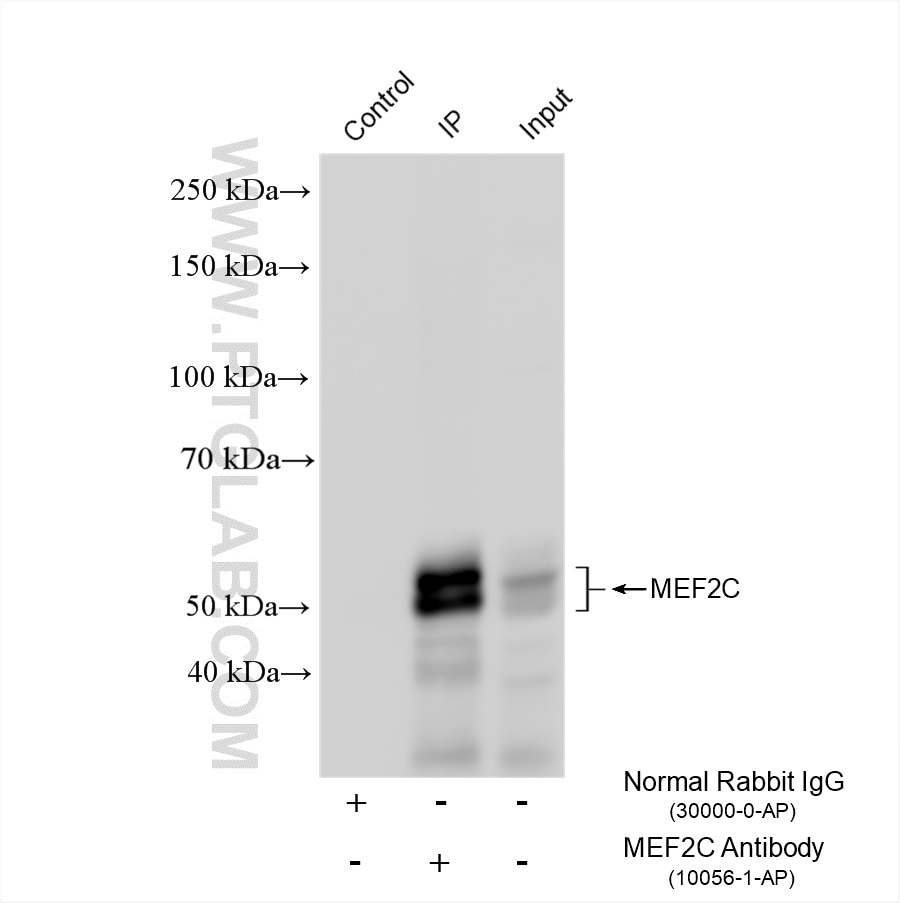
| Positive IP detected in | mouse brain tissue, N/A, SH-SY5Y cells |
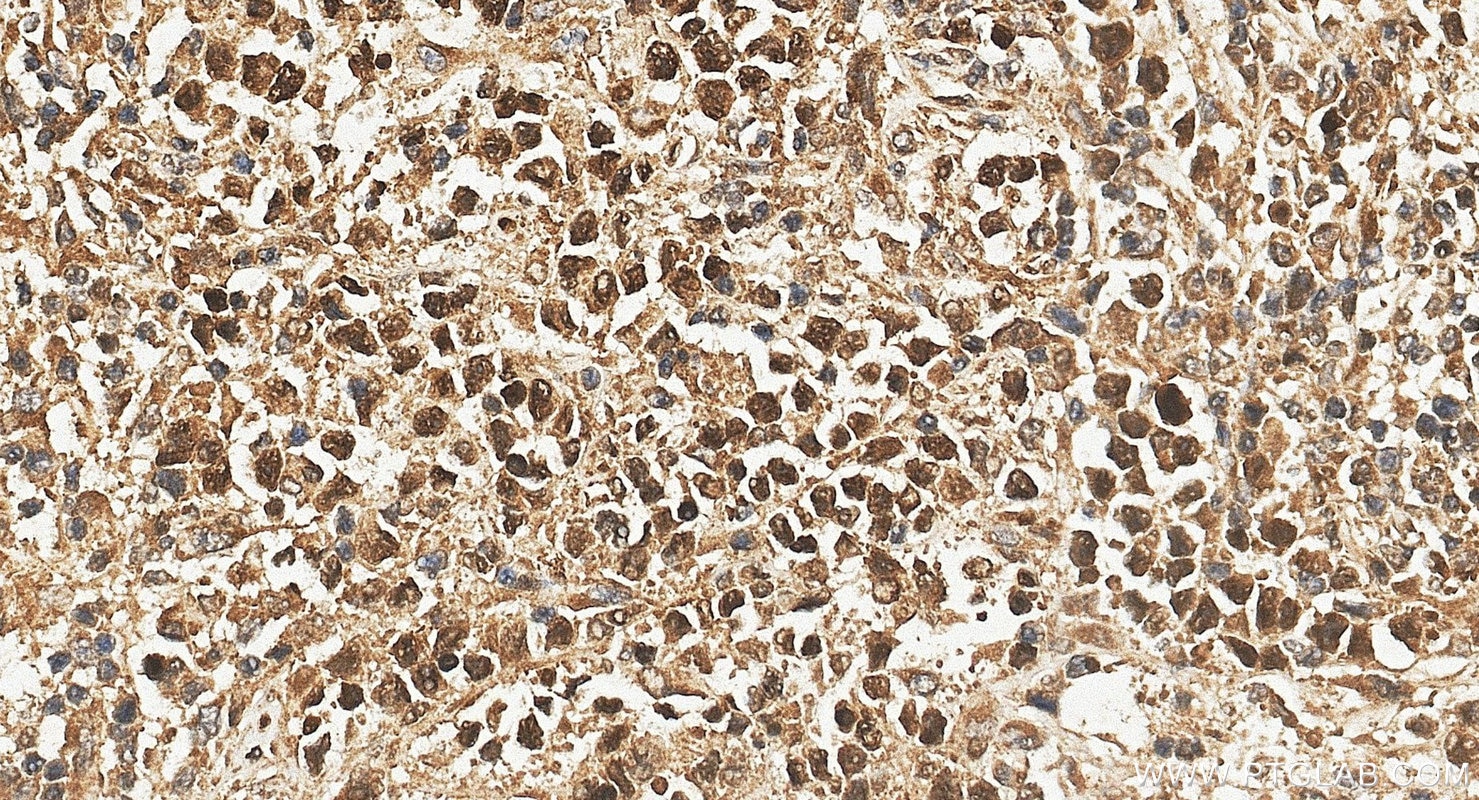
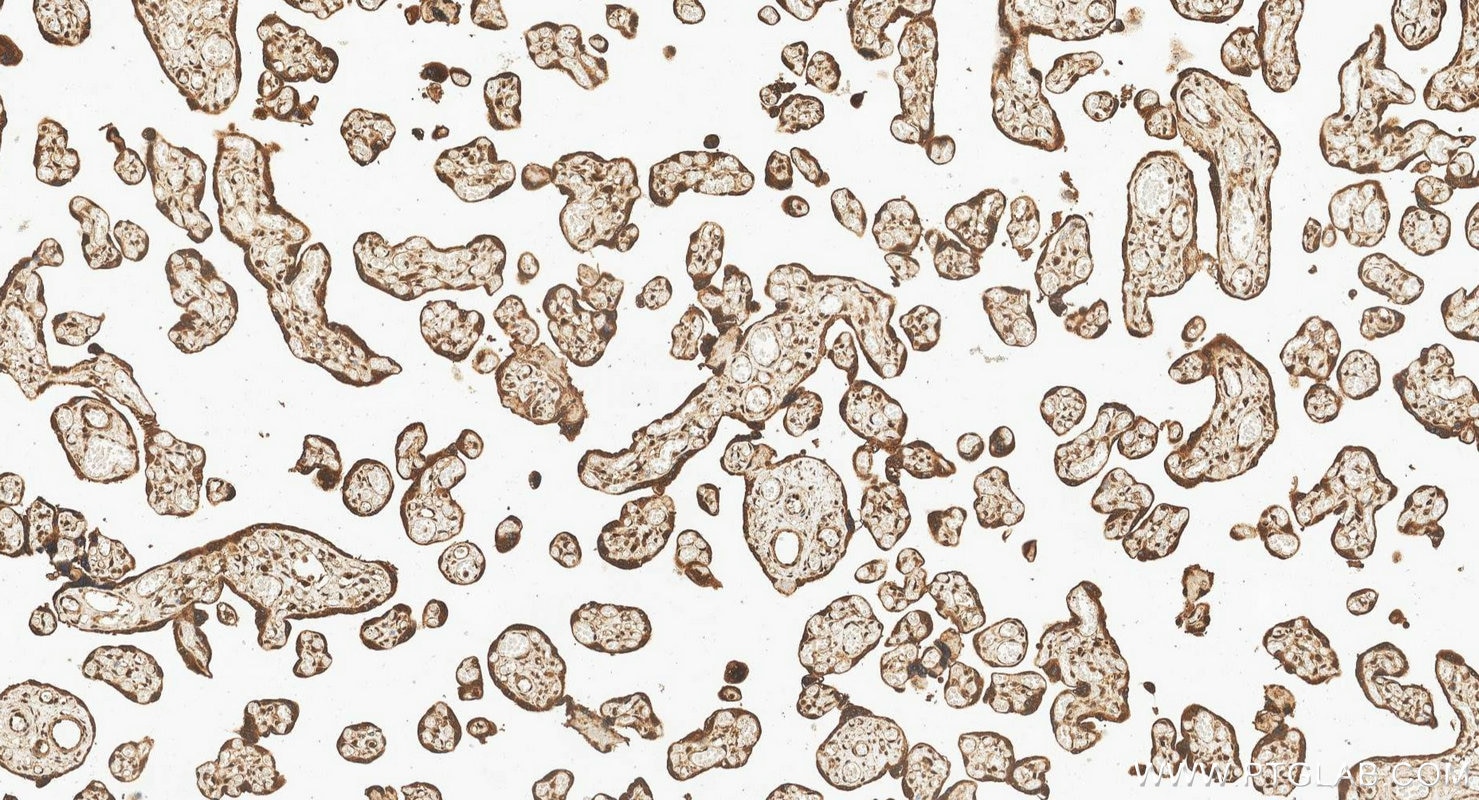
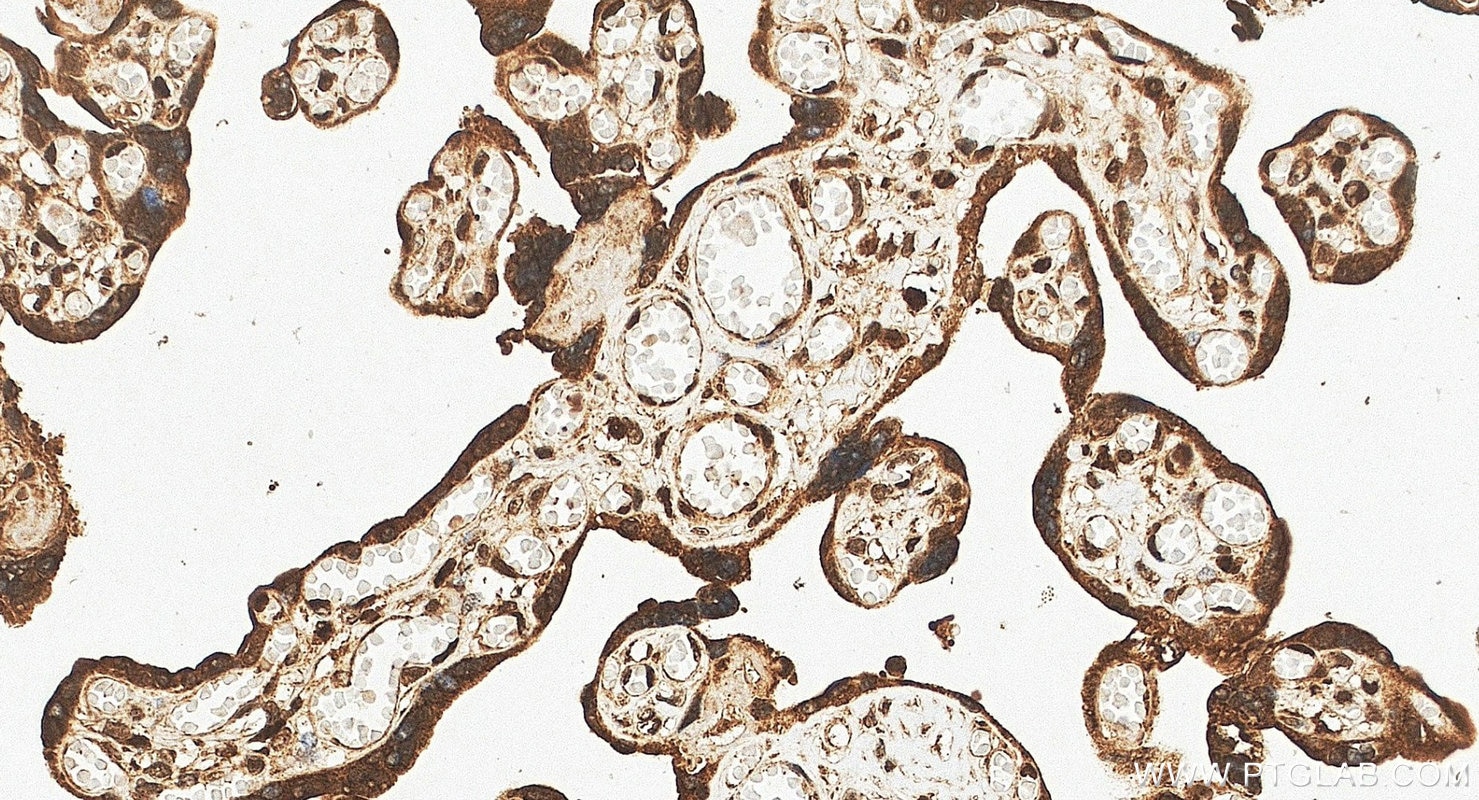
| Positive IHC detected in | human placenta tissue, human lymphoma tissue Note: suggested antigen retrieval with TE buffer pH 9.0; (*) Alternatively, antigen retrieval may be performed with citrate buffer pH 6.0 |
| Positive IF/ICC detected in | HepG2 cells |
| Positive FC (Intra) detected in | HeLa cells |
Recommended dilution
| Application | Dilution |
|---|---|
| Western Blot (WB) | WB : 1:500-1:1000 |
| Immunoprecipitation (IP) | IP : 0.5-4.0 ug for 1.0-3.0 mg of total protein lysate |
| Immunohistochemistry (IHC) | IHC : 1:200-1:800 |
| Immunofluorescence (IF)/ICC | IF/ICC : 1:50-1:500 |
| Flow Cytometry (FC) (INTRA) | FC (INTRA) : 0.40 ug per 10^6 cells in a 100 µl suspension |
| It is recommended that this reagent should be titrated in each testing system to obtain optimal results. | |
| Sample-dependent, Check data in validation data gallery. | |
Product Information
10056-1-AP targets MEF2C in WB, IHC, IF/ICC, FC (Intra), IP, chIP, ELISA applications and shows reactivity with human, mouse samples.
| Tested Reactivity | human, mouse |
| Cited Reactivity | human, mouse, rat, pig, bovine, goat |
| Host / Isotype | Rabbit / IgG |
| Class | Polyclonal |
| Type | Antibody |
| Immunogen |
CatNo: Ag0020 Product name: Recombinant human MEF2C protein Source: e coli.-derived, Unknow Tag: N/A Domain: MEF2C of BC156603 Sequence: Predict reactive species |
| Full Name | myocyte enhancer factor 2C |
| Calculated Molecular Weight | 51 kDa |
| Observed Molecular Weight | 45-70 kDa |
| GenBank Accession Number | BC156603 |
| Gene Symbol | MEF2C |
| Gene ID (NCBI) | 4208 |
| RRID | AB_513447 |
| Conjugate | Unconjugated |
| Form | Liquid |
| Purification Method | Antigen affinity purification |
| UNIPROT ID | Q06413 |
| Storage Buffer | PBS with 0.02% sodium azide and 50% glycerol, pH 7.3. |
| Storage Conditions | Store at -20°C. Stable for one year after shipment. Aliquoting is unnecessary for -20oC storage. 20ul sizes contain 0.1% BSA. |
Background Information
MEF2C belongs to the MEF2 family. It is a transcription activator which binds specifically to the MEF2 element present in the regulatory regions of many muscle-specific genes. MEF2C controls cardiac morphogenesis and myogenesis, and is also involved in vascular development[PMID: 20221419]. It plays an essential role in hippocampal-dependent learning and memory by suppressing the number of excitatory synapses and thus regulating basal and evoked synaptic transmission[PMID:18599438]. It is crucial for normal neuronal development, distribution, and electrical activity in the neocortex and is necessary for proper development of megakaryocytes and platelets and for bone marrow B lymphopoiesis[PMID: 21666133]. This protein is required for B-cell survival and proliferation in response to BCR stimulation, efficient IgG1 antibody responses to T-cell-dependent antigens and for normal induction of germinal center B cells. It may also be involved in neurogenesis and in the development of cortical architecture. MEF2C exists some isoforms with MV 50-52 kDa, 47 kDa, and 45 kDa, but modified MEF2C is about 55-66 kDa.
Protocols
| Product Specific Protocols | |
|---|---|
| FC protocol for MEF2C antibody 10056-1-AP | Download protocol |
| IF protocol for MEF2C antibody 10056-1-AP | Download protocol |
| IHC protocol for MEF2C antibody 10056-1-AP | Download protocol |
| IP protocol for MEF2C antibody 10056-1-AP | Download protocol |
| WB protocol for MEF2C antibody 10056-1-AP | Download protocol |
| Standard Protocols | |
|---|---|
| Click here to view our Standard Protocols |
Publications
What published studies show
The MEF2C Polyclonal antibody (Cat# 10056-1-AP) has 61 citations. These appear in journals including Nature Biotechnology, Nature Neuroscience, Nature Communications, Cell Research, Cell Reports, Cell Molecular Immunology, PNAS, Journal of Neuroscience, Circulation Research, Development, eLife, and Frontiers journals. Research fields span neuroscience (neurodevelopment, amygdala, Alzheimer's, autism), stem cell and cardiogenesis, skeletal muscle biology, immunology, oncology, and developmental biology. Applications include WB, IF, IHC, ChIP, and IP.
| Species | Application | Title |
|---|---|---|
Nat Biotechnol Isolation of primitive endoderm, mesoderm, vascular endothelial and trophoblast progenitors from human pluripotent stem cells. | ||
Cell Res Sequential progenitor states mark the generation of pancreatic endocrine lineages in mice and humans. | ||
Nat Neurosci Tbr1 haploinsufficiency impairs amygdalar axonal projections and results in cognitive abnormality. | ||
Nat Commun NitroSynapsin therapy for a mouse MEF2C haploinsufficiency model of human autism. |








