
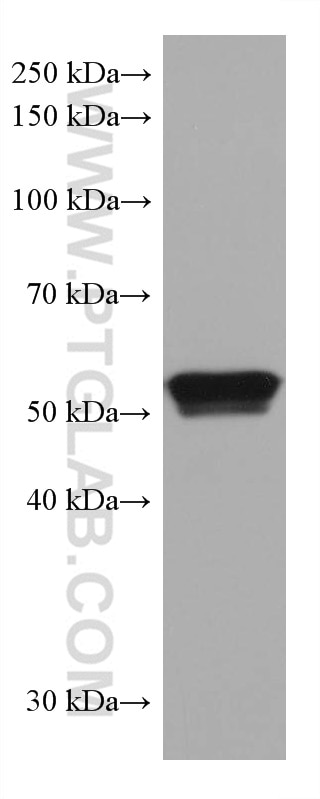
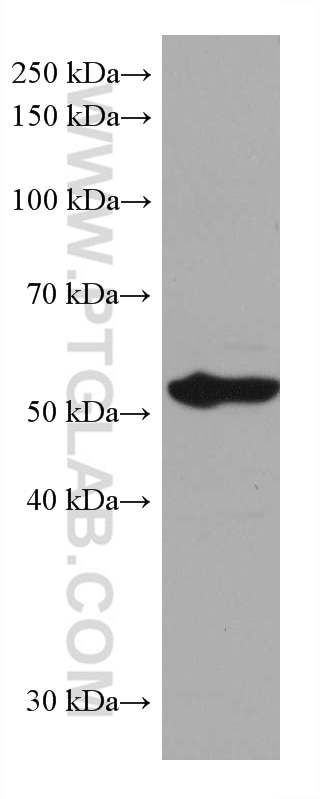

Tested Applications
| Positive WB detected in | HSC-T6 cells, ROS1728 cells |
Recommended dilution
| Application | Dilution |
|---|---|
| Western Blot (WB) | WB : 1:1000-1:6000 |
| It is recommended that this reagent should be titrated in each testing system to obtain optimal results. | |
| Sample-dependent, Check data in validation data gallery. | |
Product Information
66826-1-Ig targets PPARA in WB, IHC, IF, CoIP, ChIP, ELISA applications and shows reactivity with human, rat samples.
| Tested Reactivity | human, rat |
| Cited Reactivity | human, mouse, rat, pig, chicken, zebrafish, hamster, goat |
| Host / Isotype | Mouse / IgG1 |
| Class | Monoclonal |
| Type | Antibody |
| Immunogen |
CatNo: Ag7896 Product name: Recombinant human PPARA protein Source: e coli.-derived, PGEX-4T Tag: GST Domain: 1-258 aa of BC000052 Sequence: MVDTESPLCPLSPLEAGDLESPLSEEFLQEMGNIQEISQSIGEDSSGSFGFTEYQYLGSCPGSDGSVITDTLSPASSPSSVTYPVVPGSVDESPSGALNIECRICGDKASGYHYGVHACEGCKGFFRRTIRLKLVYDKCDRSCKIQKKNRNKCQYCRFHKCLSVGMSHNAIRFGRMPRSEKAKLKAEILTCEHDIEDSETADLKSLAKRIYEAYLKNFNMNKVKARVILSGKASNNPVGVCGCSGFSWQHGTSVVEDD Predict reactive species |
| Full Name | peroxisome proliferator-activated receptor alpha |
| Calculated Molecular Weight | 52 kDa |
| Observed Molecular Weight | 53 kDa |
| GenBank Accession Number | BC000052 |
| Gene Symbol | PPARA |
| Gene ID (NCBI) | 5465 |
| RRID | AB_2882169 |
| Conjugate | Unconjugated |
| Form | Liquid |
| Purification Method | Protein G purification |
| UNIPROT ID | Q07869 |
| Storage Buffer | PBS with 0.02% sodium azide and 50% glycerol, pH 7.3. |
| Storage Conditions | Store at -20°C. Stable for one year after shipment. Aliquoting is unnecessary for -20oC storage. 20ul sizes contain 0.1% BSA. |
Background Information
Peroxisome proliferator-activated receptor alpha (PPARA) is a ligand-activated transcription factor that belongs to the PPAR nuclear receptor superfamily. PPARA is essential in the modulation of lipid transport and metabolism, mainly through activating mitochondrial and peroxisomal fatty acid β-oxidation pathways. In addition, PPARA seems to decrease inflammation mainly through direct interaction with NF-κB, causing inhibition of its signaling pathway or reducing the activated levels of NF-κB and subsequent inflammation. Furthermore, PPARA was implicated in the attenuation of oxidative stress in alcoholic liver disease when treated with polyenephosphatidylcholine through downregulation of ROS-generating enzymes such as ethanol-inducible cytochrome P450 2E1 (CYP2E1), acyl-CoA oxidase, and NADPH oxidase. PPARA exists two isoforms and molecular weight of PPARA isoforms are 52 kDa and 22 kDa. The ability of a retinoid X receptor (RXR) to heterodimerize with many nuclear receptors, including LXR, PPAR, NGF1B and RAR, underscores its pivotal role within the nuclear receptor superfamily. Among these heterodimers, PPAR:RXR is considered an important signalling mediator of both PPAR ligands, such as fatty acids, and 9-cis retinoic acid (9-cis RA), an RXR ligand. (PMID: 15103326 ). PPARA can form Heterodimer with RXRA and molecular weight of Heterodimer is about 110 kDa.
Protocols
| Product Specific Protocols | |
|---|---|
| WB protocol for PPARA antibody 66826-1-Ig | Download protocol |
| Standard Protocols | |
|---|---|
| Click here to view our Standard Protocols |
Publications
What published studies show
The anti-PPARα antibody (Cat# 66826-1-Ig) has accumulated 260 citations across diverse high-impact journals including Nature Communications, Nature Metabolism, Advanced Science, Cell Death & Differentiation, Phytomedicine, Journal of Ethnopharmacology, International Journal of Molecular Sciences, and Frontiers in Pharmacology. Research fields span lipid metabolism, non-alcoholic fatty liver disease (NAFLD/MASLD), obesity, cardiovascular disease, oncology, neurology, renal injury, inflammation, diabetes, environmental toxicology, and nutritional science, with Western blot being the predominant application.
| Species | Application | Title |
|---|---|---|
Nat Metab Obesity impairs gut repair via AFABP-mediated iron overload in intestinal stem cells. | ||
Cell Mol Immunol Macrophage-derived VISTA engages with LRIG1 and hinders gut epithelial repair in colitis | ||
Bioact Mater A foam cell-targeted lipophagy restoration strategy stabilizes vulnerable atherosclerotic plaques. | ||
Autophagy Hypoxia-preconditioned dental pulp stem cells alleviate acetaminophen-induced liver failure via promoting MYC-HIF1A/HIF-1α-BNIP3-mediated mitophagy. | ||
Nat Commun Axin formation inhibitor 1 aggravates hepatic ischemia‒reperfusion injury by promoting the ubiquitination and degradation of PPARβ | ||
Nat Commun Limitations in PPARα-dependent mitochondrial programming restrain the differentiation of human stem cell-derived β cells. |
Reviews
What customers say
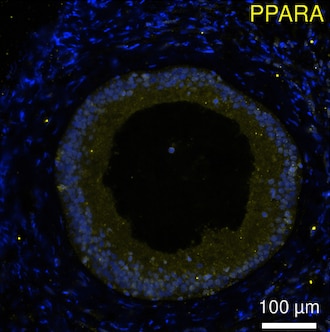
Two reviews were found for this product. One user (WB, fibroblasts, 1/3000) rated it 5/5 but noted many aspecific bands and an unclear band around 53 kDa, suggesting a different dilution might help. Another user (IF, ovarian tissue, 1:100) rated it 4/5 and reported using Tris/EDTA antigen retrieval with an AF647-conjugated secondary antibody. Overall, users report usable results but recommend optimizing dilution to reduce background.
The reviews below have been submitted by verified Proteintech customers who received an incentive for providing their feedback.
Manon (Verified Customer) (01-23-2026) | Lots of aspecifics bands , and the bands around 53kDa is not clear maybe change the dilution
|
Tianyi (Verified Customer) (08-30-2024) | Antigen retrieval in Tris/EDTA buffer and secondary antibody in AF647.
 |



