

Tested Applications
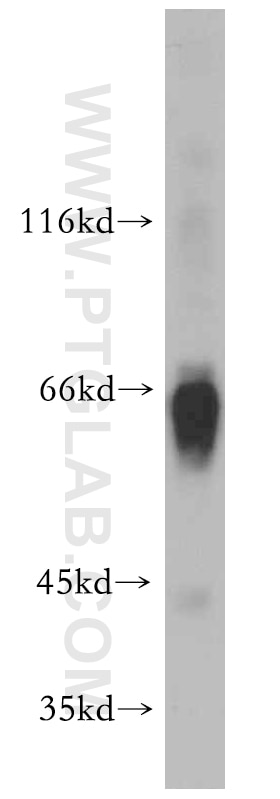
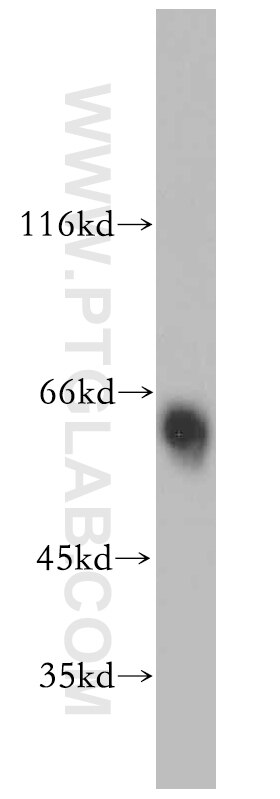
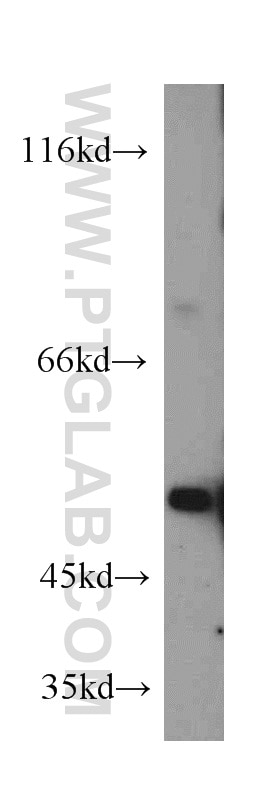
| Positive WB detected in | human blood tissue, COLO 320 cells, human colon tissue |
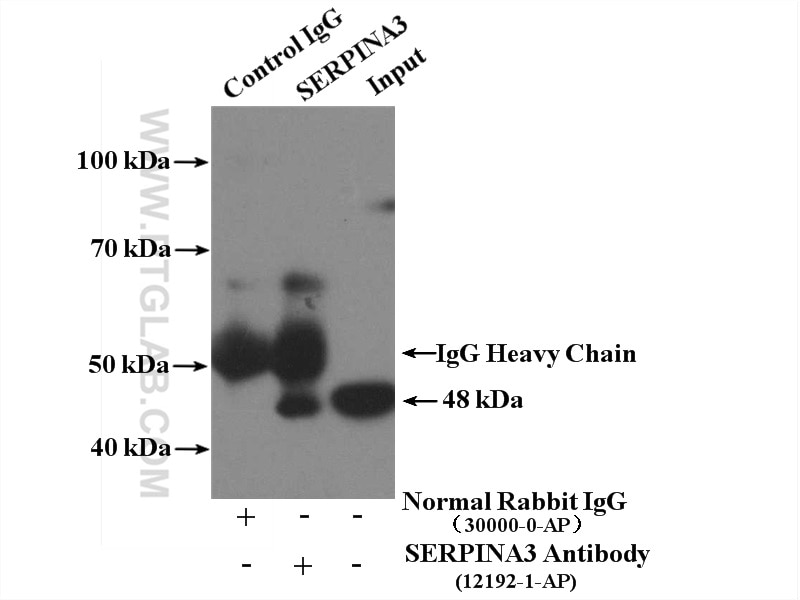
| Positive IP detected in | COLO 320 cells |
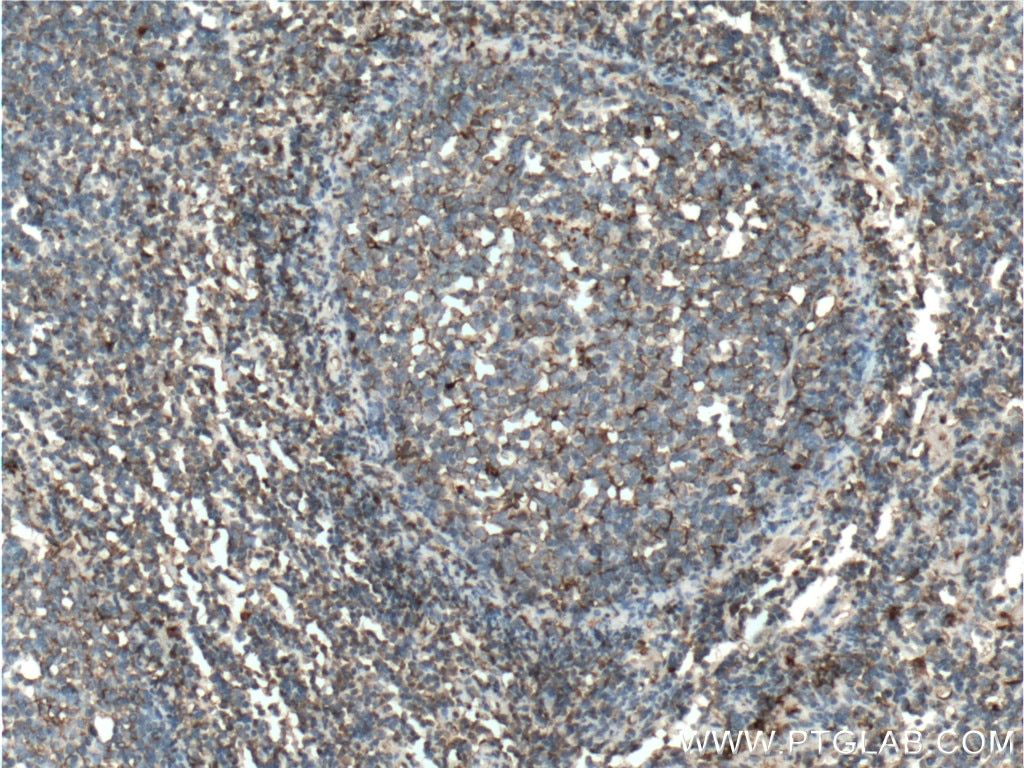
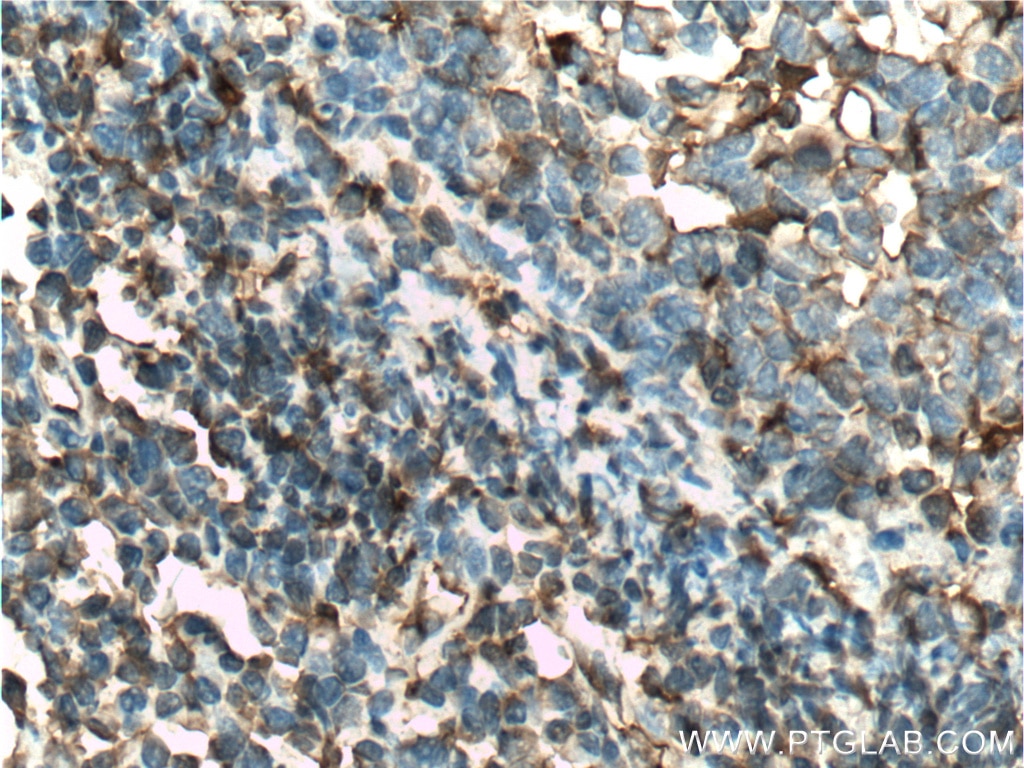
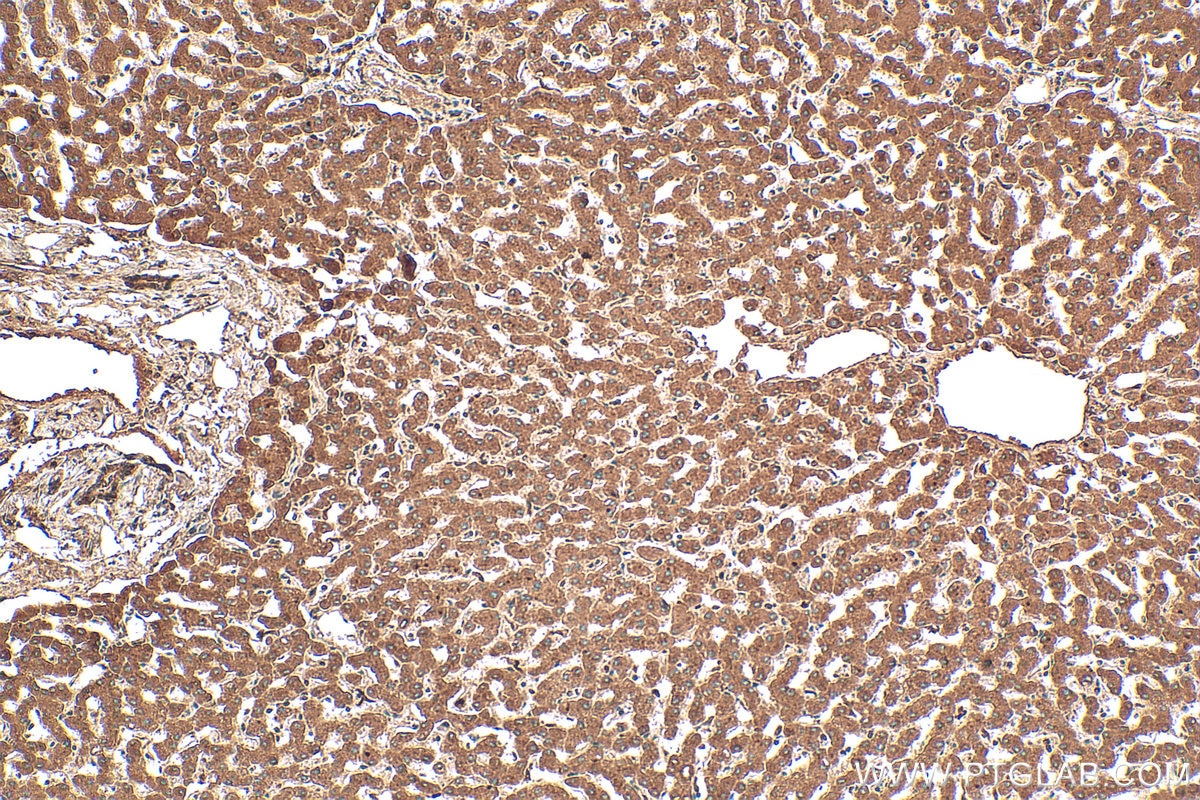
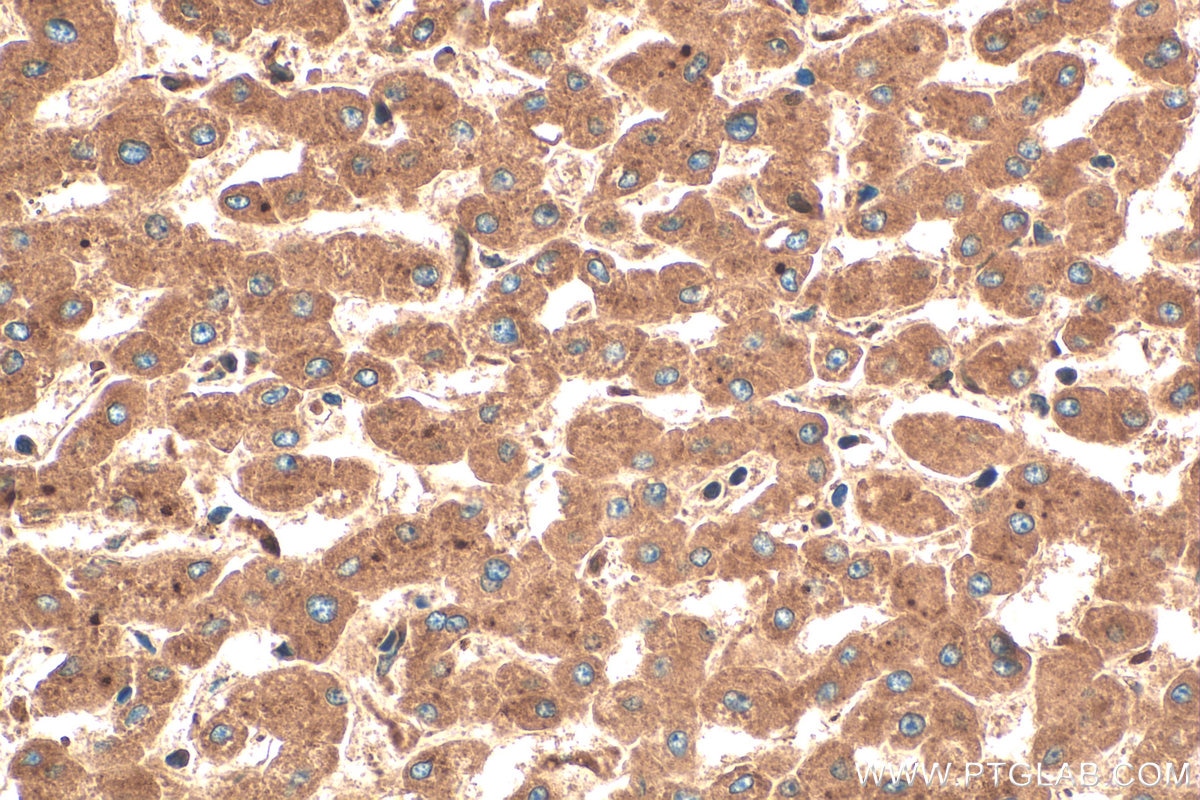
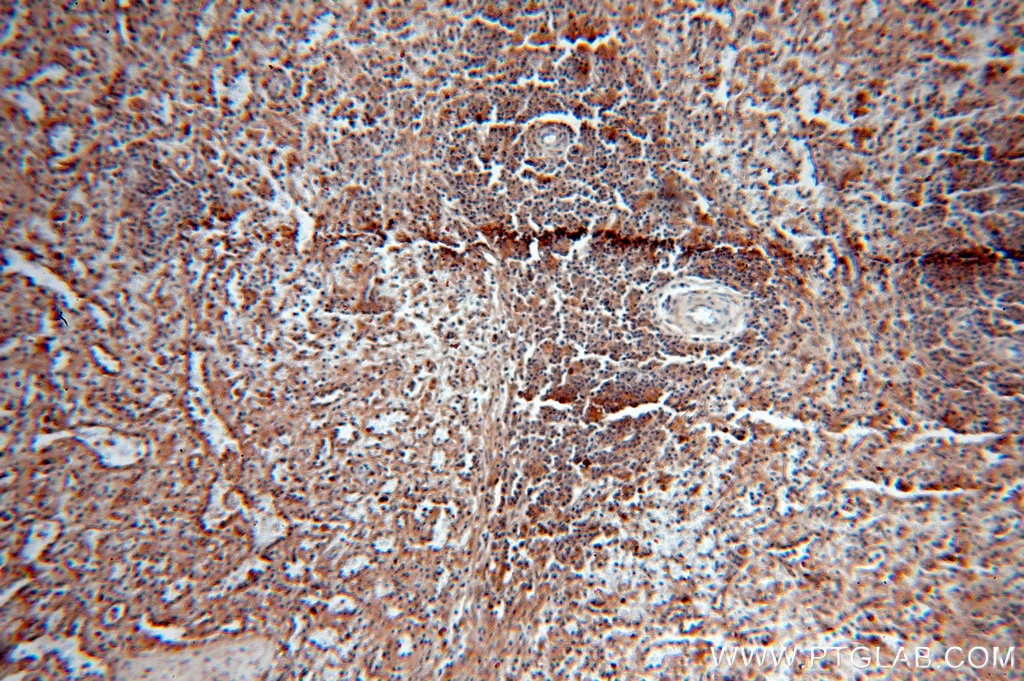
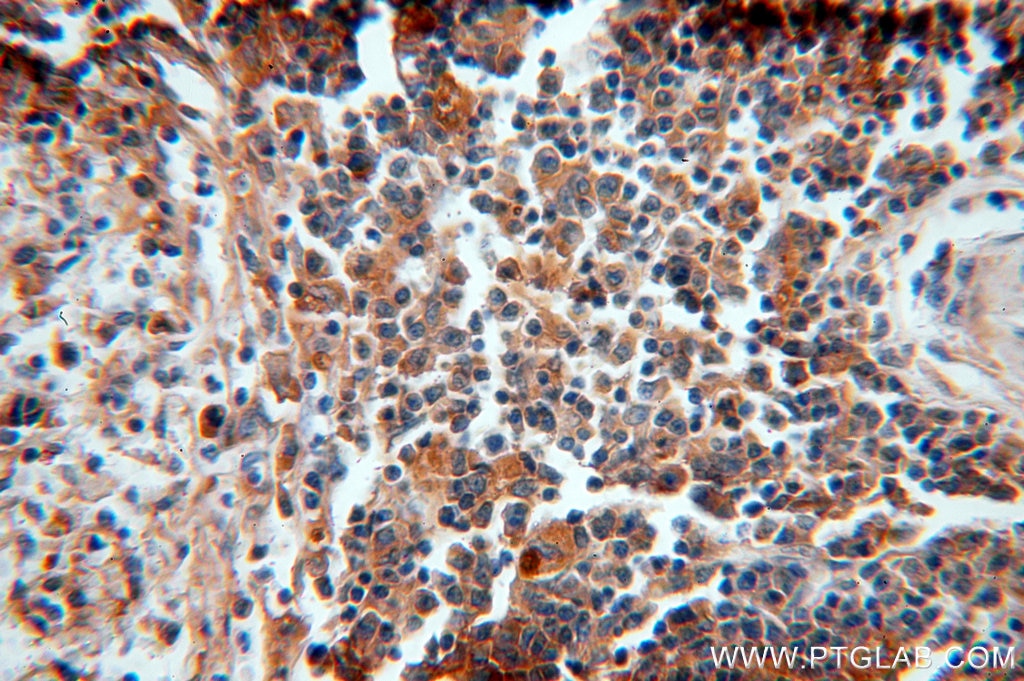
| Positive IHC detected in | human tonsillitis tissue, human liver tissue, human spleen tissue Note: suggested antigen retrieval with TE buffer pH 9.0; (*) Alternatively, antigen retrieval may be performed with citrate buffer pH 6.0 |
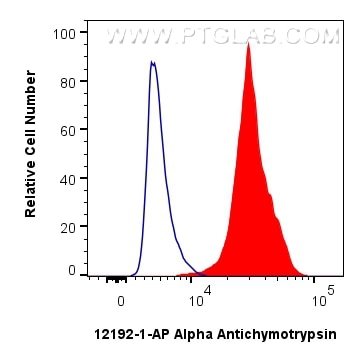
| Positive FC (Intra) detected in | HepG2 cells |
Recommended dilution
| Application | Dilution |
|---|---|
| Western Blot (WB) | WB : 1:500-1:1000 |
| Immunoprecipitation (IP) | IP : 0.5-4.0 ug for 1.0-3.0 mg of total protein lysate |
| Immunohistochemistry (IHC) | IHC : 1:50-1:500 |
| Flow Cytometry (FC) (INTRA) | FC (INTRA) : 0.25 ug per 10^6 cells in a 100 µl suspension |
| It is recommended that this reagent should be titrated in each testing system to obtain optimal results. | |
| Sample-dependent, Check data in validation data gallery. | |
Product Information
12192-1-AP targets Alpha 1 antichymotrypsin in WB, IHC, IF, FC (Intra), IP, ELISA applications and shows reactivity with human samples.
| Tested Reactivity | human |
| Cited Reactivity | human, mouse, rat, monkey |
| Host / Isotype | Rabbit / IgG |
| Class | Polyclonal |
| Type | Antibody |
| Immunogen |
CatNo: Ag2830 Product name: Recombinant human SERPINA3,AACT protein Source: e coli.-derived, PET28a Tag: 6*His Domain: 70-423 aa of BC010530 Sequence: DKNVIFSPLSISTALAFLSLGAHNTTLTEILKGLKFNLTETSEAEIHQSFQHLLRTLNQSSDELQLSMGNAMFVKEQLSLLDRFTEDAKRLYGSEAFATDFQDSAAAKKLINDYVKNGTRGKITDLIKDLDSQTMMVLVNYIFFKAKWEMPFDPQDTHQSRFYLSKKKWVMVPMMSLHHLTIPYFRDEELSCTVVELKYTGNASALFILPDQDKMEEVEAMLLPETLKRWRDSLEFREIGELYLPKFSISRDYNLNDILLQLGIEEAFTSKADLSGITGARNLAVSQVVHKAVLDVFEEGTEASAATAVKITLLSALVETRTIVRFNRPFLMIIVPTDTQNIFFMSKVTNPKQA Predict reactive species |
| Full Name | serpin peptidase inhibitor, clade A (alpha-1 antiproteinase, antitrypsin), member 3 |
| Calculated Molecular Weight | 448 aa, 48 kDa |
| Observed Molecular Weight | 44-70 kDa |
| GenBank Accession Number | BC010530 |
| Gene Symbol | Alpha 1 Antichymotrypsin |
| Gene ID (NCBI) | 12 |
| RRID | AB_10344682 |
| Conjugate | Unconjugated |
| Form | Liquid |
| Purification Method | Antigen affinity purification |
| UNIPROT ID | P01011 |
| Storage Buffer | PBS with 0.02% sodium azide and 50% glycerol, pH 7.3. |
| Storage Conditions | Store at -20°C. Stable for one year after shipment. Aliquoting is unnecessary for -20oC storage. 20ul sizes contain 0.1% BSA. |
Background Information
Human SerpinA3, also known as Alpha 1-antichymotrypsin (AACT), is a member of the serine protease inhibitor class, and is a plasma alpha globulin glycoprotein which increases in the blood during the inflammatory process. SerpinA3, is also an inhibitor of neutrophil cathepsin G, mast cell chymases and pancreatic chymotrypsin. SerpinA3 is produced primarily in the liver, and is identified as an acute-phase inflammatory protein. SerpinA3 deficiency has been associated with liver disease. SerpinA3 has also been implicated in the pathology of a number of devastating human diseases including chronic obstructive pulmonary disease (COPD), Parkinson's disease (PD), Alzheimer's disease (AD), Stroke, Cystic Fibrosis, Cerebral Haemorrhage and Multiple System Atrophy.
Protocols
| Product Specific Protocols | |
|---|---|
| FC protocol for Alpha 1 antichymotrypsin antibody 12192-1-AP | Download protocol |
| IHC protocol for Alpha 1 antichymotrypsin antibody 12192-1-AP | Download protocol |
| IP protocol for Alpha 1 antichymotrypsin antibody 12192-1-AP | Download protocol |
| WB protocol for Alpha 1 antichymotrypsin antibody 12192-1-AP | Download protocol |
| Standard Protocols | |
|---|---|
| Click here to view our Standard Protocols |
Publications
What published studies show
The anti-SERPINA3 (alpha-1-antichymotrypsin) affinity purification antibody (Cat# 12192-1-AP) has 13 citations across journals including Nature Metabolism, Cell Reports, Acta Neuropathologica, Journal of Extracellular Vesicles, British Journal of Cancer, Frontiers in Immunology, Human Reproduction, Matrix Biology, MedComm, Food & Function, Frontiers in Medicine, and Proteomics Clinical Applications. Research fields span metabolic disorders, cancer biomarkers (lung, liver, ovarian, lymphoma), neurodegenerative diseases (ALS, Parkinson's), COPD, osteoarthritis, chondrogenesis, and kidney injury.
| Species | Application | Title |
|---|---|---|
Nat Metab Maternal exercise prevents metabolic disorders in offspring mice through SERPINA3C | ||
J Extracell Vesicles Identification of a Biomarker Panel in Extracellular Vesicles Derived From Non-Small Cell Lung Cancer (NSCLC) Through Proteomic Analysis and Machine Learning | ||
MedComm (2020) Therapeutic Effects of Noninvasive Electrical Stimulation in Combination Transplantation of Human Adipose-Derived Stem Cells-Derived Dopaminergic Neuron on the Monkey Model of Parkinson's Disease. | ||
Acta Neuropathol Integrative proteomics highlight presynaptic alterations and c-Jun misactivation as convergent pathomechanisms in ALS | ||
Br J Cancer Identification of GlcNAcylated alpha-1-antichymotrypsin as an early biomarker in human non-small-cell lung cancer by quantitative proteomic analysis with two lectins. | ||
Cell Rep SERPINA3 mediates liver cancer cells escape from chemotherapy-induced neutrophil extracellular trap killing. |












