



Tested Applications
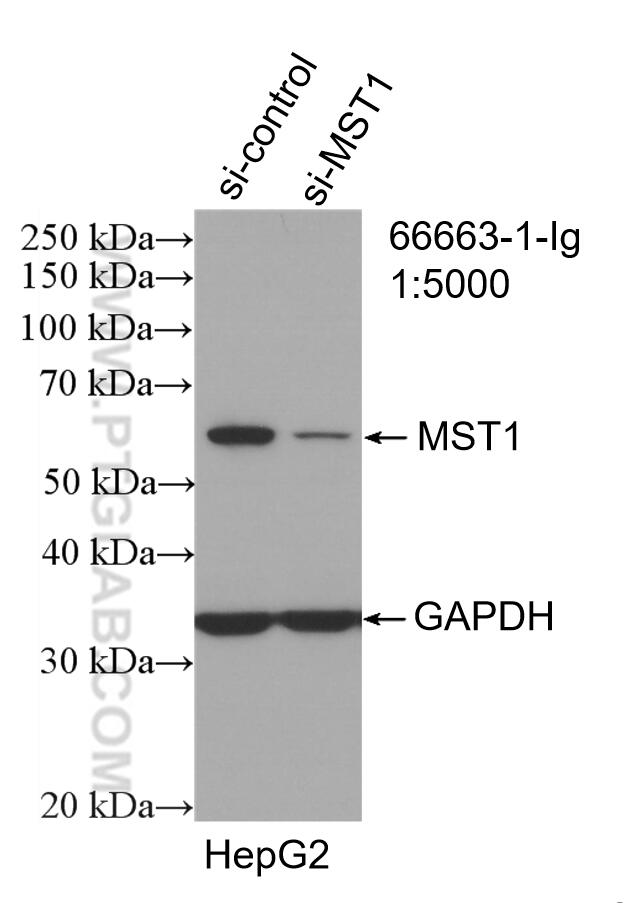
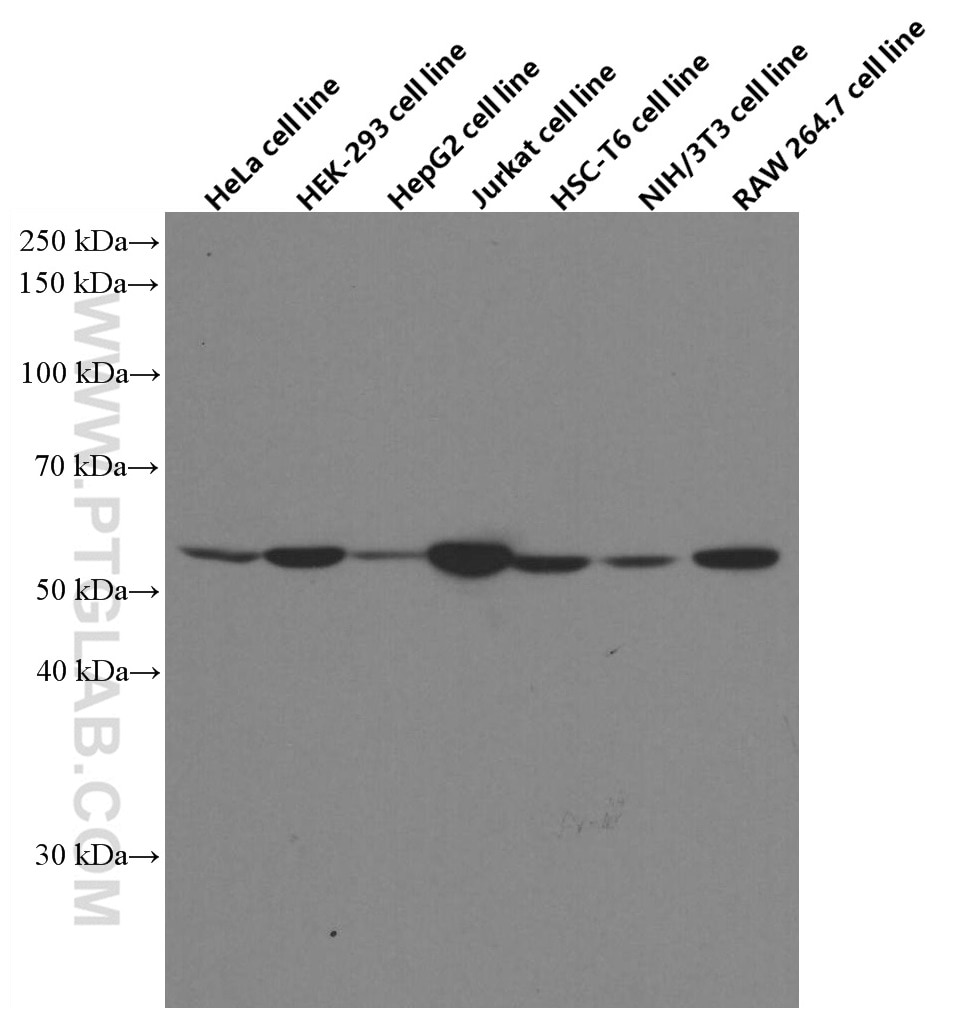
| Positive WB detected in | HeLa cells, HepG2 cells, HEK-293 cells, Jurkat cells, HSC-T6 cells, RAW 264.7 cells |
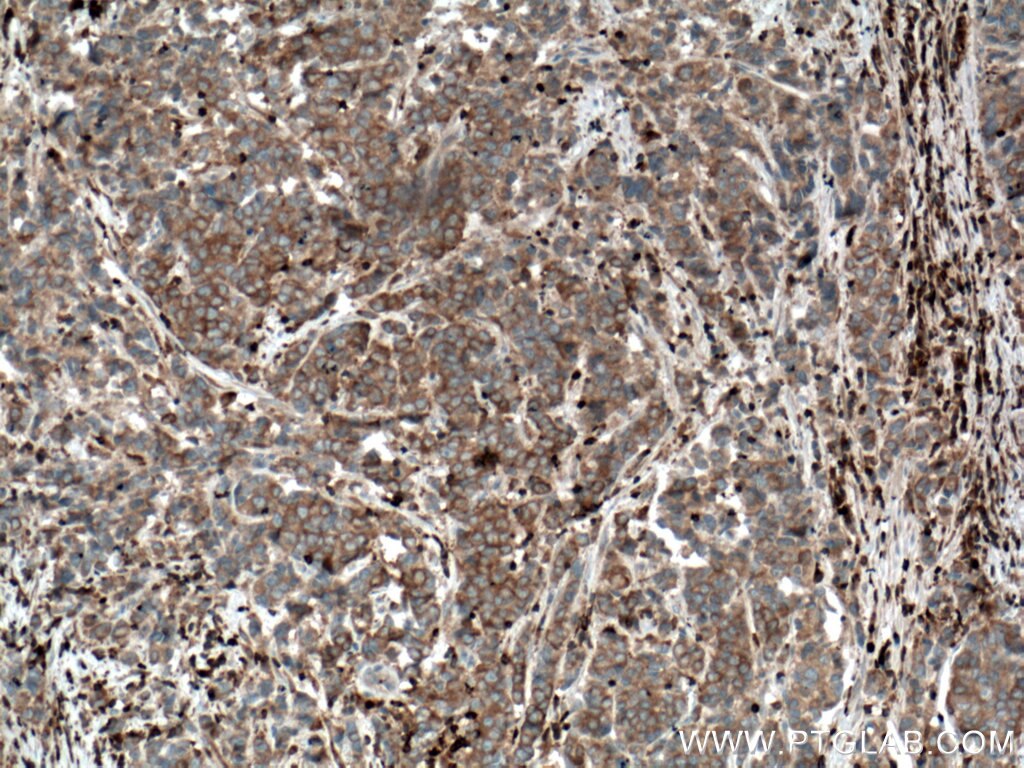
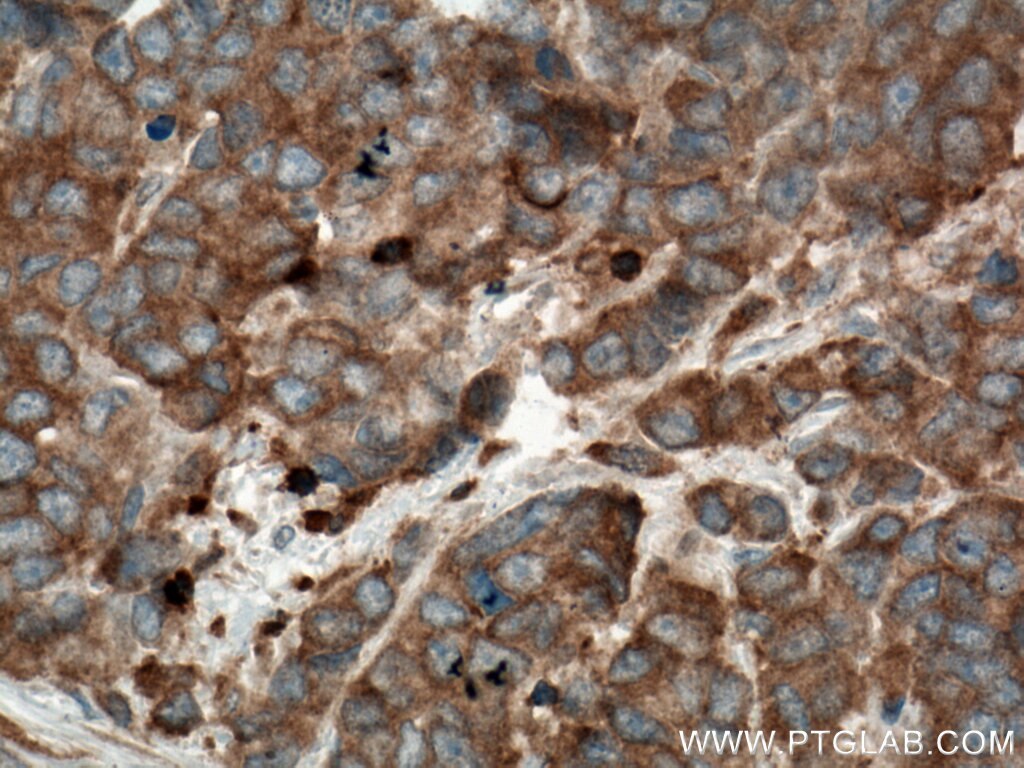
| Positive IHC detected in | human prostate cancer tissue Note: suggested antigen retrieval with TE buffer pH 9.0; (*) Alternatively, antigen retrieval may be performed with citrate buffer pH 6.0 |
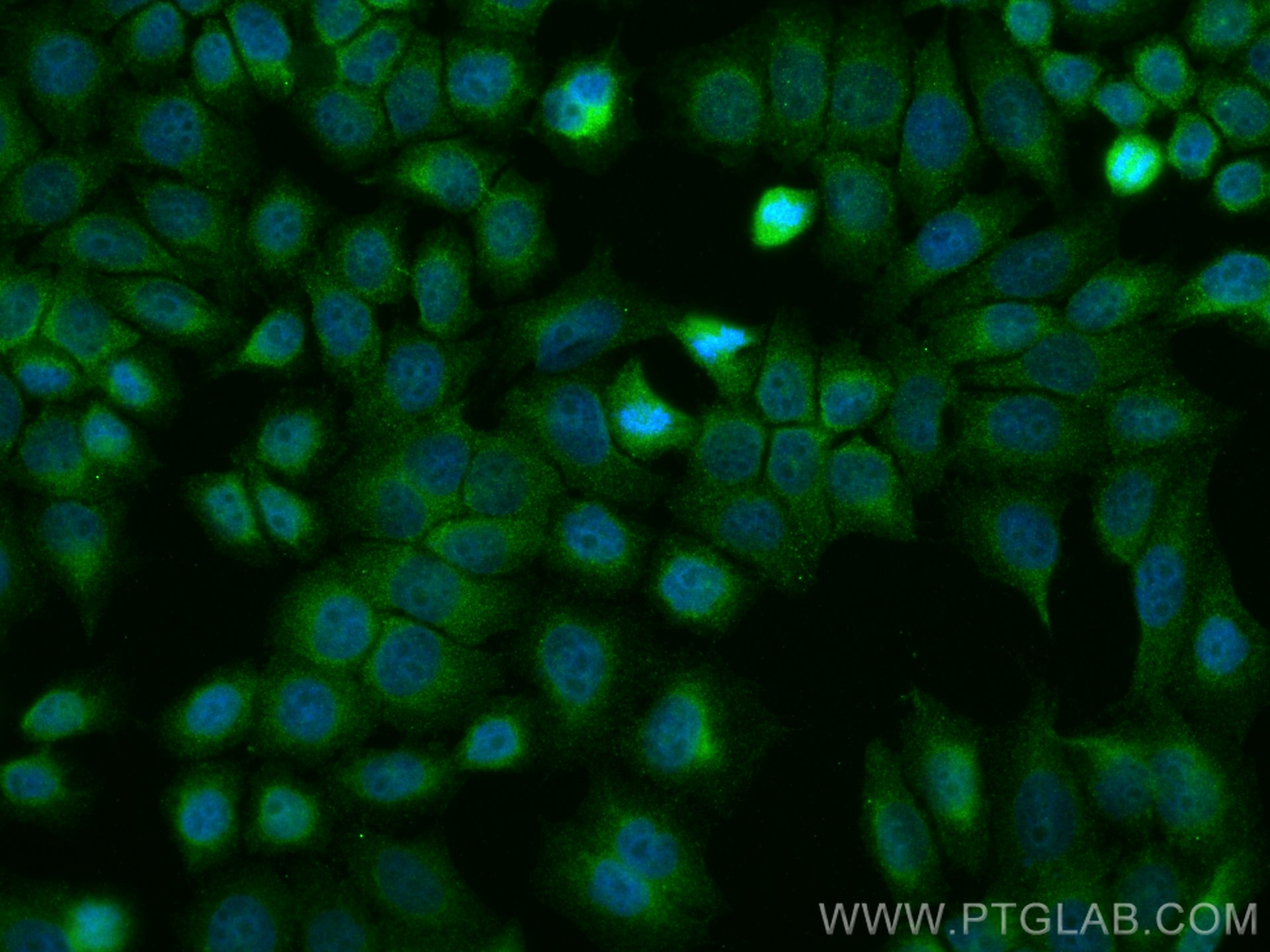
| Positive IF/ICC detected in | PC-3 cells |
Recommended dilution
| Application | Dilution |
|---|---|
| Western Blot (WB) | WB : 1:2000-1:10000 |
| Immunohistochemistry (IHC) | IHC : 1:250-1:1000 |
| Immunofluorescence (IF)/ICC | IF/ICC : 1:200-1:800 |
| It is recommended that this reagent should be titrated in each testing system to obtain optimal results. | |
| Sample-dependent, Check data in validation data gallery. | |
Product Information
66663-1-Ig targets MST1 in WB, IHC, IF/ICC, ELISA applications and shows reactivity with human, mouse, rat samples.
| Tested Reactivity | human, mouse, rat |
| Cited Reactivity | human, mouse, rat |
| Host / Isotype | Mouse / IgG2a |
| Class | Monoclonal |
| Type | Antibody |
| Immunogen |
CatNo: Ag17738 Product name: Recombinant human STK4 protein Source: e coli.-derived, PGEX-4T Tag: GST Domain: 383-451 aa of BC093768 Sequence: RRDETMQPAKPSFLEYFEQKEKENQINSFGKSVPGPLKNSSDWKIPQDGDYEFLKSWTVEDLQKRLLAL Predict reactive species |
| Full Name | serine/threonine kinase 4 |
| Calculated Molecular Weight | 487 aa, 56 kDa |
| Observed Molecular Weight | 52-56 kDa |
| GenBank Accession Number | BC093768 |
| Gene Symbol | MST1 |
| Gene ID (NCBI) | 6789 |
| RRID | AB_2882018 |
| Conjugate | Unconjugated |
| Form | Liquid |
| Purification Method | Protein A purification |
| UNIPROT ID | Q13043 |
| Storage Buffer | PBS with 0.02% sodium azide and 50% glycerol, pH 7.3. |
| Storage Conditions | Store at -20°C. Stable for one year after shipment. Aliquoting is unnecessary for -20oC storage. 20ul sizes contain 0.1% BSA. |
Background Information
Mammalian STE20-like serine-threonine kinase MST1, encoded by the STK4 gene, is a multifunctional protein. MST1 and its closest paralogs MST2 (encoded by the STK3 gene), MST3, and MST4 are members of the Class II Germinal Center Family of Protein Kinases . STK3/4 and LATS1/2 (large tumor suppressor 1 and 2) are core kinase components of the Hippo tumor suppressor pathway in mammalians . In the conventional Hippo pathway, the STK3/4 and LATS1/2 signaling cascade phosphorylates and inactivates the transcriptional coactivator YAP1 (yes associated protein 1) and its close paralog WWTR1]. YAP1 and WWTR1 do not have DNA binding domains and they exert their biological outputs, such as cell proliferation and survival, by interacting with the TEAD1-4 transcription factors. Lines of evidence have indicated that dysregulation or loss of STK4/Hippo signaling is linked to developmental disorders and carcinogenesis with poor prognosis. STK4 is a stress-induced kinase and it can be activated in response to cell-death inducers. Autophosphorylation of STK4 at Thr183 (Thr180 in STK3) in the activation loop is a key activation mechanism for STK4/3 because phosphorylation of Thr183/180 causes the cleavage of STK4 by caspases under apoptotic conditions. The caspase-cleavage results in a more active STK4 protein (STK4-N, an amino-terminally truncated STK4), which localizes into the nucleus and induces apoptosis through histone modifications and chromatin condensations.
Protocols
| Product Specific Protocols | |
|---|---|
| IF protocol for MST1 antibody 66663-1-Ig | Download protocol |
| IHC protocol for MST1 antibody 66663-1-Ig | Download protocol |
| WB protocol for MST1 antibody 66663-1-Ig | Download protocol |
| Standard Protocols | |
|---|---|
| Click here to view our Standard Protocols |
Publications
What published studies show
MST1 Monoclonal antibody (2G11C1), catalog number 66663-1-Ig, has 9 citations published in Advanced Science, British Journal of Pharmacology, Biochemical Pharmacology, Biofactors, Scientific Reports, Journal of the Endocrine Society, Journal of Biological Chemistry, and Journal of Natural Medicine. Research fields span Hippo signaling pathway, kidney fibrosis, diabetic nephropathy, thyroid cancer, cerebral ischemia-reperfusion injury, adrenal cortex biology, liver fibrosis, muscle atrophy, and exosome-mediated tissue regeneration.
| Species | Application | Title |
|---|---|---|
Adv Sci (Weinh) TEAD1 Enhances Exosome Secretion and Promotes Exosome-Mediated Tissue Regeneration. | ||
Br J Pharmacol Diminished nuclear-localized β-adrenoceptor signalling activates YAP to promote kidney fibrosis in diabetic nephropathy | ||
Biochem Pharmacol A humanized Anti-YKL-40 antibody inhibits tumor development
| ||
Biofactors FERM domain-containing protein 6 exerts a tumor-inhibiting role in thyroid cancer by antagonizing oncogenic YAP1 | ||
Sci Rep MST1/Drp1 axis mediates microglia pro-inflammatory activation following cerebral ischemia-reperfusion injury. | ||







