

Tested Applications
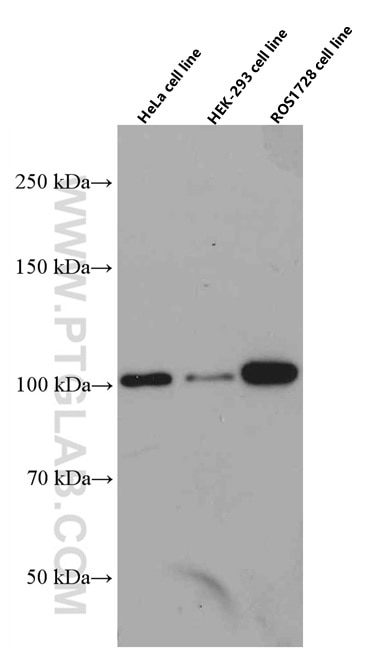
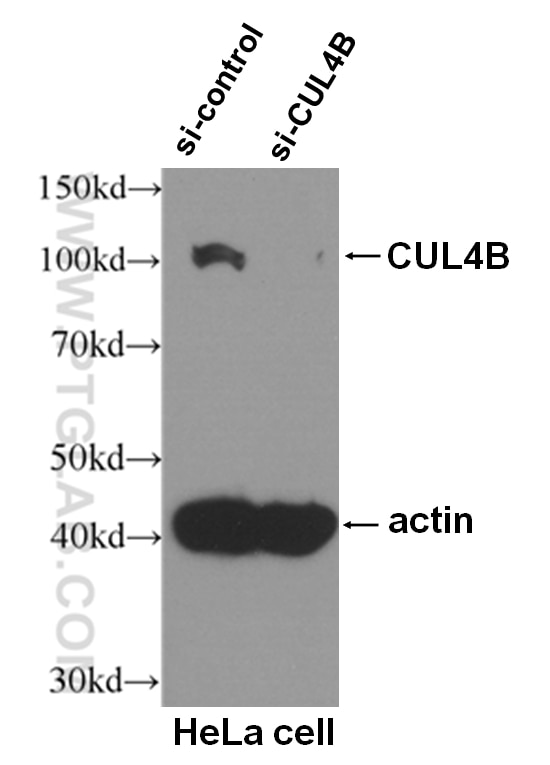
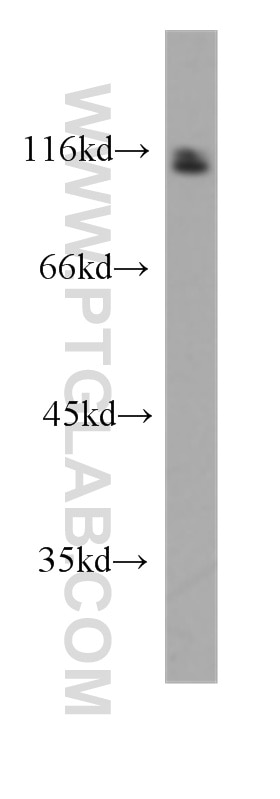
| Positive WB detected in | HeLa cells, HEK-293 cells, ROS1728 cells |
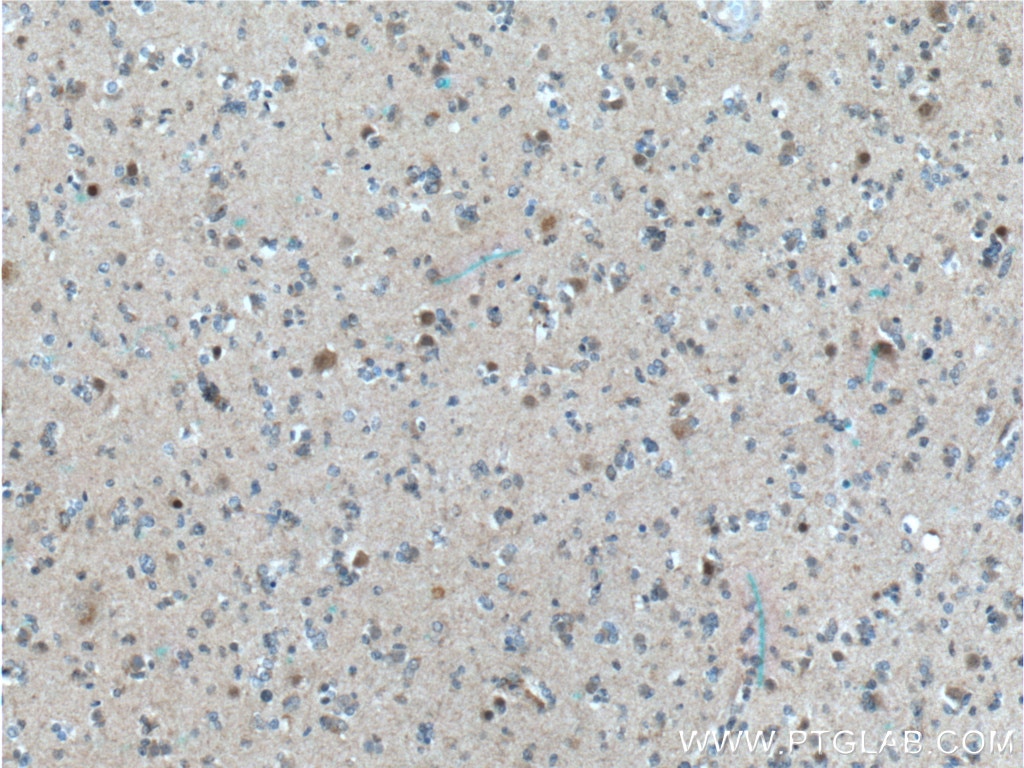
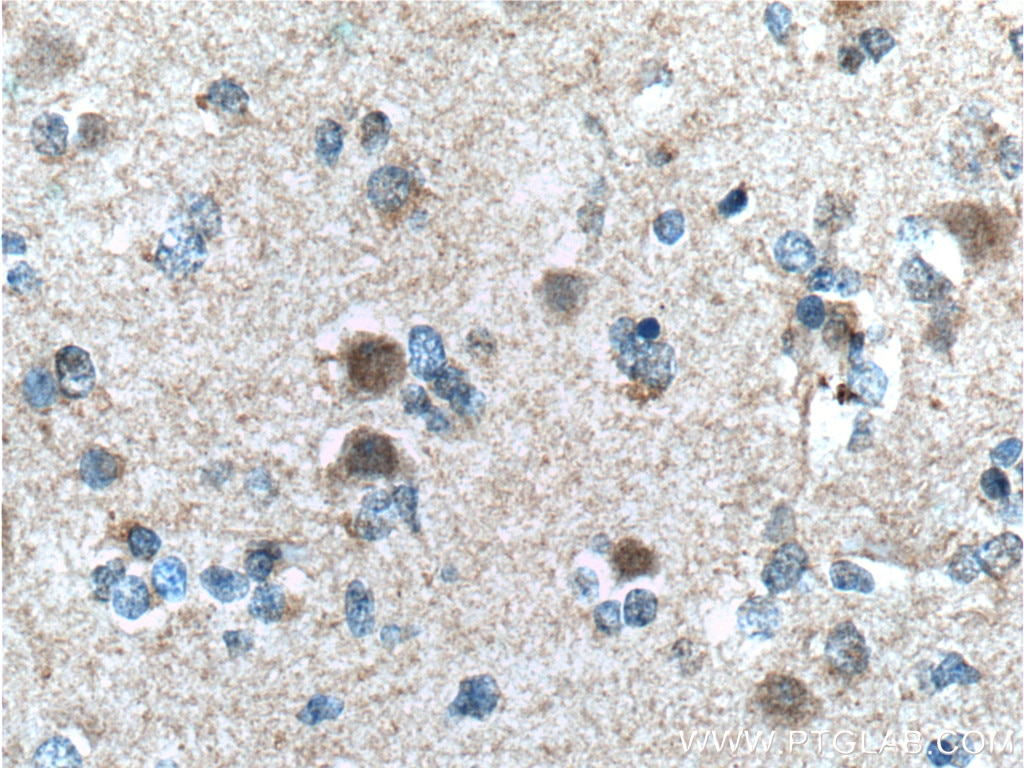
| Positive IHC detected in | human gliomas tissue Note: suggested antigen retrieval with TE buffer pH 9.0; (*) Alternatively, antigen retrieval may be performed with citrate buffer pH 6.0 |
Recommended dilution
| Application | Dilution |
|---|---|
| Western Blot (WB) | WB : 1:1000-1:4000 |
| Immunohistochemistry (IHC) | IHC : 1:50-1:500 |
| It is recommended that this reagent should be titrated in each testing system to obtain optimal results. | |
| Sample-dependent, Check data in validation data gallery. | |
Product Information
60151-1-Ig targets CUL4B in WB, IHC, ELISA applications and shows reactivity with human, rat samples.
| Tested Reactivity | human, rat |
| Cited Reactivity | human, mouse |
| Host / Isotype | Mouse / IgG1 |
| Class | Monoclonal |
| Type | Antibody |
| Immunogen |
CatNo: Ag3563 Product name: Recombinant human CUL4B protein Source: e coli.-derived, PGEX-4T Tag: GST Domain: 1-351 aa of BC036216 Sequence: MMSQSSGSGDGNDDEATTSKDGGFSSPSPSAAAAAQEVRSATDGNTSTTPPTSAKKRKLNSSSSSSSNSSNEREDFDSTSSSSSTPPLQPRDSASPSTSSFCLGVSVAASSHVPIQKKLRFEDTLEFVGFDAKMAEESSSSSSSSSPTAATSQQQQLKNKSILISSVASVHHANGLAKSSTTVSSFANSKPGSAKKLVIKNFKDKPKLPENYTDETWQKLKEAVEAIQNSTSIKYNLEELYQAVENLCSYKISANLYKQLRQICEDHIKAQIHQFREDSLDSVLFLKKIDRCWQNHCRQMIMIRSIFLFLDRTYVLQNSMLPSIWDMGLELFRAHIISDQKVQNKTIDGIL Predict reactive species |
| Full Name | cullin 4B |
| Calculated Molecular Weight | 913 aa, 104 kDa |
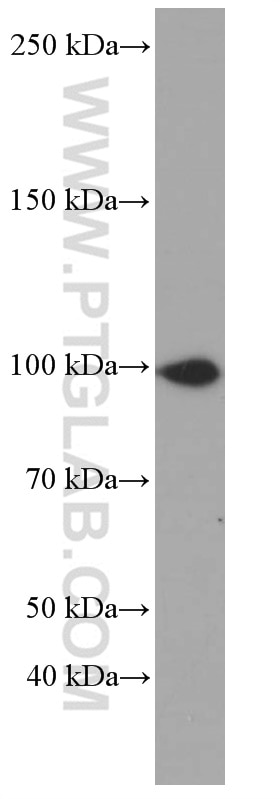
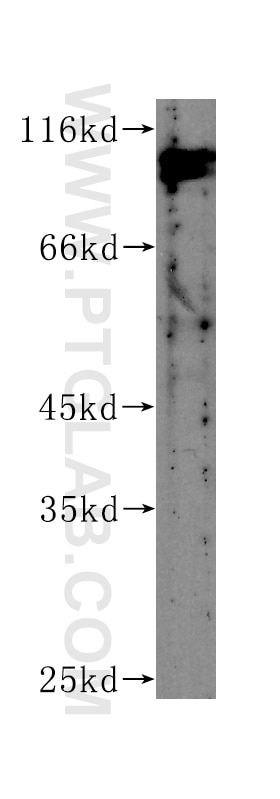
| Observed Molecular Weight | 102 kDa |
| GenBank Accession Number | BC036216 |
| Gene Symbol | CUL4B |
| Gene ID (NCBI) | 8450 |
| RRID | AB_10641034 |
| Conjugate | Unconjugated |
| Form | Liquid |
| Purification Method | Protein G purification |
| UNIPROT ID | Q13620 |
| Storage Buffer | PBS with 0.02% sodium azide and 50% glycerol, pH 7.3. |
| Storage Conditions | Store at -20°C. Stable for one year after shipment. Aliquoting is unnecessary for -20oC storage. 20ul sizes contain 0.1% BSA. |
Background Information
Cullin-RING ligases (CRLs) complexes participate in the regulation of diverse cellular processes, including cell cycle progression, transcription, signal transduction and development (PMID: 21816341)(PMID: 21554755). Serving as the scaffold protein, cullins are crucial for the assembly of ligase complexes, which recognize and target various substrates for proteosomal degradation. Two cullin 4 (CUL4) proteins, CUL4A (87 kDa) and CUL4B(104 kDa), are two members in cullin family with 83% of identity. Mutations in human CUL4B are one of the major causes of X-linked mental retardation. Cul4b knockout mice demonstrated that CUL4B is indispensable for embryonic development in the mouse (PMID: 22606329).
Protocols
| Product Specific Protocols | |
|---|---|
| IHC protocol for CUL4B antibody 60151-1-Ig | Download protocol |
| WB protocol for CUL4B antibody 60151-1-Ig | Download protocol |
| Standard Protocols | |
|---|---|
| Click here to view our Standard Protocols |
Publications
What published studies show
The CUL4B antibody (Cat# 60151-1-Ig) has a total of 5 citations. These appear in Science Advances, Current Biology, International Journal of Oncology, Pathology Research and Practice, and Biochemical and Biophysical Research Communications. Research fields span cancer biology (gastric and colorectal cancer), cell proliferation and invasion, Wnt/β-catenin and p53 signaling pathways, ESCO2/MCM complex regulation, and acute respiratory distress syndrome (ARDS). Applications include Western blot and IHC in human and mouse samples.
| Species | Application | Title |
|---|---|---|
Sci Adv NEDDylated Cullin 3 mediates the adaptive response to topoisomerase 1 inhibitors
| ||
Curr Biol Temporal Regulation of ESCO2 Degradation by the MCM Complex, the CUL4-DDB1-VPRBP Complex, and the Anaphase-Promoting Complex. | ||
Int J Oncol miR‑381 and miR‑489 suppress cell proliferation and invasion by targeting CUL4B via the Wnt/β‑catenin pathway in gastric cancer. | ||
Pathol Res Pract Cullin-4B promotes cell proliferation and invasion through inactivation of p53 signaling pathway in colorectal cancer. | ||
Biochem Biophys Res Commun Insulin alleviates LPS-induced ARDS via inhibiting CUL4B-mediated proteasomal degradation and restoring expression level of Na,K-ATPase α1 subunit through elevating HCF-1. |








