

Tested Applications
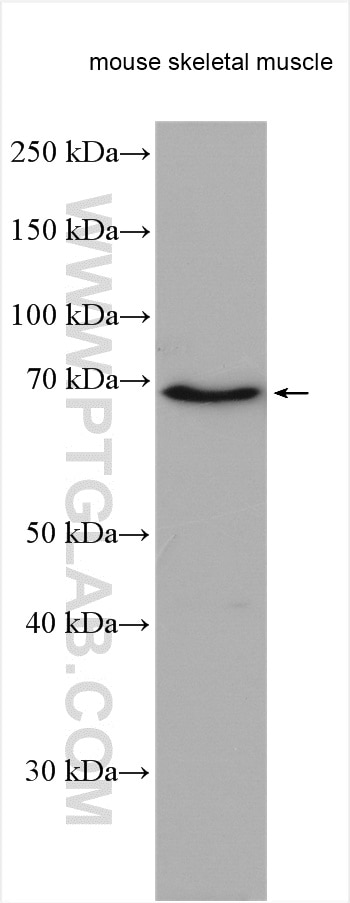
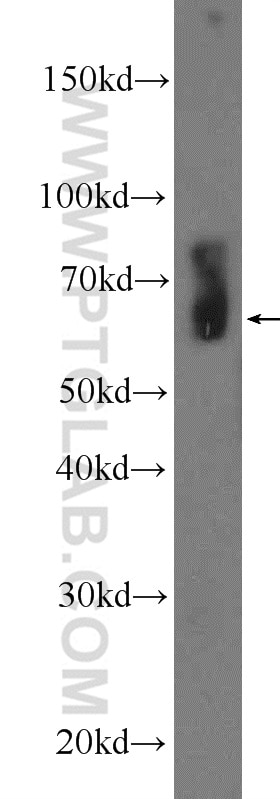
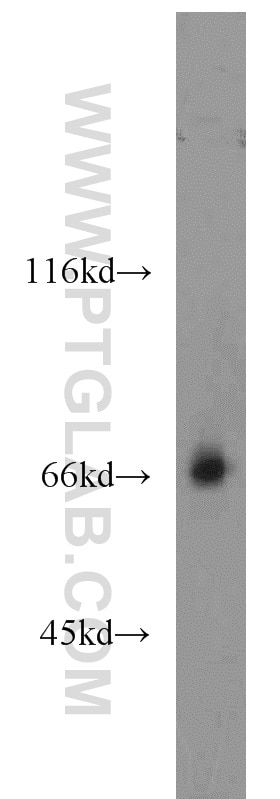
| Positive WB detected in | mouse skeletal muscle tissue, mouse heart tissue, rat skeletal muscle tissue |
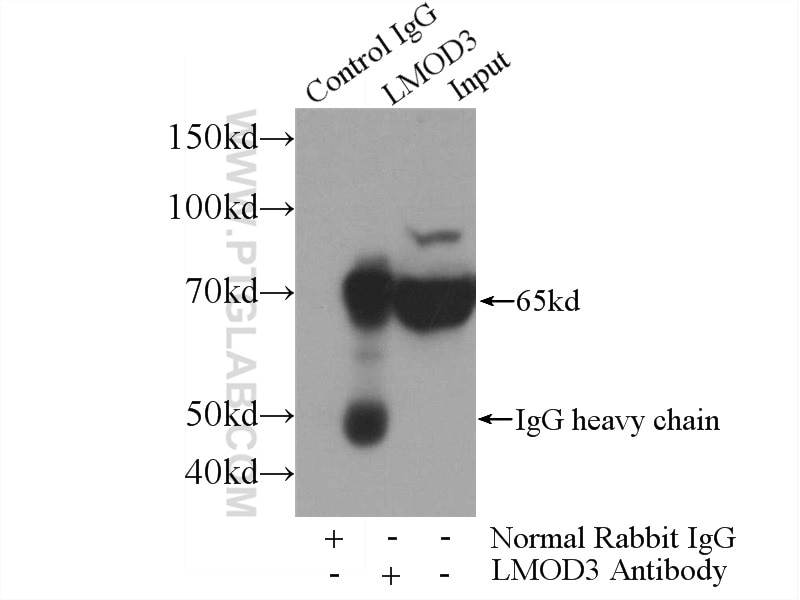
| Positive IP detected in | mouse skeletal muscle tissue |
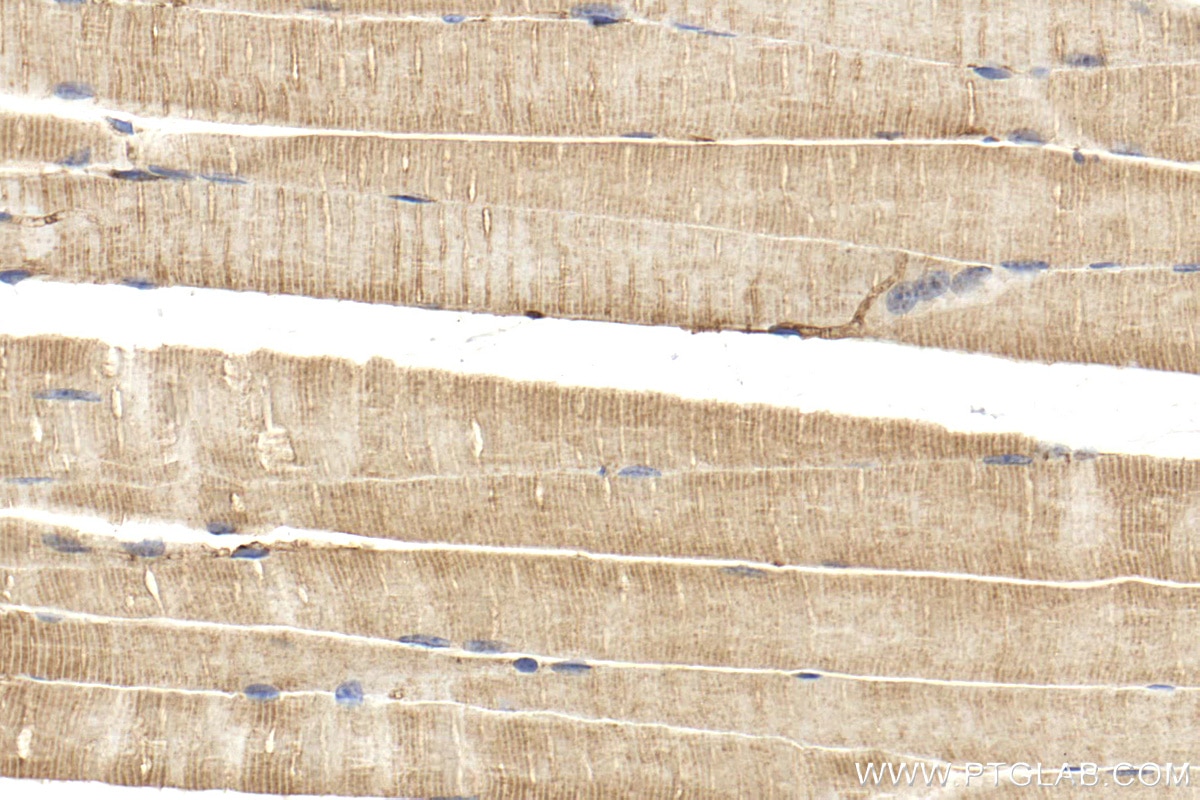
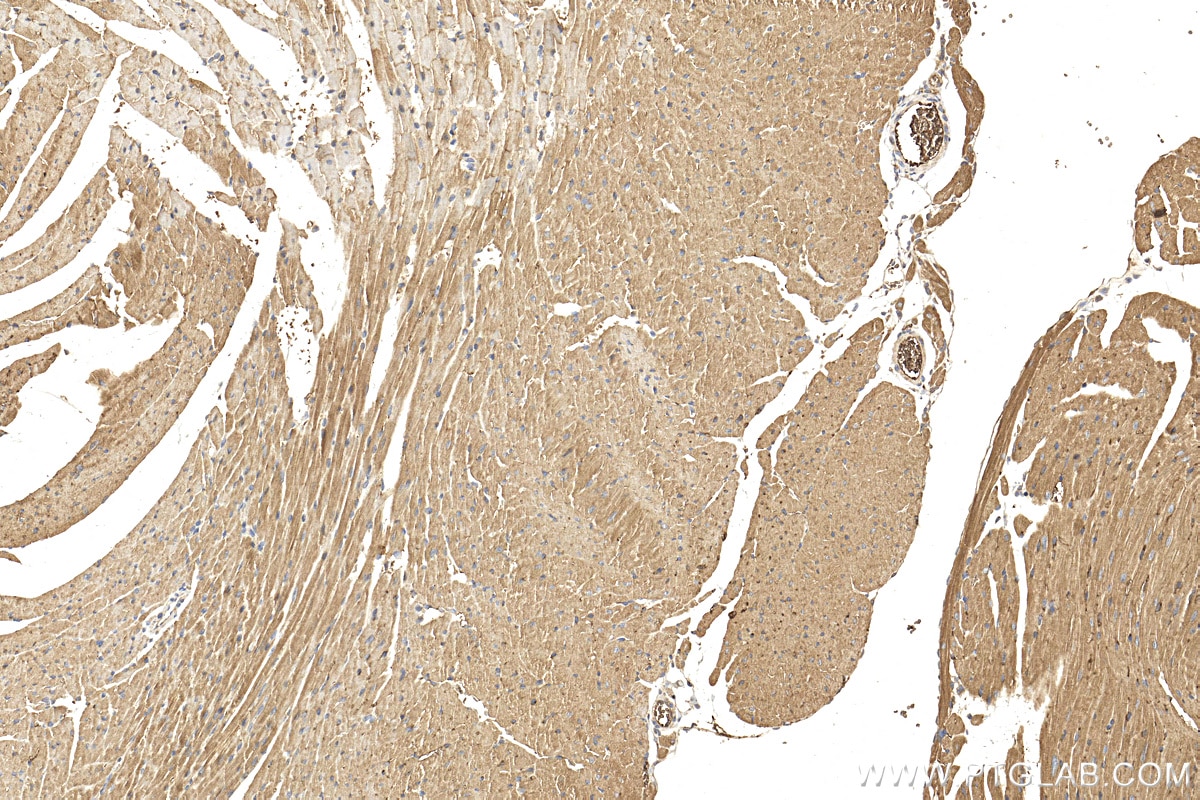
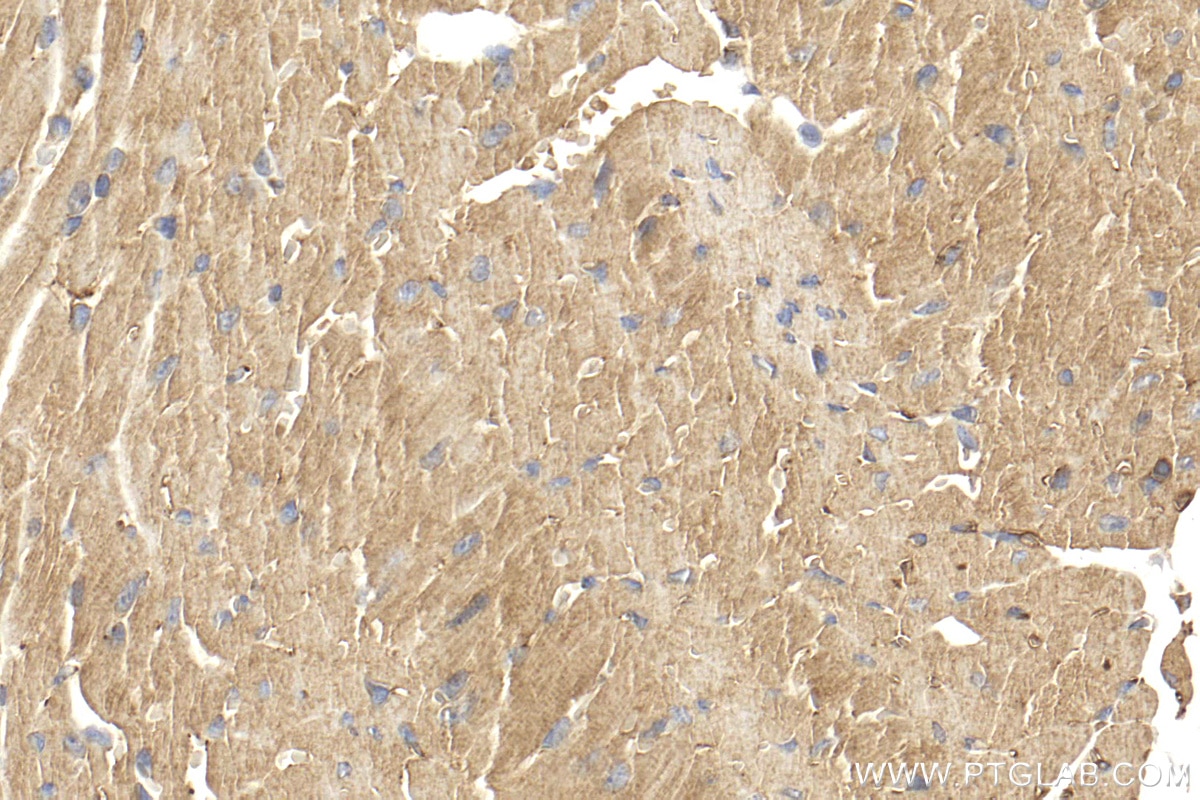
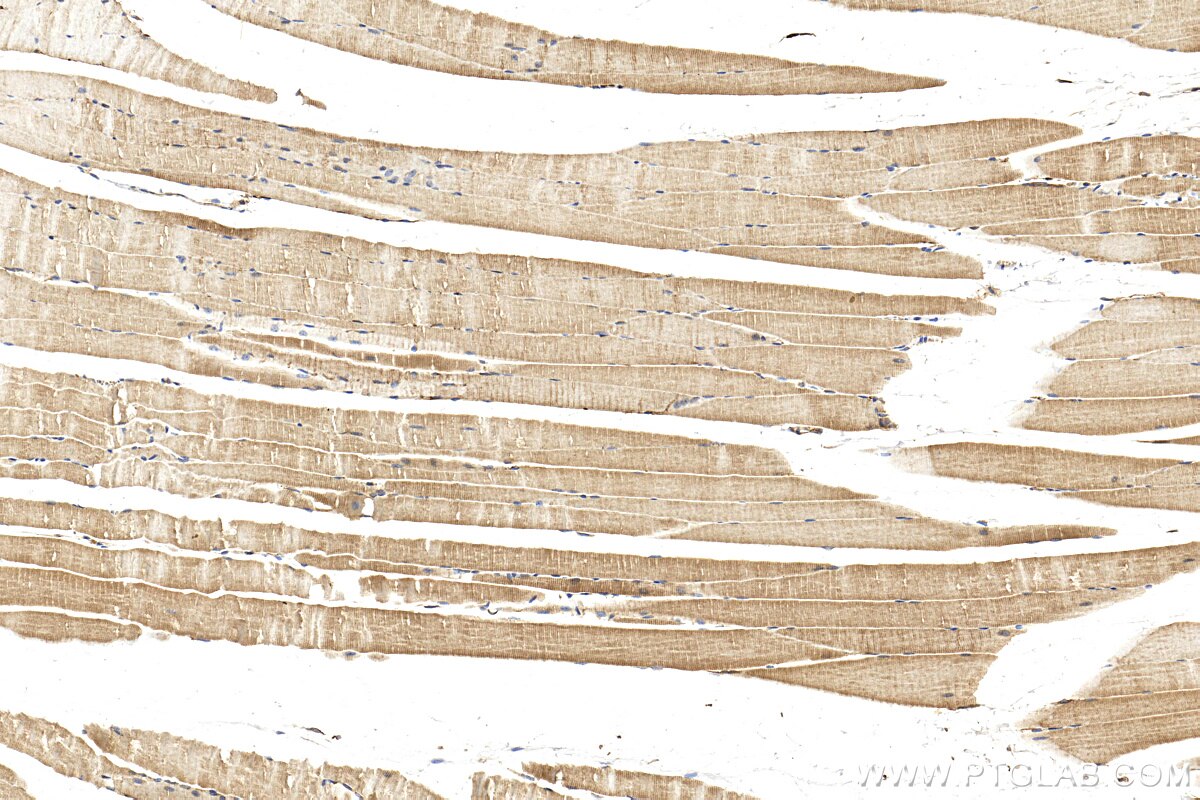
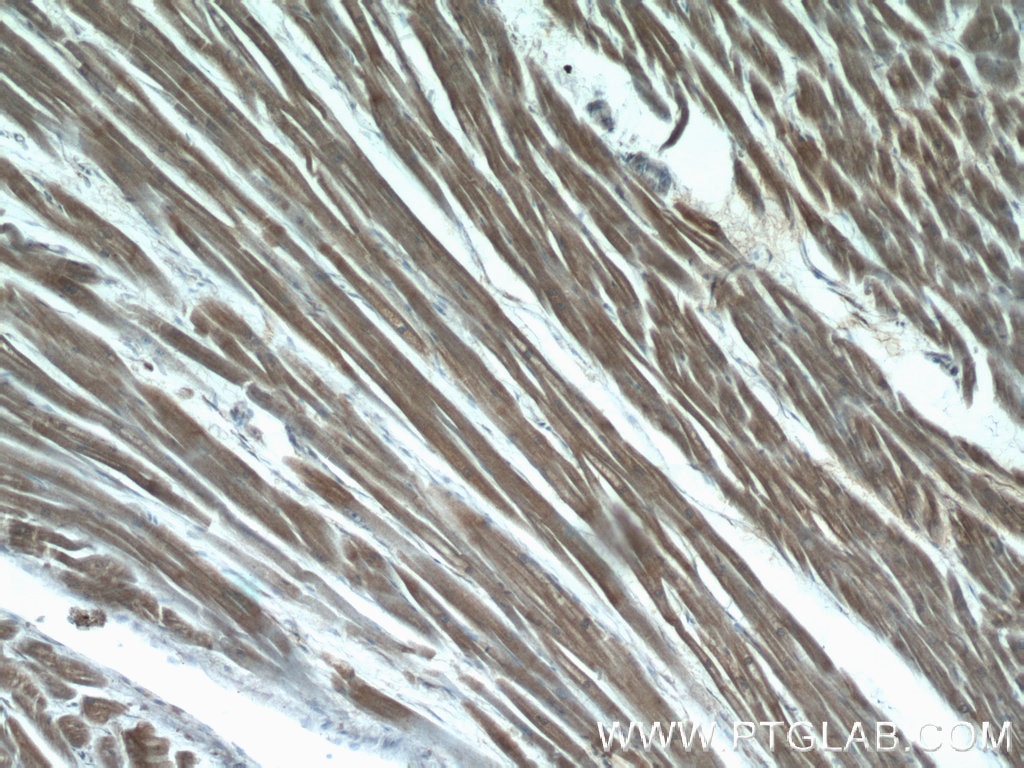
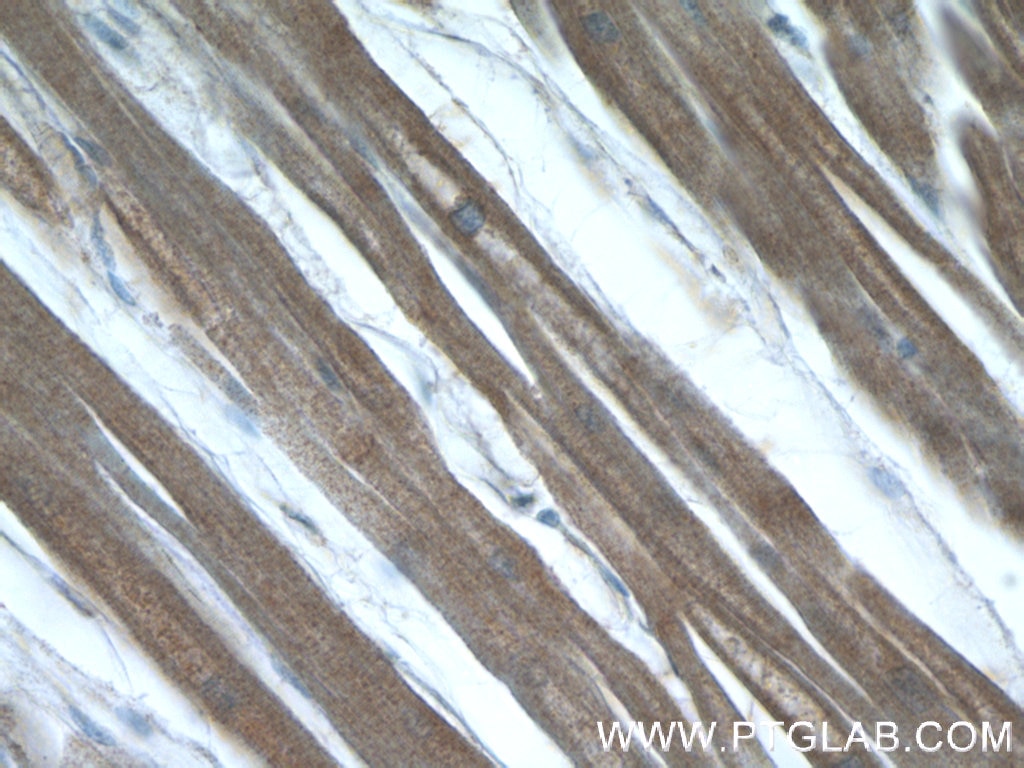
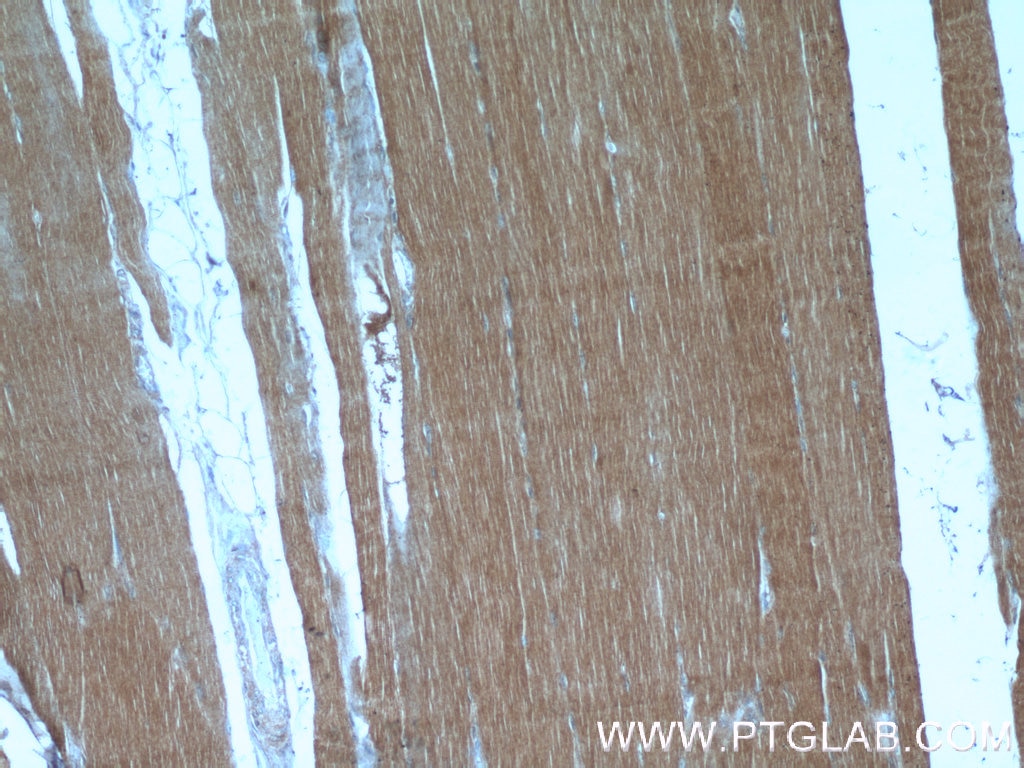
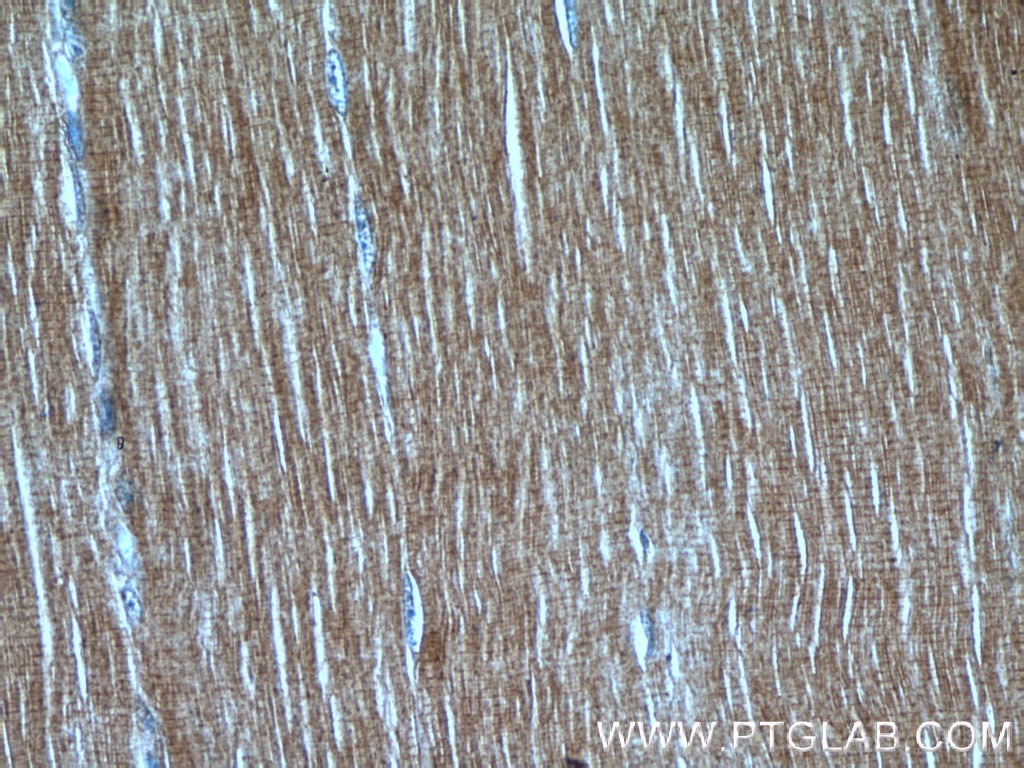
| Positive IHC detected in | mouse skeletal muscle tissue, human heart tissue, human skeletal muscle tissue, mouse heart tissue Note: suggested antigen retrieval with TE buffer pH 9.0; (*) Alternatively, antigen retrieval may be performed with citrate buffer pH 6.0 |
Recommended dilution
| Application | Dilution |
|---|---|
| Western Blot (WB) | WB : 1:2000-1:10000 |
| Immunoprecipitation (IP) | IP : 0.5-4.0 ug for 1.0-3.0 mg of total protein lysate |
| Immunohistochemistry (IHC) | IHC : 1:500-1:2000 |
| It is recommended that this reagent should be titrated in each testing system to obtain optimal results. | |
| Sample-dependent, Check data in validation data gallery. | |
Product Information
14948-1-AP targets LMOD3 in WB, IHC, IF, IP, ELISA applications and shows reactivity with human, mouse, rat samples.
| Tested Reactivity | human, mouse, rat |
| Cited Reactivity | human, mouse, zebrafish, xenopus |
| Host / Isotype | Rabbit / IgG |
| Class | Polyclonal |
| Type | Antibody |
| Immunogen |
CatNo: Ag6758 Product name: Recombinant human LMOD3 protein Source: e coli.-derived, PGEX-4T Tag: GST Domain: 1-236 aa of BC039202 Sequence: MSEHSRNSDQEELDEEINEDEILANLSAEELKELQSEMEVMAPDPSLPVGMIQKDQTDKPPTGNFNHKSLVDYMYWEKASRRMLEEERVPVTFVKSEEKTQEEHEEIEKRNKNMAQYLKEKLNNEIVANKRESKGSSNIQETDEEDEEEEDDDDDDEGEDDGEESEETNREEEGKAKEQIRNCENNCQQVTDKAFKEQRDRPEAQEKKKKKISQGKIIFRKNNVRAQQKFRSRRTR Predict reactive species |
| Full Name | leiomodin 3 (fetal) |
| Calculated Molecular Weight | 65 kDa |
| Observed Molecular Weight | 65-70 kDa |
| GenBank Accession Number | BC039202 |
| Gene Symbol | LMOD3 |
| Gene ID (NCBI) | 56203 |
| RRID | AB_2136690 |
| Conjugate | Unconjugated |
| Form | Liquid |
| Purification Method | Antigen affinity purification |
| UNIPROT ID | Q0VAK6 |
| Storage Buffer | PBS with 0.02% sodium azide and 50% glycerol, pH 7.3. |
| Storage Conditions | Store at -20°C. Stable for one year after shipment. Aliquoting is unnecessary for -20oC storage. 20ul sizes contain 0.1% BSA. |
Background Information
The gene encoding LMOD3 has not been characterized so far and very limited information of its function has been reported. Nanda et al. found that the expression of mouse LMOD3 mRNA is restricted largely to cardiac and skeletal muscle through RT-PCR analysis (PMID: 22157009). Two isoforms of LMOD3 may exist due to the alternative splicing, whose molecular weights are predicted as 65 kDa and 40 kDa, respectively (Uniprot). This antibody was raised against the N-terminal region of human LMOD3. It detects a double bands around 80 kDa and 65 kDa in heart and skeletal muscle lysates. The reason causing the discrepancy between the predicted and observed molecular weight is not clear.
Protocols
| Product Specific Protocols | |
|---|---|
| IHC protocol for LMOD3 antibody 14948-1-AP | Download protocol |
| IP protocol for LMOD3 antibody 14948-1-AP | Download protocol |
| WB protocol for LMOD3 antibody 14948-1-AP | Download protocol |
| Standard Protocols | |
|---|---|
| Click here to view our Standard Protocols |
Publications
What published studies show
The LMOD3 Polyclonal antibody (Cat# 14948-1-AP) has 20 citations published in journals including Cell Stem Cell, J Clin Invest, Sci Adv, PNAS, NPJ Regen Med, Eur J Hum Genet, J Sleep Res, J Neurosci, Development, J Cell Sci, BMC Genomics, PLoS Genet, Methods, Biochimie, and eLife. Research fields span skeletal muscle myopathy, thin-filament biology, dilated cardiomyopathy, cochlear/auditory development, actin regulation, and pluripotent stem cell organoid generation.
| Species | Application | Title |
|---|---|---|
Cell Stem Cell Generating high-fidelity cochlear organoids from human pluripotent stem cells | ||
J Clin Invest KLHL40 deficiency destabilizes thin filament proteins and promotes nemaline myopathy. | ||
J Clin Invest Leiomodin-3 dysfunction results in thin filament disorganization and nemaline myopathy. | ||
J Clin Invest Severe myopathy in mice lacking the MEF2/SRF-dependent gene leiomodin-3.
| ||
J Clin Invest Leiomodin-3 dysfunction results in thin filament disorganization and nemaline myopathy. | ||
Reviews
What customers say
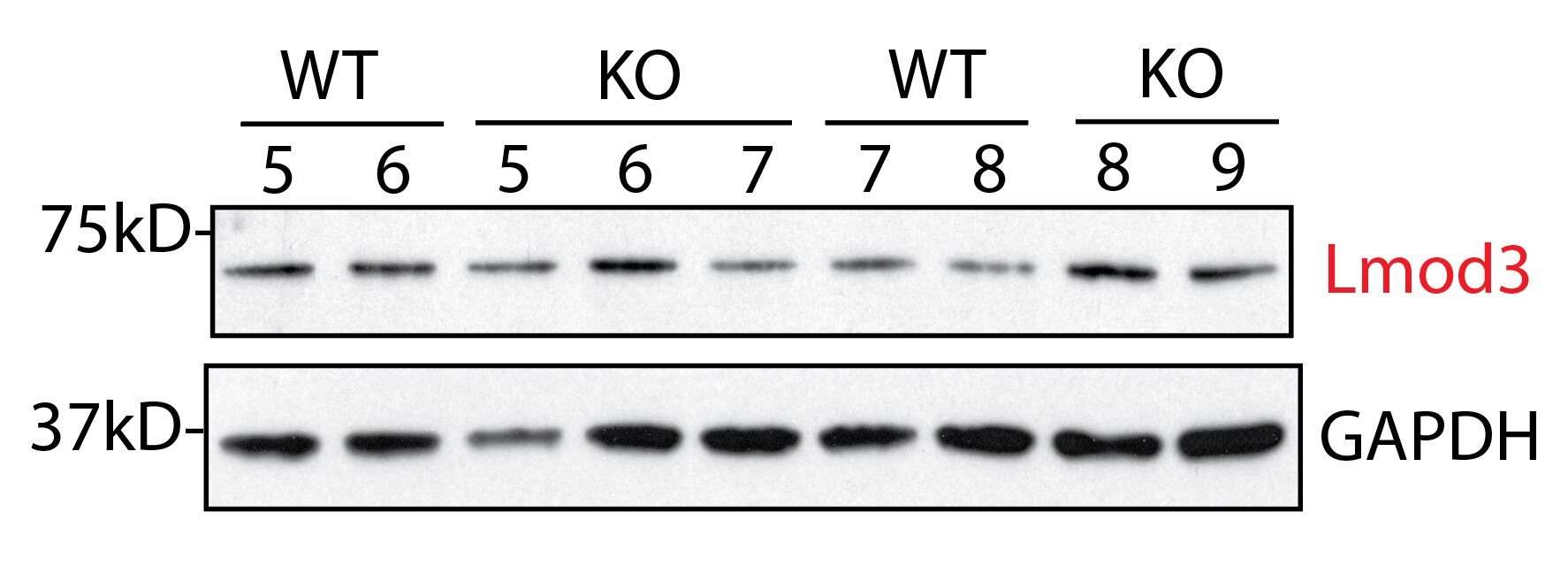
The single review for this antibody is a 5-star rating from a Western Blot application on heart tissue at a 1:1000 dilution. The user reported the antibody to be very specific, producing a single Lmod3 band at approximately 70 kD. They further noted that the Western blot results using this antibody were published in a peer-reviewed PNAS paper, indicating reliable and publication-grade performance.
The reviews below have been submitted by verified Proteintech customers who received an incentive for providing their feedback.
Tongbin (Verified Customer) (08-25-2020) | This antibody is very specific. I had a single Lmod3 band at around 70kD. Western blot results of this antibody had been published in our PNAS paper (PMID: 29078393)
 |













