



Tested Applications
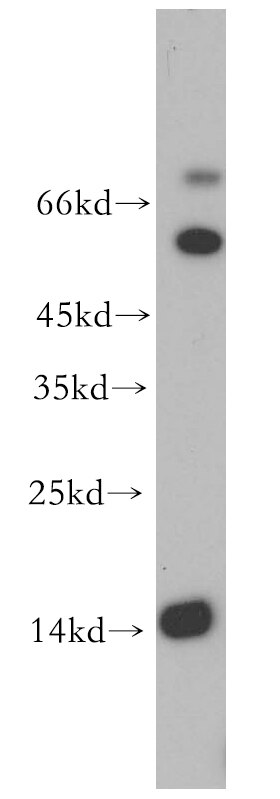
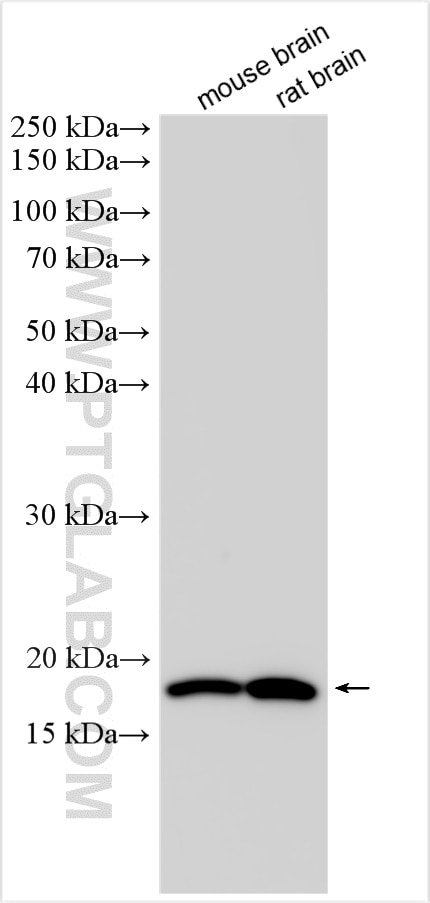
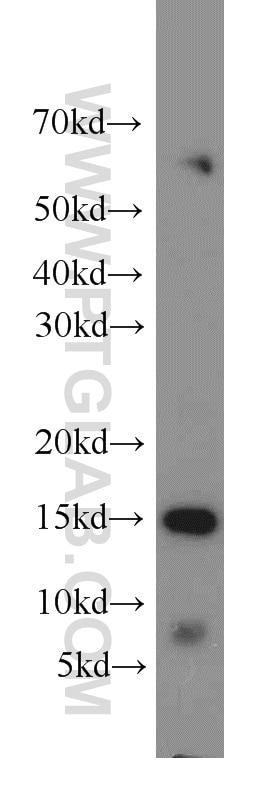
| Positive WB detected in | mouse brain tissue, human brain tissue, rat brain tissue |
| Positive IHC detected in | human breast cancer tissue Note: suggested antigen retrieval with TE buffer pH 9.0; (*) Alternatively, antigen retrieval may be performed with citrate buffer pH 6.0 |
Recommended dilution
| Application | Dilution |
|---|---|
| Western Blot (WB) | WB : 1:5000-1:50000 |
| Immunohistochemistry (IHC) | IHC : 1:50-1:500 |
| It is recommended that this reagent should be titrated in each testing system to obtain optimal results. | |
| Sample-dependent, Check data in validation data gallery. | |
Product Information
18722-1-AP targets LC3A-Specific in WB, IHC, IF, ELISA applications and shows reactivity with human, mouse, rat samples.
| Tested Reactivity | human, mouse, rat |
| Cited Reactivity | human, mouse, rat, zebrafish |
| Host / Isotype | Rabbit / IgG |
| Class | Polyclonal |
| Type | Antibody |
| Immunogen |
Peptide Predict reactive species |
| Full Name | microtubule-associated protein 1 light chain 3 alpha |
| Calculated Molecular Weight | 14 kDa |
| Observed Molecular Weight | 15-18 kDa |
| GenBank Accession Number | NM_032514 |
| Gene Symbol | LC3 |
| Gene ID (NCBI) | 84557 |
| RRID | AB_10597104 |
| Conjugate | Unconjugated |
| Form | Liquid |
| Purification Method | Antigen affinity purification |
| UNIPROT ID | Q9H492 |
| Storage Buffer | PBS with 0.02% sodium azide and 50% glycerol, pH 7.3. |
| Storage Conditions | Store at -20°C. Stable for one year after shipment. Aliquoting is unnecessary for -20oC storage. 20ul sizes contain 0.1% BSA. |
Background Information
LC3A, also named as MAP1LC3A, LC3, MAP1ALC3 and MAP1BLC3, belongs to the MAP1 LC3 family. LC3A is one of the light chain subunits and can associate with either MAP1A or MAP1B, which are microtubule-associated proteins that mediate the physical interactions between microtubules and components of the cytoskeleton. In cell biology, autophagy, or autophagocytosis, is a catabolic process involving the degradation of a cell's components through the lysosomalmachinery. It is a major mechanism by which a starving cell reallocates nutrients from unnecessary processes to more-essential processes. Two forms of LC3, called LC3-I (17-19kd) and -II(14-16kd), were produced post-translationally in various cells. LC3-I is cytosolic, whereas LC3-II is membrane bound. The precursor molecule is cleaved by APG4B/ATG4B to form the cytosolic form, LC3-I. This is activated by APG7L/ATG7, transferred to ATG3 and conjugated to phospholipid to form the membrane-bound form, LC3-II. The amount of LC3-II is correlated with the extent of autophagosome formation. LC3-II is the first mammalian protein identified that specifically associates with autophagosome membranes. (PMID:11060023) MAP1LC3 has 3 isoforms MAP1LC3A, MAP1LC3B and MAP1LC3C. MAP1LC3A and MAP1LC3C are produced by the proteolytic cleavage after the conserved C-terminal Gly residue, like their rat counterpart, MAP1LC3B does not undergo C-terminal cleavage and exists in a single modified form.(PMID:12740394 ) This antibody is specific to LC3A.
Protocols
| Product Specific Protocols | |
|---|---|
| IHC protocol for LC3A-Specific antibody 18722-1-AP | Download protocol |
| WB protocol for LC3A-Specific antibody 18722-1-AP | Download protocol |
| Standard Protocols | |
|---|---|
| Click here to view our Standard Protocols |
Publications
What published studies show
Anti-LC3 antibody (Cat# 18722-1-AP) has accumulated 19 citations across 18 journals including Autophagy, Developmental Cell, Translational Psychiatry, Journal of Immunology, Oxidative Medicine and Cellular Longevity, and Marine Drugs. Research fields span autophagy, apoptosis, oxidative stress, cancer (breast, gastric, lung, glioma), neurology (depression, stroke, cognitive impairment), cardiology, immunology, and mitophagy. Applications are predominantly Western blot, with some IF and IHC.
| Species | Application | Title |
|---|---|---|
Autophagy Advancing targeted protein degradation: pLIRTAC's role in glioma and CAR-T cell therapy.
| ||
Dev Cell TM9SF3 is a Golgi-resident ATG8-binding protein essential for Golgi-selective autophagy | ||
Phytother Res 6-Methoxydihydrosanguinarine induces apoptosis and autophagy in breast cancer MCF-7 cells by accumulating ROS to suppress the PI3K/AKT/mTOR signaling pathway | ||
Transl Psychiatry Does decreased autophagy and dysregulation of LC3A in astrocytes play a role in major depressive disorder | ||
Oxid Med Cell Longev Imbalance of Autophagy and Apoptosis Induced by Oxidative Stress May Be Involved in Thyroid Damage Caused by Sleep Deprivation in Rats. | ||
Oxid Med Cell Longev Autophagy Triggered by Oxidative Stress Appears to Be Mediated by the AKT/mTOR Signaling Pathway in the Liver of Sleep-Deprived Rats. |





