
Recombinant Human BNP protein (His Tag)
Species
Human
Purity
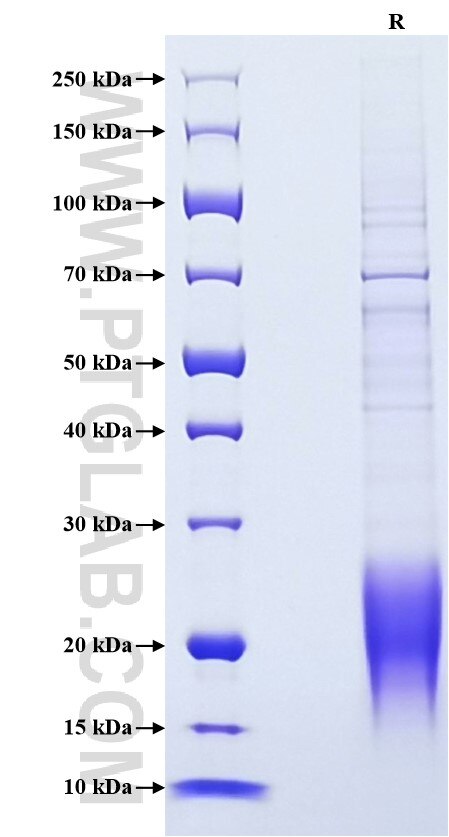
>90 %, SDS-PAGE
Tag
His Tag
Activity
not tested
Cat no : Eg1029
Validation Data Gallery
Product Information
| Purity | >90 %, SDS-PAGE |
| Endotoxin | <0.1 EU/μg protein, LAL method |
| Activity |
Not tested |
| Expression | HEK293-derived Human BNP protein His27-His134 (Accession# P16860) with a his tag at the N-terminus. |
| GeneID | 4879 |
| Accession | P16860 |
| PredictedSize | 13.0 kDa |
| SDS-PAGE | 16-26 kDa, reducing (R) conditions |
| Formulation | Lyophilized from 0.22 μm filtered solution in 20 mM Tris, 150 mM NaCl, pH 7.4. Normally 5% trehalose and 5% mannitol are added as protectants before lyophilization. |
| Reconstitution | Briefly centrifuge the tube before opening. Reconstitute at 0.1-0.5 mg/mL in sterile water. |
| Storage Conditions |
It is recommended that the protein be aliquoted for optimal storage. Avoid repeated freeze-thaw cycles.
|
| Shipping | The product is shipped at ambient temperature. Upon receipt, store it immediately at the recommended temperature. |
Background
NPPB, also known as B-type natriuretic peptide (BNP), is a cardiac hormone that is secreted mainly in the ventricles in response to increased wall stress. The protein undergoes two cleavage events, one within the cell and a second after secretion into the blood. The protein's biological actions include natriuresis, diuresis, vasorelaxation, inhibition of renin and aldosterone secretion, and a key role in cardiovascular homeostasis. BNP is a marker of systolic and diastolic dysfunction and a strong predictor of mortality in heart failure patients.
References:
1. K J Koller, et al. (1991) Science. 252(5002):120-3.
2. Denise M Heublein, et al. (2007) Hypertension. 49(5):1114-9.
3. Brenda K Huntley, et al. (2015) Circ Heart Fail. 8(1):89-97.