
Recombinant Human CXCR3 protein (rFc Tag)
Species
Human
Purity
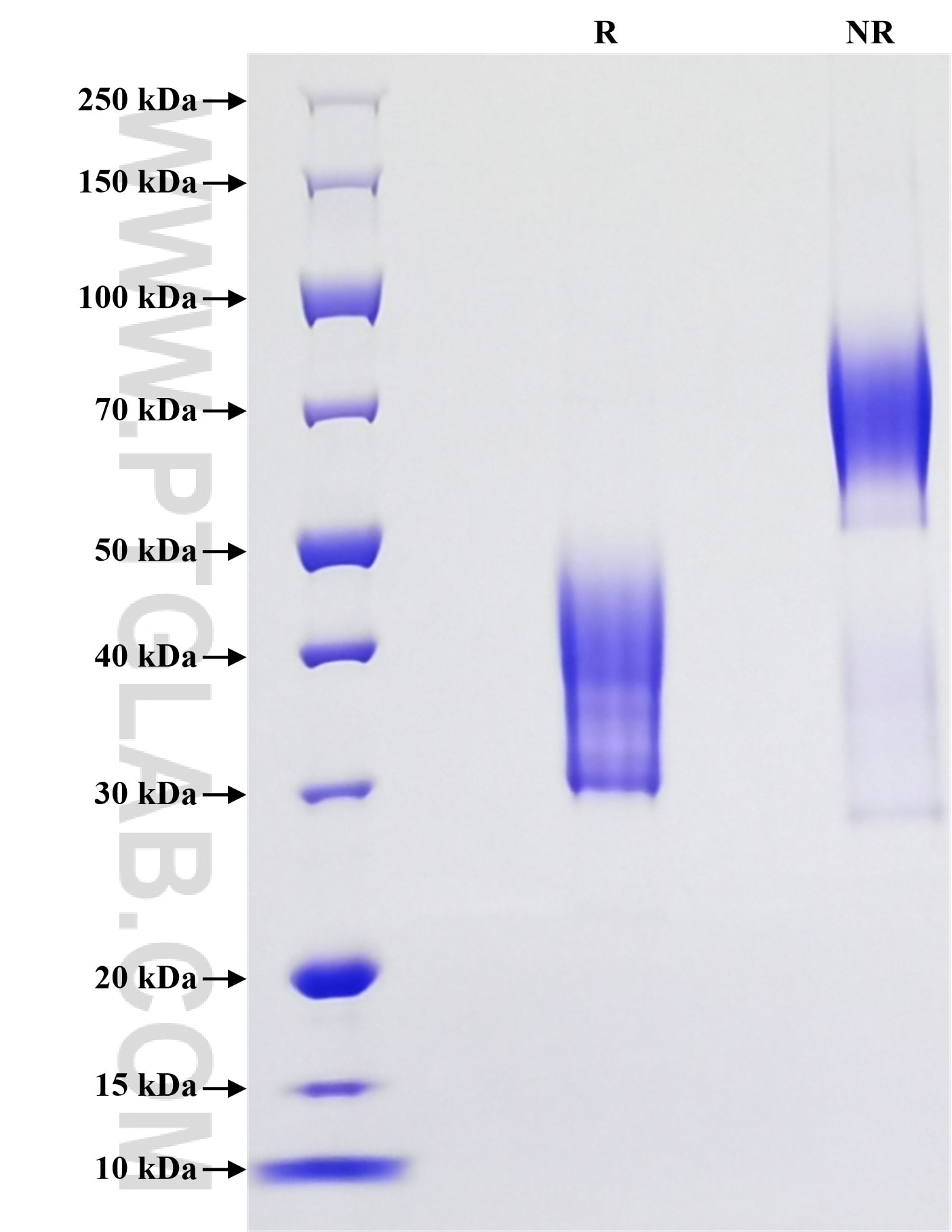
>90 %, SDS-PAGE
Tag
rFc Tag
Activity
not tested
Cat no : Eg2269
Validation Data Gallery
Product Information
| Purity | >90 %, SDS-PAGE |
| Endotoxin | <0.1 EU/μg protein, LAL method |
| Activity |
Not tested |
| Expression | HEK293-derived Human CXCR3 protein Met1-Arg53 (Accession# P49682-1) with a rabbit IgG Fc tag at the C-terminus. |
| GeneID | 2833 |
| Accession | P49682-1 |
| PredictedSize | 32.2 kDa |
| SDS-PAGE | 30-48 kDa, reducing (R) conditions |
| Formulation | Lyophilized from 0.22 μm filtered solution in 50 mM HEPES,150 mM NaCl, pH 7.5. Normally 5% trehalose and 5% mannitol are added as protectants before lyophilization. |
| Reconstitution | Briefly centrifuge the tube before opening. Reconstitute at 0.1-0.5 mg/mL in sterile water. |
| Storage Conditions |
It is recommended that the protein be aliquoted for optimal storage. Avoid repeated freeze-thaw cycles.
|
| Shipping | The product is shipped at ambient temperature. Upon receipt, store it immediately at the recommended temperature. |
Background
CXCR3 (C-X-C chemokine receptor type 3) is a G protein-coupled, seven-transmembrane domain chemokine receptor that is expressed on the surface of several cell types, including activated CD4+ and CD8+ T cells, NK and NK-T cells, plasmacytoid dendritic cells, and some B cells. CXCR3 binds and is activated by the three IFN-gamma-inducible chemokines: CXCL9, CXCL10, and CXCL11. The binding of these ligands to CXCR3 has been implicated in regulating T-cell infiltration during inflammation and tissue injury. Alternatively, spliced transcript variants encoding different isoforms have been found for this gene. One of the isoforms, CXCR3B, mediates the angiostatic activity of CXCR3 ligands and also acts as a functional receptor for CXCL4.
References:
1. Colvin, Richard A et al. Molecular and cellular biology vol. 26,15 (2006): 5838-49.
2. Dar, Wasim A, and Stuart J Knechtle. Immunology vol. 120,4 (2007): 467-85.
3. Lasagni, Laura et al. The Journal of experimental medicine vol. 197,11 (2003): 1537-49.