
Recombinant Human PLAP protein (rFc Tag)
Species
Human
Purity
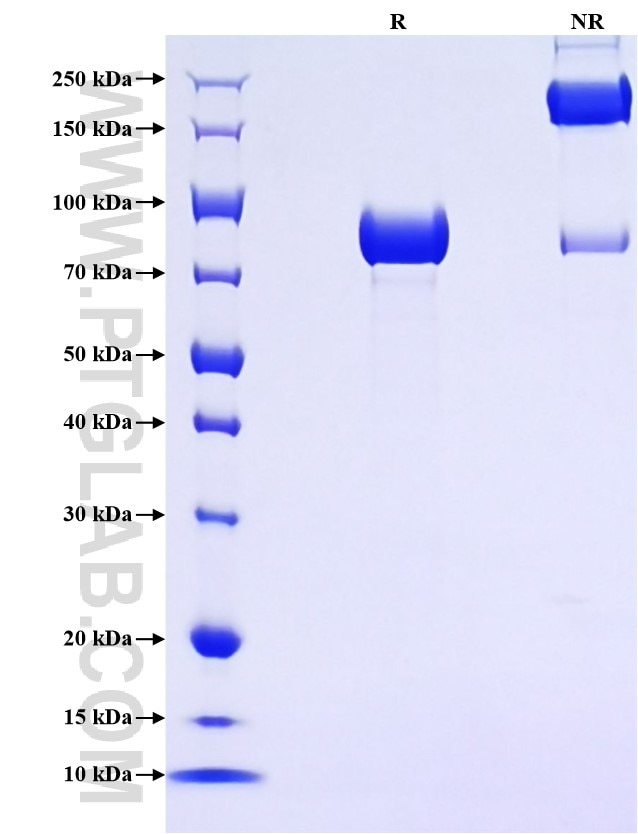
>90 %, SDS-PAGE
Tag
rFc Tag
Activity
not tested
Cat no : Eg3065
Validation Data Gallery
Product Information
| Purity | >90 %, SDS-PAGE |
| Endotoxin | <0.1 EU/μg protein, LAL method |
| Activity |
Not tested |
| Expression | HEK293-derived Human PLAP protein Ile23-Asp506 (Accession# P05187) with a rabbit IgG Fc tag at the C-terminus. |
| GeneID | 250 |
| Accession | P05187 |
| PredictedSize | 78.8 kDa |
| SDS-PAGE | 72-95 kDa, reducing (R) conditions |
| Formulation | Lyophilized from 0.22 μm filtered solution in PBS, pH 7.4. Normally 5% trehalose and 5% mannitol are added as protectants before lyophilization. |
| Reconstitution | Briefly centrifuge the tube before opening. Reconstitute at 0.1-0.5 mg/mL in sterile water. |
| Storage Conditions |
It is recommended that the protein be aliquoted for optimal storage. Avoid repeated freeze-thaw cycles.
|
| Shipping | The product is shipped at ambient temperature. Upon receipt, store it immediately at the recommended temperature. |
Background
ALPP (Alkaline Phosphatase, Placental Type) is an alkaline phosphatase (ALP) isoenzyme, a heat-stable enzyme, which is highly abundant in the placenta. It is a membrane-bound glycoprotein that catalyzes the hydrolysis of monoesters of phosphoric acid at alkaline pH, and zinc and magnesium are important cofactors for ALPP. ALPP expression is highly restricted in normal tissues, but their expression levels are elevated in certain cancer types, making them potential targets with tumor specificity.
References:
1. Wennberg C,et al. Hum Mutat. 2002;19(3):258-67.
2. Niida T, et al. J Thromb Thrombolysis. 2024;57(2):204-211.
3. Bellazi L, et al. Placenta. 2010;31(9):764-9.