
Recombinant Rat NCAM-1/CD56 protein (rFc Tag)(HPLC verified)
Species
Rat
Purity
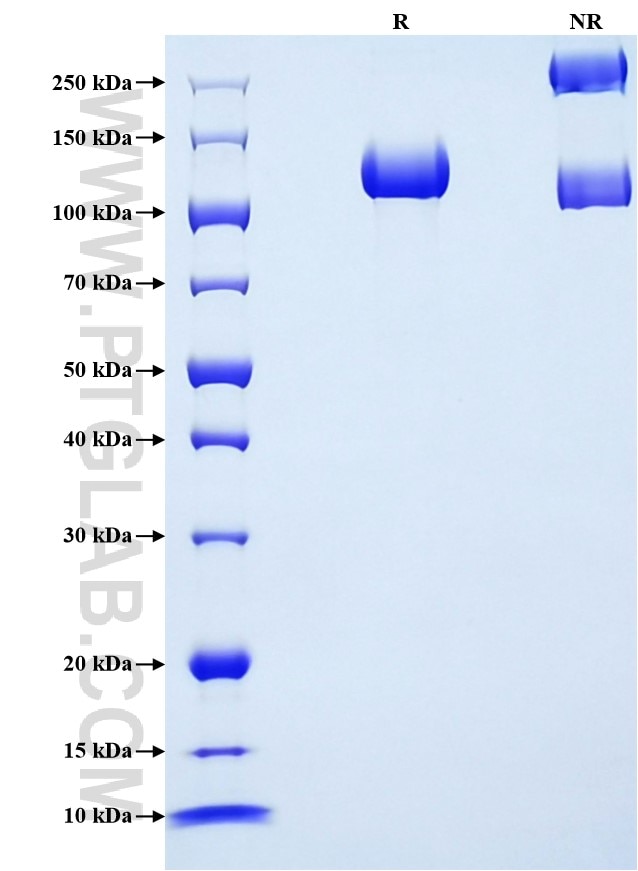
>90 %, SDS-PAGE
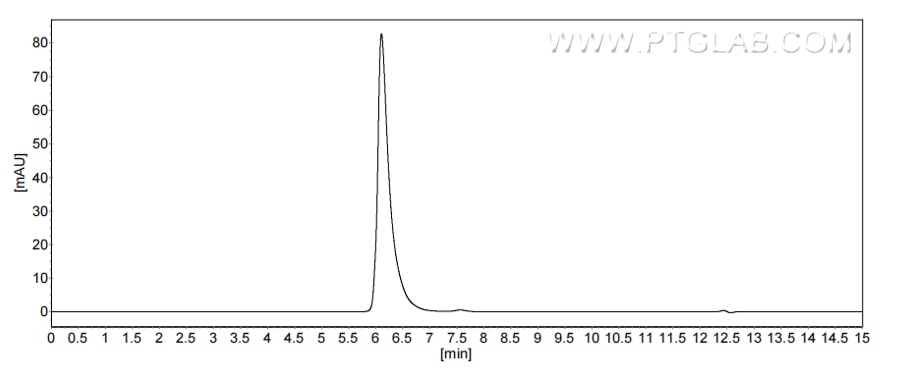
>90%, SEC-HPLC
Tag
rFc Tag
Activity
not tested
Cat no : Eg3243
Validation Data Gallery
Product Information
| Purity | >90 %, SDS-PAGE >90%, SEC-HPLC |
| Endotoxin | <0.1 EU/μg protein, LAL method |
| Activity |
Not tested |
| Expression | HEK293-derived Rat NCAM-1 protein Leu20-Thr721 (Accession# P13596-1) with a rabbit IgG Fc tag at the C-terminus. |
| GeneID | 24586 |
| Accession | P13596-1 |
| PredictedSize | 104.0 kDa |
| SDS-PAGE | 120-130 kDa, reducing (R) conditions |
| Formulation | Lyophilized from 0.22 μm filtered solution in PBS, pH 7.4. Normally 5% trehalose and 5% mannitol are added as protectants before lyophilization. |
| Reconstitution | Briefly centrifuge the tube before opening. Reconstitute at 0.1-0.5 mg/mL in sterile water. |
| Storage Conditions |
It is recommended that the protein be aliquoted for optimal storage. Avoid repeated freeze-thaw cycles.
|
| Shipping | The product is shipped at ambient temperature. Upon receipt, store it immediately at the recommended temperature. |
Background
NCAM-1 (Neural Cell Adhesion Molecule 1), also known as CD56, is a cell-surface glycoprotein that is a member of the immunoglobulin superfamily and expresses three isoforms at 120, 140, and 180 kDa. NCAM-1 plays a role in cell development and differentiation as well as in immune surveillance, and is involved in the regulation of cellular adhesion and survival, intracellular signaling, cytoskeletal dynamics, neurological development, synaptic plasticity, learning and memory, and immune surveillance. It plays a role in signal transduction by interacting with fibroblast growth factor receptor, N-calmodulin and activating the signaling cascade of FAK, MAPK, and PI3K.Abnormal NCAM-1 expression is seen in a range of hematological malignancies including multiple myeloma and leukemias, and solid tumors, such as lung cancer, ovarian cancer, and neuroblastoma.
References:
1. Chu CS, et al. (2018) Psychiatry Investig.15(7):727-732.
2. Sasca D, et al. (2019) Blood. 133(21):2305-2319.