

Tested Applications
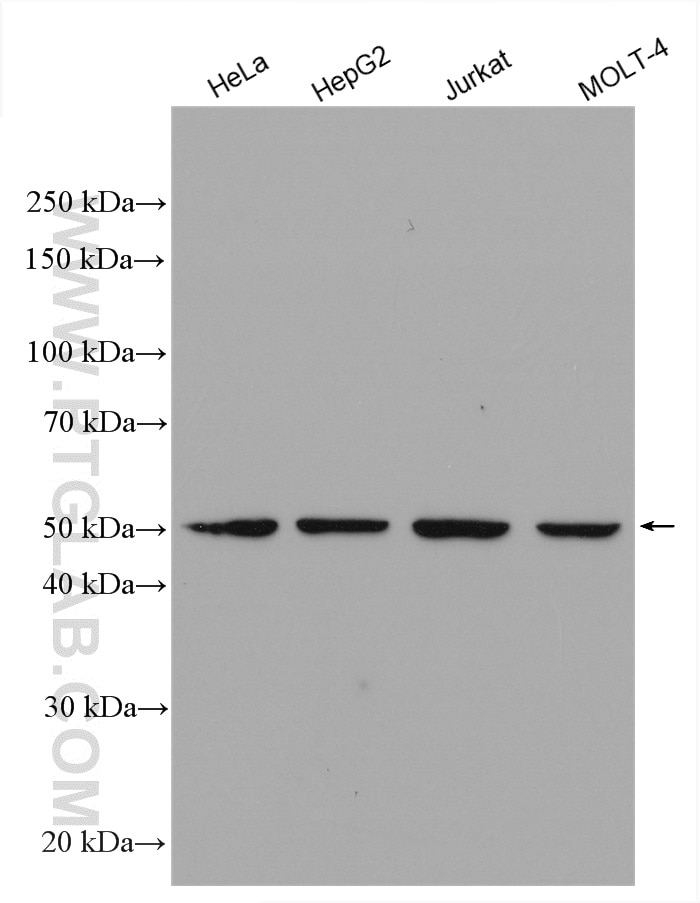
| Positive WB detected in | HeLa cells, HepG2 cells, Jurkat cells, MOLT-4 cells |
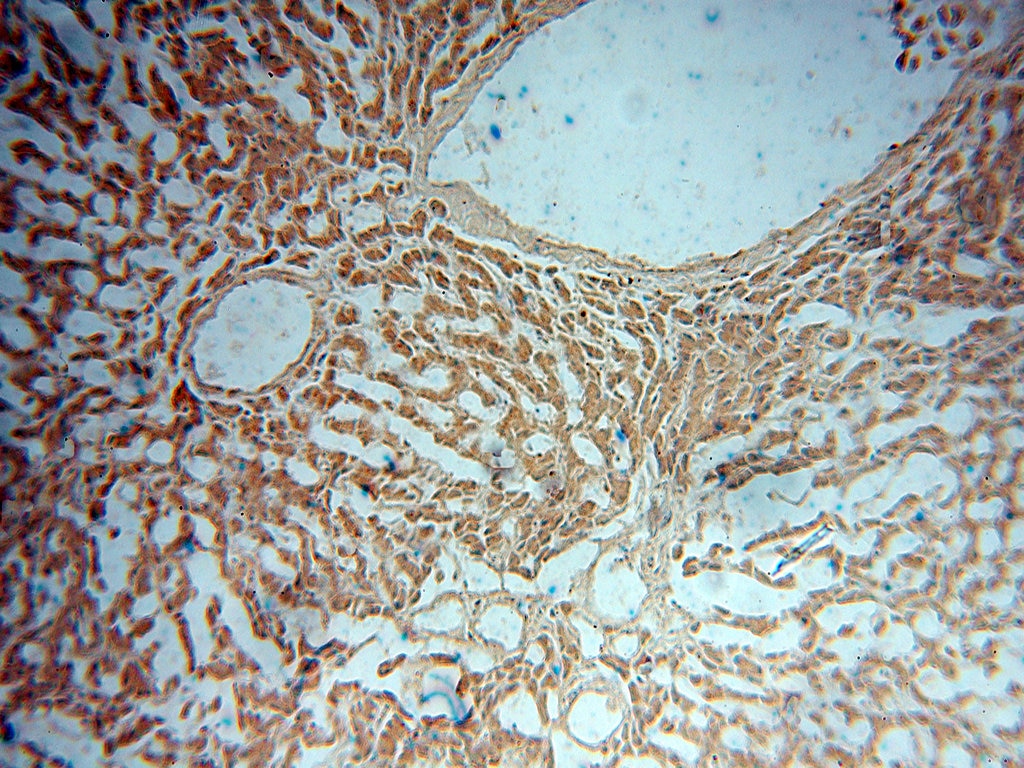
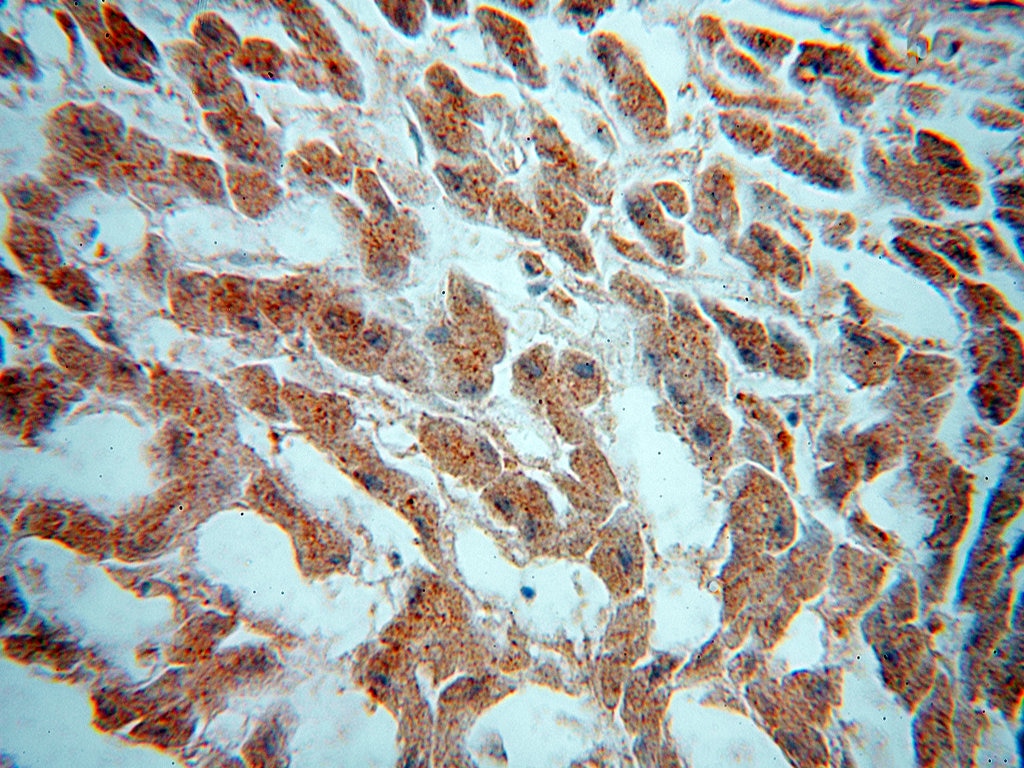
| Positive IHC detected in | human liver tissue Note: suggested antigen retrieval with TE buffer pH 9.0; (*) Alternatively, antigen retrieval may be performed with citrate buffer pH 6.0 |
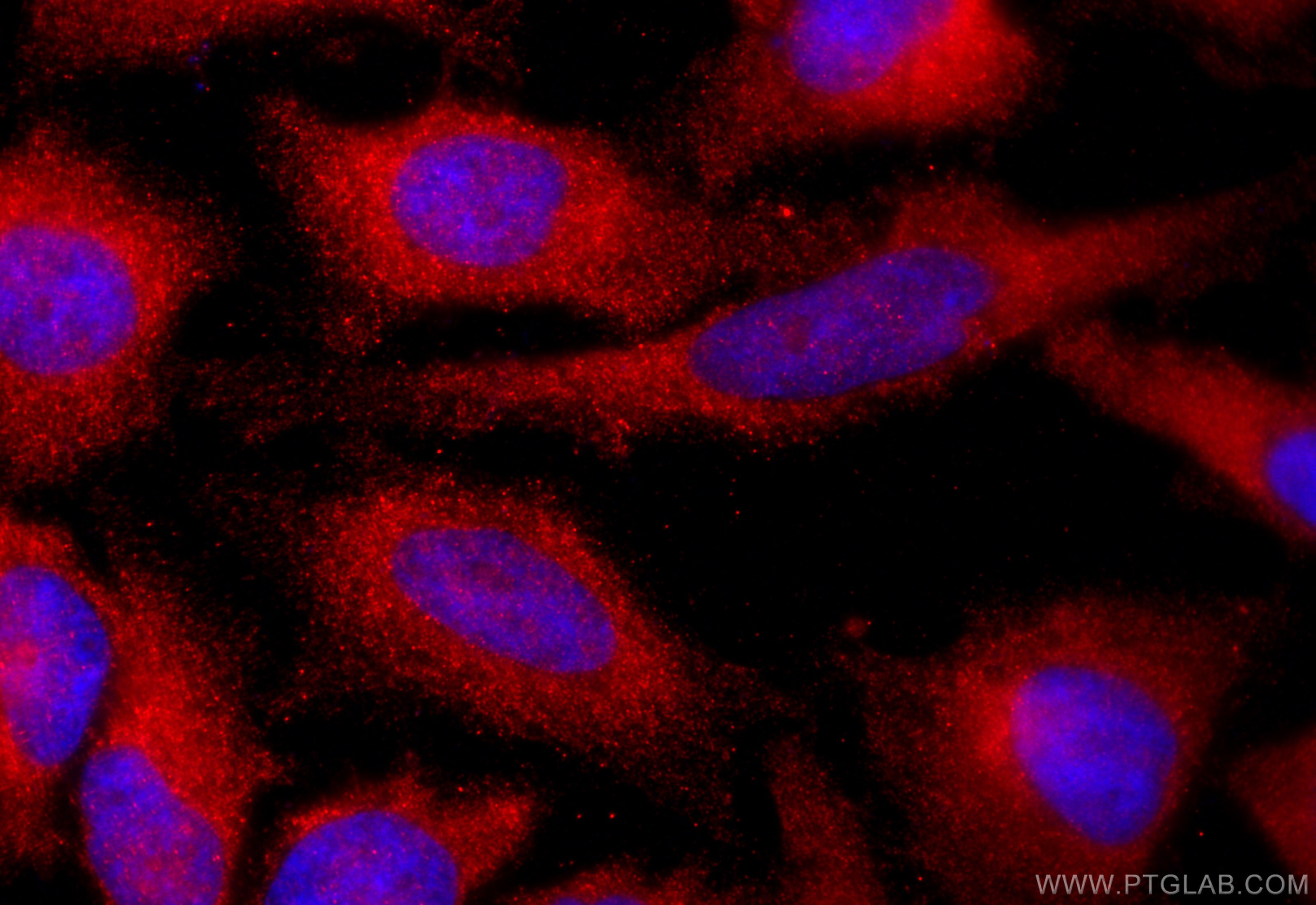
| Positive IF/ICC detected in | HeLa cells |
Recommended dilution
| Application | Dilution |
|---|---|
| Western Blot (WB) | WB : 1:500-1:2000 |
| Immunohistochemistry (IHC) | IHC : 1:20-1:200 |
| Immunofluorescence (IF)/ICC | IF/ICC : 1:50-1:500 |
| It is recommended that this reagent should be titrated in each testing system to obtain optimal results. | |
| Sample-dependent, Check data in validation data gallery. | |
Product Information
15639-1-AP targets ADPGK in WB, IHC, IF/ICC, ELISA applications and shows reactivity with human, mouse, rat samples.
| Tested Reactivity | human, mouse, rat |
| Cited Reactivity | human, mouse |
| Host / Isotype | Rabbit / IgG |
| Class | Polyclonal |
| Type | Antibody |
| Immunogen |
CatNo: Ag8105 Product name: Recombinant human ADPGK protein Source: e coli.-derived, PGEX-4T Tag: GST Domain: 148-497 aa of BC006112 Sequence: EFPGAQHYVGGNAALIGQKFAANSDLKVLLCGPVGPKLHELLDDNVFVPPESLQEVDEFHLILEYQAGEEWGQLKAPHANRFIFSHDLSNGAMNMLEVFVSSLEEFQPDLVVLSGLHMMEGQSKELQRKRLLEVVTSISDIPTGIPVHLELASMTNRELMSSIVHQQVFPAVTSLGLNEQELLFLTQSASGPHSSLSSWNGVPDVGMVSDILFWILKEHGRSKSRASDLTRIHFHTLVYHILATVDGHWANQLAAVAAGARVAGTQACATETIDTSRVSLRAPQEFMTSHSEAGSRIVLNPNKPVVEWHREGISFHFTPVLVCKDPIRTVGLGDAISAEGLFYSEVHPHY Predict reactive species |
| Full Name | ADP-dependent glucokinase |
| Calculated Molecular Weight | 497 aa, 54 kDa |
| Observed Molecular Weight | 51 kDa |
| GenBank Accession Number | BC006112 |
| Gene Symbol | ADPGK |
| Gene ID (NCBI) | 83440 |
| RRID | AB_2224911 |
| Conjugate | Unconjugated |
| Form | Liquid |
| Purification Method | Antigen affinity purification |
| UNIPROT ID | Q9BRR6 |
| Storage Buffer | PBS with 0.02% sodium azide and 50% glycerol, pH 7.3. |
| Storage Conditions | Store at -20°C. Stable for one year after shipment. Aliquoting is unnecessary for -20oC storage. 20ul sizes contain 0.1% BSA. |
Background Information
ADP-dependent glucokinase (ADPGK) has frst been described 1994 in hyperthermophilic archaea as a novel glucose-phosphorylating enzyme dependent on ADP (adenosine diphosphate) instead of ATP (adenosine triphosphate). Highest ADPGK expression is found in immune cells of both myeloid and lymphoid lineages. Catalyzes the phosphorylation of D-glucose to D-glucose 6-phosphate using ADP as the phosphate donor. GDP and CDP can replace ADP, but with reduced efficiency (By similarity).
Protocols
| Product Specific Protocols | |
|---|---|
| IF protocol for ADPGK antibody 15639-1-AP | Download protocol |
| IHC protocol for ADPGK antibody 15639-1-AP | Download protocol |
| WB protocol for ADPGK antibody 15639-1-AP | Download protocol |
| Standard Protocols | |
|---|---|
| Click here to view our Standard Protocols |
Publications
What published studies show
The ADPGK Polyclonal antibody (Cat# 15639-1-AP) has 7 total citations across journals including Biomaterials, Oncogenesis, Frontiers in Molecular Neuroscience, Journal of Clinical Immunology, and Frontiers in Oncology. Research fields span tumor immunotherapy, lung adenocarcinoma glycolysis, nerve injury macrophage phagocytosis, G6PC3 deficiency, and clear cell renal cell carcinoma biomarker discovery.
| Species | Application | Title |
|---|---|---|
Biomaterials P-Pev: micelle-like complexes transformed from tumor extracellular vesicles by PEG-PE for personalized therapeutic tumor vaccine | ||
Oncogenesis Inhibition of ZBTB7B-mediated ADPGK transcription by NEDD4 impedes glycolysis and progression of lung adenocarcinoma.
| ||
Front Mol Neurosci Quantitative Proteomic Analysis of Mouse Sciatic Nerve Reveals Post-injury Upregulation of ADP-Dependent Glucokinase Promoting Macrophage Phagocytosis. | ||
J Clin Immunol Molecular and Clinical Characterization of a Founder Mutation Causing G6PC3 Deficiency | ||
Front Oncol Machine learning-based analysis identifies glucose metabolism-related genes ADPGK as potential diagnostic biomarkers for clear cell renal cell carcinoma.
| ||
Res Sq Molecular and clinical characterization of a founder mutation causing G6PC3 deficiency |





