

Tested Applications
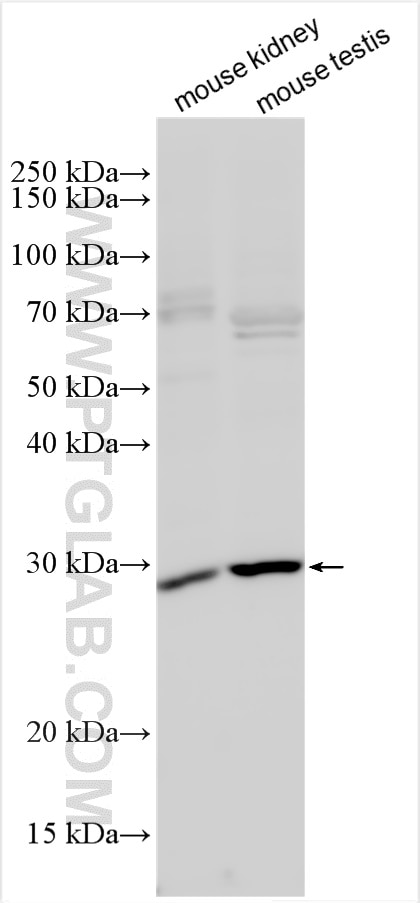
| Positive WB detected in | mouse kidney tissue, mouse testis tissue |
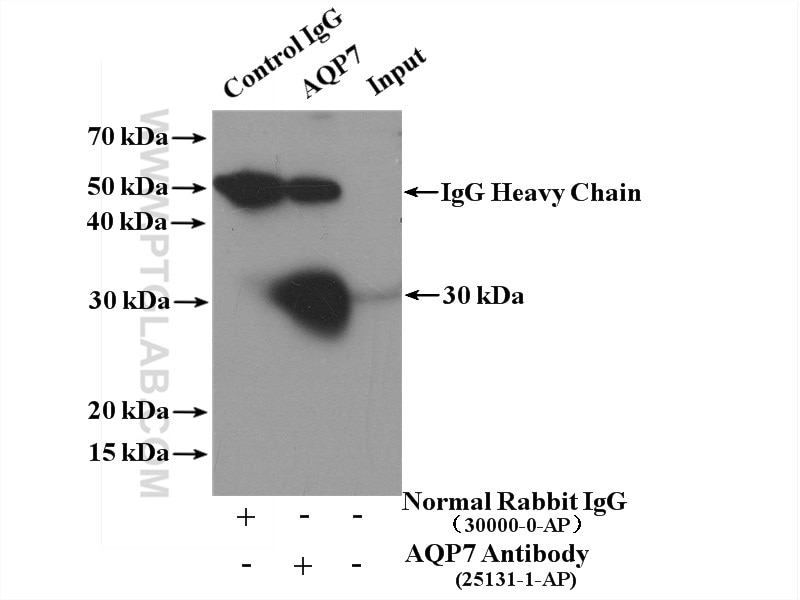
| Positive IP detected in | mouse kidney tissue |
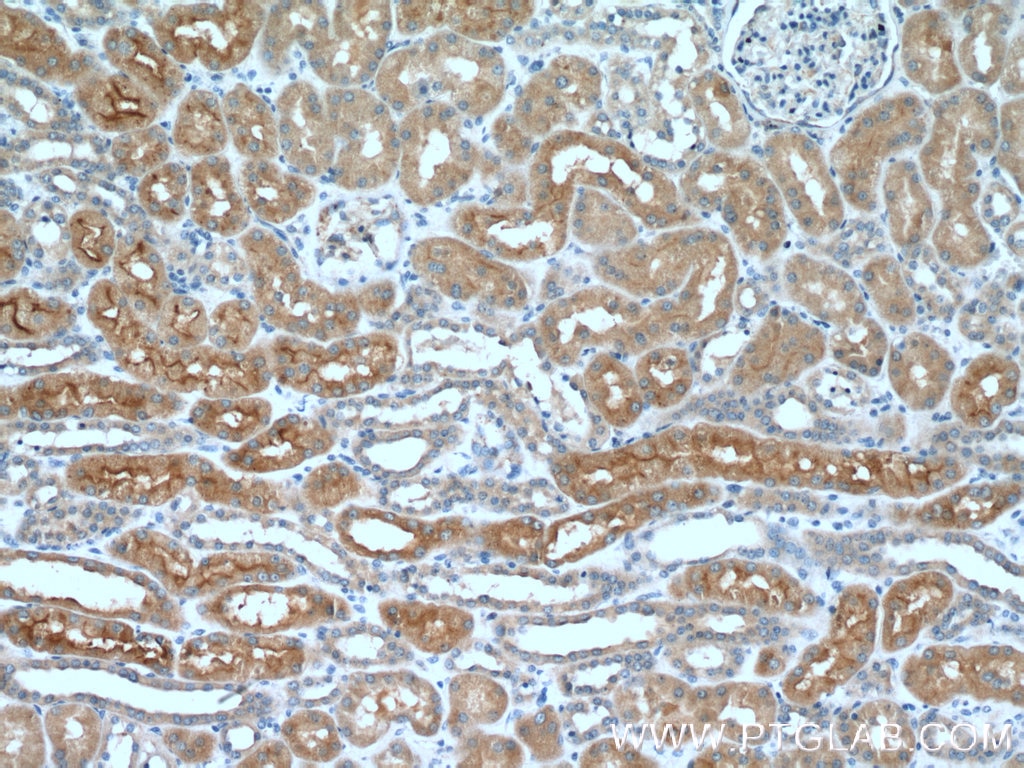
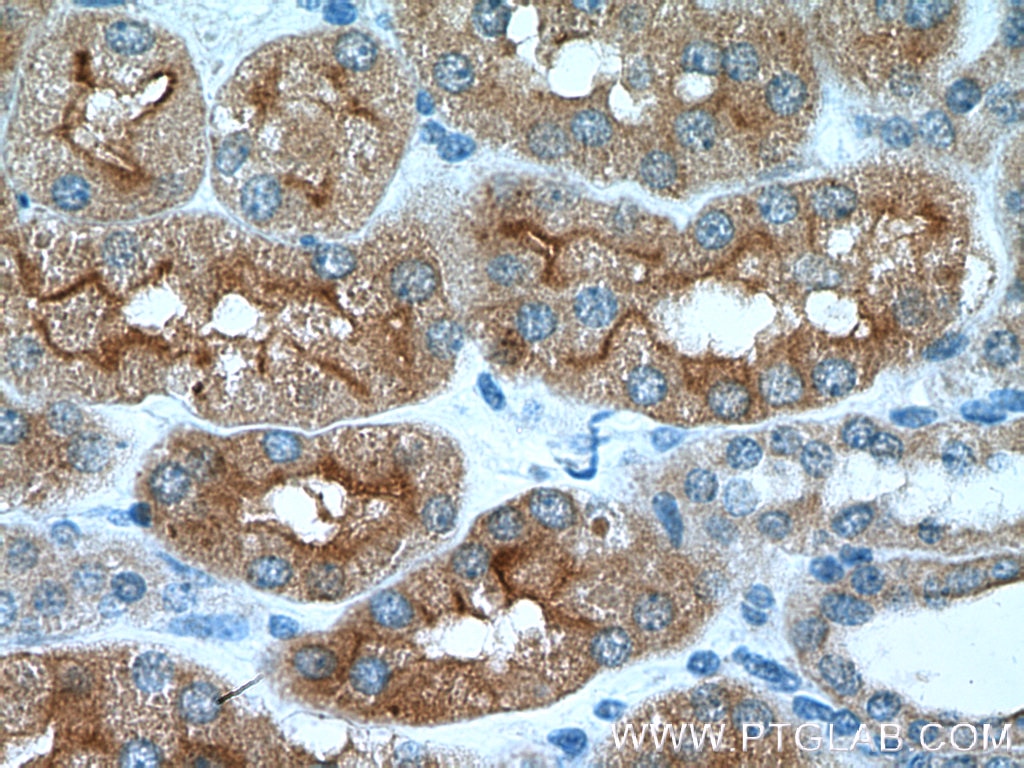
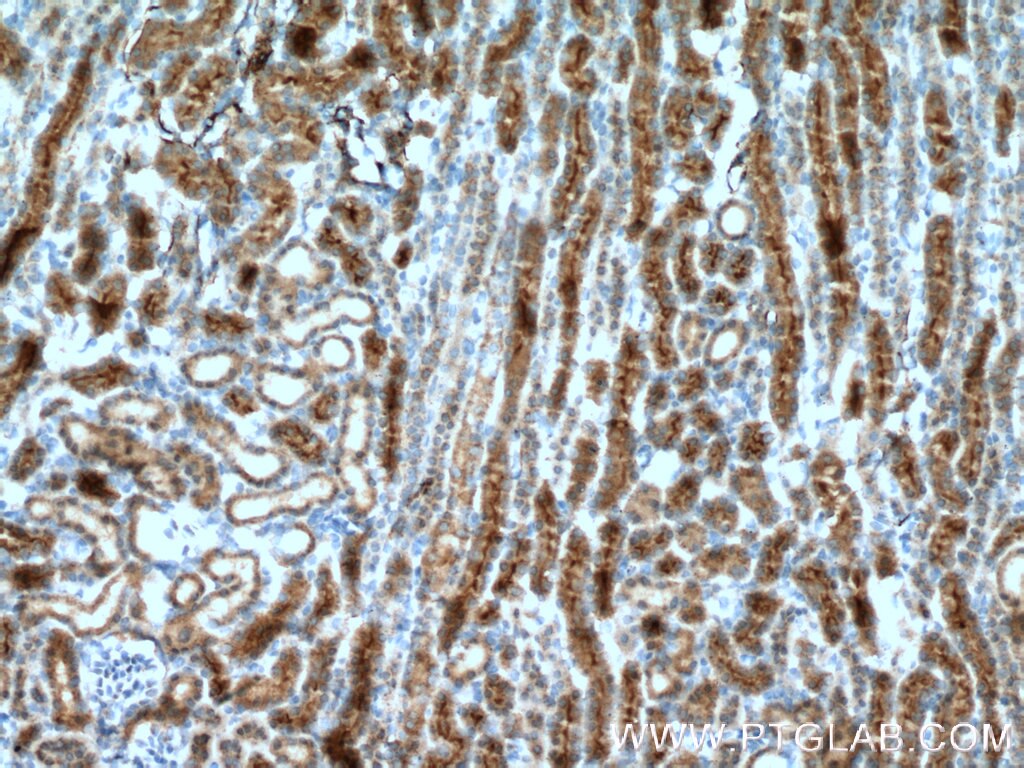
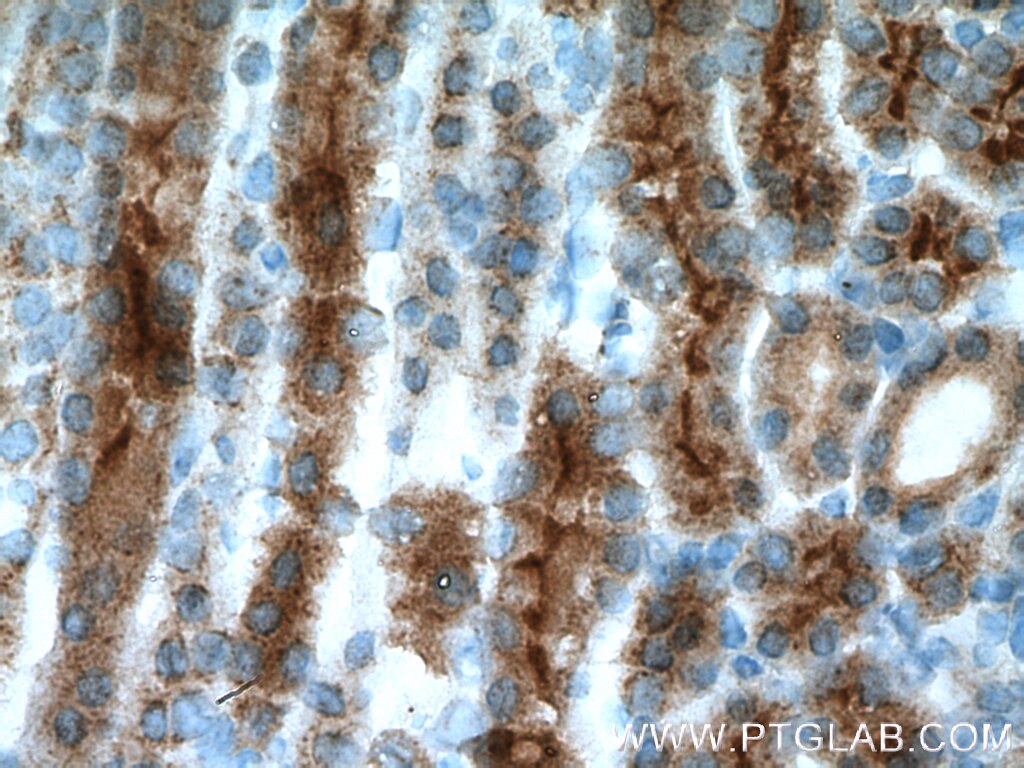
| Positive IHC detected in | human kidney tissue, mouse kidney tissue Note: suggested antigen retrieval with TE buffer pH 9.0; (*) Alternatively, antigen retrieval may be performed with citrate buffer pH 6.0 |
Recommended dilution
| Application | Dilution |
|---|---|
| Western Blot (WB) | WB : 1:500-1:3000 |
| Immunoprecipitation (IP) | IP : 0.5-4.0 ug for 1.0-3.0 mg of total protein lysate |
| Immunohistochemistry (IHC) | IHC : 1:50-1:500 |
| It is recommended that this reagent should be titrated in each testing system to obtain optimal results. | |
| Sample-dependent, Check data in validation data gallery. | |
Product Information
25131-1-AP targets AQP7 in WB, IHC, IF, IP, ELISA applications and shows reactivity with human, mouse samples.
| Tested Reactivity | human, mouse |
| Cited Reactivity | human, mouse, sheep |
| Host / Isotype | Rabbit / IgG |
| Class | Polyclonal |
| Type | Antibody |
| Immunogen |
CatNo: Ag17945 Product name: Recombinant human AQP7 protein Source: e coli.-derived, PGEX-4T Tag: GST Domain: 68-122 aa of BC062701 Sequence: LAAATIYSLFYTAILHFSGGQLMVTGPVATAGIFATYLPDHMTLWRGFLNEAWLT Predict reactive species |
| Full Name | aquaporin 7 |
| Calculated Molecular Weight | 342 aa, 37 kDa |
| Observed Molecular Weight | 25-30 kDa, 40 kDa |
| GenBank Accession Number | BC062701 |
| Gene Symbol | AQP7 |
| Gene ID (NCBI) | 364 |
| RRID | AB_2879913 |
| Conjugate | Unconjugated |
| Form | Liquid |
| Purification Method | Antigen affinity purification |
| UNIPROT ID | O14520 |
| Storage Buffer | PBS with 0.02% sodium azide and 50% glycerol, pH 7.3. |
| Storage Conditions | Store at -20°C. Stable for one year after shipment. Aliquoting is unnecessary for -20oC storage. 20ul sizes contain 0.1% BSA. |
Background Information
AQP7 is a member of the aquaporin family of water-selective membrane channels, localizes to the plasma membrane, and allows movement of water, glycerol and urea across cell membranes. AQP7 forms a channel that mediates water and glycerol transport across cell membranes at neutral pH. AQP7 is highly expressed in the adipose tissue(PMID: 9405233).
Protocols
| Product Specific Protocols | |
|---|---|
| IHC protocol for AQP7 antibody 25131-1-AP | Download protocol |
| IP protocol for AQP7 antibody 25131-1-AP | Download protocol |
| WB protocol for AQP7 antibody 25131-1-AP | Download protocol |
| Standard Protocols | |
|---|---|
| Click here to view our Standard Protocols |
Publications
What published studies show
The AQP7 Polyclonal antibody (catalog number 25131-1-AP) has 5 total citations. These appear in the journals Gastroenterology, Biomedicine & Pharmacotherapy, Biochemical Pharmacology, FASEB Journal, and Animals. The associated research fields span intestinal ion transport and CFTR function, diabetic nephropathy and lipid metabolism, hepatocellular carcinoma, reproductive/epididymal metabolism, and ruminant rumen fermentation and growth performance. Applications include immunofluorescence and immunohistochemistry across mouse, human, and sheep species.
| Species | Application | Title |
|---|---|---|
Gastroenterology Loss of MYO5B Leads to Reductions in Na+ Absorption With Maintenance of CFTR-Dependent Cl- Secretion in Enterocytes. | ||
Biomed Pharmacother Central administration of Dapagliflozin alleviates a hypothalamic neuroinflammatory signature and changing tubular lipid metabolism in type 2 diabetic nephropathy by upregulating MCPIP1 | ||
Biochem Pharmacol S-adenosylmethionine and nicotinic acid suppress Hepatocellular carcinoma proliferation by targeting SLC25A4. | ||
FASEB J Sperm immotility is associated with epididymis metabolism disorder in mice under obstructive azoospermia | ||
Animals (Basel) Rumen-Degradable Starch Improves Rumen Fermentation, Function, and Growth Performance by Altering Bacteria and Its Metabolome in Sheep Fed Alfalfa Hay or Silage |







