

Tested Applications
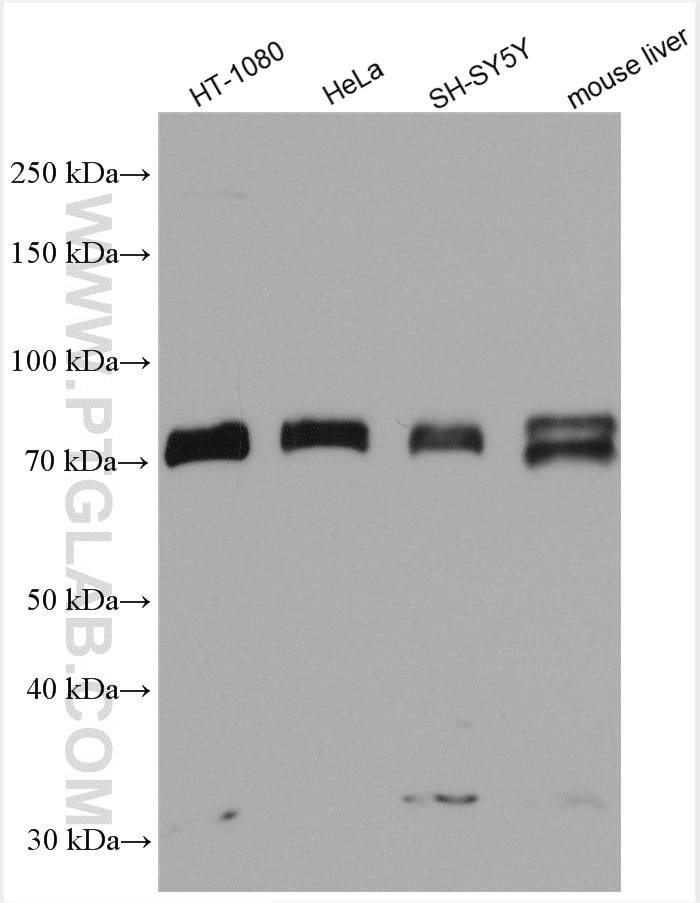
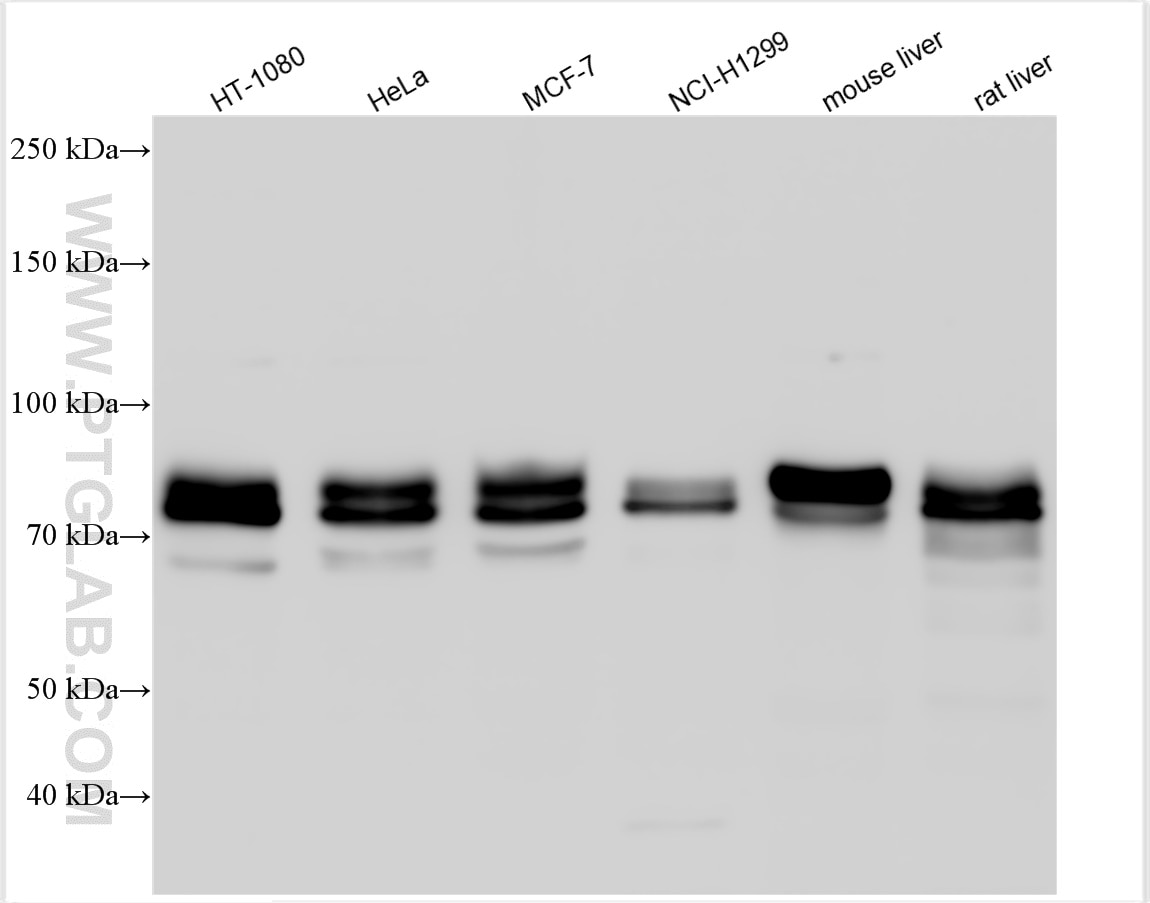
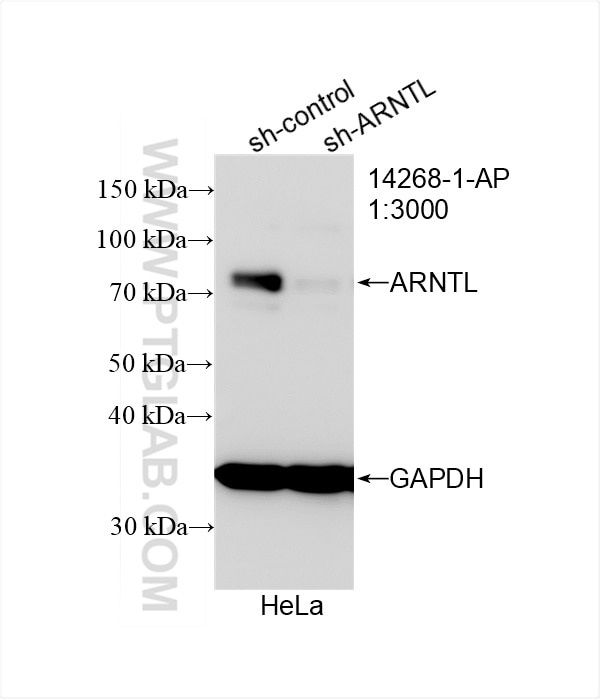
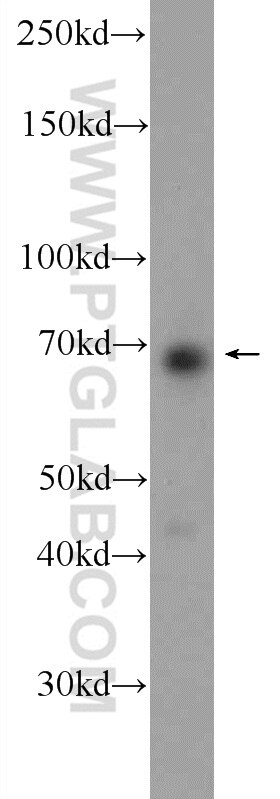
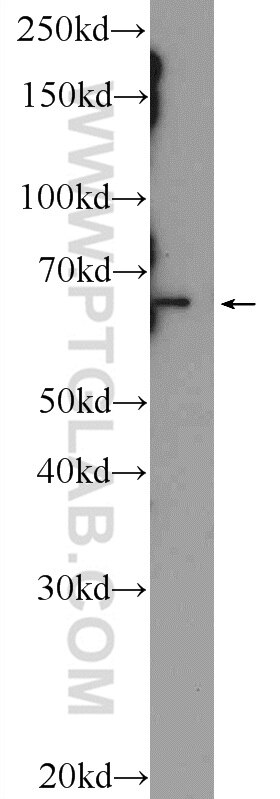
| Positive WB detected in | HT-1080 cells, 3T3-L1 cells, HeLa cells, SH-SY5Y cells, mouse liver tissue, MCF-7 cells, NCI-H1299 cells, rat liver tissue |
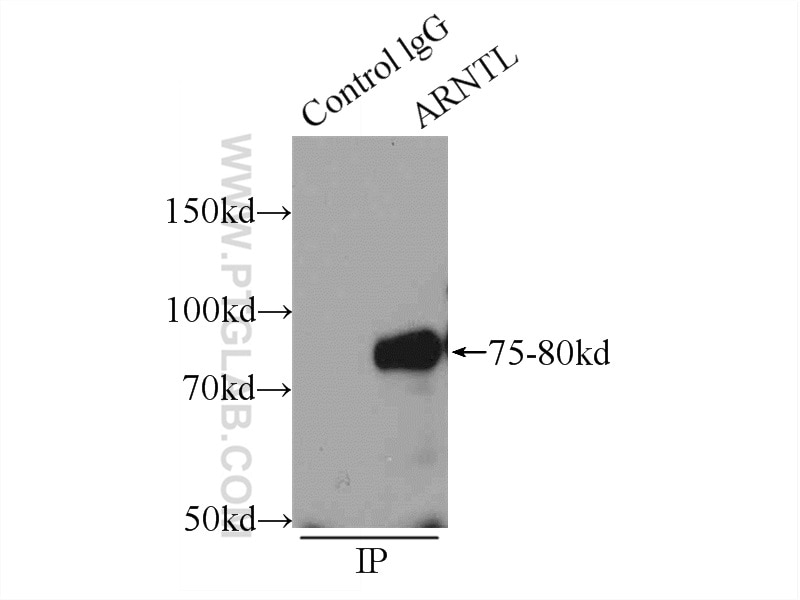
| Positive IP detected in | HeLa cells |
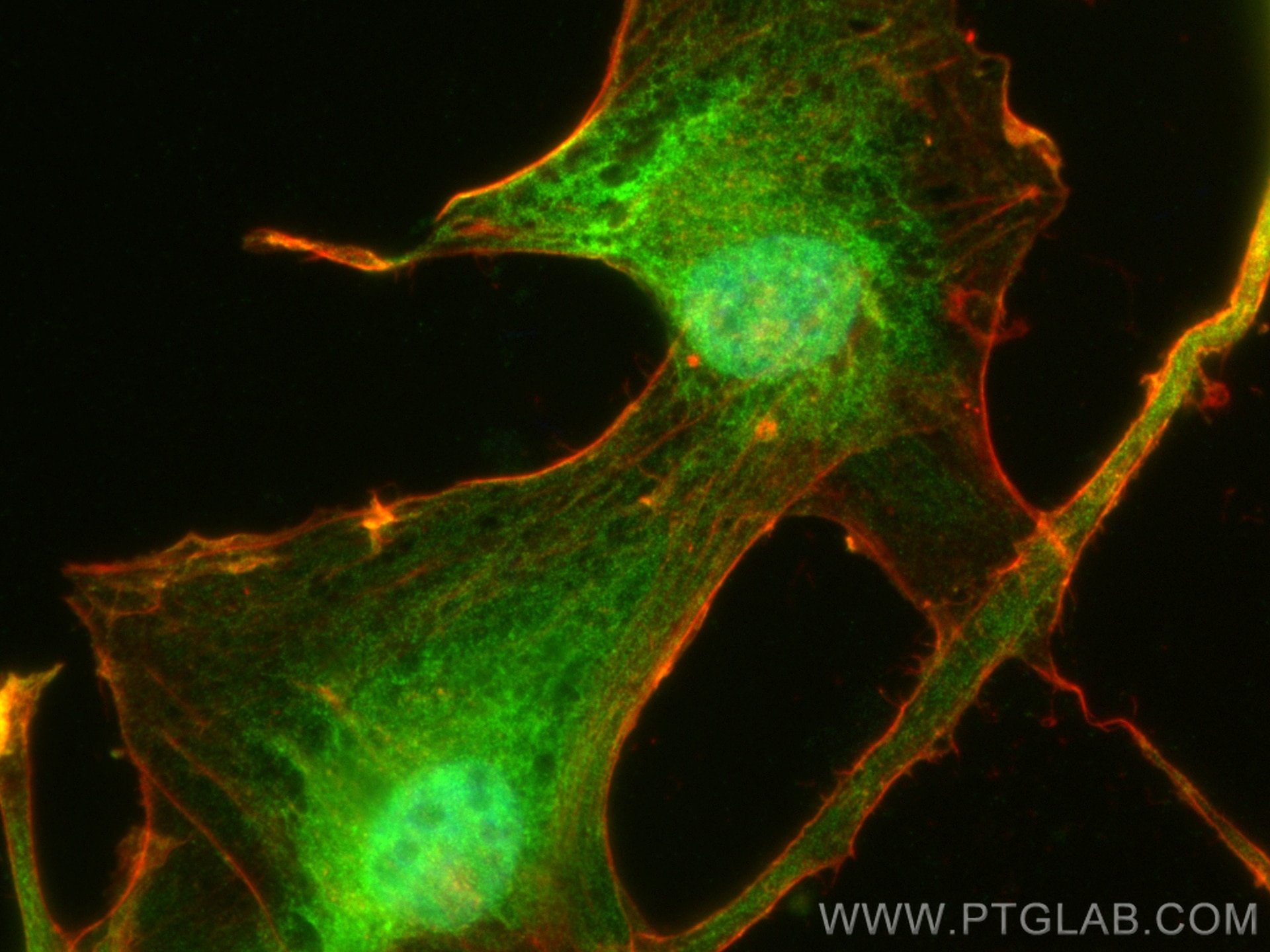
| Positive IF/ICC detected in | U-87 MG cells |
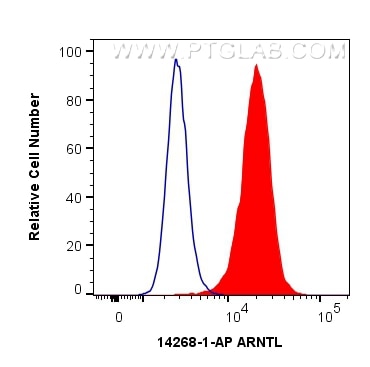
| Positive FC (Intra) detected in | HeLa cells |
Recommended dilution
| Application | Dilution |
|---|---|
| Western Blot (WB) | WB : 1:2000-1:10000 |
| Immunoprecipitation (IP) | IP : 0.5-4.0 ug for 1.0-3.0 mg of total protein lysate |
| Immunofluorescence (IF)/ICC | IF/ICC : 1:50-1:500 |
| Flow Cytometry (FC) (INTRA) | FC (INTRA) : 0.40 ug per 10^6 cells in a 100 µl suspension |
| It is recommended that this reagent should be titrated in each testing system to obtain optimal results. | |
| Sample-dependent, Check data in validation data gallery. | |
Product Information
14268-1-AP targets BMAL1 in WB, IHC, IF/ICC, FC (Intra), IP, CoIP, ChIP, ELISA, CUT&Tag applications and shows reactivity with human, mouse, rat samples.
| Tested Reactivity | human, mouse, rat |
| Cited Reactivity | human, mouse, rat, hamster |
| Host / Isotype | Rabbit / IgG |
| Class | Polyclonal |
| Type | Antibody |
| Immunogen |
CatNo: Ag5586 Product name: Recombinant human ARNTL protein Source: e coli.-derived, PGEX-4T Tag: GST Domain: 1-303 aa of BC041129 Sequence: MADQRMDISSTISDFMSPGPTDLLSSSLGTSGVDCNRKRKGSSTDYQESMDTDKDDPHGRLEYTEHQGRIKNAREAHSQIEKRRRDKMNSFIDELASLVPTCNAMSRKLDKLTVLRMAVQHMKTLRGATNPYTEANYKPTFLSDDELKHLILRAADGFLFVVGCDRGKILFVSESVFKILNYSQNDLIGQSLFDYLHPKDIAKVKEQLSSSDTAPRERLIDAKTGLPVKTDITPGPSRLCSGARRSFFCRMKCNRPSVKVEDKDFPSTCSKKKDRKSFCTIHSTGYLKSWPPTKMGLDEDNEP Predict reactive species |
| Full Name | aryl hydrocarbon receptor nuclear translocator-like |
| Calculated Molecular Weight | 69 kDa |
| Observed Molecular Weight | 69-75 kDa |
| GenBank Accession Number | BC041129 |
| Gene Symbol | ARNTL |
| Gene ID (NCBI) | 406 |
| RRID | AB_2878037 |
| Conjugate | Unconjugated |
| Form | Liquid |
| Purification Method | Antigen affinity purification |
| UNIPROT ID | O00327 |
| Storage Buffer | PBS with 0.02% sodium azide and 50% glycerol, pH 7.3. |
| Storage Conditions | Store at -20°C. Stable for one year after shipment. Aliquoting is unnecessary for -20oC storage. 20ul sizes contain 0.1% BSA. |
Background Information
BMAL1, a basic helix-loop-helices with Per-Arnt-Sim (PAS) domain transcription factor, is one of components that has core clock function in mammals. It form a heterodimer with CLOCK, and induce the transcription of target genes by binding to E-box elements within their promoter regions. And this transcription is inhibited in a feedback loop by PER, and also by CRY proteins.Also BMAL1 is a key player in the regulation of metabolism, playing a role in adipogenesis and in the control of glucose and triglycerides levels. Due to phosphorylation modification, BMAL1 can be detected as a band in the range of 70-80 kda (PMID: 14750952).
Protocols
| Product Specific Protocols | |
|---|---|
| FC protocol for BMAL1 antibody 14268-1-AP | Download protocol |
| IF protocol for BMAL1 antibody 14268-1-AP | Download protocol |
| IP protocol for BMAL1 antibody 14268-1-AP | Download protocol |
| WB protocol for BMAL1 antibody 14268-1-AP | Download protocol |
| Standard Protocols | |
|---|---|
| Click here to view our Standard Protocols |
Publications
What published studies show
The BMAL1 Polyclonal antibody (Cat# 14268-1-AP) has accumulated 123 citations. Publications appear in high-impact journals including Cell Metabolism, Nature Communications, Molecular Cell, EMBO Journal, Free Radical Biology and Medicine, Cell Death & Disease, Theranostics, and Advanced Science. Research fields span circadian clock biology, cancer, lipid and glucose metabolism, ferroptosis, inflammation, neuroscience, liver disease, bone biology, cardiovascular health, respiratory disorders, sleep disorders, toxicology, and reproductive biology.
| Species | Application | Title |
|---|---|---|
Cell Metab Oncogenic fatty acid oxidation senses circadian disruption in sleep-deficiency-enhanced tumorigenesis | ||
Cell Metab Intestinal clock shapes sleep-wake cycle via sustaining glutamine homeostasis. | ||
Bioact Mater Bone microenvironment regulative hydrogels with ROS scavenging and prolonged oxygen-generating for enhancing bone repair
| ||
Nat Commun The tight junction protein TJP1 regulates the feeding-modulated hepatic circadian clock. | ||
Redox Biol BMAL1 deficiency exacerbates HDM-induced asthma by promoting JUN-mediated lipid peroxidation and airway epithelial ferroptosis. | ||









