
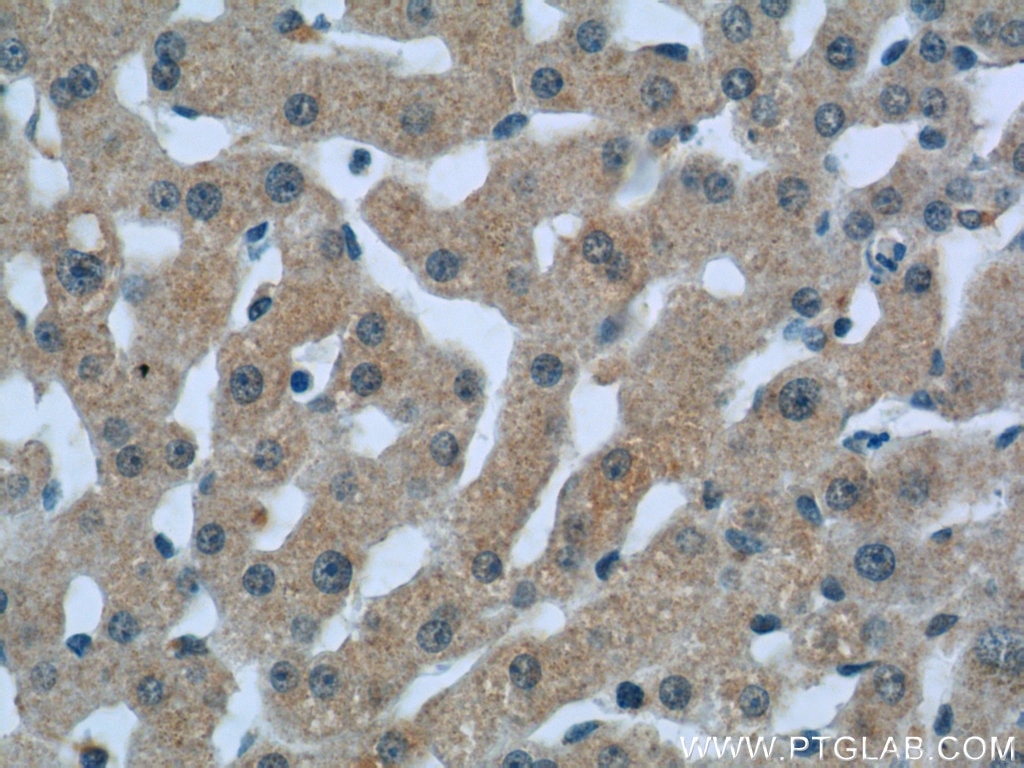

Tested Applications
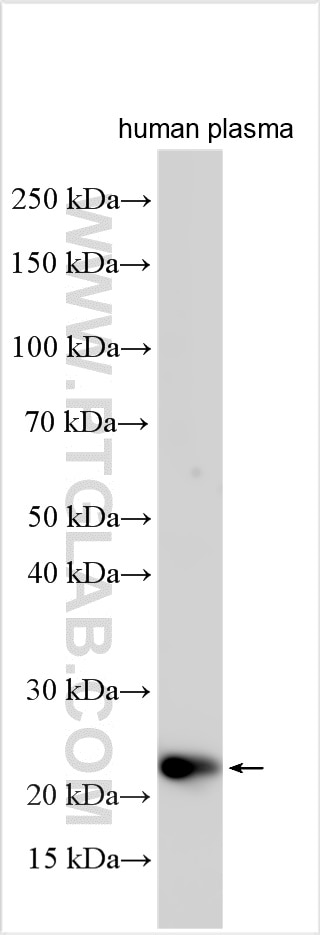
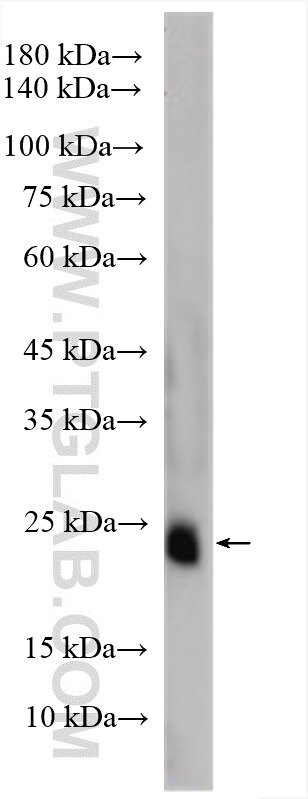
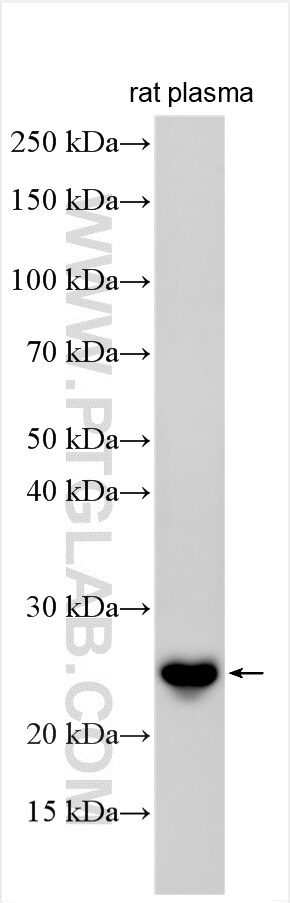
| Positive WB detected in | human plasma, mouse serum, rat plasma |
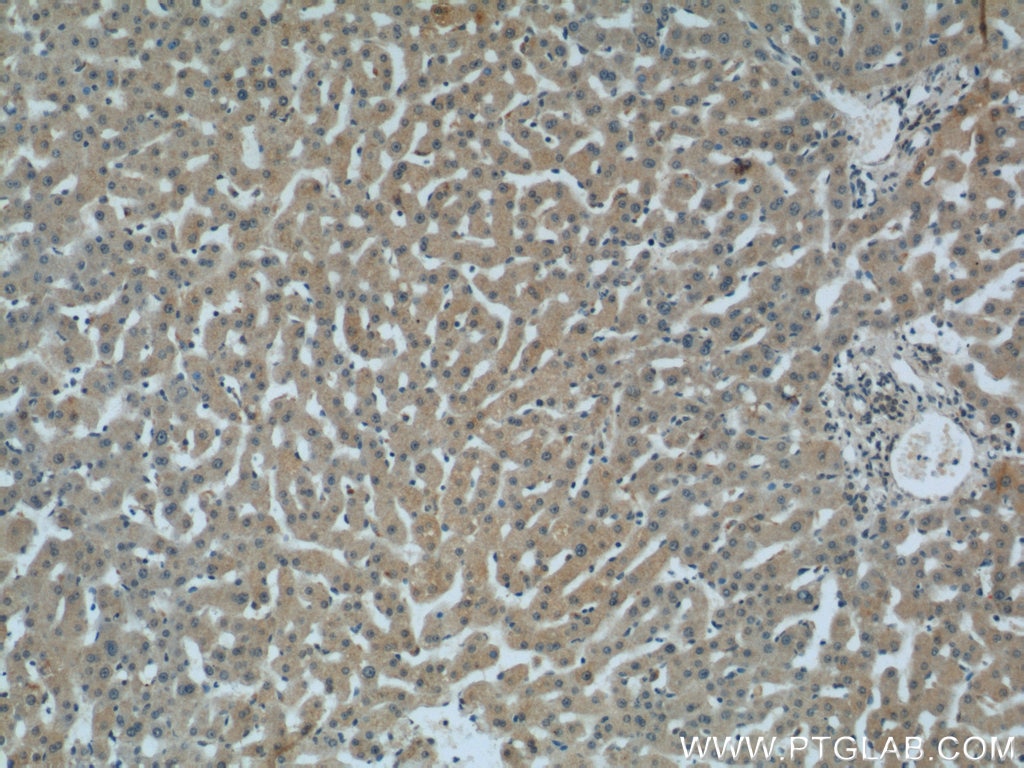
| Positive IHC detected in | human liver tissue Note: suggested antigen retrieval with TE buffer pH 9.0; (*) Alternatively, antigen retrieval may be performed with citrate buffer pH 6.0 |
Recommended dilution
| Application | Dilution |
|---|---|
| Western Blot (WB) | WB : 1:2000-1:10000 |
| Immunohistochemistry (IHC) | IHC : 1:20-1:200 |
| It is recommended that this reagent should be titrated in each testing system to obtain optimal results. | |
| Sample-dependent, Check data in validation data gallery. | |
Product Information
16889-1-AP targets C1qC in WB, IHC, IF, ELISA applications and shows reactivity with human, mouse, rat samples.
| Tested Reactivity | human, mouse, rat |
| Cited Reactivity | human, mouse |
| Host / Isotype | Rabbit / IgG |
| Class | Polyclonal |
| Type | Antibody |
| Immunogen |
CatNo: Ag10400 Product name: Recombinant human C1QC protein Source: e coli.-derived, PGEX-4T Tag: GST Domain: 27-245 aa of BC009016 Sequence: QANTGCYGIPGMPGLPGAPGKDGYDGLPGPKGEPGIPAIPGIRGPKGQKGEPGLPGHPGKNGPMGPPGMPGVPGPMGIPGEPGEEGRYKQKFQSVFTVTRQTHQPPAPNSLIRFNAVLTNPQGDYDTSTGKFTCKVPGLYYFVYHASHTANLCVLLYRSGVKVVTFCGHTSKTNQVNSGGVLLRLQVGEEVWLAVNDYYDMVGIQGSDSVFSGFLLFPD Predict reactive species |
| Full Name | complement component 1, q subcomponent, C chain |
| Calculated Molecular Weight | 245 aa, 26 kDa |
| Observed Molecular Weight | 24-26 kDa |
| GenBank Accession Number | BC009016 |
| Gene Symbol | C1QC |
| Gene ID (NCBI) | 714 |
| RRID | AB_2878328 |
| Conjugate | Unconjugated |
| Form | Liquid |
| Purification Method | Antigen affinity purification |
| UNIPROT ID | P02747 |
| Storage Buffer | PBS with 0.02% sodium azide and 50% glycerol, pH 7.3. |
| Storage Conditions | Store at -20°C. Stable for one year after shipment. Aliquoting is unnecessary for -20oC storage. 20ul sizes contain 0.1% BSA. |
Background Information
The first component of complement, C1, is a calcium-dependent complex of the 3 subcomponents C1q, C1r, and C1s. C1q is composed of 18 polypeptide chains: six A-chains, six B-chains, and six C-chains. Each chain contains a collagen-like region located near the N terminus and a C-terminal globular region. Deficiency of C1q has been associated with lupus erythematosus and glomerulonephritis. This antibody is raised against C1qC which is the C-chain polypeptide of human complement subcomponent C1q.
Protocols
| Product Specific Protocols | |
|---|---|
| IHC protocol for C1qC antibody 16889-1-AP | Download protocol |
| WB protocol for C1qC antibody 16889-1-AP | Download protocol |
| Standard Protocols | |
|---|---|
| Click here to view our Standard Protocols |
Publications
What published studies show
C1qC Polyclonal antibody (Cat# 16889-1-AP) has 8 citations across journals including Nature Communications, Investigative Ophthalmology & Visual Science, Molecular Neurobiology, Scientific Reports, PLoS Pathogens, Journal of Cancer, Frontiers in Genetics, and World Journal of Surgical Oncology. Research fields span immune heterogeneity and spatial transcriptomics, corneal dystrophy, blood-brain barrier damage in diabetes, diabetic kidney disease, complement activation in infection, gastric cancer, renal cell carcinoma prognosis, and hepatocellular carcinoma exosome proteomics.
| Species | Application | Title |
|---|---|---|
Nat Commun Ultra-precision deconvolution of spatial transcriptomics decodes immune heterogeneity and fate-defining programs in tissues. | ||
Mol Neurobiol Upregulation of C1QC as a Mediator of Blood-Brain Barrier Damage in Type 2 Diabetes Mellitus | ||
Invest Ophthalmol Vis Sci Early Transcriptomic and Pathologic Changes of Col8a2 Mutant Fuchs Endothelial Corneal Dystrophy. | ||
PLoS Pathog C/EBP-β-regulated complement hyperactivation in spleen of SFTSV-infected mice: A clue to targeted complement therapy. | ||
Sci Rep Complement classical and alternative pathway activation contributes to diabetic kidney disease progression: a glomerular proteomics on kidney biopsies | ||
J Cancer Identification of crucial genes through WGCNA in the progression of gastric cancer |






