

Tested Applications
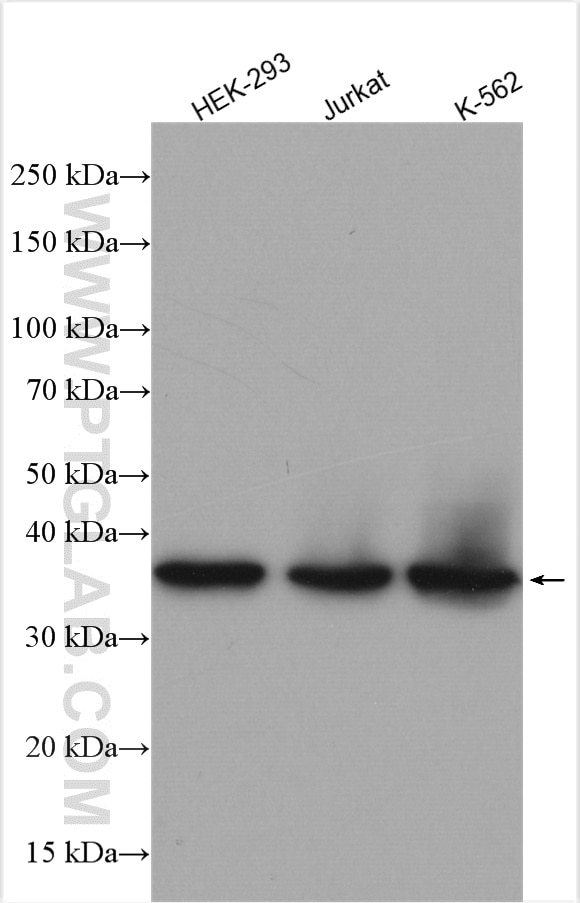
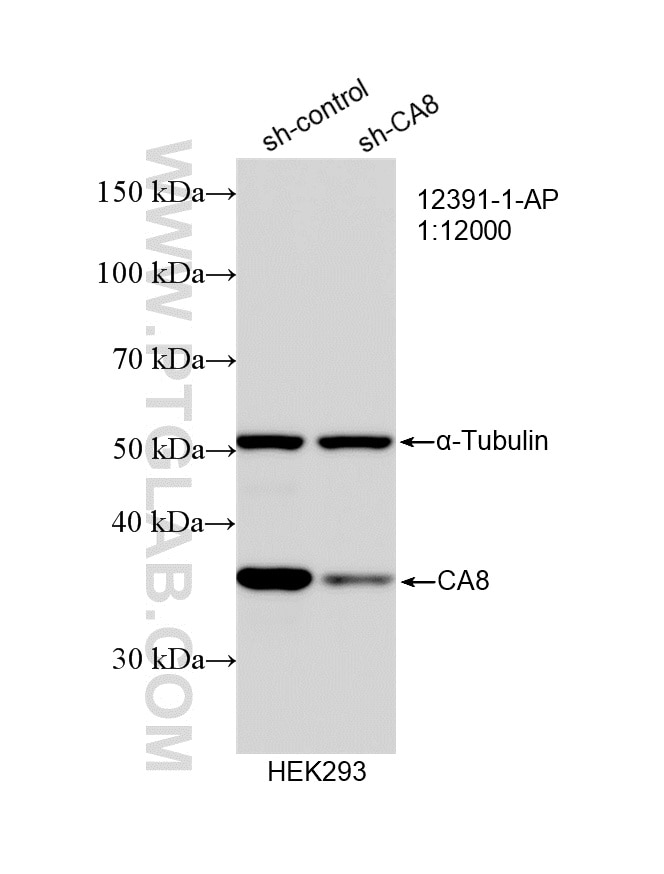
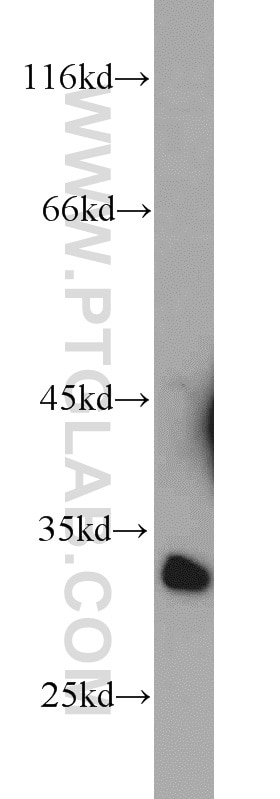
| Positive WB detected in | HEK-293 cells, mouse brain tissue, Jurkat cells, K-562 cells |
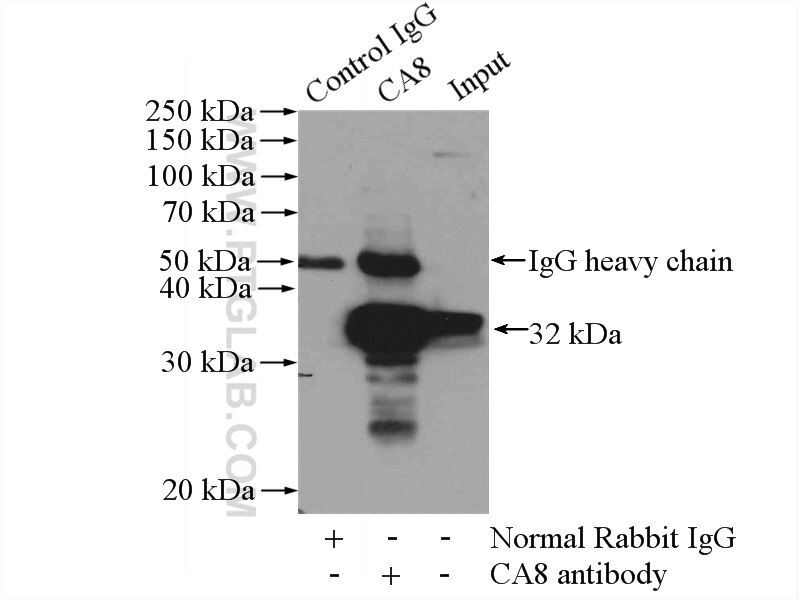
| Positive IP detected in | mouse brain tissue |
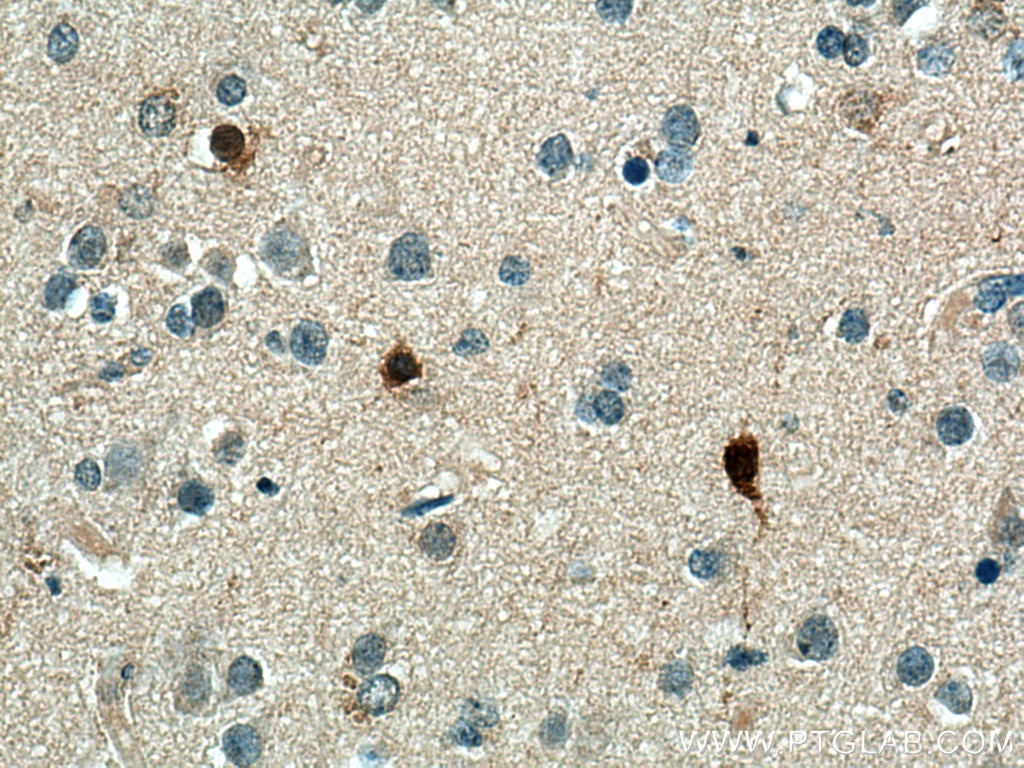
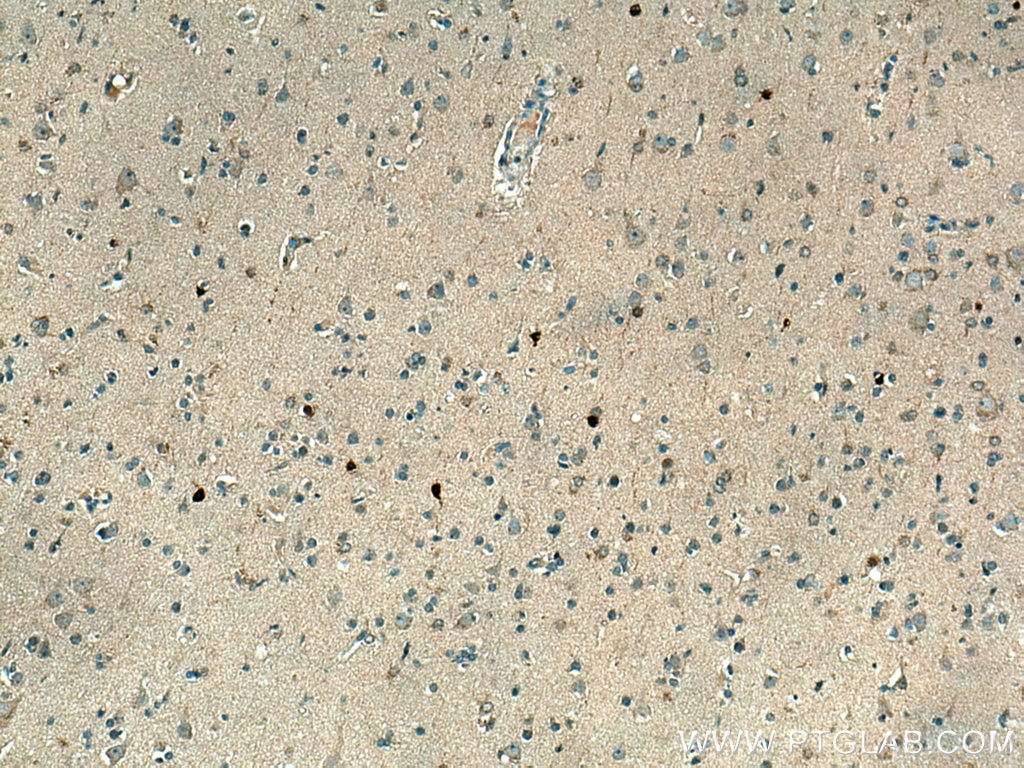
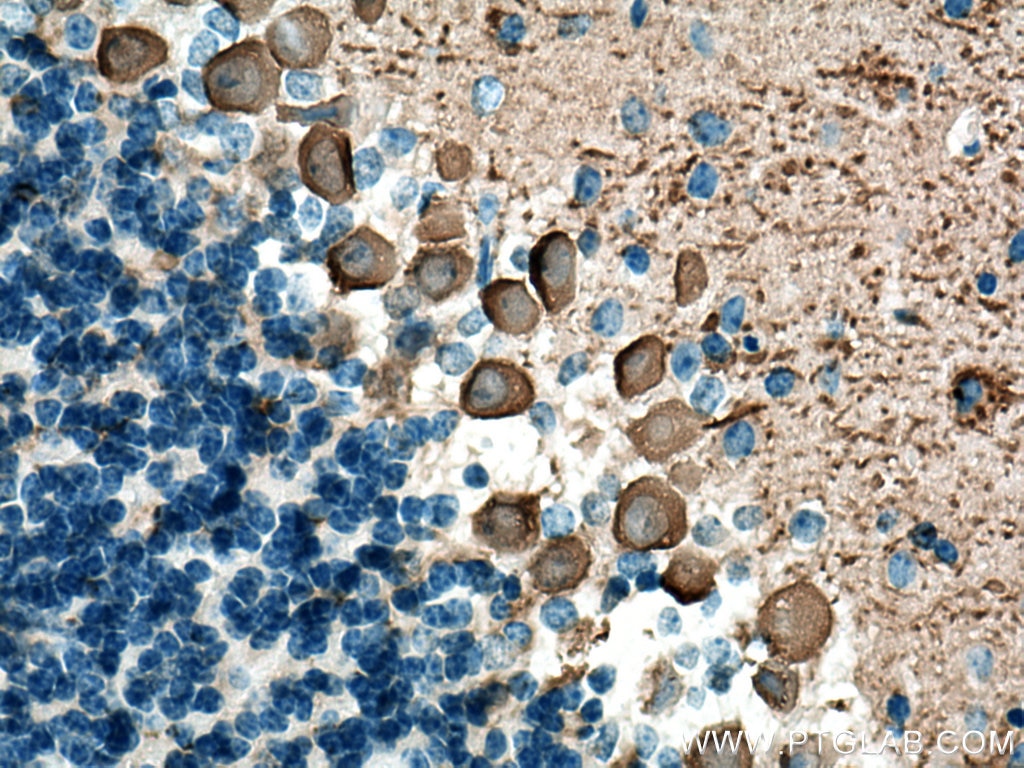
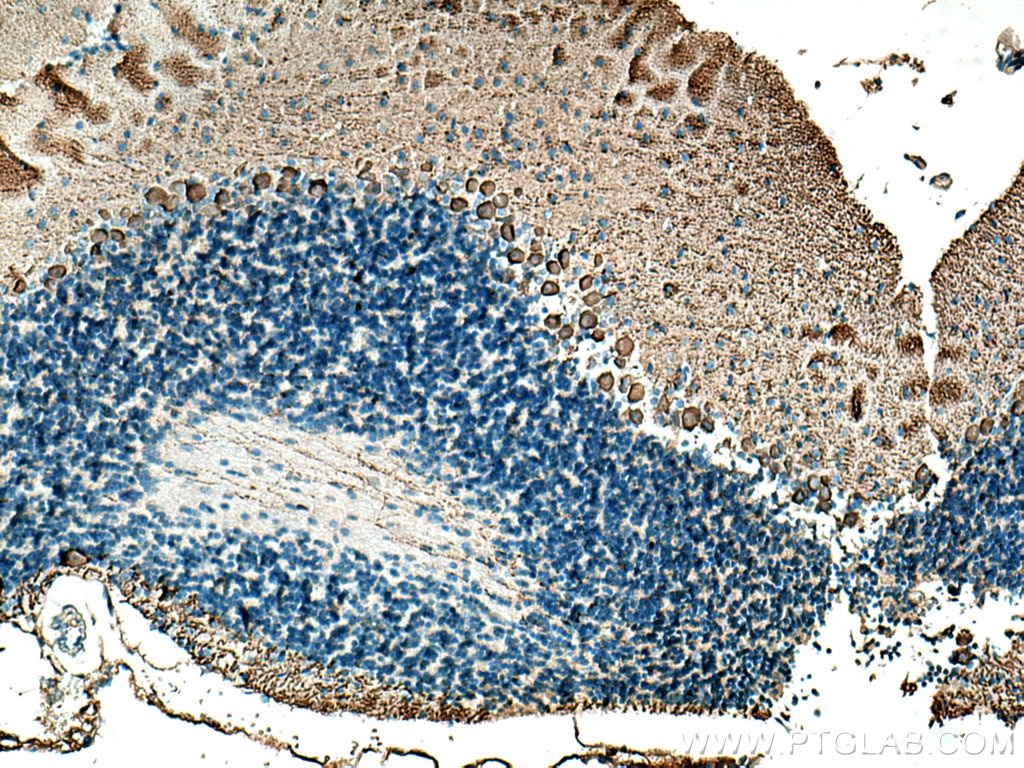
| Positive IHC detected in | human gliomas tissue, mouse cerebellum tissue Note: suggested antigen retrieval with TE buffer pH 9.0; (*) Alternatively, antigen retrieval may be performed with citrate buffer pH 6.0 |
Recommended dilution
| Application | Dilution |
|---|---|
| Western Blot (WB) | WB : 1:2000-1:12000 |
| Immunoprecipitation (IP) | IP : 0.5-4.0 ug for 1.0-3.0 mg of total protein lysate |
| Immunohistochemistry (IHC) | IHC : 1:50-1:500 |
| It is recommended that this reagent should be titrated in each testing system to obtain optimal results. | |
| Sample-dependent, Check data in validation data gallery. | |
Product Information
12391-1-AP targets CA8 in WB, IHC, IF, IP, ELISA applications and shows reactivity with human, mouse, rat samples.
| Tested Reactivity | human, mouse, rat |
| Cited Reactivity | human, mouse, rat |
| Host / Isotype | Rabbit / IgG |
| Class | Polyclonal |
| Type | Antibody |
| Immunogen |
CatNo: Ag3068 Product name: Recombinant human CA8 protein Source: e coli.-derived, PGEX-4T Tag: GST Domain: 1-143 aa of BC015531 Sequence: MADLSFIEDTVAFPEKEEDEEEEEEGVEWGYEEGVEWGLVFPDANGEYQSPINLNSREARYDPSLLDVRLSPNYVVCRDCEVTNDGHTIQVILKSKSVLSGGPLPQGHEFELYEVRFHWGRENQRGSEHTVNFKAFPMEVRIT Predict reactive species |
| Full Name | carbonic anhydrase VIII |
| Calculated Molecular Weight | 290 aa, 32 kDa |
| Observed Molecular Weight | 32-35 kDa |
| GenBank Accession Number | BC015531 |
| Gene Symbol | CA8 |
| Gene ID (NCBI) | 767 |
| RRID | AB_2066277 |
| Conjugate | Unconjugated |
| Form | Liquid |
| Purification Method | Antigen affinity purification |
| UNIPROT ID | P35219 |
| Storage Buffer | PBS with 0.02% sodium azide and 50% glycerol, pH 7.3. |
| Storage Conditions | Store at -20°C. Stable for one year after shipment. Aliquoting is unnecessary for -20oC storage. 20ul sizes contain 0.1% BSA. |
Background Information
The CA8 (CARP) gene encodes carbonic anhydrase VIII, which is part of a family of zinc metalloenzyme. CA8 has a central carbonic anhydrase motif, but it lacks carbonic anhydrase activity due to absence of catalytic zinc coordinating residues(PMID:2121526). CARP is a novel IP3R1-binding protein, and is expressed in Purkinje cells abundantly. CA8 is co-localized with IP3R1 in Purkinje cells and it binds to IP3R1, reducing the affinity of the receptor for its ligand, IP3(PMID:12611586). Defects in CA8 are the cause of cerebellar ataxia mental retardation and dysequilibrium syndrome type 3 (CMARQ3)(PMID:19461874).
Protocols
| Product Specific Protocols | |
|---|---|
| IHC protocol for CA8 antibody 12391-1-AP | Download protocol |
| IP protocol for CA8 antibody 12391-1-AP | Download protocol |
| WB protocol for CA8 antibody 12391-1-AP | Download protocol |
| Standard Protocols | |
|---|---|
| Click here to view our Standard Protocols |
Publications
What published studies show
The CA8 Polyclonal antibody (Cat# 12391-1-AP) has 11 total citations. These appear in journals including Cell Research, Nature Communications, Neuron, Nucleic Acids Research, Journal of the American Society of Nephrology, Molecular Oncology, Biomedical Pharmacotherapy, Cell Biochemistry and Function, American Journal of Physiology, and PLoS One. Research fields span neuroscience (cerebellar function, spinocerebellar ataxia, brain development), oncology (colorectal and renal cell carcinoma), renal physiology, RNA-mediated gene silencing, and metabolic regulation.
| Species | Application | Title |
|---|---|---|
Cell Res Cochlear nucleus spatial transcriptomes of normal and hearing loss mice reveal a critical role of Spp1 in bushy cells. | ||
Nat Commun Glutamatergic cerebellar neurons differentially contribute to the acquisition of motor and social behaviors | ||
Neuron Disruption of the ATXN1-CIC complex reveals the role of additional nuclear ATXN1 interactors in spinocerebellar ataxia type 1 | ||
Nucleic Acids Res Short DNA/RNA heteroduplex oligonucleotide interacting proteins are key regulators of target gene silencing.
| ||
J Am Soc Nephrol Single-Cell RNA Sequencing Reveals Renal Endothelium Heterogeneity and Metabolic Adaptation to Water Deprivation. | ||
Mol Oncol Consensus molecular subtyping of colorectal carcinoma brain metastases reveals a metabolic signature associated with poor patient survival |









