

Tested Applications
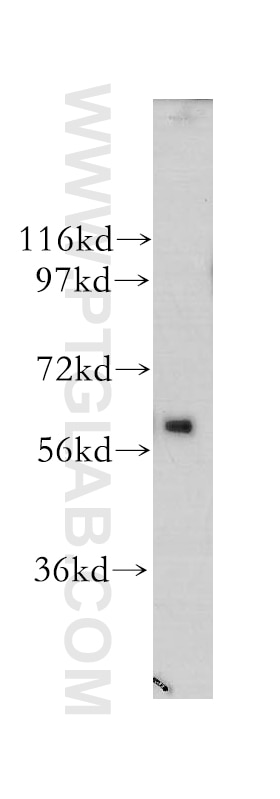
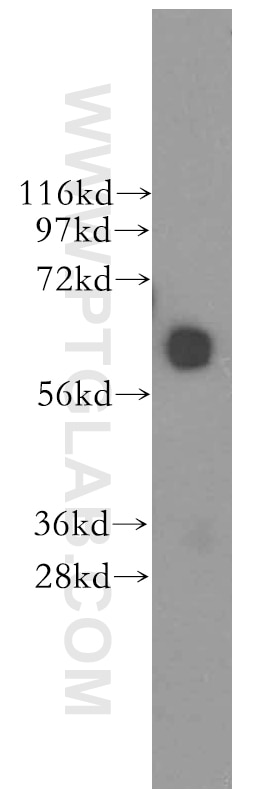
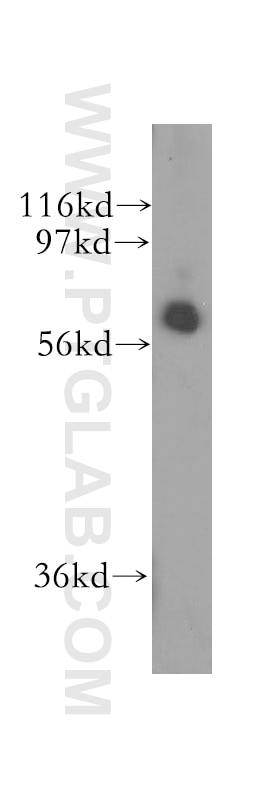
| Positive WB detected in | human brain tissue, Y79 cells |
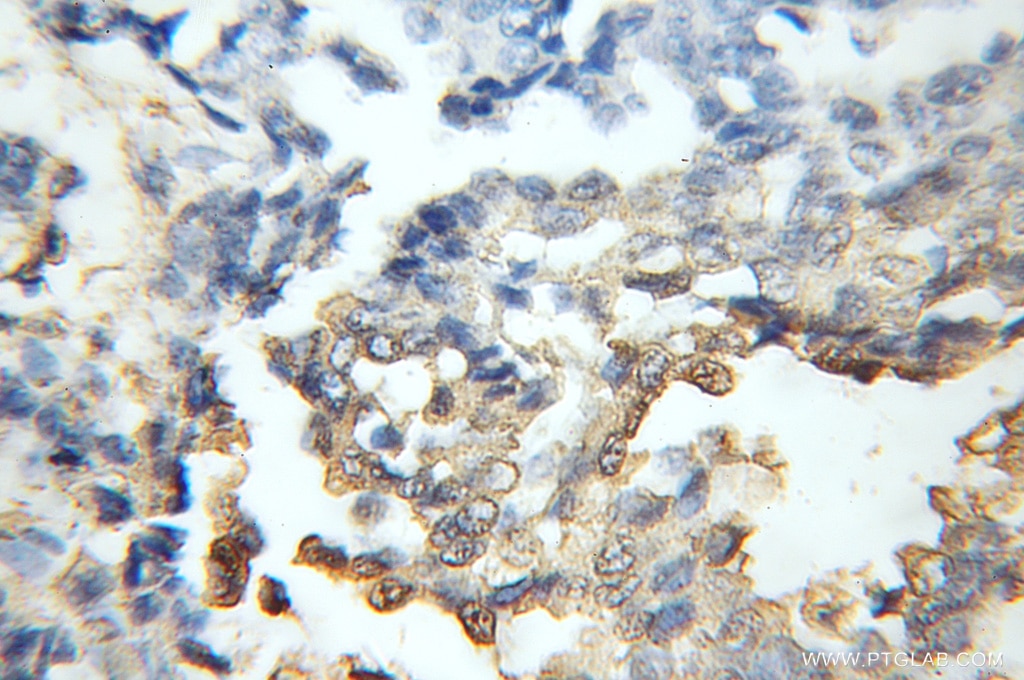
| Positive IHC detected in | human breast cancer tissue Note: suggested antigen retrieval with TE buffer pH 9.0; (*) Alternatively, antigen retrieval may be performed with citrate buffer pH 6.0 |
Recommended dilution
| Application | Dilution |
|---|---|
| Western Blot (WB) | WB : 1:500-1:2000 |
| Immunohistochemistry (IHC) | IHC : 1:20-1:200 |
| It is recommended that this reagent should be titrated in each testing system to obtain optimal results. | |
| Sample-dependent, Check data in validation data gallery. | |
Product Information
11611-2-AP targets CDR2 in WB, IP, IHC, ELISA applications and shows reactivity with human, mouse samples.
| Tested Reactivity | human, mouse |
| Cited Reactivity | human |
| Host / Isotype | Rabbit / IgG |
| Class | Polyclonal |
| Type | Antibody |
| Immunogen |
CatNo: Ag2183 Product name: Recombinant human CDR2 protein Source: e coli.-derived, PGEX-4T Tag: GST Domain: 105-454 aa of BC017503 Sequence: SKASQQKILSLTETIECLQTNIDHLQSQVEELKSSGQGRRSPGKCDQEKPAPSFACLKELYDLRQHFVYDHVFAEKITSLQGQPSPDEEENEHLKKTVTMLQAQLSLERQKRVTMEEEYGLVLKENSELEQQLGATGAYRARALELEAEVAEMRQMLQSEHPFVNGVEKLVPDSLYVPFKEPSQSLLEEMFLTVPESHRKPLKRSSSETILSSLAGSDIVKGHEETCIRRAKAVKQRGISLLHEVDTQYSALKVKYEELLKKCQEEQDSLSHKAVQTSRAAAKDLTGVNAQSEPVASGWELASVNPEPVSSPTTPPEYKALFKEIFSCIKKTKQEIDEQRTKYRSLSSHS Predict reactive species |
| Full Name | cerebellar degeneration-related protein 2, 62kDa |
| Calculated Molecular Weight | 454 aa, 52 kDa |
| Observed Molecular Weight | 62 kDa |
| GenBank Accession Number | BC017503 |
| Gene Symbol | CDR2 |
| Gene ID (NCBI) | 1039 |
| RRID | AB_2076734 |
| Conjugate | Unconjugated |
| Form | Liquid |
| Purification Method | Antigen affinity purification |
| UNIPROT ID | Q01850 |
| Storage Buffer | PBS with 0.02% sodium azide and 50% glycerol, pH 7.3. |
| Storage Conditions | Store at -20°C. Stable for one year after shipment. Aliquoting is unnecessary for -20oC storage. 20ul sizes contain 0.1% BSA. |
Background Information
Patients with paraneoplastic cerebellar degeneration (PCD) carry a characteristic antibody called anti-Yo. On Western blot analysis of Purkinje cells and tumor tissue from CD patient, the anti-Yo sera react with at least 2 antigens, a major species of 62 kD called CDR62 or CDR2 [PMID:18045792]. CDR2 is partly characterized, as CDR2 through its leucine zipper motif has been demonstrated to interact with c-myc, with cell cycle-related proteins and with a protein kinase, indicating that CDR2 is involved in signal transduction and gene transcription. Furthermore, CDR2 has been found to attenuate hypoxic response in renal cell carcinoma, and recent data suggest a role for CDR2 and c-myc in mitosis in cycling cells [PMID:21080165].
Protocols
| Product Specific Protocols | |
|---|---|
| IHC protocol for CDR2 antibody 11611-2-AP | Download protocol |
| WB protocol for CDR2 antibody 11611-2-AP | Download protocol |
| Standard Protocols | |
|---|---|
| Click here to view our Standard Protocols |
Publications
What published studies show
The CDR2 Polyclonal antibody (Cat# 11611-2-AP) has 1 citation. It appears in Acta Neuropathologica (2014), in a study investigating how paraneoplastic CDR2 and CDR2L antibodies affect Purkinje cell calcium homeostasis. The associated research field is neuropathology/neurology, specifically paraneoplastic neurological syndromes and neuronal ion channel dysfunction. The antibody was used for IP and WB applications in human samples.
| Species | Application | Title |
|---|---|---|
Acta Neuropathol Paraneoplastic CDR2 and CDR2L antibodies affect Purkinje cell calcium homeostasis. |
Reviews
What customers say
Able is busy answering your previous question. Please try again later.
The reviews below have been submitted by verified Proteintech customers who received an incentive for providing their feedback.
anwesh (Verified Customer) (11-11-2019) | CDR2 was successfully IP'ed from A549 cells. The antibody had not background bands.
|
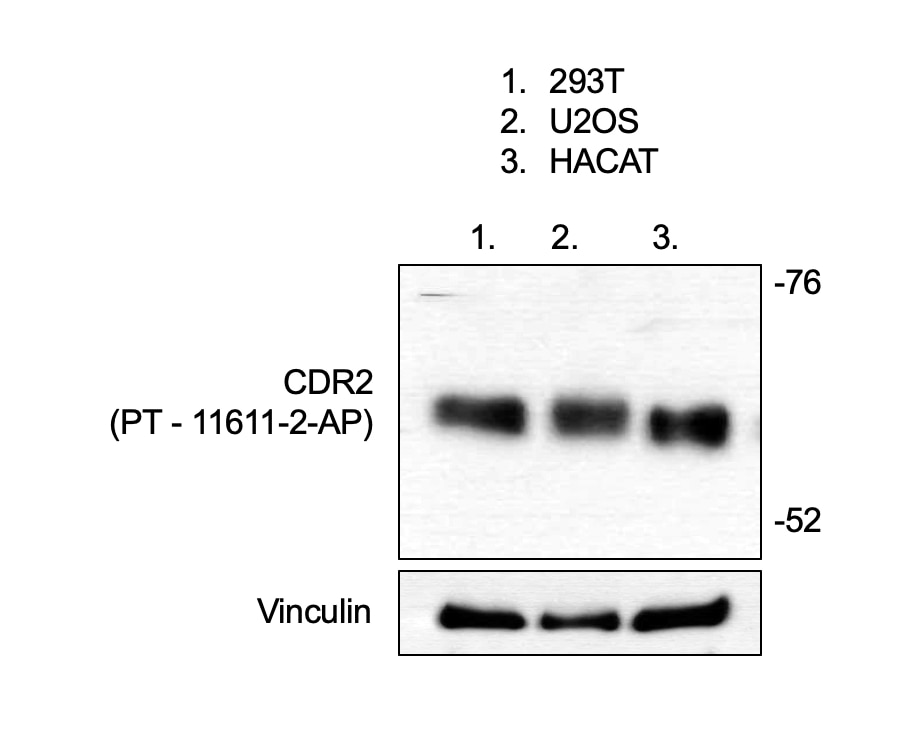
anwesh (Verified Customer) (07-29-2019) | The protein was found at the right size and no additional background bands were observed around the size range. Perfect!
 |





