

Tested Applications
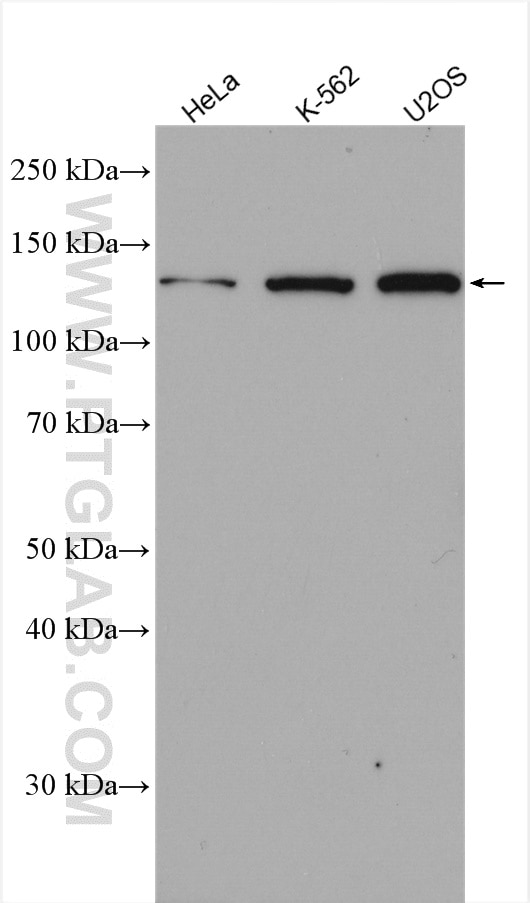
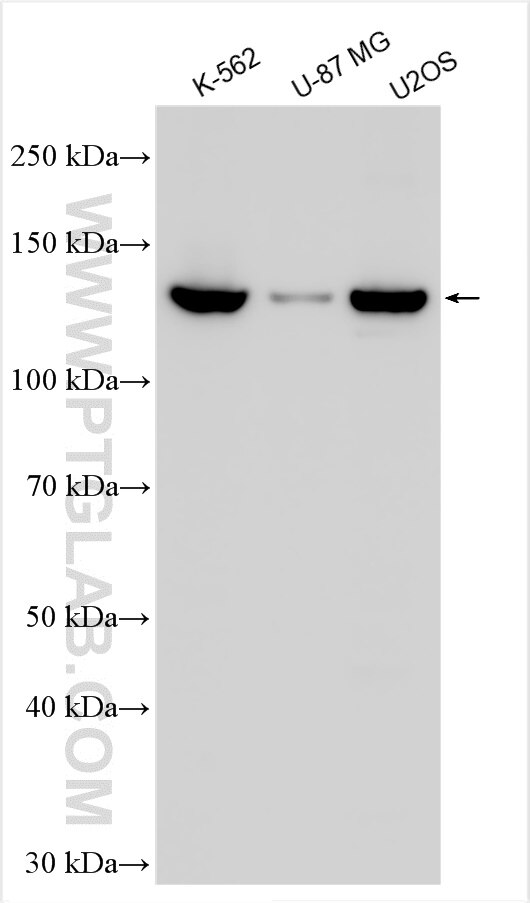
| Positive WB detected in | HeLa cells, K-562 cells, U2OS cells, U-87 MG cells |
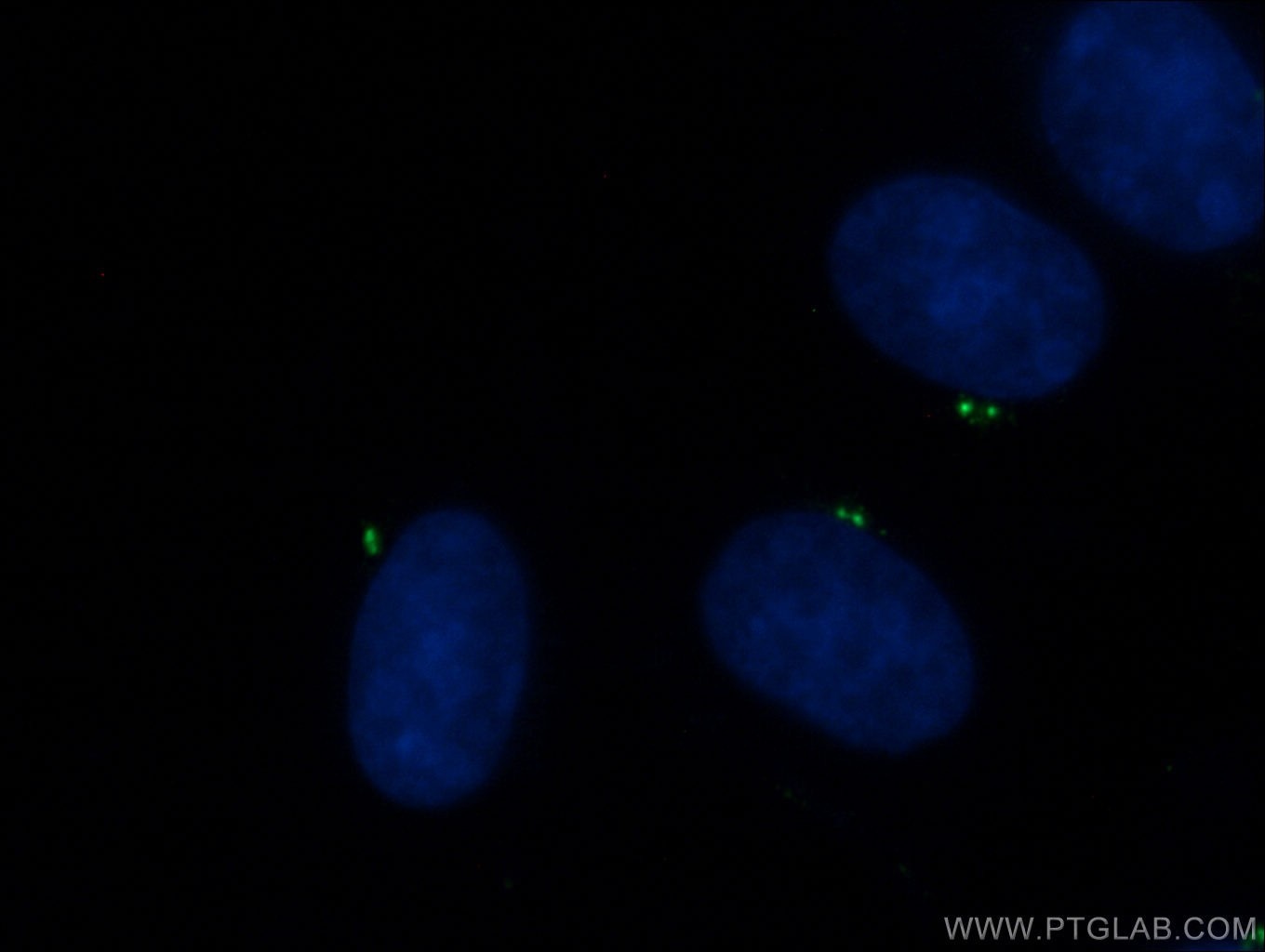
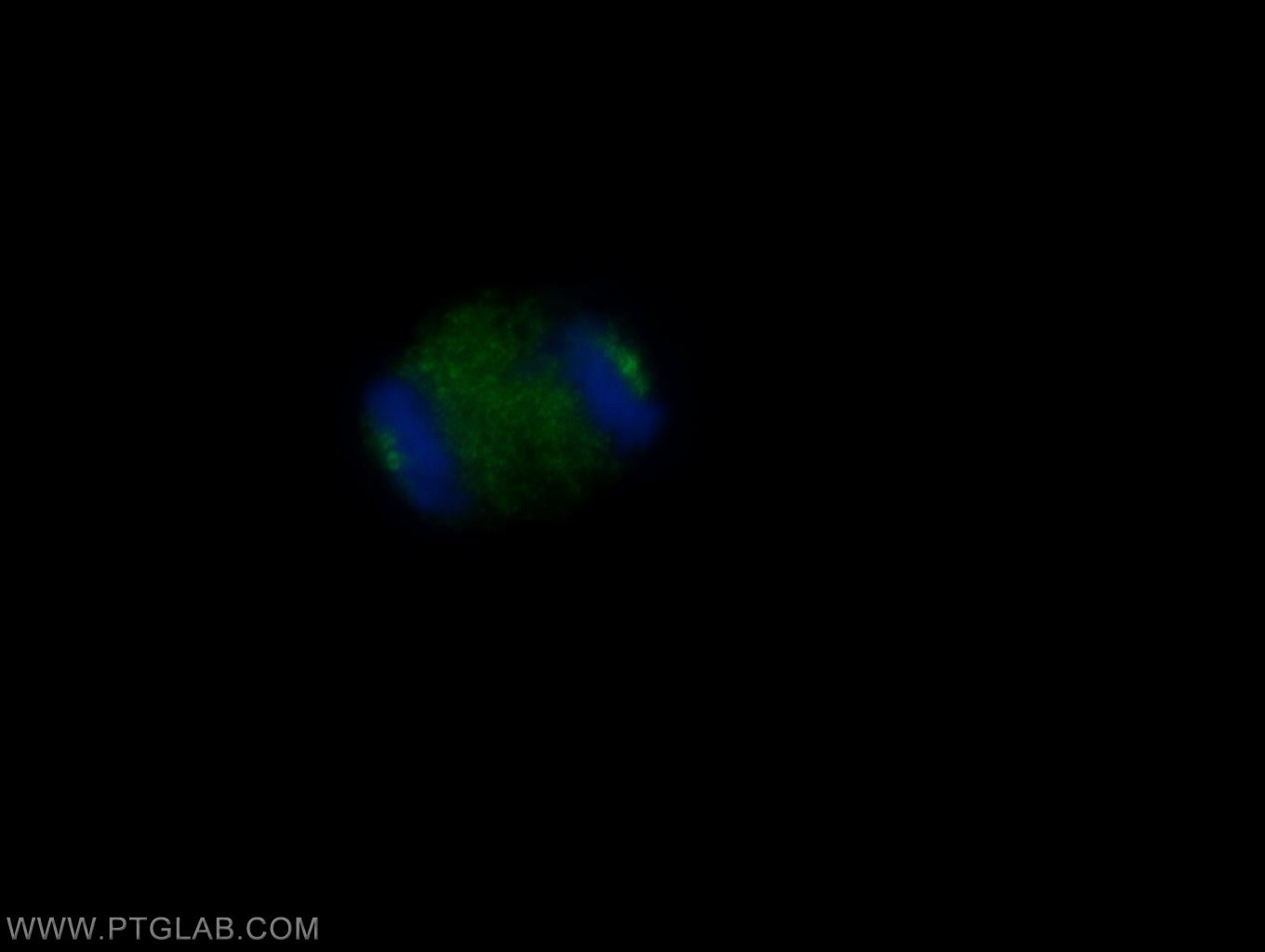
| Positive IF/ICC detected in | MDCK cells |
Recommended dilution
| Application | Dilution |
|---|---|
| Western Blot (WB) | WB : 1:1000-1:3000 |
| Immunofluorescence (IF)/ICC | IF/ICC : 1:50-1:500 |
| It is recommended that this reagent should be titrated in each testing system to obtain optimal results. | |
| Sample-dependent, Check data in validation data gallery. | |
Product Information
24428-1-AP targets CEP135 in WB, IF/ICC, ELISA applications and shows reactivity with human, Canine samples.
| Tested Reactivity | human, Canine |
| Cited Reactivity | human, mouse |
| Host / Isotype | Rabbit / IgG |
| Class | Polyclonal |
| Type | Antibody |
| Immunogen |
CatNo: Ag19122 Product name: Recombinant human CEP135 protein Source: e coli.-derived, PET28a Tag: 6*His Domain: 1-233 aa of BC136535 Sequence: MTTAVERKYINIRKRLDQLGYRQTLTVECLPLVEKLFSDLVHTTESLRQSKLSAVKAEKESANFDFVLEPYKLENARLSRENNELYLELMKLREHSDQHVKELKTSLKKCARETADLKFLNNQYAHKLKLLEKESKAKNERIQQLQEKNLHAVVQTPGGKKRSIAFRRQRMQIDEPVPPSEVSSYPVPQPDDPYIADLLQVADNRIQELQQEVHQLQEKLAMMESGVRDYSKQ Predict reactive species |
| Full Name | centrosomal protein 135kDa |
| Calculated Molecular Weight | 1140 aa, 134 kDa |
| Observed Molecular Weight | 135 kDa |
| GenBank Accession Number | BC136535 |
| Gene Symbol | CEP135 |
| Gene ID (NCBI) | 9662 |
| RRID | AB_2879543 |
| Conjugate | Unconjugated |
| Form | Liquid |
| Purification Method | Antigen affinity purification |
| UNIPROT ID | Q66GS9 |
| Storage Buffer | PBS with 0.02% sodium azide and 50% glycerol, pH 7.3. |
| Storage Conditions | Store at -20°C. Stable for one year after shipment. Aliquoting is unnecessary for -20oC storage. 20ul sizes contain 0.1% BSA. |
Background Information
CEP135 is a 135 kDa centrosomal protein that is present in a wide range of organisms. CEP135 is located at the centrosome throughout the cell cycle, and localization is independent of the microtubule network. It distributes throughout the centrosomal area in association with the electron-dense material surrounding centrioles.
Protocols
| Product Specific Protocols | |
|---|---|
| IF protocol for CEP135 antibody 24428-1-AP | Download protocol |
| WB protocol for CEP135 antibody 24428-1-AP | Download protocol |
| Standard Protocols | |
|---|---|
| Click here to view our Standard Protocols |
Publications
What published studies show
The CEP135 Polyclonal antibody (Cat# 24428-1-AP) has 15 citations spanning journals including Science, Cell, Nature Communications, Current Biology, Cell Reports, EMBO Reports, eLife, Molecular Biology of the Cell, Journal of Cell Science, Asian Journal of Andrology, Cells, Gene, and bioRxiv. Research fields covered include centriole assembly and duplication, ciliogenesis, centrosome structure, mitotic spindle formation, and sperm flagella morphology.
| Species | Application | Title |
|---|---|---|
Cell Time-series reconstruction of the molecular architecture of human centriole assembly | ||
Curr Biol SAS-6 Association with γ-Tubulin Ring Complex Is Required for Centriole Duplication in Human Cells. | ||
EMBO Rep ENKD1 promotes CP110 removal through competing with CEP97 to initiate ciliogenesis. |
Reviews
What customers say
The single review for this product is a 5-star rating from an immunofluorescence experiment on human RPE-1 cells. The antibody was used at a 1:200 dilution following cold methanol fixation and standard permeabilization/blocking steps. It produced clear, specific staining of Cep135 at the centrosome, co-stained with γ-tubulin and Hoechst, demonstrating reliable performance for IF applications.
The reviews below have been submitted by verified Proteintech customers who received an incentive for providing their feedback.
Elisa (Verified Customer) (01-25-2023) | RPE1 cells stained for Hoechst (DNA marker, in blue), Cep135 (in magenta) and g-Tubulin (pericentriolar matrix marker, in green). RPE1 cells were fixed in cold methanol for 10' at -20C. Cells were then rehydrated with PBS for 5'. Membrane permeabilization was then performed with 0.1% Triton + 0.1% Tween +0.01%SDS in PBS for 5'. Cells were finally incubated with blocking buffer (5% BSA+ 0.1% Tween in PBS) for 30' at RT. Primary antibody was diluted in blocking buffer 1:200 and incubated for 1h at room temperature. Alexa-488-Anti-rabbit was used as secondary antibody (1:600 dilution) (1h at room temperature).
 |





