
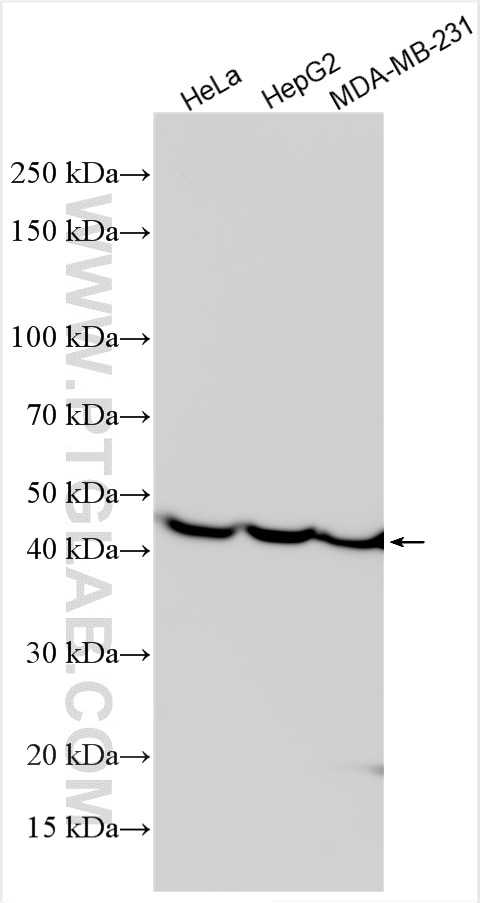

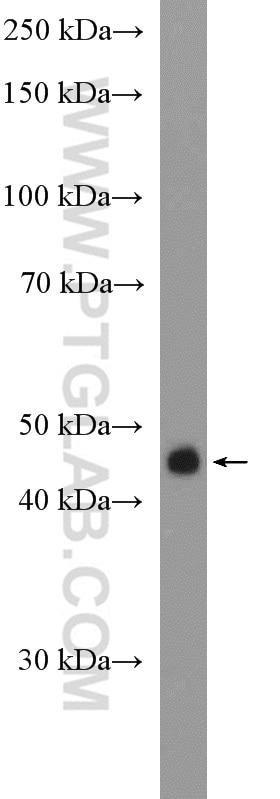
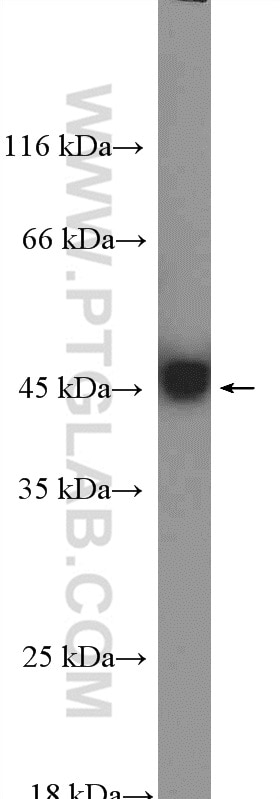
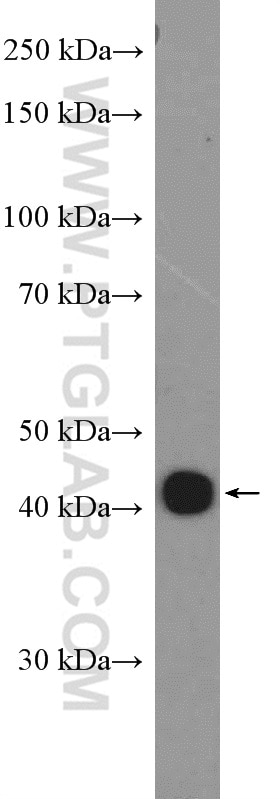


Tested Applications
| Positive WB detected in | HeLa cells, HEK-293 cells, mouse heart tissue, HepG2 cells, MDA-MB-231 cells |
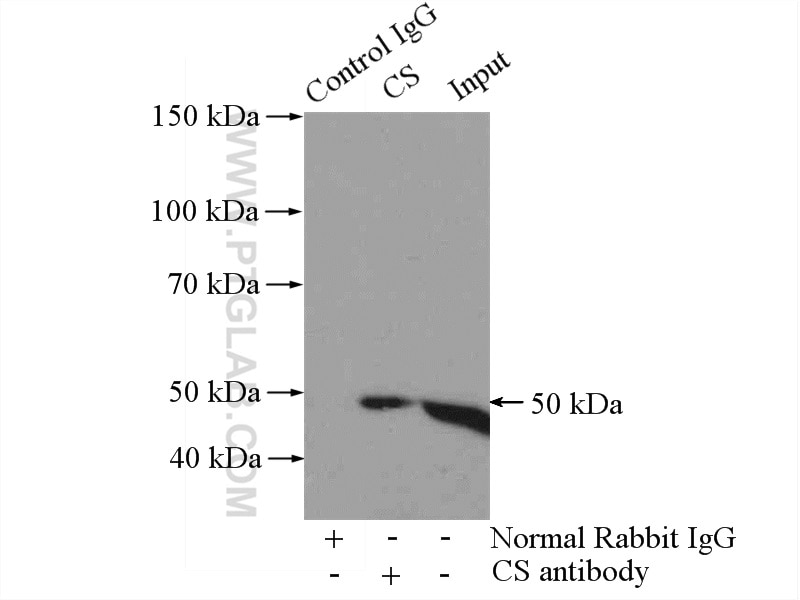
| Positive IP detected in | mouse heart tissue |
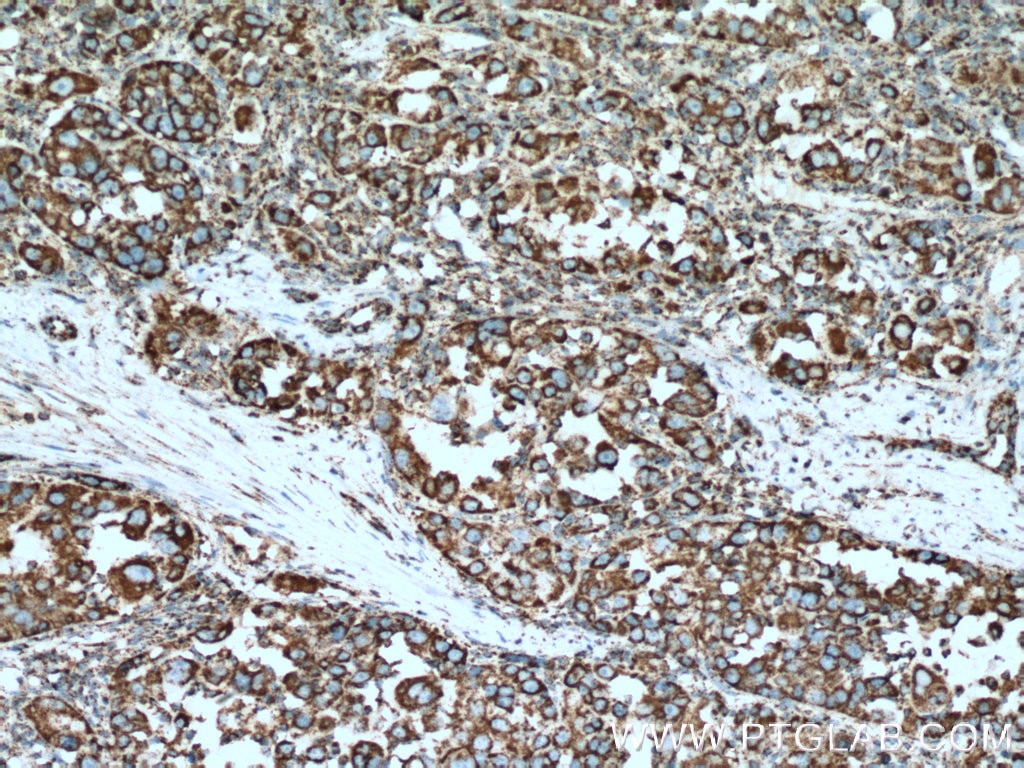
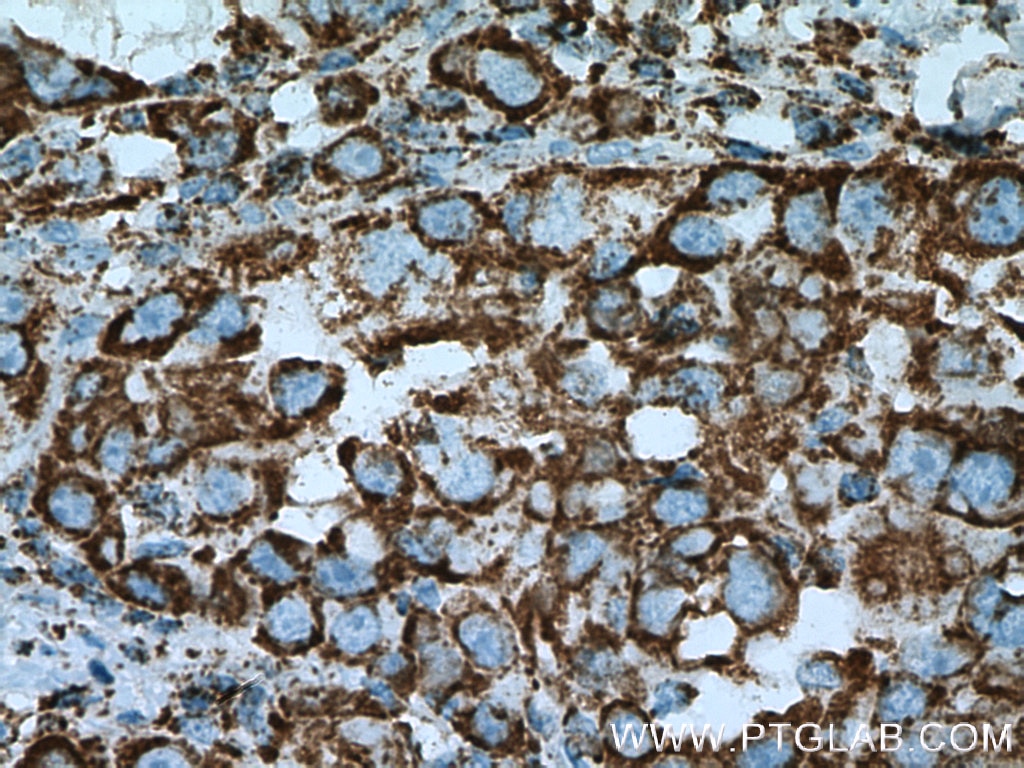
| Positive IHC detected in | human liver cancer tissue Note: suggested antigen retrieval with TE buffer pH 9.0; (*) Alternatively, antigen retrieval may be performed with citrate buffer pH 6.0 |
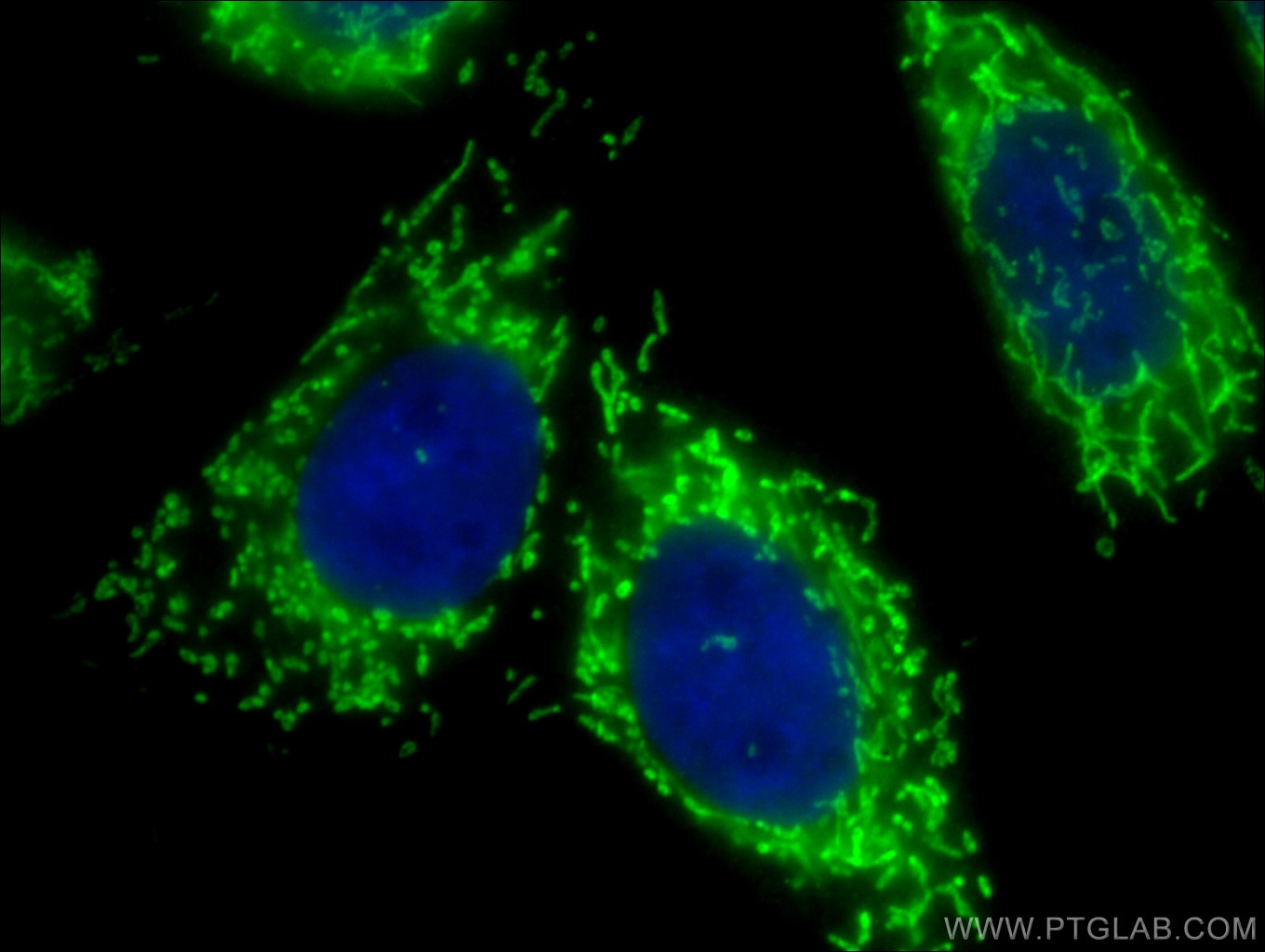
| Positive IF/ICC detected in | HepG2 cells |
Recommended dilution
| Application | Dilution |
|---|---|
| Western Blot (WB) | WB : 1:2000-1:16000 |
| Immunoprecipitation (IP) | IP : 0.5-4.0 ug for 1.0-3.0 mg of total protein lysate |
| Immunohistochemistry (IHC) | IHC : 1:100-1:400 |
| Immunofluorescence (IF)/ICC | IF/ICC : 1:50-1:500 |
| It is recommended that this reagent should be titrated in each testing system to obtain optimal results. | |
| Sample-dependent, Check data in validation data gallery. | |
Product Information
16131-1-AP targets Citrate synthase in WB, IHC, IF/ICC, IP, CoIP, ELISA applications and shows reactivity with human, mouse, rat samples.
| Tested Reactivity | human, mouse, rat |
| Cited Reactivity | human, mouse, rat, rabbit, chicken, hamster |
| Host / Isotype | Rabbit / IgG |
| Class | Polyclonal |
| Type | Antibody |
| Immunogen |
CatNo: Ag9117 Product name: Recombinant human CS protein Source: e coli.-derived, PGEX-4T Tag: GST Domain: 132-466 aa of BC010106 Sequence: EQVSWLSKEWAKRAALPSHVVTMLDNFPTNLHPMSQLSAAVTALNSESNFARAYAQGISRTKYWELIYEDSMDLIAKLPCVAAKIYRNLYREGSGIGAIDSNLDWSHNFTNMLGYTDHQFTELTRLYLTIHSDHEGGNVSAHTSHLVGSALSDPYLSFAAAMNGLAGPLHGLANQEVLVWLTQLQKEVGKDVSDEKLRDYIWNTLNSGRVVPGYGHAVLRKTDPRYTCQREFALKHLPNDPMFKLVAQLYKIVPNVLLEQGKAKNPWPNVDAHSGVLLQYYGMTEMNYYTVLFGVSRALGVLAQLIWSRALGFPLERPKSMSTEGLMKFVDSKSG Predict reactive species |
| Full Name | citrate synthase |
| Calculated Molecular Weight | 466 aa, 52 kDa |
| Observed Molecular Weight | 45-50 kDa |
| GenBank Accession Number | BC010106 |
| Gene Symbol | Citrate Synthase |
| Gene ID (NCBI) | 1431 |
| RRID | AB_1640013 |
| Conjugate | Unconjugated |
| Form | Liquid |
| Purification Method | Antigen affinity purification |
| UNIPROT ID | O75390 |
| Storage Buffer | PBS with 0.02% sodium azide and 50% glycerol, pH 7.3. |
| Storage Conditions | Store at -20°C. Stable for one year after shipment. Aliquoting is unnecessary for -20oC storage. 20ul sizes contain 0.1% BSA. |
Background Information
Citrate synthase (CS), the first and rate-limiting enzyme of the tricarboxylic acid cycle, plays a key role in regulating energy generation of mitochondrial respiration(PMID:19479947).It belongs to the citrate synthase family. The deduced 466-amino acid protein contains an N-terminal mitochondrial targeting sequence and a motif highly conserved in citrate synthases(PMID:12549038). It can exsit as a dimer(PMID:8749851). Northern blot analysis detected no CS expression in thymus and small intestine(PMID:12549038). This antibody is specific to CS.
Protocols
| Product Specific Protocols | |
|---|---|
| IF protocol for Citrate synthase antibody 16131-1-AP | Download protocol |
| IHC protocol for Citrate synthase antibody 16131-1-AP | Download protocol |
| IP protocol for Citrate synthase antibody 16131-1-AP | Download protocol |
| WB protocol for Citrate synthase antibody 16131-1-AP | Download protocol |
| Standard Protocols | |
|---|---|
| Click here to view our Standard Protocols |
Publications
What published studies show
The Citrate synthase Polyclonal antibody (catalog number 16131-1-AP) has 118 citations. These appear in journals including Nature, Cell, Nature Communications, Nature Neuroscience, Nature Cell Biology, Science Translational Medicine, Science Advances, EMBO Journal, Molecular Cell, Cell Reports, Free Radical Biology and Medicine, Journal of Biological Chemistry, and PLoS One. Research fields span mitochondrial biology, energy metabolism, oxidative stress, cancer, cardiovascular disease, neurodegeneration, and immunology, with applications mainly in Western blot, immunofluorescence, immunohistochemistry, and immunoprecipitation.
| Species | Application | Title |
|---|---|---|
Cell Architecture of the outbred brown fat proteome defines regulators of metabolic physiology | ||
J Hepatol Nucleolin lactylation contributes to intrahepatic cholangiocarcinoma pathogenesis via RNA splicing regulation of MADD | ||
Adv Mater Supramolecular Hydrogel with Ultra-Rapid Cell-Mediated Network Adaptation for Enhancing Cellular Metabolic Energetics and Tissue Regeneration | ||
Nat Cell Biol Breast-cancer-secreted miR-122 reprograms glucose metabolism in premetastatic niche to promote metastasis. |
Reviews
What customers say
Both reviewers used this antibody for Western Blot at a 1:1000 dilution and reported positive results. One user tested it on human samples and noted clear, sharp bands as expected. The other tested it on DU145 prostate cancer cell lysates (5% milk, 1 hr RT incubation) and found it performed very well. Overall, the antibody is well-received for WB applications with human samples, delivering specific and reliable signal.
The reviews below have been submitted by verified Proteintech customers who received an incentive for providing their feedback.
Sami Elamin Mustafa (Verified Customer) (01-31-2025) | The antibody works nicely giving clear sharp bands as expected.
|
RAHUL (Verified Customer) (07-03-2019) | Works very good with human cell lysates. 1:1000 dilution in 5% milk; 1 hr incubation at RT.
|











