

Tested Applications
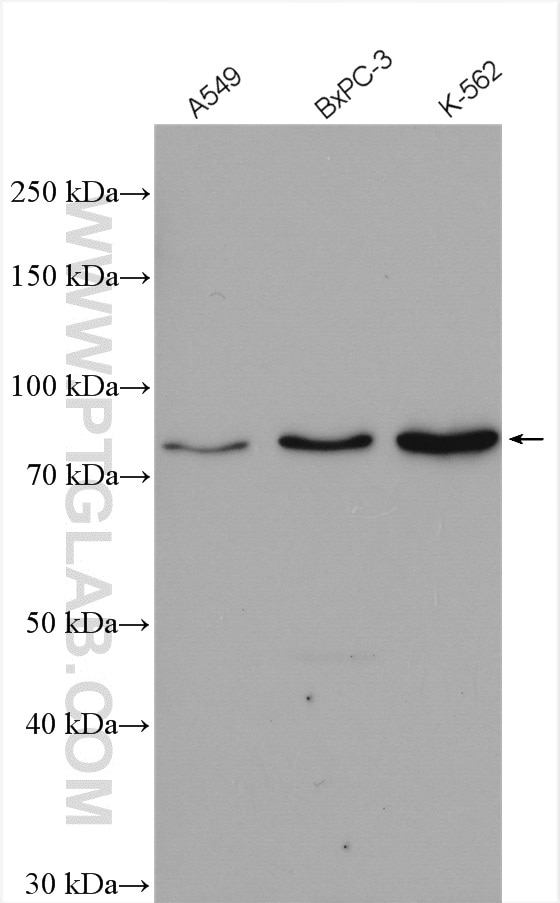
| Positive WB detected in | A549 cells, BxPC-3 cells, K-562 cells |
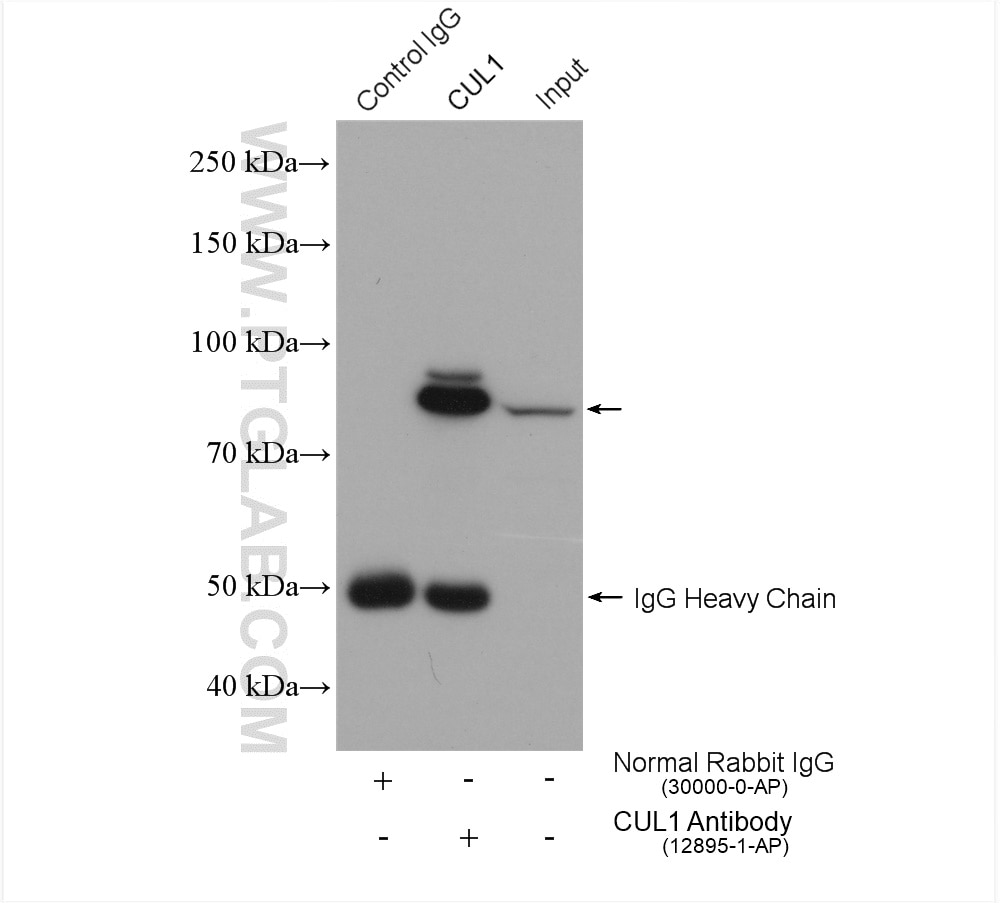
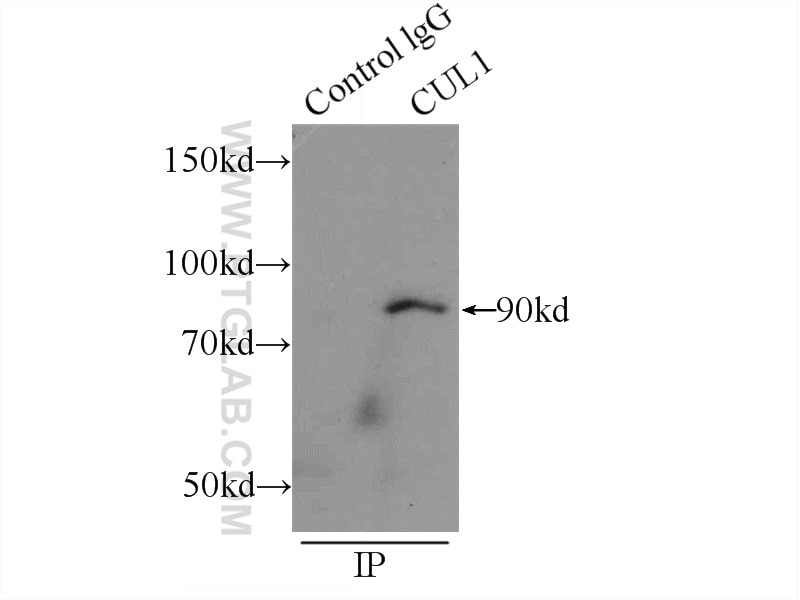
| Positive IP detected in | K-562 cells, HeLa cells |
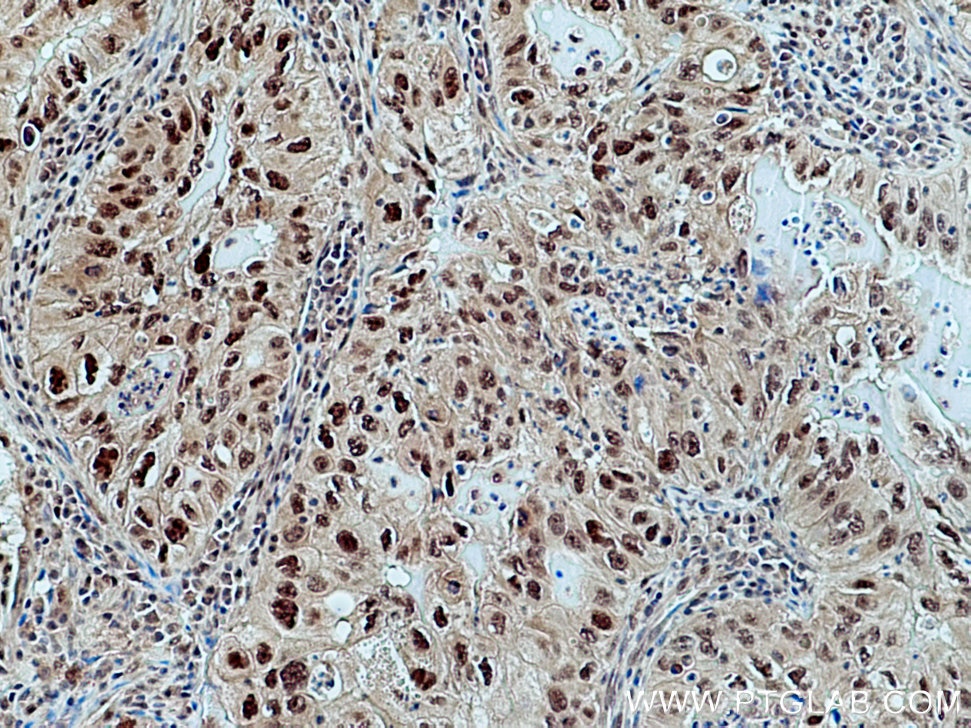
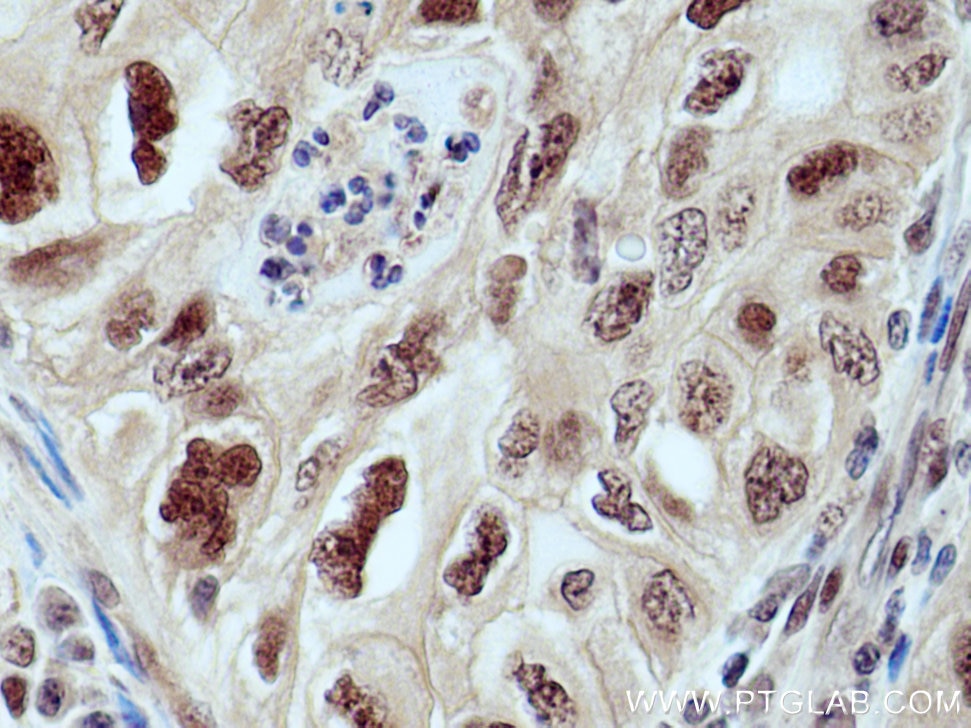
| Positive IHC detected in | human lung cancer tissue Note: suggested antigen retrieval with TE buffer pH 9.0; (*) Alternatively, antigen retrieval may be performed with citrate buffer pH 6.0 |
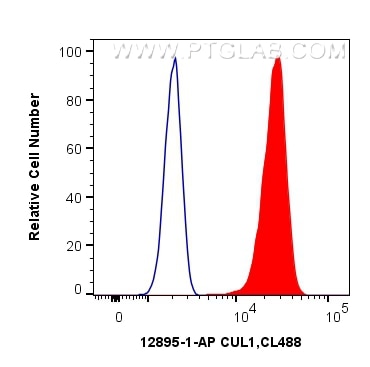
| Positive FC (Intra) detected in | HeLa cells |
Recommended dilution
| Application | Dilution |
|---|---|
| Western Blot (WB) | WB : 1:5000-1:50000 |
| Immunoprecipitation (IP) | IP : 0.5-4.0 ug for 1.0-3.0 mg of total protein lysate |
| Immunohistochemistry (IHC) | IHC : 1:250-1:1000 |
| Flow Cytometry (FC) (INTRA) | FC (INTRA) : 0.40 ug per 10^6 cells in a 100 µl suspension |
| It is recommended that this reagent should be titrated in each testing system to obtain optimal results. | |
| Sample-dependent, Check data in validation data gallery. | |
Product Information
12895-1-AP targets CUL1 in WB, IHC, FC (Intra), IP, CoIP, ELISA applications and shows reactivity with human, mouse samples.
| Tested Reactivity | human, mouse |
| Cited Reactivity | human, mouse |
| Host / Isotype | Rabbit / IgG |
| Class | Polyclonal |
| Type | Antibody |
| Immunogen |
CatNo: Ag3585 Product name: Recombinant human CUL1 protein Source: e coli.-derived, PGEX-4T Tag: GST Domain: 111-462 aa of BC034318 Sequence: YCDSLLKKSSKNPEEAELEDTLNQVMVVFKYIEDKDVFQKFYAKMLAKRLVHQNSASDDAEASMISKLKQACGFEYTSKLQRMFQDIGVSKDLNEQFKKHLTNSEPLDLDFSIQVLSSGSWPFQQFCTFALPSELERSYQRFTAFYASRHSGRKLTWLYQLSKGELVTNCFKNRYTLQASTFQMAILLQYNTEDAYTVQQLTDSTQIKMDILAQVLQILLKSKLLVLEDENANVDEVELKPDTLIKLYLGYKNKKLRVNINVPMKTEQKQEQETTHKNIEEDRKLLIQAAIVRIMKMRKVLKHQQLLGEVLTQLSSRFKPRVPVIKKCIDILIEKEYLERVDGEKDTYSYLA Predict reactive species |
| Full Name | cullin 1 |
| Calculated Molecular Weight | 90 kDa |
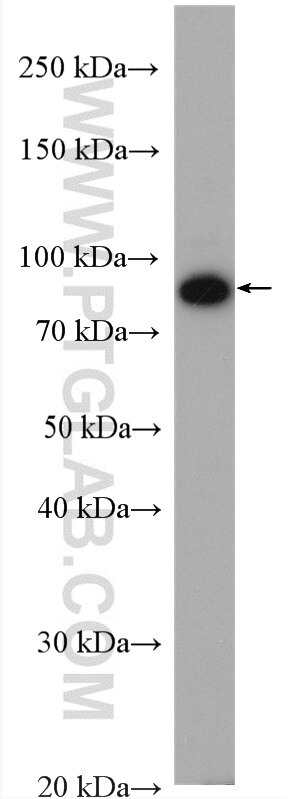
| Observed Molecular Weight | 80-90 kDa |
| GenBank Accession Number | BC034318 |
| Gene Symbol | CUL1 |
| Gene ID (NCBI) | 8454 |
| RRID | AB_2086291 |
| Conjugate | Unconjugated |
| Form | Liquid |
| Purification Method | Antigen affinity purification |
| UNIPROT ID | Q13616 |
| Storage Buffer | PBS with 0.02% sodium azide and 50% glycerol, pH 7.3. |
| Storage Conditions | Store at -20°C. Stable for one year after shipment. Aliquoting is unnecessary for -20oC storage. 20ul sizes contain 0.1% BSA. |
Background Information
The cullin family proteins are scaffold proteins for the Ring finger type E3 ligases. Humans express seven cullin proeins: CUL1-3, CUL4A, CUL4B, CUL5, and CUL7. Each cullin protein can form an E3 ligase similar to the prototype Ring-type E3 ligase Skp1-CUL1-F-box complex. The Cullin-RING-finger type E3 ligases are important regulators in early embryonic development, as highlighted by genetic studies demonstrating that knock-out of CUL1, CUL3, or CUL4A in mice results in early embryonic lethality.
Protocols
| Product Specific Protocols | |
|---|---|
| FC protocol for CUL1 antibody 12895-1-AP | Download protocol |
| IHC protocol for CUL1 antibody 12895-1-AP | Download protocol |
| IP protocol for CUL1 antibody 12895-1-AP | Download protocol |
| WB protocol for CUL1 antibody 12895-1-AP | Download protocol |
| Standard Protocols | |
|---|---|
| Click here to view our Standard Protocols |
Publications
What published studies show
The CUL1 Polyclonal antibody (Cat# 12895-1-AP) has 30 citations. They appear in journals including Nature Chemical Biology, Cell Metabolism, Molecular Cell, EMBO Journal, Developmental Cell, Cell Reports, Cell Death & Differentiation, Cell Death & Disease, Signal Transduction and Targeted Therapy, Redox Biology, Arthritis & Rheumatology, Journal of Experimental & Clinical Cancer Research, Clinical & Translational Medicine, Journal of Cell Biology, Neoplasia, iScience, and others. Research fields center on ubiquitination and neddylation, cullin-RING E3 ligase biology, cancer, cardiac disease, mitophagy, and cell signaling.
| Species | Application | Title |
|---|---|---|
Signal Transduct Target Ther A small molecule inhibitor of the UBE2F-CRL5 axis induces apoptosis and radiosensitization in lung cancer | ||
Cell Metab The tRNA-GCN2-FBXO22-axis-mediated mTOR ubiquitination senses amino acid insufficiency | ||
Redox Biol Cardioprotective effect of MLN4924 on ameliorating autophagic flux impairment in myocardial ischemia-reperfusion injury by Sirt1. | ||
Mol Cell A mitophagy sensor PPTC7 controls BNIP3 and NIX degradation to regulate mitochondrial mass | ||
Nat Chem Biol E2-Ub-R74G strategy reveals E2-specific ubiquitin conjugation profiles in live cells |
Reviews
What customers say
The single review for this product is a 5-star rating from a Western Blot experiment performed on mouse heart tissue. The reviewer reported a strong band at the predicted molecular weight, indicating reliable specificity and performance for their application. Overall, the feedback is positive, with no issues or concerns raised.
The reviews below have been submitted by verified Proteintech customers who received an incentive for providing their feedback.
WEI (Verified Customer) (05-11-2022) | strong band for predicted band
|








