


Tested Applications
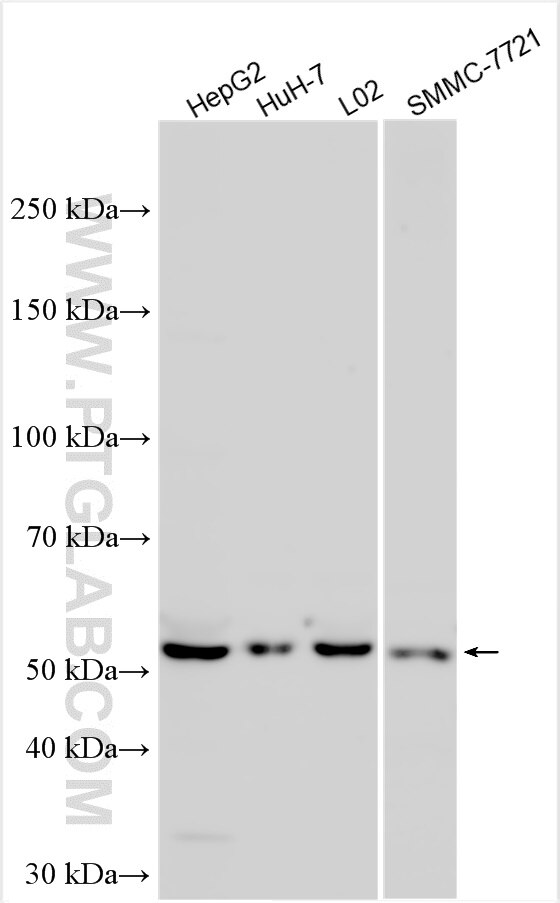
| Positive WB detected in | HepG2 cells, HuH-7 cells, L02 cells, SMMC-7721 cells |
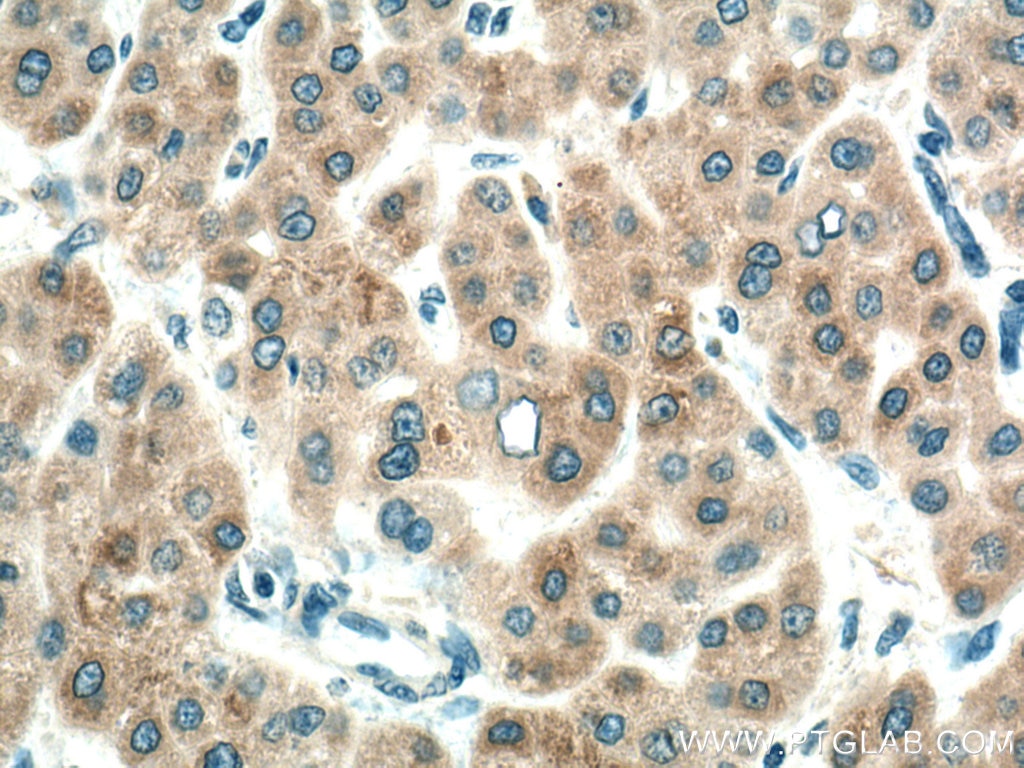
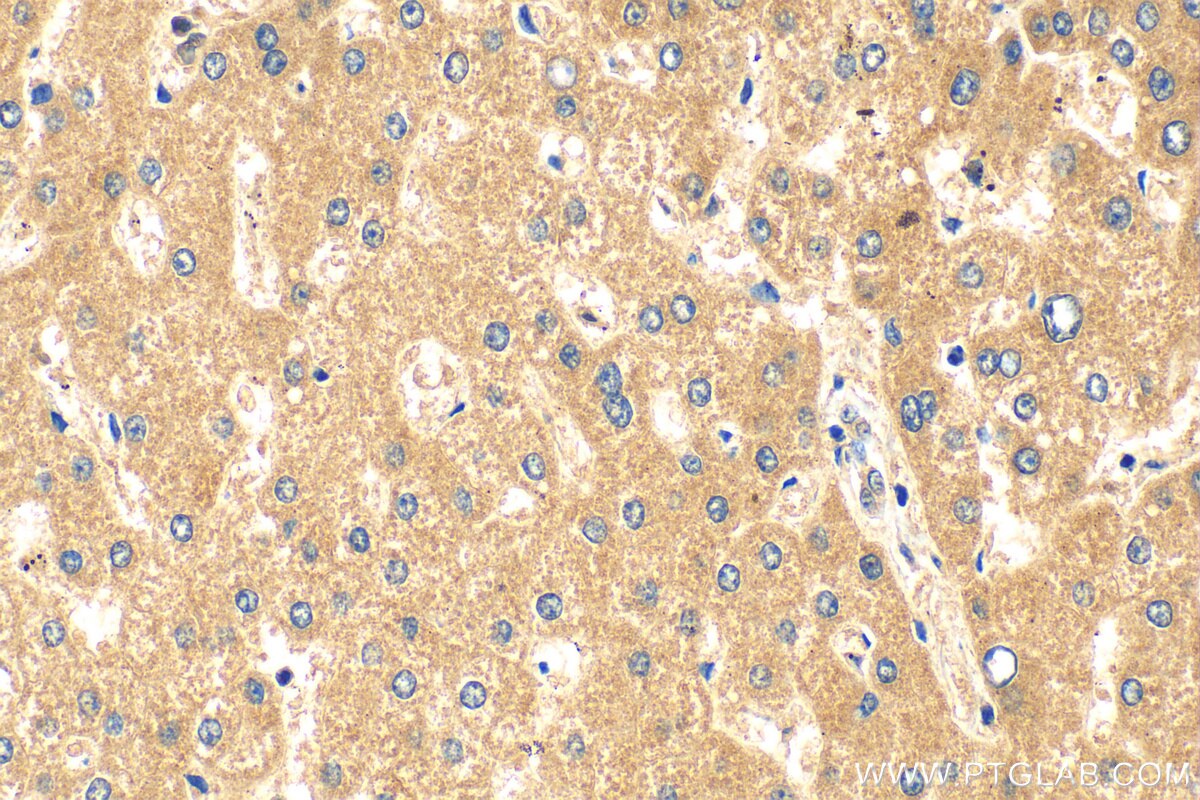
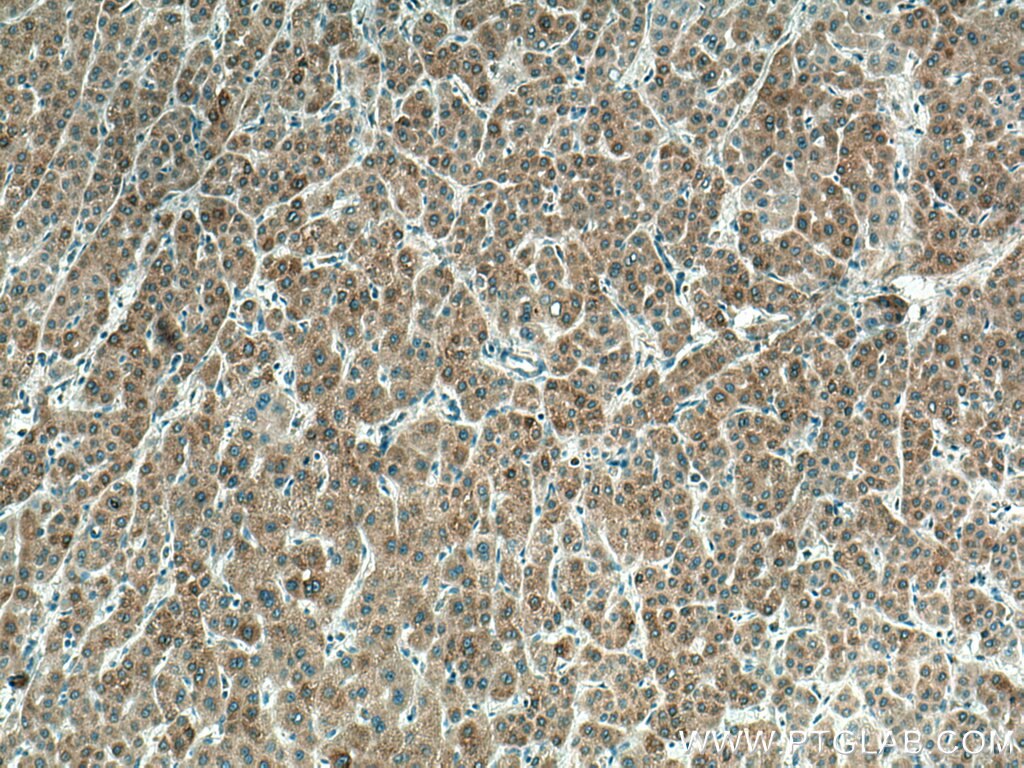
| Positive IHC detected in | human liver tissue, human liver cancer tissue Note: suggested antigen retrieval with TE buffer pH 9.0; (*) Alternatively, antigen retrieval may be performed with citrate buffer pH 6.0 |
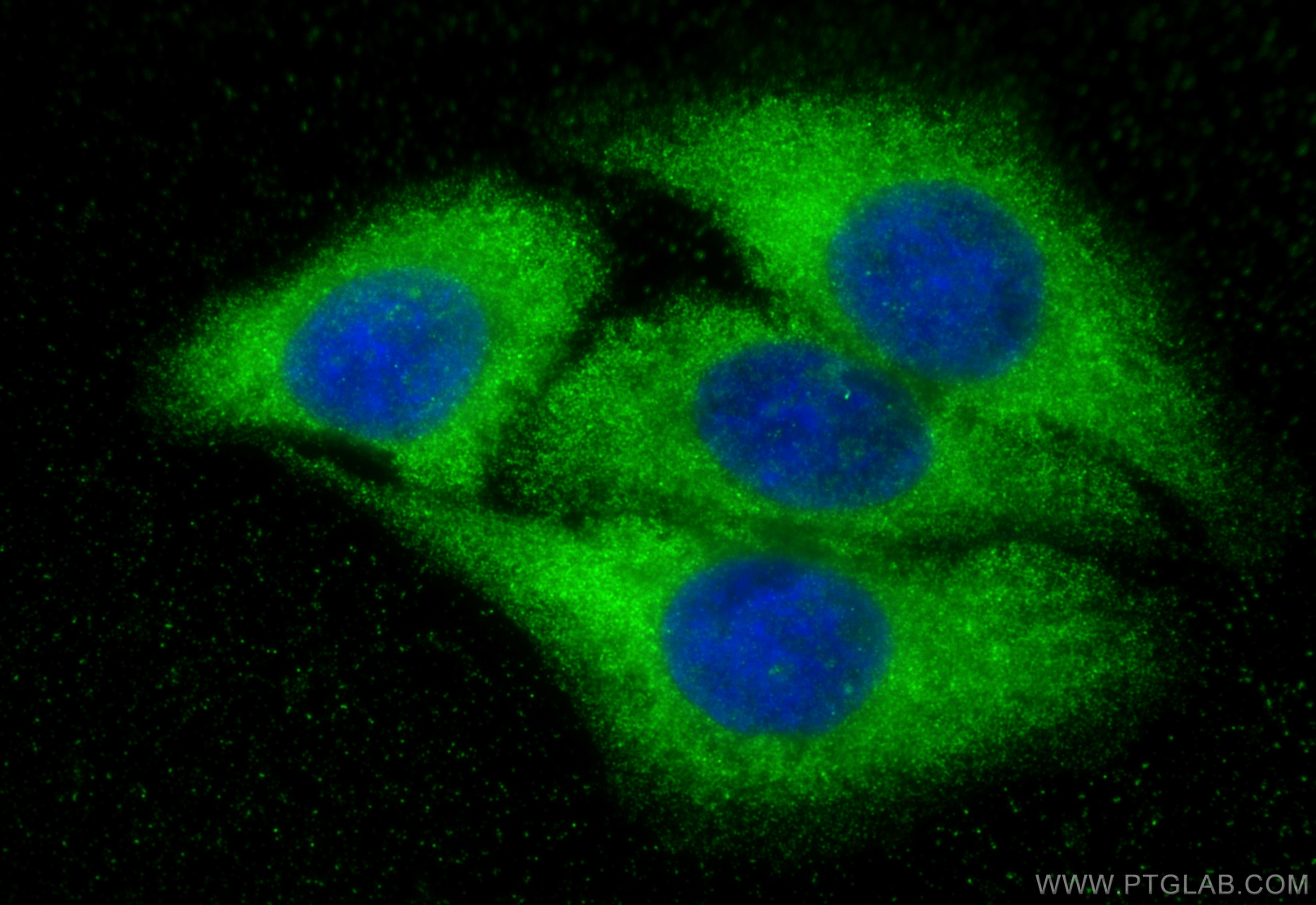
| Positive IF/ICC detected in | HepG2 cells |
Recommended dilution
| Application | Dilution |
|---|---|
| Western Blot (WB) | WB : 1:1000-1:3000 |
| Immunohistochemistry (IHC) | IHC : 1:50-1:500 |
| Immunofluorescence (IF)/ICC | IF/ICC : 1:50-1:500 |
| It is recommended that this reagent should be titrated in each testing system to obtain optimal results. | |
| Sample-dependent, Check data in validation data gallery. | |
Product Information
18054-1-AP targets CYP7A1 in WB, IHC, IF/ICC, ELISA applications and shows reactivity with human samples.
| Tested Reactivity | human |
| Cited Reactivity | human, mouse, rat, hamster |
| Host / Isotype | Rabbit / IgG |
| Class | Polyclonal |
| Type | Antibody |
| Immunogen |
CatNo: Ag12572 Product name: Recombinant human CYP7A1 protein Source: e coli.-derived, PGEX-4T Tag: GST Domain: 154-504 aa of BC101777 Sequence: RPPVSSNSKTAAWVTEGMYSFCYRVMFEAGYLTIFGRDLTRRDTQKAHILNNLDNFKQFDKVFPALVAGLPIHMFRTAHNAREKLAESLRHENLQKRESISELISLRMFLNDTLSTFDDLEKAKTHLVVLWASQANTIPATFWSLFQMIRNPEAMKAATEEVKRTLENAGQKVSLEGNPICLSQAELNDLPVLDSIIKESLRLSSASLNIRTAKEDFTLHLEDGSYNIRKDDIIALYPQLMHLDPEIYPDPLTFKYDRYLDENGKTKTTFYCNGLKLKYYYMPFGSGATICPGRLFAIHEIKQFLILMLSYFELELIEGQAKCPPLDQSRAGLGILPPLNDIEFKYKFKHL Predict reactive species |
| Full Name | cytochrome P450, family 7, subfamily A, polypeptide 1 |
| Calculated Molecular Weight | 504 aa, 58 kDa |
| Observed Molecular Weight | 58 kDa |
| GenBank Accession Number | BC101777 |
| Gene Symbol | CYP7A1 |
| Gene ID (NCBI) | 1581 |
| RRID | AB_3085551 |
| Conjugate | Unconjugated |
| Form | Liquid |
| Purification Method | Antigen affinity purification |
| UNIPROT ID | P22680 |
| Storage Buffer | PBS with 0.02% sodium azide and 50% glycerol, pH 7.3. |
| Storage Conditions | Store at -20°C. Stable for one year after shipment. Aliquoting is unnecessary for -20oC storage. 20ul sizes contain 0.1% BSA. |
Background Information
CYP7A1 (Cytochrome P450 Family 7 Subfamily A Member 1), is a cholesterol 7alpha-hydroxylase, catalyzing the first and rate-limiting step in the neutral or classic pathway for bile acid biosynthesis. CYP7A1 is a postulated gene modifier of colorectal cancer risk and target for the therapeutic bile acid, ursodeoxycholic acid (UDCA). The CYP7A1 enzyme controls the rate-limiting step of the catabolism of cholesterol into bile acids in the liver.
Protocols
| Product Specific Protocols | |
|---|---|
| IF protocol for CYP7A1 antibody 18054-1-AP | Download protocol |
| IHC protocol for CYP7A1 antibody 18054-1-AP | Download protocol |
| WB protocol for CYP7A1 antibody 18054-1-AP | Download protocol |
| Standard Protocols | |
|---|---|
| Click here to view our Standard Protocols |
Publications
What published studies show
CYP7A1 Polyclonal antibody (Cat# 18054-1-AP) has 61 citations across journals including Phytomedicine, J Ethnopharmacol, Cell Mol Gastroenterol Hepatol, Adv Sci, Food Funct, Drug Des Devel Ther, Biochem Pharmacol, J Lipid Res, Hepatol Commun, Environ Sci Technol, and others. Research fields cover bile acid metabolism, cholestatic liver injury, hepatic fibrosis, lipid metabolism, gut microbiota modulation, gallstone formation, and pharmacological interventions targeting the FXR/CYP7A1 signaling axis.
| Species | Application | Title |
|---|---|---|
Adv Sci (Weinh) Diabetes Mellitus Facilitates Gallstone Formation Through CXCR2-NETs-Mediated Liver-Bile Barrier Damage. | ||
Cell Mol Biol Lett Maternal high-fat diet orchestrates offspring hepatic cholesterol metabolism via MEF2A hypermethylation-mediated CYP7A1 suppression | ||
Environ Sci Technol Microcystin-LR Disrupts Bile Acid Homeostasis, Driving Cholestatic Liver Injury and Gallstones via FXR/SHP Antagonism. | ||
NPJ Biofilms Microbiomes Disruption of bile acid homeostasis potentiates Paneth cell ablation by activating the intestinal Farnesoid X receptor in necrotizing enterocolitis. | ||
Phytomedicine Dictamnus dasycarpus Turcz. alleviates cholestatic liver injury: orchestrating tissue-divergent extracellular matrix remodeling across the gut-liver axis. | ||
Phytomedicine Diammonium glycyrrhizinate alleviates iron overload-induced liver injury in mice via regulating the gut-liver axis |







