
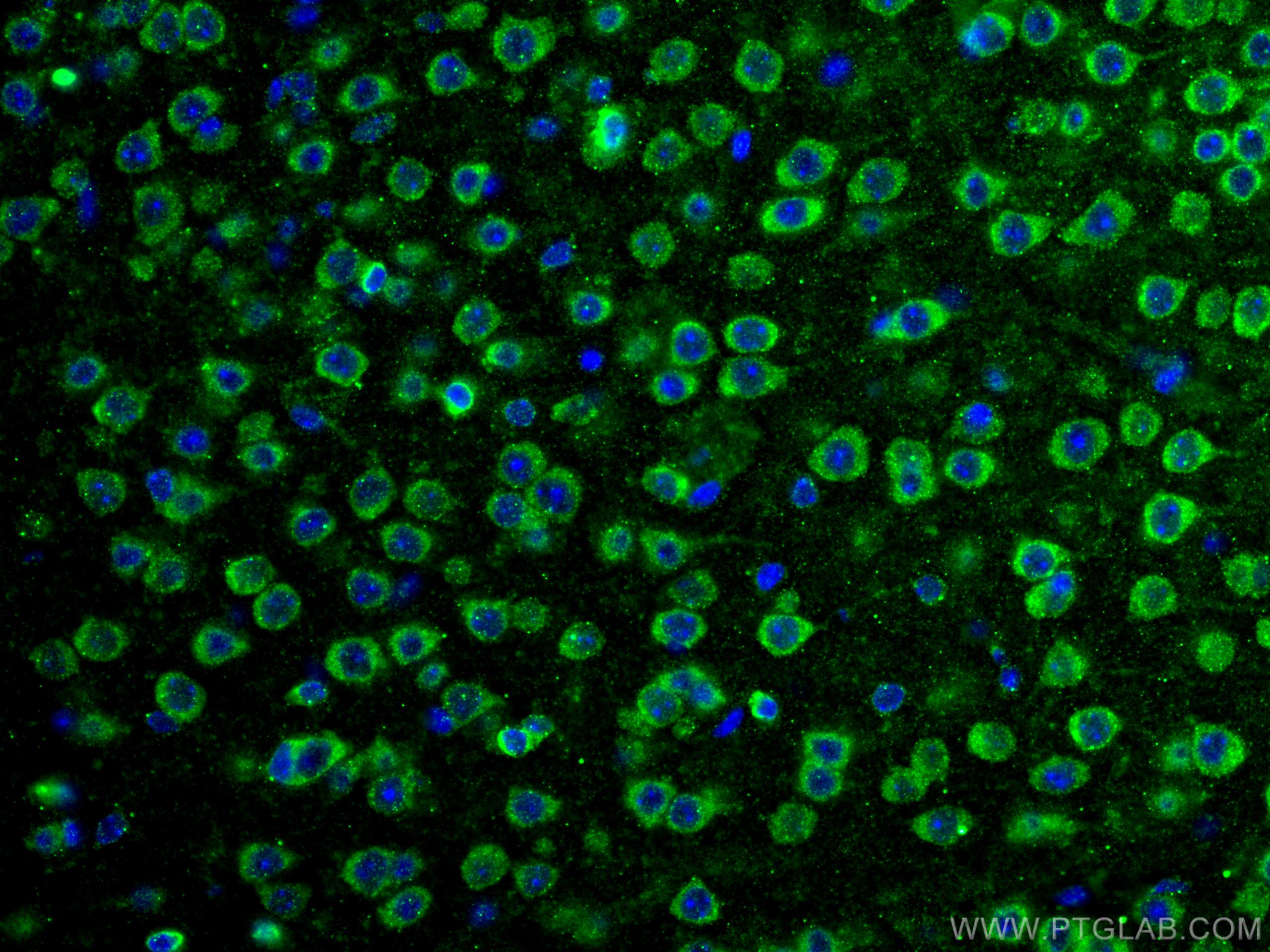
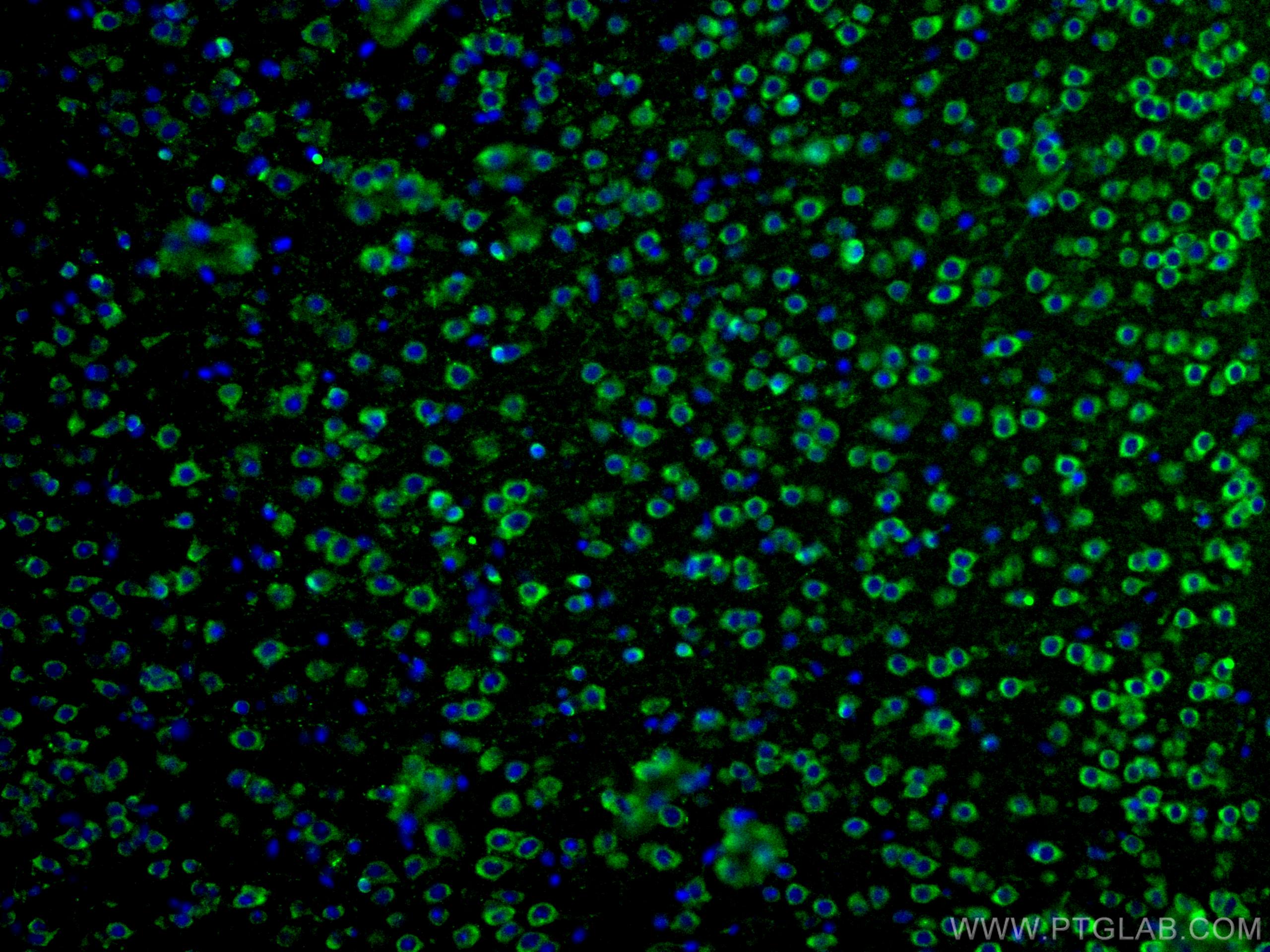

Tested Applications
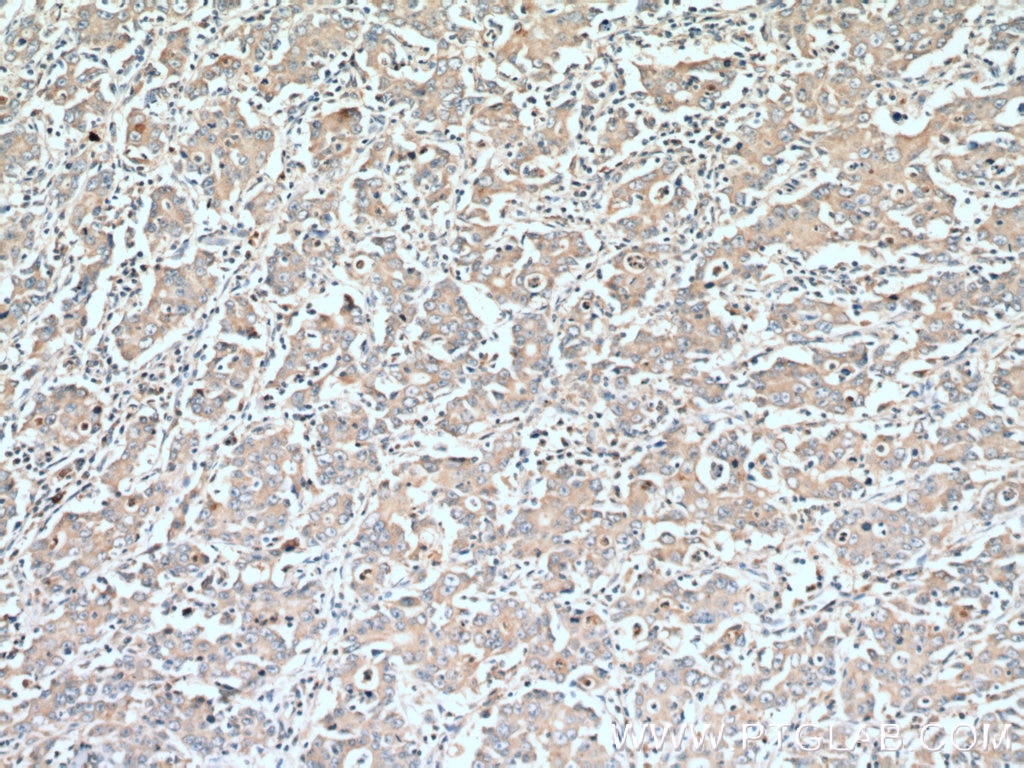
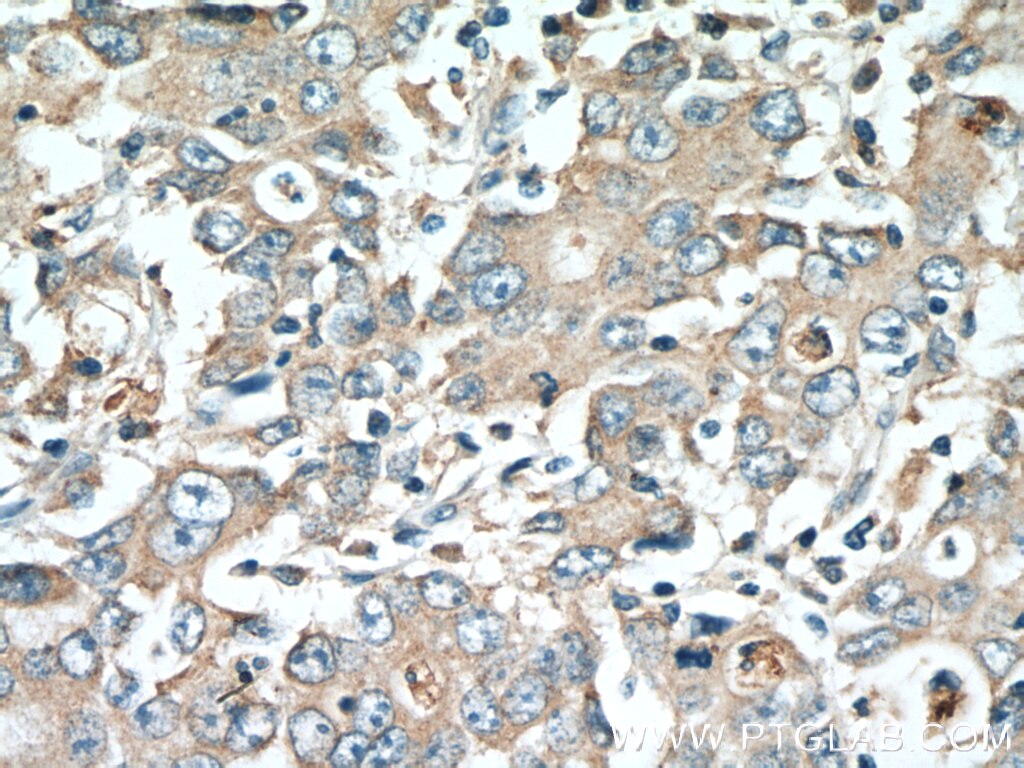
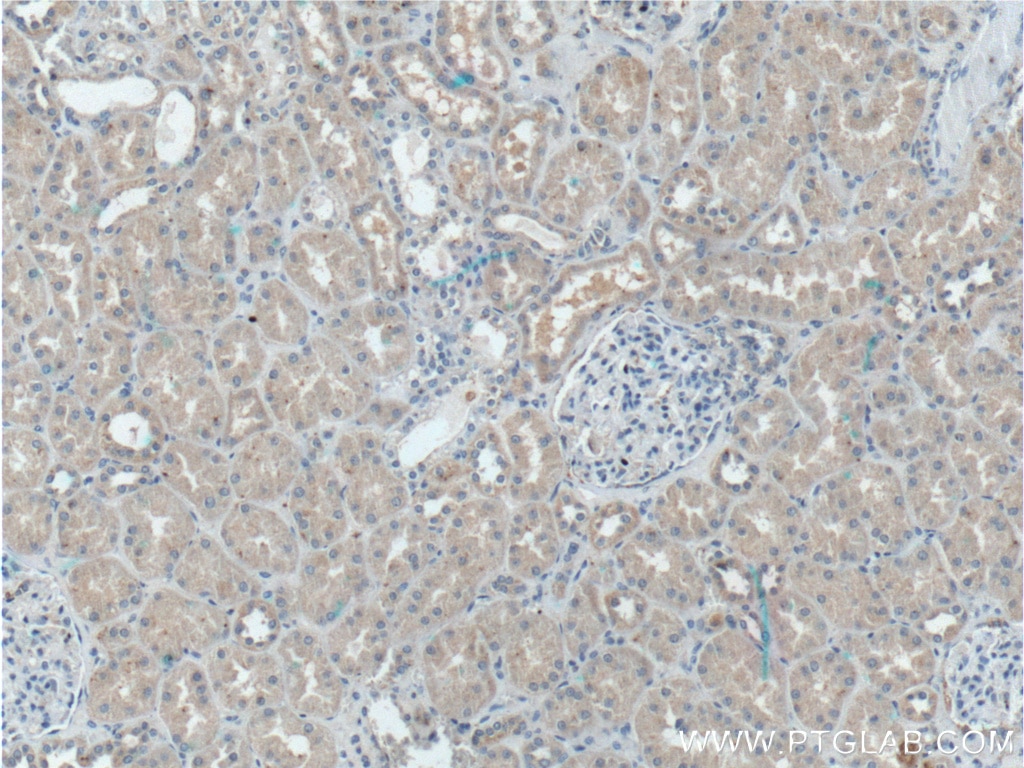
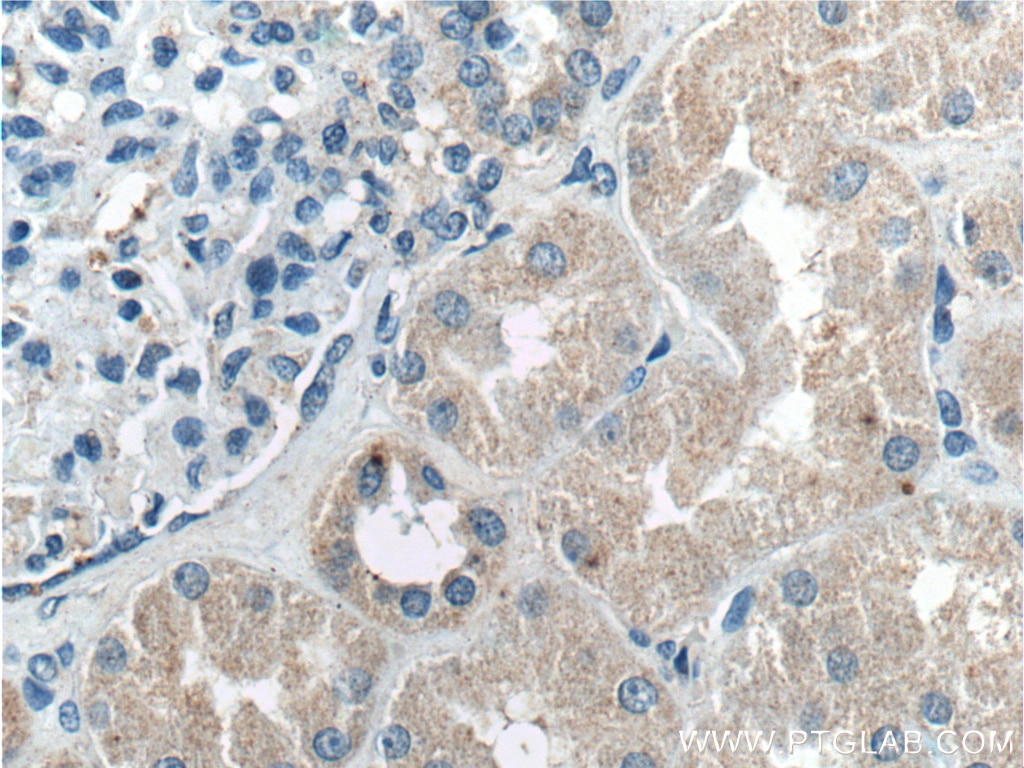
| Positive IHC detected in | human stomach cancer tissue, human kidney tissue Note: suggested antigen retrieval with TE buffer pH 9.0; (*) Alternatively, antigen retrieval may be performed with citrate buffer pH 6.0 |
| Positive IF-P detected in | human brain tissue |
Recommended dilution
| Application | Dilution |
|---|---|
| Immunohistochemistry (IHC) | IHC : 1:50-1:500 |
| Immunofluorescence (IF)-P | IF-P : 1:50-1:500 |
| It is recommended that this reagent should be titrated in each testing system to obtain optimal results. | |
| Sample-dependent, Check data in validation data gallery. | |
Product Information
27069-1-AP targets DMBT1 in WB, IHC, IF-P, ELISA applications and shows reactivity with human samples.
| Tested Reactivity | human |
| Cited Reactivity | human |
| Host / Isotype | Rabbit / IgG |
| Class | Polyclonal |
| Type | Antibody |
| Immunogen |
CatNo: Ag16229 Product name: Recombinant human DMBT1 protein Source: e coli.-derived, PET28a Tag: 6*His Domain: 1313-1662 aa of BC153299 Sequence: IEVFDGPYRSSPLIARVCDGARGSFTSSSNFMSIRFISDHSITRRGFRAEYYSSPSNDSTNLLCLPNHMQASVSRSYLQSLGFSASDLVISTWNGYYECRPQITPNLVIFTIPYSGCGTFKQADNDTIDYSNFLTAAVSGGIIKRRTDLRIHVSCRMLQNTWVDTMYIANDTIHVANNTIQVEEVQYGNFDVNISFYTSSSFLYPVTSRPYYVDLNQDLYVQAEILHSDAVLTLFVDTCVASPYSNDFTSLTYDLIRSGCVRDDTYGPYSSPSLRIARFRFRAFHFLNRFPSVYLRCKMVVCRAYDPSSRCYRGCVSRSKRDVGSYQEKVDVVLGPIQLQTPPRREEEPR Predict reactive species |
| Full Name | deleted in malignant brain tumors 1 |
| Calculated Molecular Weight | 2413 aa, 261 kDa |
| GenBank Accession Number | BC153299 |
| Gene Symbol | DMBT1 |
| Gene ID (NCBI) | 1755 |
| RRID | AB_2880741 |
| Conjugate | Unconjugated |
| Form | Liquid |
| Purification Method | Antigen affinity purification |
| UNIPROT ID | Q9UGM3 |
| Storage Buffer | PBS with 0.02% sodium azide and 50% glycerol, pH 7.3. |
| Storage Conditions | Store at -20°C. Stable for one year after shipment. Aliquoting is unnecessary for -20oC storage. 20ul sizes contain 0.1% BSA. |
Background Information
Deleted in malignant brain tumors 1 (DMBT1), also known as the salivary scavenger and agglutinin (SALSA), salivary agglutinin (SAG) or gp340, is a multifunctional molecule with important functions in innate immunity, inflammation and epithelial homeostasis (PMID: 28668353). DMBT1 has some isoforms with the molecular weight of 193, 260 and 340 kDa.
Protocols
| Product Specific Protocols | |
|---|---|
| IF protocol for DMBT1 antibody 27069-1-AP | Download protocol |
| IHC protocol for DMBT1 antibody 27069-1-AP | Download protocol |
| Standard Protocols | |
|---|---|
| Click here to view our Standard Protocols |
Publications
What published studies show
27069-1-AP (DMBT1 Polyclonal antibody) has 4 citations published across 4 journals: Cell Discovery, Stem Cell Reviews and Reports, Cancer Science, and Frontiers in Bioscience (Landmark Edition). The research fields covered include cancer biology (breast cancer liver metastasis via neutrophil extracellular traps, cuproptosis in colorectal cancer), regenerative medicine (adipose-derived stem cell exosomes and diabetic wound healing via ferroptosis), and genetics/immunology (Lynch syndrome colorectal mucosal heterogeneity).
| Species | Application | Title |
|---|---|---|
Cell Discov Breast cancer induces CD62L(+) Kupffer cells via DMBT1 to promote neutrophil extracellular trap formation and liver metastasis. | ||
Stem Cell Rev Rep DMBT1 in Adipose-Derived Stem Cell-Derived Exosomes Participates in Alleviating Ferroptosis to Promote Diabetic Wound Healing. | ||
Cancer Sci FDX1 Depletion Activates CD8(+) T Cell Antitumor Immunity by Promoting DMBT1 Secretion in Cuproptosis of Colorectal Cancer. | ||
Front Biosci (Landmark Ed) From Normal Mucosa to Colorectal Cancer in Lynch Syndrome: Single-Cell Dissection of Cellular Heterogeneity and Communication Networks.
|







