

Tested Applications
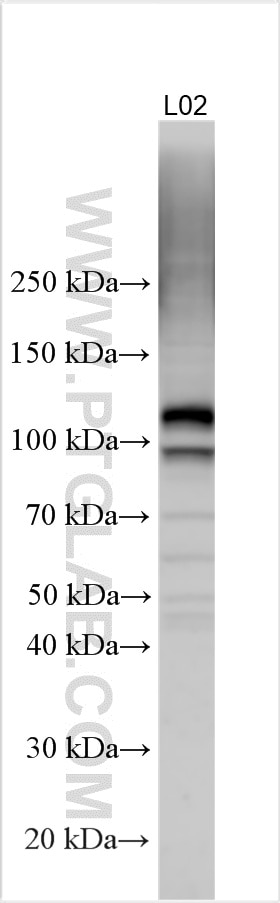
| Positive WB detected in | L02 cells |
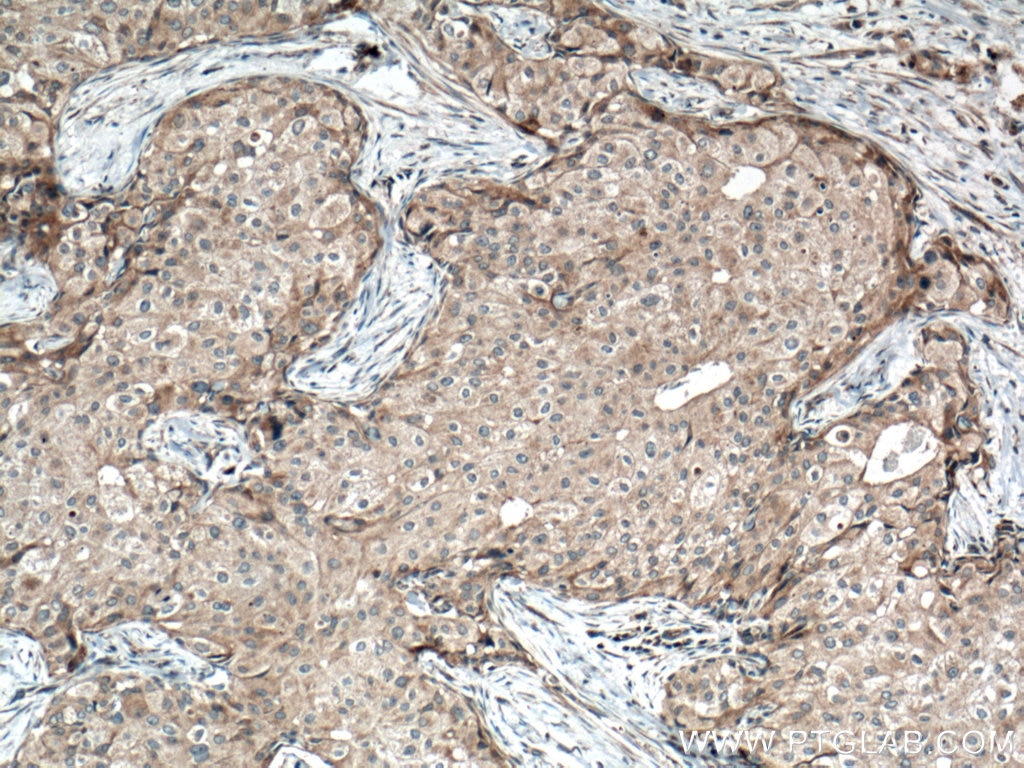
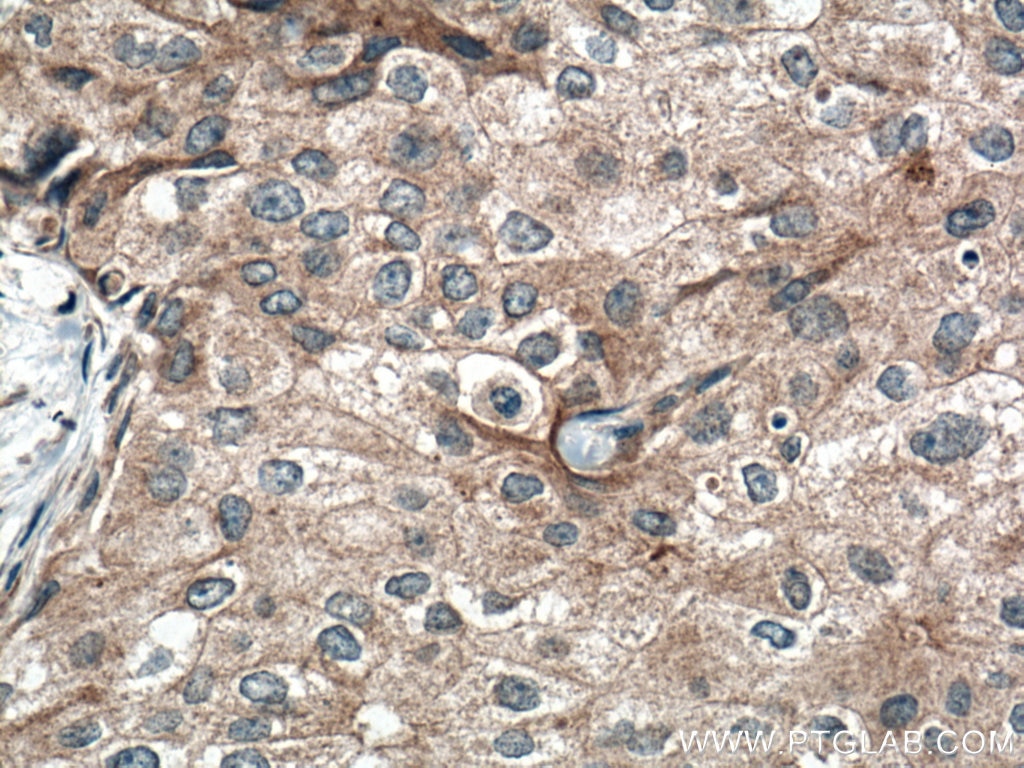
| Positive IHC detected in | human breast cancer tissue Note: suggested antigen retrieval with TE buffer pH 9.0; (*) Alternatively, antigen retrieval may be performed with citrate buffer pH 6.0 |
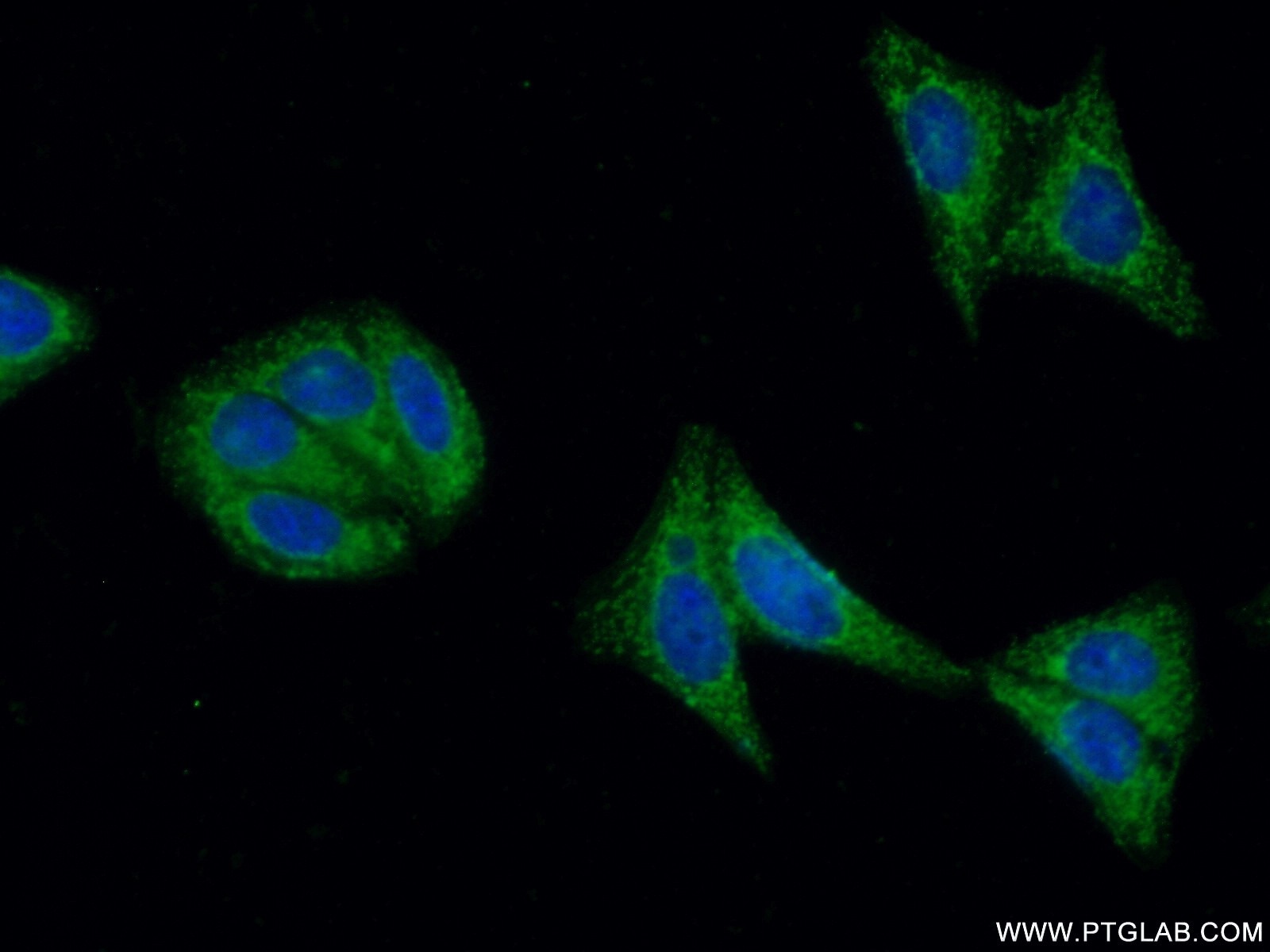
| Positive IF/ICC detected in | HepG2 cells |
Recommended dilution
| Application | Dilution |
|---|---|
| Western Blot (WB) | WB : 1:500-1:2000 |
| Immunohistochemistry (IHC) | IHC : 1:50-1:500 |
| Immunofluorescence (IF)/ICC | IF/ICC : 1:50-1:500 |
| It is recommended that this reagent should be titrated in each testing system to obtain optimal results. | |
| Sample-dependent, Check data in validation data gallery. | |
Product Information
11098-1-AP targets FGFR4 in WB, IHC, IF/ICC, ELISA applications and shows reactivity with human samples.
| Tested Reactivity | human |
| Cited Reactivity | human, mouse, rat |
| Host / Isotype | Rabbit / IgG |
| Class | Polyclonal |
| Type | Antibody |
| Immunogen |
CatNo: Ag1573 Product name: Recombinant human FGFR4 protein Source: e coli.-derived, PGEX-4T Tag: GST Domain: 503-802 aa of BC011847 Sequence: KMLKDNASDKDLADLVSEMEVMKLIGRHKNIINLLGVCTQEGPLYVIVECAAKGNLREFLRARRPPGPDLSPDGPRSSEGPLSFPVLVSCAYQVARGMQYLESRKCIHRDLAARNVLVTEDNVMKIADFGLARGVHHIDYYKKTSNGRLPVKWMAPEALFDRVYTHQSDVWSFGILLWEIFTLGGSPYPGIPVEELFSLLREGHRMDRPPHCPPELYGLMRECWHAAPSQRPTFKQLVEALDKVLLAVSEEYLDLRLTFGPYSPSGGDASSTCSSSDSVFSHDPLPLGSSSFPFGSGVQT Predict reactive species |
| Full Name | fibroblast growth factor receptor 4 |
| Calculated Molecular Weight | 88 kDa |
| Observed Molecular Weight | 95, 100-110 kDa |
| GenBank Accession Number | BC011847 |
| Gene Symbol | FGFR4 |
| Gene ID (NCBI) | 2264 |
| RRID | AB_2103657 |
| Conjugate | Unconjugated |
| Form | Liquid |
| Purification Method | Antigen affinity purification |
| UNIPROT ID | P22455 |
| Storage Buffer | PBS with 0.02% sodium azide and 50% glycerol, pH 7.3. |
| Storage Conditions | Store at -20°C. Stable for one year after shipment. Aliquoting is unnecessary for -20oC storage. 20ul sizes contain 0.1% BSA. |
Background Information
Fibroblast growth factor receptor 4 (FGFR4) is a member of a highly conserved tyrosine kinase family, along with FGFR1-3. This family consists of an intracellular tyrosine kinase domain, a single transmembrane domain, and extracellular ligand-binding domains (PMID: 32492514). FGFR4 is the predominant FGFR isoform present in human hepatocytes. FGFR4 has been proposed to play a role in the observed induction of hepatocyte proliferation and carcinogenesis by FGF19; however, contradicting evidence proposing a protective role for FGFR4 in suppressing hepatoma progression has also been proposed(PMID: 20018895). While the role of FGFR4 in cancer remains to be fully elucidated, several findings suggest that this receptor may be an important player in Hepatocellular carcinoma (HCC) development and/or progression(PMID: 10336501).
Protocols
| Product Specific Protocols | |
|---|---|
| IF protocol for FGFR4 antibody 11098-1-AP | Download protocol |
| IHC protocol for FGFR4 antibody 11098-1-AP | Download protocol |
| WB protocol for FGFR4 antibody 11098-1-AP | Download protocol |
| Standard Protocols | |
|---|---|
| Click here to view our Standard Protocols |
Publications
What published studies show
The FGFR4 Polyclonal antibody (Cat# 11098-1-AP) has 34 citations across journals including Cell Metabolism, Clinical and Molecular Hepatology, Redox Biology, Biomarkers Research, Journal of Experimental & Clinical Cancer Research, Advanced Science, Cell Reports Medicine, Cell & Molecular Gastroenterology and Hepatology, International Journal of Oncology, Journal of Medicinal Chemistry, Journal of Ethnopharmacology, Biochemical Pharmacology, Hepatology Communications, Communications Biology, Frontiers in Endocrinology, Investigative Ophthalmology & Visual Science, Frontiers in Pharmacology, Frontiers in Cell and Developmental Biology, Cell Signaling, Biomedicine & Pharmacotherapy, Cancer Research and Treatment, Clinical Immunology, Microbiology Spectrum, BMC Cancer, Endocrine Connections, Endocrine, Brain Research, Journal of Cellular Biochemistry, and Tissue Engineering Part A. Research fields span liver disease, bile acid metabolism, cancer, diabetes, and neurodegeneration.
| Species | Application | Title |
|---|---|---|
Cell Metab Hepatic FXR-FGF4 is required for bile acid homeostasis via an FGFR4-LRH-1 signal node under cholestatic stress | ||
Clin Mol Hepatol Radiogenomics of intrahepatic cholangiocarcinoma predicts immunochemotherapy response and identifies therapeutic target | ||
Redox Biol Fibroblast growth factor receptor-4 mediates activation of Nuclear Factor Erythroid 2-Related Factor-2 in gastric tumorigenesis
| ||
Biomark Res Deep proteogenomic characterization of pancreatic solid pseudopapillary neoplasm reveals unique features distinct from other pancreatic tumors. | ||
J Exp Clin Cancer Res The RNA methyltransferase METTL16 enhances cholangiocarcinoma growth through PRDM15-mediated FGFR4 expression | ||
Adv Sci (Weinh) Hepatocyte-Derived FGF1 Alleviates Isoniazid and Rifampicin-Induced Liver Injury by Regulating HNF4α-Mediated Bile Acids Synthesis |
Reviews
What customers say
The single review for this antibody was mixed. The user tested it at a 1:400 dilution for immunohistochemistry on non-human primate liver, frontal, and temporal tissue samples. They reported significant nonspecific binding, which left them less satisfied than expected with the overall performance. The review was rated 2 out of 5 stars.
The reviews below have been submitted by verified Proteintech customers who received an incentive for providing their feedback.
Jillian (Verified Customer) (05-27-2025) | Overall we weren't as happy with the antibody as we wanted to be. There appeared to be a lot of nonspecific binding in the NHP samples that we tested it on
|





