
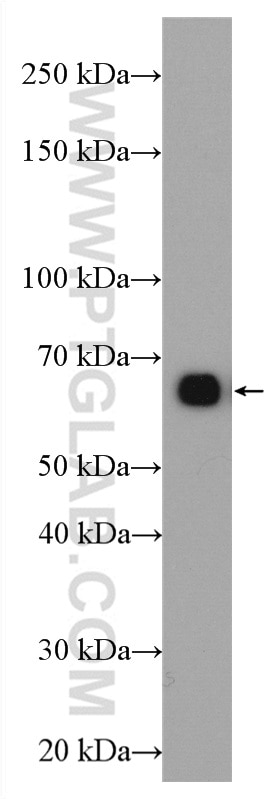
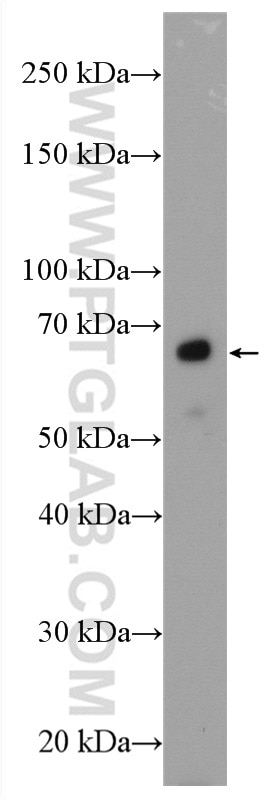
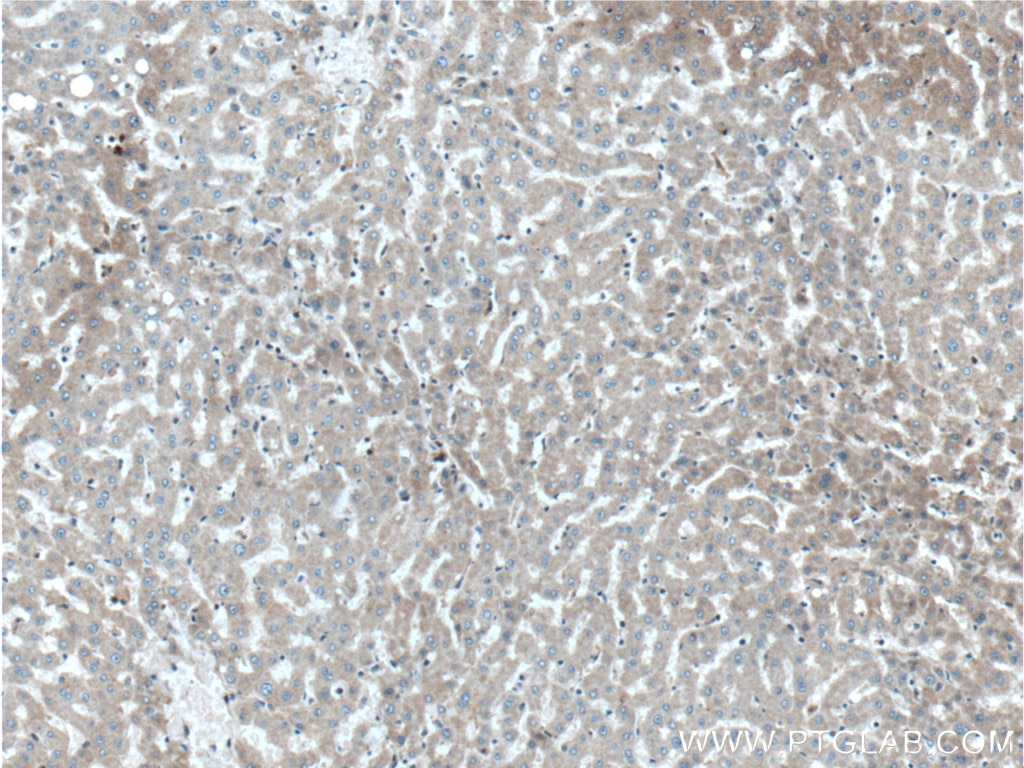
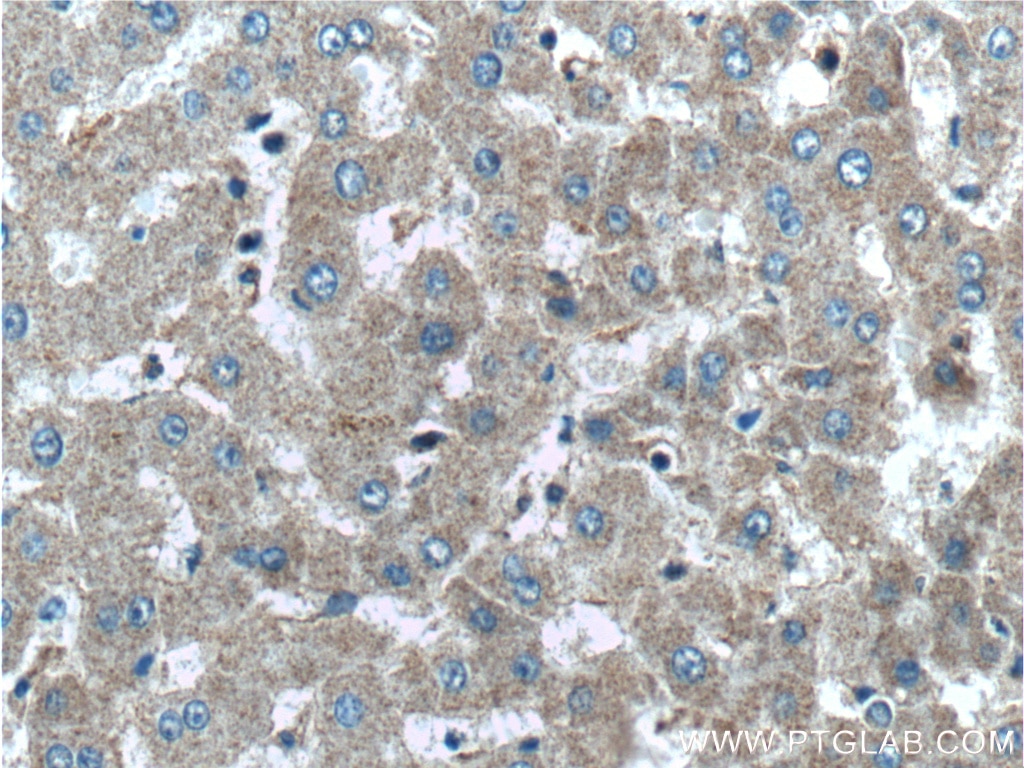

Tested Applications
| Positive WB detected in | mouse liver tissue, mouse heart tissue |
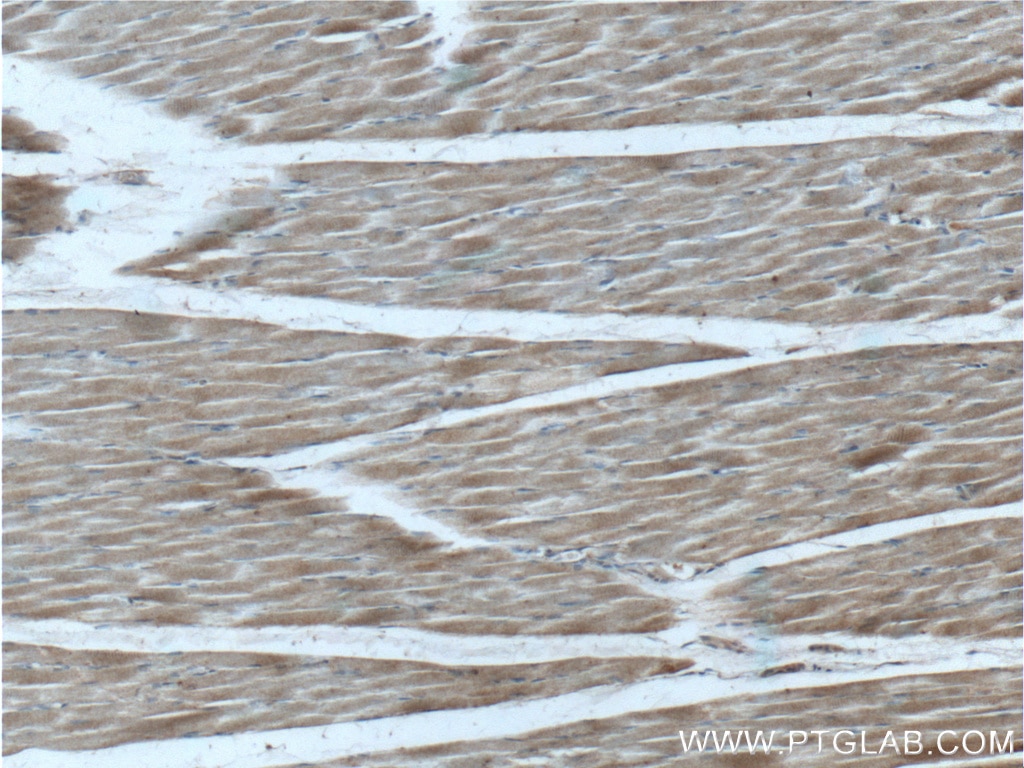
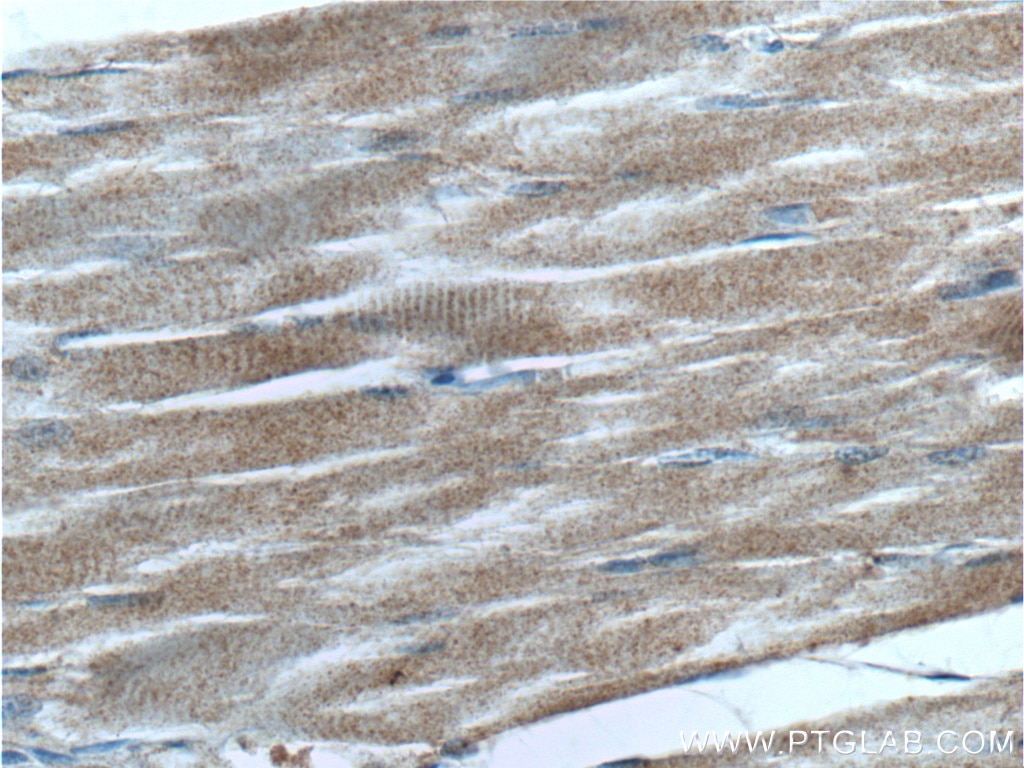
| Positive IHC detected in | human liver tissue, human skeletal muscle tissue Note: suggested antigen retrieval with TE buffer pH 9.0; (*) Alternatively, antigen retrieval may be performed with citrate buffer pH 6.0 |
Recommended dilution
| Application | Dilution |
|---|---|
| Western Blot (WB) | WB : 1:500-1:2000 |
| Immunohistochemistry (IHC) | IHC : 1:50-1:500 |
| It is recommended that this reagent should be titrated in each testing system to obtain optimal results. | |
| Sample-dependent, Check data in validation data gallery. | |
Product Information
26784-1-AP targets GCGR in WB, IHC, IF, ELISA applications and shows reactivity with human, mouse samples.
| Tested Reactivity | human, mouse |
| Cited Reactivity | mouse |
| Host / Isotype | Rabbit / IgG |
| Class | Polyclonal |
| Type | Antibody |
| Immunogen |
CatNo: Ag24861 Product name: Recombinant human GCGR protein Source: e coli.-derived, PGEX-4T Tag: GST Domain: 91-141 aa of BC104854 Sequence: VQHRFVFKRCGPDGQWVRGPRGQPWRDASQCQMDGEEIEVQKEVAKMYSSF Predict reactive species |
| Full Name | glucagon receptor |
| Calculated Molecular Weight | 477 aa, 54 kDa |
| Observed Molecular Weight | 62-68 kDa |
| GenBank Accession Number | BC104854 |
| Gene Symbol | GCGR |
| Gene ID (NCBI) | 2642 |
| RRID | AB_2880634 |
| Conjugate | Unconjugated |
| Form | Liquid |
| Purification Method | Antigen affinity purification |
| UNIPROT ID | P47871 |
| Storage Buffer | PBS with 0.02% sodium azide and 50% glycerol, pH 7.3. |
| Storage Conditions | Store at -20°C. Stable for one year after shipment. Aliquoting is unnecessary for -20oC storage. 20ul sizes contain 0.1% BSA. |
Background Information
Glucagon receptor (GCGR) is a secretin-like (class B) family of G-protein coupled receptors (GPCRs). It plays an important role in elevating the glucose concentration in the blood and has thus become one of the promising therapeutic targets for treating type 2 diabetes mellitus (PMID: 26236379). GCGR is a 62-kDa glycoprotein that contains at least four N-linked oligosaccharide chains (PMID: 2174441; 15245877). Defects in the gene of GCGR cause non-insulin-dependent diabetes mellitus (NIDDM).
Protocols
| Product Specific Protocols | |
|---|---|
| IHC protocol for GCGR antibody 26784-1-AP | Download protocol |
| WB protocol for GCGR antibody 26784-1-AP | Download protocol |
| Standard Protocols | |
|---|---|
| Click here to view our Standard Protocols |
Publications
What published studies show
The Glucagon Receptor (GCGR) antibody (Cat# 26784-1-AP) has 11 citations. Publications appear in Science, Phytomedicine, Cell Mol Gastroenterol Hepatol, Biomed Pharmacother, Cells, Toxicology, iScience, Am J Physiol Endocrinol Metab, J Gastroenterol Hepatol, Mol Cell Endocrinol, and bioRxiv. Research fields include glucose and lipid metabolism, diabetic cardiomyopathy, hepatic gluconeogenesis, pancreatic islet biology, β-cell function, and hepatic steatosis.
| Species | Application | Title |
|---|---|---|
Science Liver ALKBH5 regulates glucose and lipid homeostasis independently through GCGR and mTORC1 signaling | ||
Phytomedicine Chlorogenic acid and ferulic acid in SMYAD alleviate diabetic cardiomyopathy by inhibiting cardiac lipotoxicity via GCGR/PPARα and GCGR/AMPK pathways | ||
Cell Mol Gastroenterol Hepatol A Dual-compartment Scaffolding Role for Receptor for Activate C Kinase 1 in Hepatic Glucagon Signaling and Gluconeogenesis. | ||
Biomed Pharmacother Si-Miao-Yong-An decoction preserves cardiac function and regulates GLC/AMPK/NF-κB and GLC/PPARα/PGC-1α pathways in diabetic mice | ||







