

Tested Applications
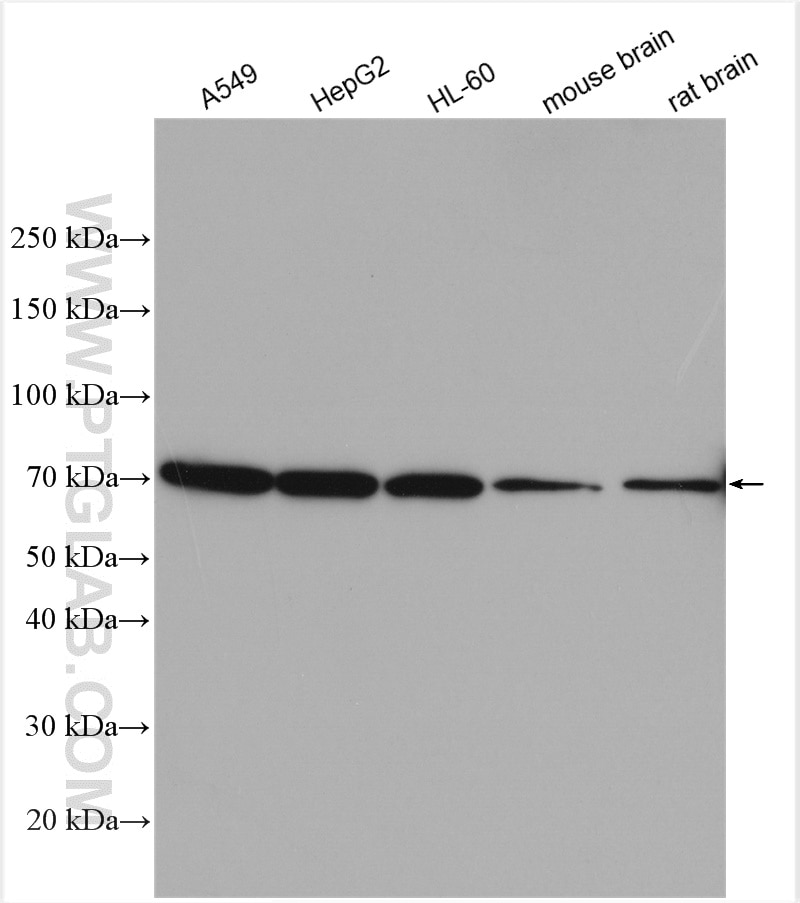
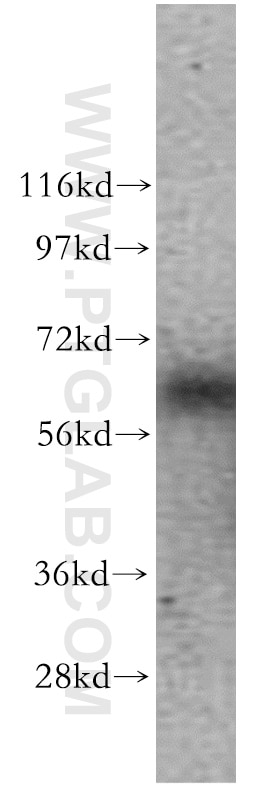
| Positive WB detected in | A549 cells, mouse brain tissue, HepG2 cells, HL-60 cells, rat brain tissue |
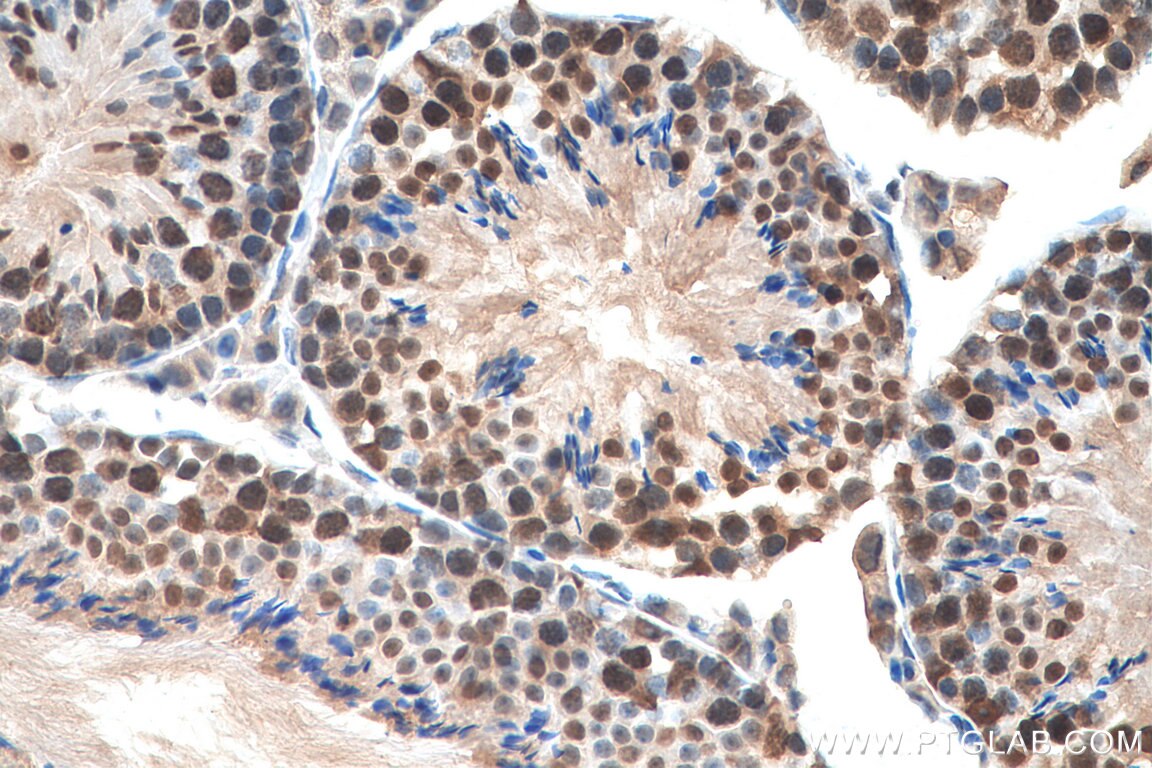
| Positive IHC detected in | mouse testis tissue Note: suggested antigen retrieval with TE buffer pH 9.0; (*) Alternatively, antigen retrieval may be performed with citrate buffer pH 6.0 |
Recommended dilution
| Application | Dilution |
|---|---|
| Western Blot (WB) | WB : 1:500-1:2000 |
| Immunohistochemistry (IHC) | IHC : 1:200-1:500 |
| It is recommended that this reagent should be titrated in each testing system to obtain optimal results. | |
| Sample-dependent, Check data in validation data gallery. | |
Product Information
10173-1-AP targets GTF2H1 in WB, IHC, ELISA applications and shows reactivity with human, mouse, rat samples.
| Tested Reactivity | human, mouse, rat |
| Cited Reactivity | human |
| Host / Isotype | Rabbit / IgG |
| Class | Polyclonal |
| Type | Antibody |
| Immunogen |
CatNo: Ag0229 Product name: Recombinant human GTF2H1 protein Source: e coli.-derived, PGEX-4T Tag: GST Domain: 231-545 aa of BC004452 Sequence: HRDRLNTGSKDLFAECAKIDEKGLKTMVSLGVKNPLLDLTALEDKPLDEGYGISSVPSASNSKSIKENSNAAIIKRFNHHSAMVLAAGLRKQEAQNEQTSEPSNMDGNSGDADCFQPAVKRAKLQESIEYEDLGKNNSVKTIALNLKKSDRYYHGPTPIQSLQYATSQDIINSFQSIRQEMEAYTPKLTQVLSSSAASSTITALSPGGALMQGGTQQAINQMVPNDIQSELKHLYVAVGELLRHFWSCFPVNTPFLEEKVVKMKSNLERFQVTKLCPFQEKIRRQYLSTNLVSHIEEMLQTAYNKLHTWQSRRLM Predict reactive species |
| Full Name | general transcription factor IIH, polypeptide 1, 62kDa |
| Calculated Molecular Weight | 62 kDa |
| Observed Molecular Weight | 62 kDa |
| GenBank Accession Number | BC004452 |
| Gene Symbol | GTF2H1 |
| Gene ID (NCBI) | 2965 |
| RRID | AB_2295009 |
| Conjugate | Unconjugated |
| Form | Liquid |
| Purification Method | Antigen affinity purification |
| UNIPROT ID | P32780 |
| Storage Buffer | PBS with 0.02% sodium azide and 50% glycerol, pH 7.3. |
| Storage Conditions | Store at -20°C. Stable for one year after shipment. Aliquoting is unnecessary for -20oC storage. 20ul sizes contain 0.1% BSA. |
Background Information
TFIIH is a multiprotein complex that has a central role in the RNA pol II mediated transcription, in DNA repair and in the control of the cell cycle. TFIIH consists of nine subunits: cyclin-dependent kinase 7 (Cdk7), cyclin H and MAT1 (forming the Cdk-activating-kinase or CAK complex), the two helicases Xpb/Hay and Xpd, and p34, p44, p52 and p62. As the kinase subunit of TFIIH, Cdk7 participates in basal transcription by phosphorylating the carboxy-terminal domain of the largest subunit of RNA polymerase II. Mutations in some components of TFIIH are associated with three hereditary human syndromes: xeroderma pigmentosum (XP), Cockayne syndrome (CS) and trichothiodystrophy (TTD). The p62 protein (TFIIH1) is a structural component of the TFIIH core and no syndromes have been identified up to date by mutations in this human gene.
Protocols
| Product Specific Protocols | |
|---|---|
| IHC protocol for GTF2H1 antibody 10173-1-AP | Download protocol |
| WB protocol for GTF2H1 antibody 10173-1-AP | Download protocol |
| Standard Protocols | |
|---|---|
| Click here to view our Standard Protocols |
Publications
What published studies show
The GTF2H1 Polyclonal antibody (Cat# 10173-1-AP) has 1 citation. It was cited in Cell (IF: 45.1) in a 2014 study by Schaffer et al., which investigated how a CLP1 founder mutation links tRNA splicing and maturation to cerebellar development and neurodegeneration. The research field encompasses neurodegeneration, RNA processing, and developmental biology. The antibody was used for Western blot (WB) in human samples.
| Species | Application | Title |
|---|---|---|
Cell CLP1 Founder Mutation Links tRNA Splicing and Maturation to Cerebellar Development and Neurodegeneration. |




