

Tested Applications
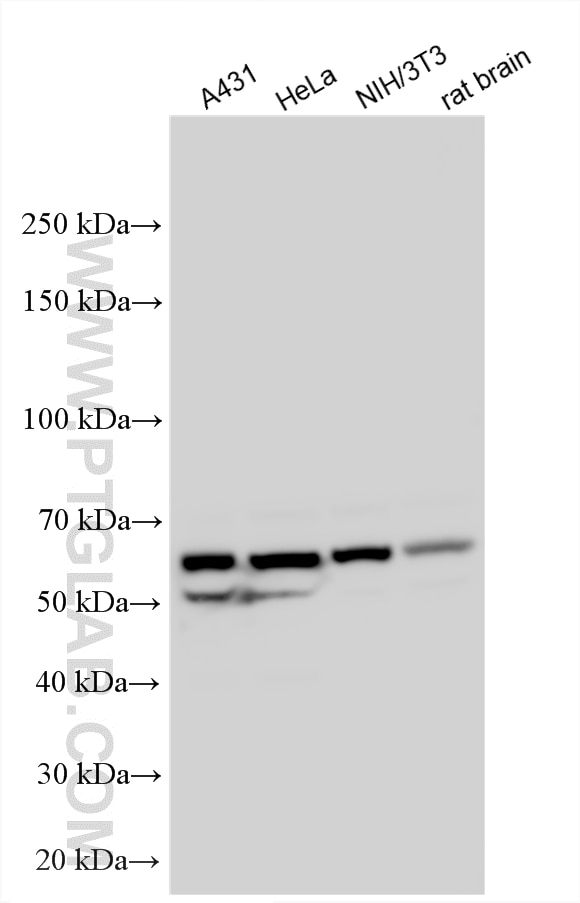
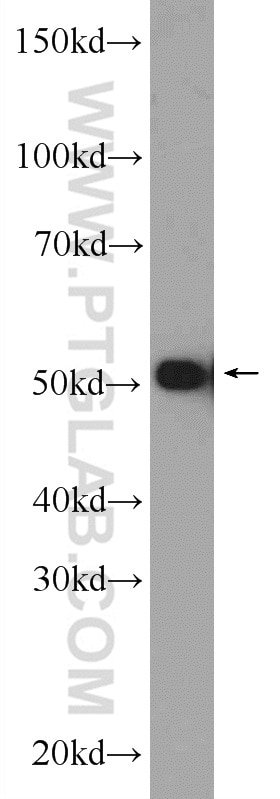
| Positive WB detected in | A431 cells, MCF-7 cells, HeLa cells, NIH/3T3 cells, rat brain tissue |
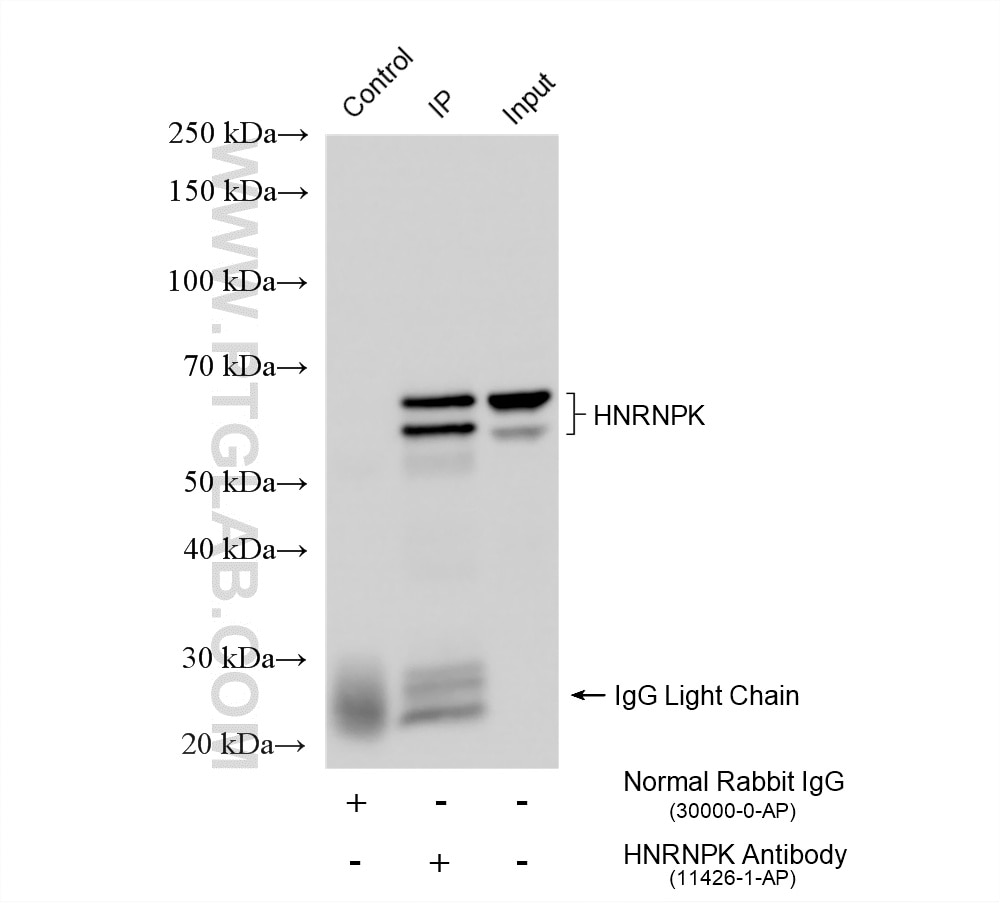
| Positive IP detected in | HeLa cells |
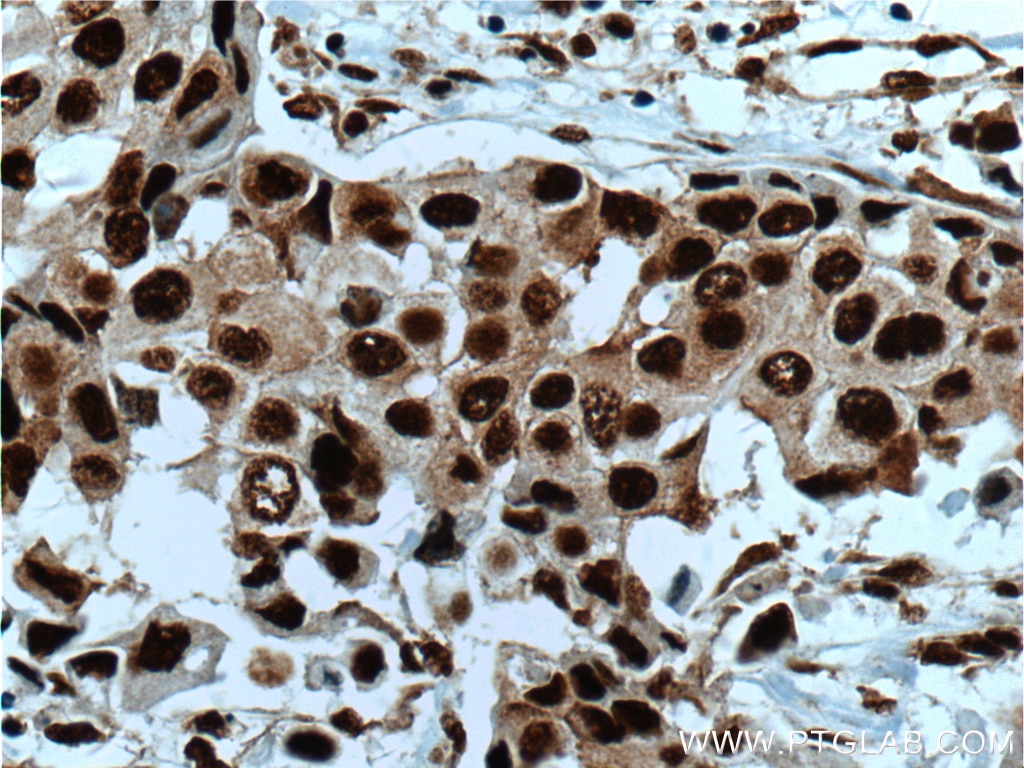
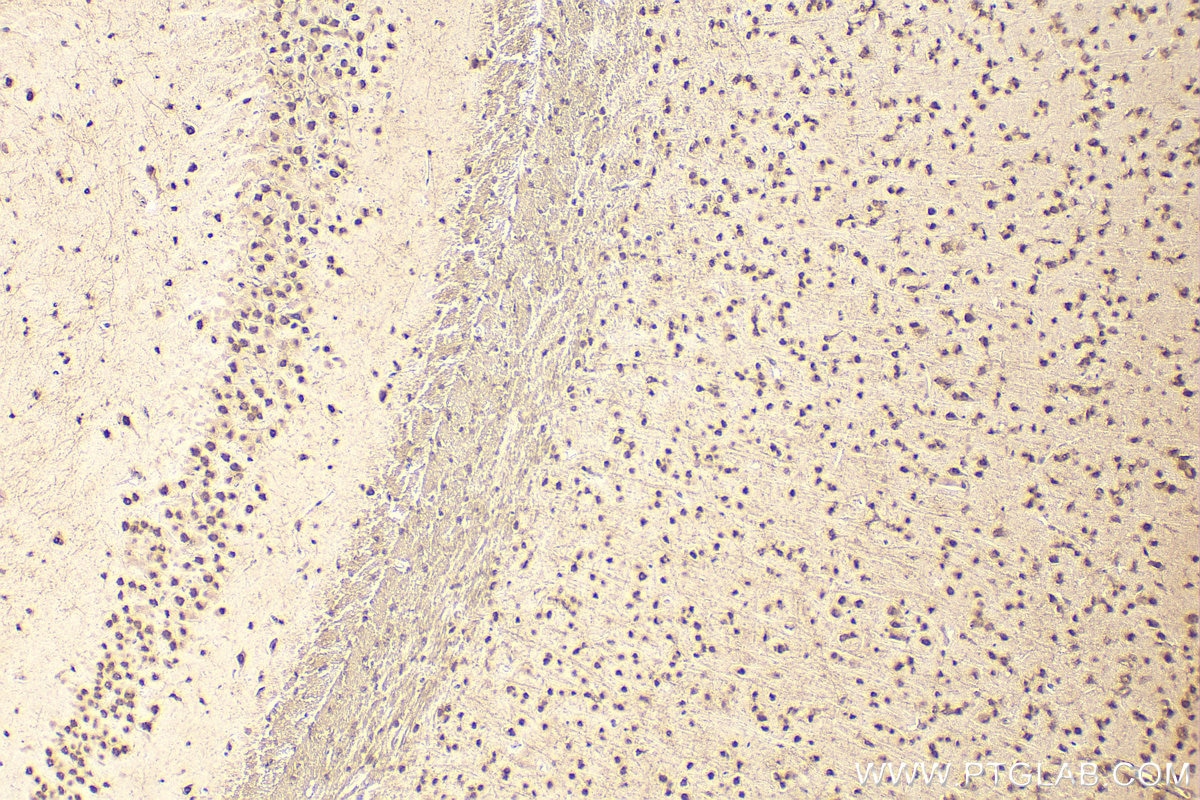
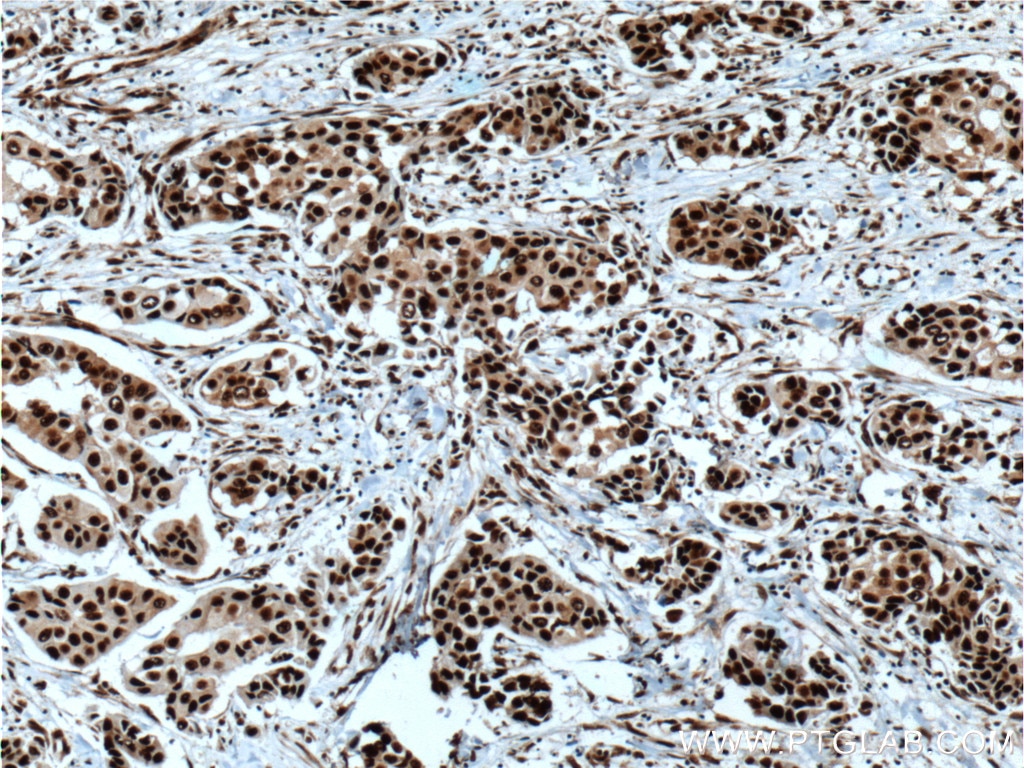
| Positive IHC detected in | human breast cancer tissue, mouse brain tissue Note: suggested antigen retrieval with TE buffer pH 9.0; (*) Alternatively, antigen retrieval may be performed with citrate buffer pH 6.0 |
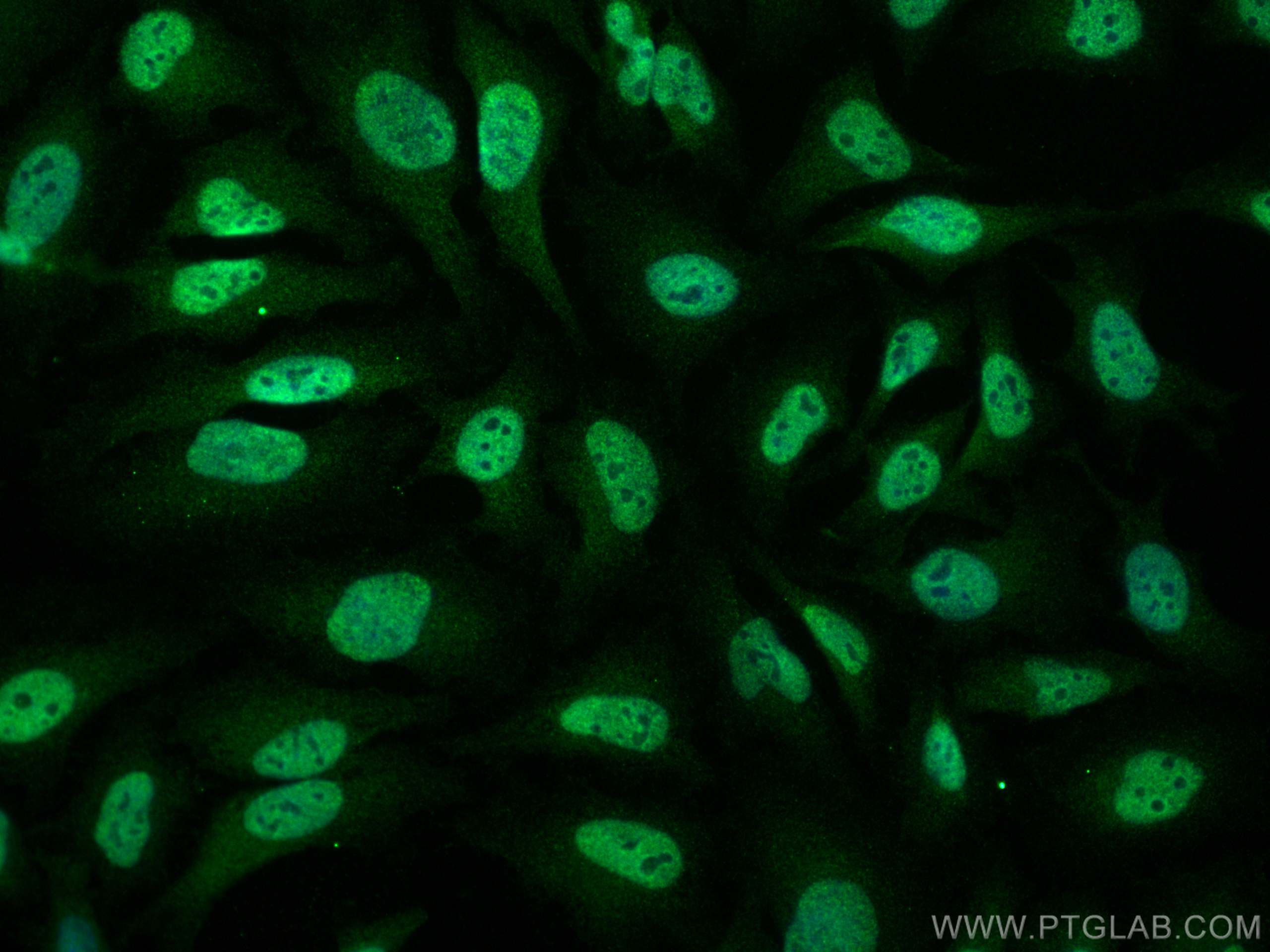
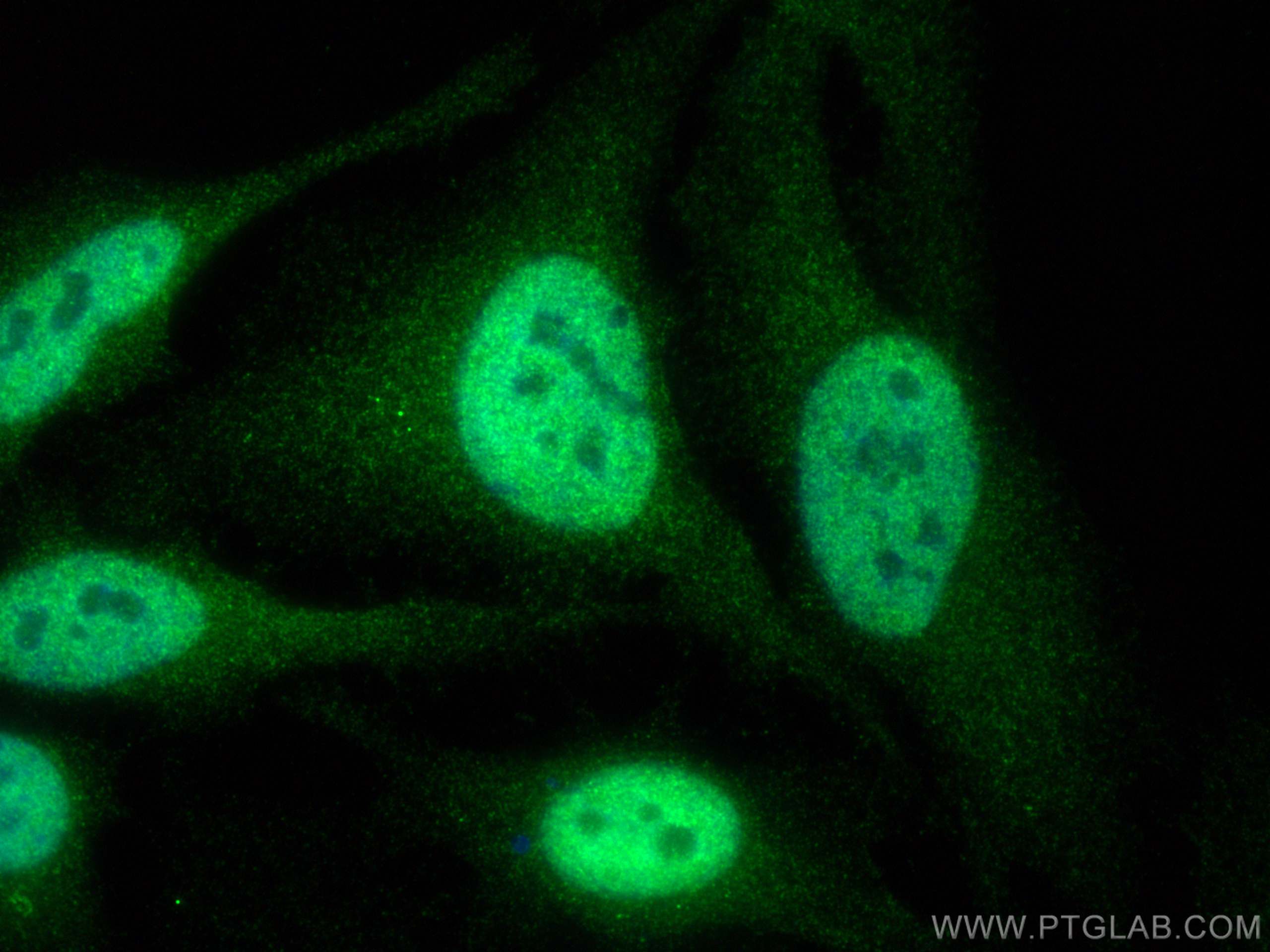
| Positive IF/ICC detected in | HeLa cells |
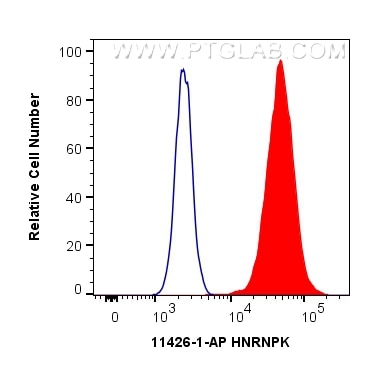
| Positive FC (Intra) detected in | HepG2 cells |
Recommended dilution
| Application | Dilution |
|---|---|
| Western Blot (WB) | WB : 1:5000-1:50000 |
| Immunoprecipitation (IP) | IP : 0.5-4.0 ug for 1.0-3.0 mg of total protein lysate |
| Immunohistochemistry (IHC) | IHC : 1:50-1:500 |
| Immunofluorescence (IF)/ICC | IF/ICC : 1:50-1:500 |
| Flow Cytometry (FC) (INTRA) | FC (INTRA) : 0.40 ug per 10^6 cells in a 100 µl suspension |
| It is recommended that this reagent should be titrated in each testing system to obtain optimal results. | |
| Sample-dependent, Check data in validation data gallery. | |
Product Information
11426-1-AP targets HNRNPK in WB, IHC, IF/ICC, FC (Intra), IP, CoIP, chIP, RIP, ELISA applications and shows reactivity with human, mouse, rat samples.
| Tested Reactivity | human, mouse, rat |
| Cited Reactivity | human, mouse, rat, pig, chicken, deer |
| Host / Isotype | Rabbit / IgG |
| Class | Polyclonal |
| Type | Antibody |
| Immunogen |
CatNo: Ag1976 Product name: Recombinant human HNRNPK protein Source: e coli.-derived, PGEX-4T Tag: GST Domain: 114-463 aa of BC014980 Sequence: LPSPTATSQLPLESDAVECLNYQHYKGSDFDCELRLLIHQSLAGGIIGVKGAKIKELRENTQTTIKLFQECCPHSTDRVVLIGGKPDRVVECIKIILDLISESPIKGRAQPYDPNFYDETYDYGGFTMMFDDRRGRPVGFPMRGRGGFDRMPPGRGGRPMPPSRRDYDDMSPRRGPPPPPPGRGGRGGSRARNLPLPPPPPPRGGDLMAYDRRGRPGDRYDGMVGFSADETWDSAIDTWSPSEWQMAYEPQGGSGYDYSYAGGRGSYGDLGGPIITTQVTIPKDLAGSIIGKGGQRIKQIRHESGASIKIDEPLEGSEDRIITITGTQDQIQNAQYLLQNSVKQYSGKFF Predict reactive species |
| Full Name | heterogeneous nuclear ribonucleoprotein K |
| Calculated Molecular Weight | 463 aa, 51 kDa |
| Observed Molecular Weight | 55-65 kDa |
| GenBank Accession Number | BC014980 |
| Gene Symbol | HNRNPK |
| Gene ID (NCBI) | 3190 |
| RRID | AB_2264314 |
| Conjugate | Unconjugated |
| Form | Liquid |
| Purification Method | Antigen affinity purification |
| UNIPROT ID | P61978 |
| Storage Buffer | PBS with 0.02% sodium azide and 50% glycerol, pH 7.3. |
| Storage Conditions | Store at -20°C. Stable for one year after shipment. Aliquoting is unnecessary for -20oC storage. 20ul sizes contain 0.1% BSA. |
Background Information
HNRNPK belongs to the heterogeneous nuclear ribonucleoprotein family of 20 proteins that participate in a wide range of key cellular functions involving many of the pathways implicated, disrupted or dysregulated in tumor development and progression. It is also a conserved pre-mRNA-binding protein that is involved in multiple processes of gene expression, including chromatin remodeling, transcription, and mRNA splicing, translation, and stability.
Protocols
| Product Specific Protocols | |
|---|---|
| FC protocol for HNRNPK antibody 11426-1-AP | Download protocol |
| IF protocol for HNRNPK antibody 11426-1-AP | Download protocol |
| IHC protocol for HNRNPK antibody 11426-1-AP | Download protocol |
| IP protocol for HNRNPK antibody 11426-1-AP | Download protocol |
| WB protocol for HNRNPK antibody 11426-1-AP | Download protocol |
| Standard Protocols | |
|---|---|
| Click here to view our Standard Protocols |
Publications
What published studies show
The anti-hnRNPK antibody (Cat# 11426-1-AP) has 54 citations. It appears in high-impact journals including Nature, Cell, Nature Communications, Molecular Cancer, Cell Metabolism, Cancer Research, Autophagy, Molecular Cell, Nucleic Acids Research, Cell Reports, Cell Death & Disease, Journal of Virology, and Frontiers in Microbiology. Research fields span RNA biology and RNA-protein interactions, epigenetics and X-chromosome inactivation, cancer (breast, colorectal, pancreatic, lung, glioblastoma), virology, ferroptosis, autophagy, and immunology.
| Species | Application | Title |
|---|---|---|
Cell In vivo structural characterization of the SARS-CoV-2 RNA genome identifies host proteins vulnerable to repurposed drugs. | ||
Mol Cancer piR-1170 drives brain metastasis and immune evasion via WTAP-mediated m6A methylation reprogramming in triple-negative breast cancer. | ||
Cell Metab NEAT1 is essential for metabolic changes that promote breast cancer growth and metastasis. | ||
Cancer Res CircFOXK2 Promotes Growth and Metastasis of Pancreatic Ductal Adenocarcinoma by Complexing with RNA Binding Proteins and Sponging MiR-942. |
Reviews
What customers say
The product received a 5-star rating for use in Western Blot and Immunoprecipitation on endothelial cells. The reviewer reported successful performance with a WB dilution of 1:2000 and an IP protocol using 2 µg/mg cell lysate, indicating reliable detection and efficient pull-down capability in both applications.
The reviews below have been submitted by verified Proteintech customers who received an incentive for providing their feedback.
DEBJIT (Verified Customer) (09-17-2020) | WB: 1:2000IP: 2ug/mg cell lysate
|










