
Recombinant Human CD21 protein (rFc Tag)
Species
Human
Purity
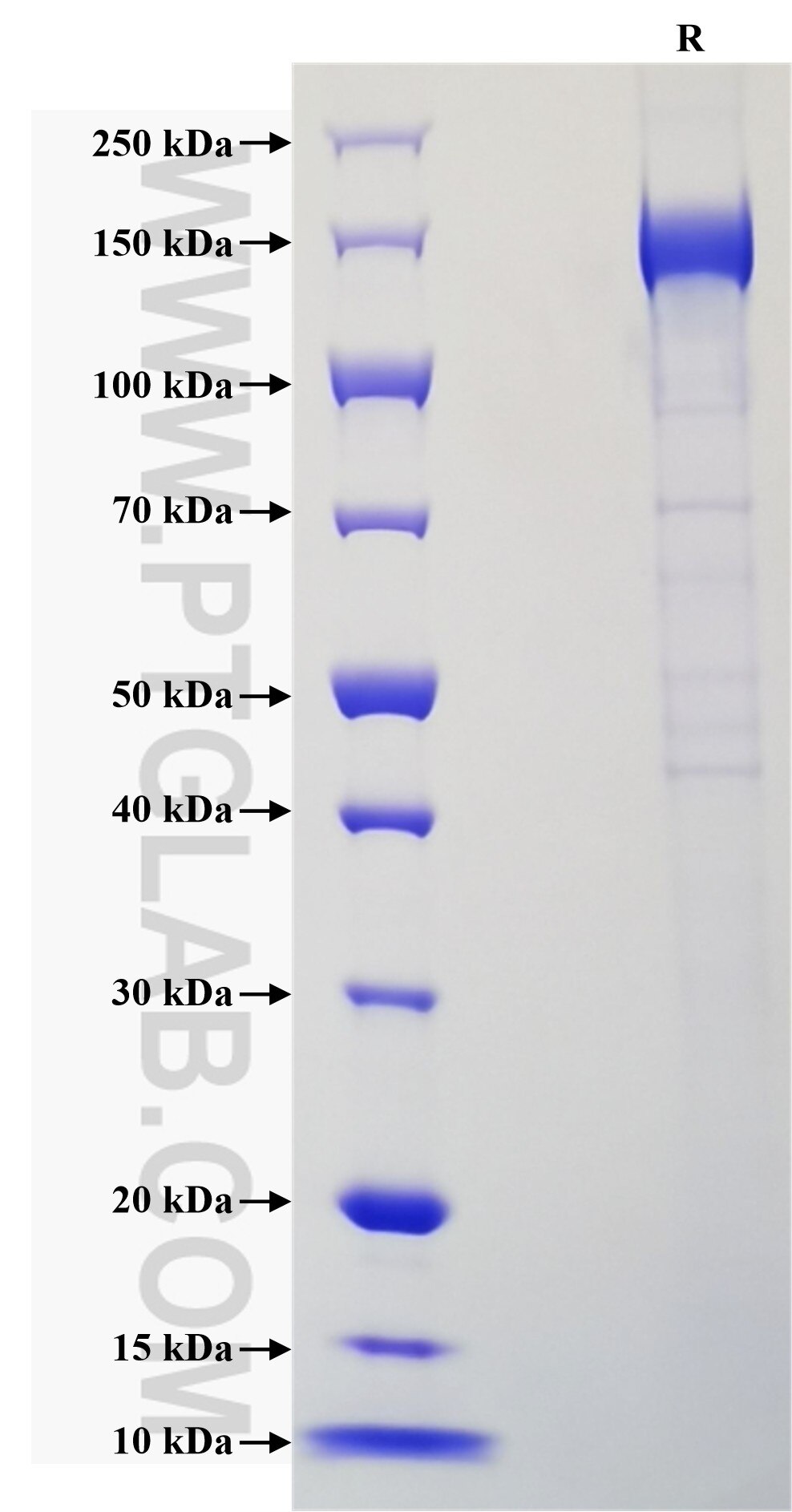
>90 %, SDS-PAGE
Tag
rFc Tag
Activity
not tested
Cat no : Eg2980
Validation Data Gallery
Product Information
| Purity | >90 %, SDS-PAGE |
| Endotoxin | <0.1 EU/μg protein, LAL method |
| Activity |
Not tested |
| Expression | HEK293-derived Human CD21 protein Ile21-Arg971 (Accession# P20023-1) with a rabbit IgG Fc tag at the C-terminus. |
| GeneID | 1380 |
| Accession | P20023-1 |
| PredictedSize | 129.8 kDa |
| SDS-PAGE | 130-180 kDa, reducing (R) conditions |
| Formulation | Lyophilized from 0.22 μm filtered solution in PBS, pH 7.4. Normally 5% trehalose and 5% mannitol are added as protectants before lyophilization. |
| Reconstitution | Briefly centrifuge the tube before opening. Reconstitute at 0.1-0.5 mg/mL in sterile water. |
| Storage Conditions |
It is recommended that the protein be aliquoted for optimal storage. Avoid repeated freeze-thaw cycles.
|
| Shipping | The product is shipped at ambient temperature. Upon receipt, store it immediately at the recommended temperature. |
Background
CD21, also known as complement receptor 2 (CR2), is a key membrane protein expressed on the surface of B lymphocytes and follicular dendritic cells. Its core function is to serve as a bridge linking innate and adaptive immunity: on the one hand, as a receptor for complement C3 fragments, it enhances antigen recognition and activation of B cells; on the other hand, it is also the primary receptor for EB virus invasion of B cells and is closely associated with various lymphoproliferative disorders and tumors. Due to its crucial role in immune regulation and pathological processes, CD21 has emerged as a highly regarded potential therapeutic target in the development of drugs for B-cell lymphoma, autoimmune diseases, and anti-EBV infection, holding significant research value particularly in the fields of antibody-based therapeutics and cell therapy.
References:
1. Maciocia, Nicola et al. Science translational medicine vol. 17,794 (2025): eadr1476. 2. Zhu, Danni Y et al. Science immunology vol. 10,113 (2025): eads8226. 3. Gjertsson, Inger et al. Clinical and experimental immunology vol. 210,3 (2022): 217-229.