
Recombinant Human Chemerin protein (rFc Tag) (HPLC verified)
Species
Human
Purity
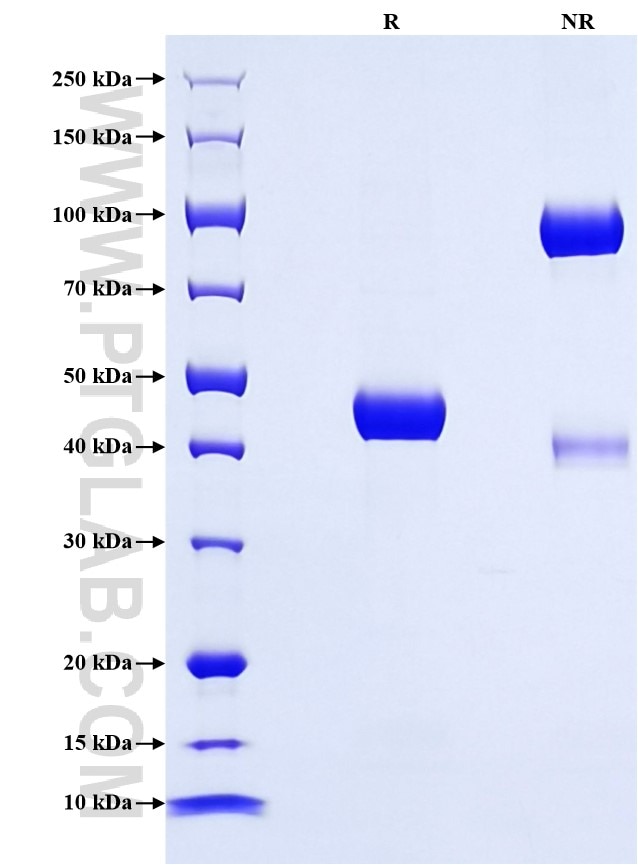
>90 %, SDS-PAGE
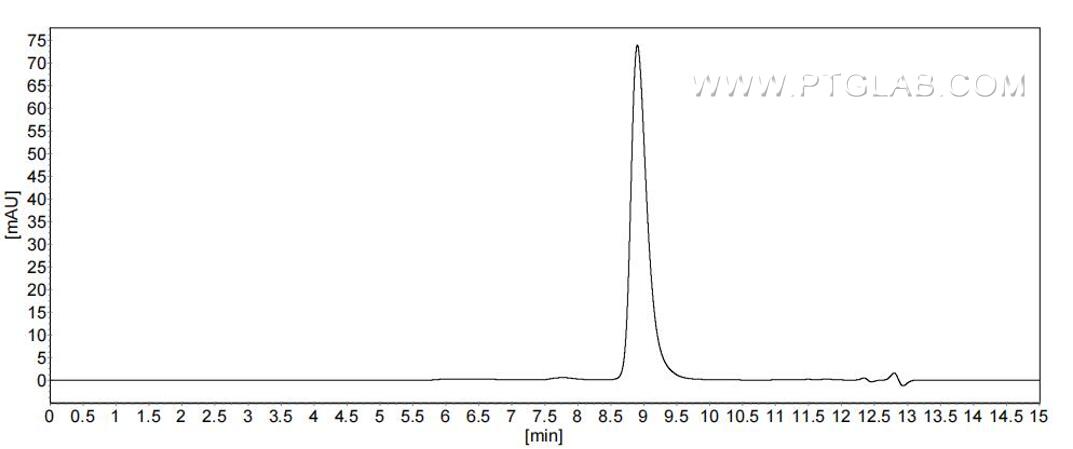
>90 %, SEC-HPLC
Tag
rFc Tag
Activity
not tested
Cat no : Eg3688
Validation Data Gallery
Product Information
| Purity | >90 %, SDS-PAGE >90 %, SEC-HPLC |
| Endotoxin | <0.1 EU/μg protein, LAL method |
| Activity |
Not tested |
| Expression | HEK293-derived Human Chemerin protein Glu21-Ser157 (Accession# Q99969) with a rabbit IgG Fc tag at the C-terminus. |
| GeneID | 5919 |
| Accession | Q99969 |
| PredictedSize | 42.2 kDa |
| SDS-PAGE | 42-48 kDa, reducing (R) conditions |
| Formulation | Lyophilized from 0.22 μm filtered solution in PBS, pH 7.4. Normally 5% trehalose and 5% mannitol are added as protectants before lyophilization. |
| Reconstitution | Briefly centrifuge the tube before opening. Reconstitute at 0.1-0.5 mg/mL in sterile water. |
| Storage Conditions |
It is recommended that the protein be aliquoted for optimal storage. Avoid repeated freeze-thaw cycles.
|
| Shipping | The product is shipped at ambient temperature. Upon receipt, store it immediately at the recommended temperature. |
Background
Chemerin, also named as TIG2 and RARRES2, is adipocyte-secreted protein (adipokine) that regulates adipogenesis, metabolism and inflammation through activation of the chemokine-like receptor 1 (CMKLR1). Its other ligands include G protein-coupled receptor 1 (GPR1) and chemokine receptor-like 2 (CCRL2). It positively regulates adipocyte differentiation, modulates the expression of adipocyte genes involved in lipid and glucose metabolism and might play a role in angiogenesis, a process essential for the expansion of white adipose tissue. RARRES2 have both pro- and anti-inflammatory properties depending on the modality of enzymatic cleavage by different classes of proteases.
References:
1. Bozaoglu K, et al. (2007). Endocrinology, Oct;148(10):4687-94.
2. Ernst, M. C., et al. (2010). Trends Endocrinol Metab.Nov;21(11):660-667.
3. Mattern A, et al. (2014). IUBMB Life. Jan;66(1):19-26.