
Recombinant Human GGT1 protein (rFc Tag)
Species
Human
Purity
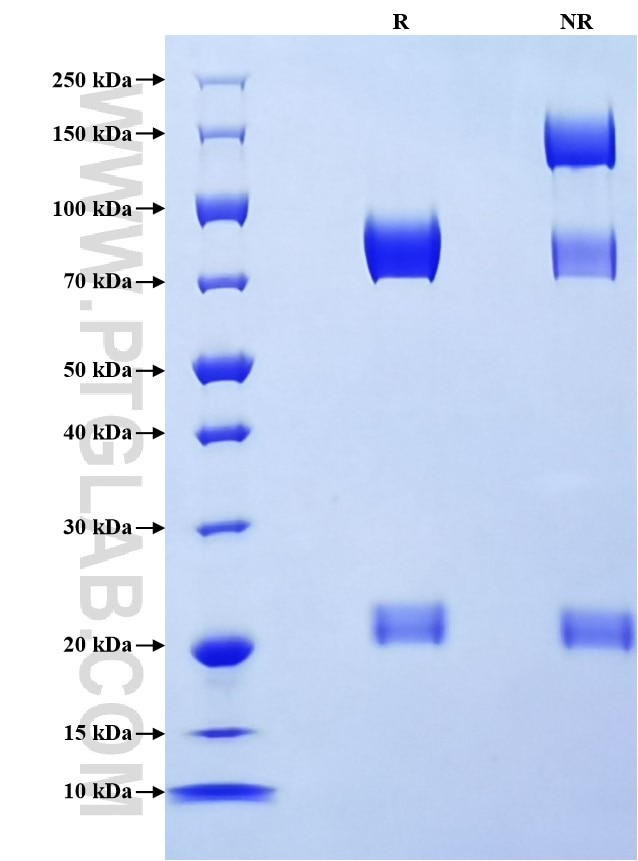
>90 %, SDS-PAGE
Tag
rFc Tag
Activity
not tested
Cat no : Eg4602
Validation Data Gallery
Product Information
| Purity | >90 %, SDS-PAGE |
| Endotoxin | <0.1 EU/μg protein, LAL method |
| Activity |
Not tested |
| Expression | HEK293-derived Human GGT1 protein Pro27-Tyr569 (Accession# P19440-1) with a rabbit IgG Fc tag at the N-terminus. |
| GeneID | 2678 |
| Accession | P19440-1 |
| PredictedSize | 85.8 kDa |
| SDS-PAGE | 20-23 kDa and 70-90 kDa, reducing (R) conditions |
| Formulation | Lyophilized from 0.22 μm filtered solution in PBS, pH 7.4. Normally 5% trehalose and 5% mannitol are added as protectants before lyophilization. |
| Reconstitution | Briefly centrifuge the tube before opening. Reconstitute at 0.1-0.5 mg/mL in sterile water. |
| Storage Conditions |
It is recommended that the protein be aliquoted for optimal storage. Avoid repeated freeze-thaw cycles.
|
| Shipping | The product is shipped at ambient temperature. Upon receipt, store it immediately at the recommended temperature. |
Background
Glutamyltransferase 1 (GGT1) is abundantly expressed in various tissues including the pancreas. GGT1 is thought to be involved in the transport of amino acids across the plasma membrane through the gamma-glutamyl cycle. The main function of normal GGT1 is to induce glutathione molecules followed by providing protection against oxidative stress. It is known that oxidative stress plays a role in the pathogenesis of acute pancreatitis. Additionally, smokers with the GGT1 SNP rs5751901 show a higher risk for acute pancreatitis. Furthermore, GGT1 is involved in NF-κB pathway in a manner dependent on reactive oxygen species (ROS) regulation, although GGT1-mediated glutathione molecules suppressed oxidative stress.
References:
1. Heisterkamp N. et al. (2008). Hum Genet. 123(4):321-332.
2. Furukawa R. et al. (2024). Sci Rep. 14(1):12224.