
Recombinant Human IL15RA protein (rFc Tag)(HPLC verified)
Species
Human
Purity
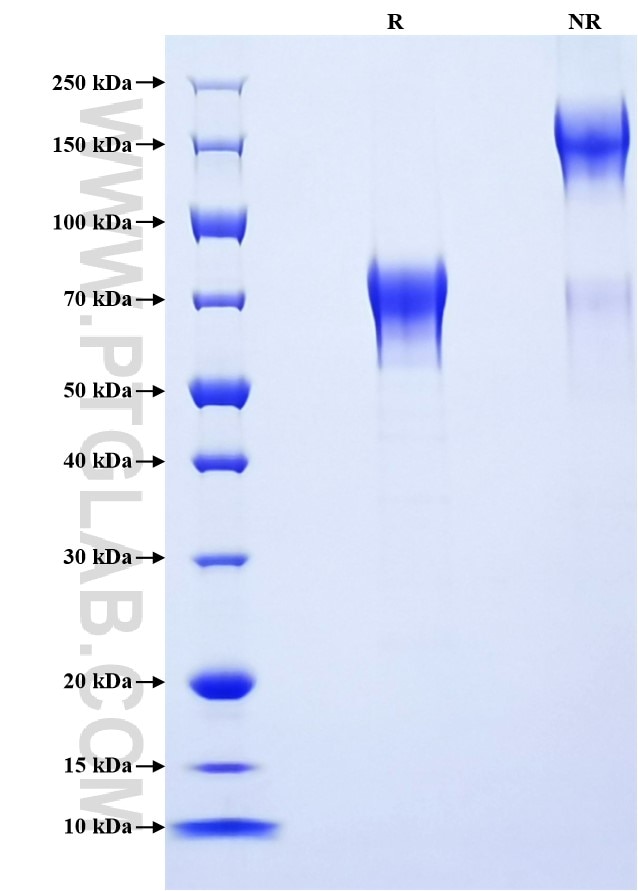
>90 %, SDS-PAGE
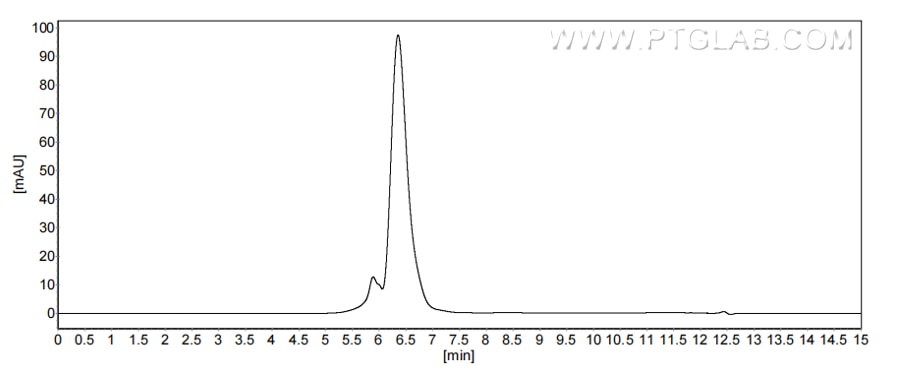
>90%, SEC-HPLC
Tag
rFc Tag
Activity
not tested
Cat no : Eg3588
Validation Data Gallery
Product Information
| Purity | >90 %, SDS-PAGE >90%, SEC-HPLC |
| Endotoxin | <0.1 EU/μg protein, LAL method |
| Activity |
Not tested |
| Expression | HEK293-derived Human IL15RA protein Ile31-Thr205 (Accession# Q13261-1) with a rabbit IgG Fc tag at the C-terminus. |
| GeneID | 3601 |
| Accession | Q13261-1 |
| PredictedSize | 44.7 kDa |
| SDS-PAGE | 65-75 kDa, reducing (R) conditions |
| Formulation | Lyophilized from 0.22 μm filtered solution in PBS, pH 7.4. Normally 5% trehalose and 5% mannitol are added as protectants before lyophilization. |
| Reconstitution | Briefly centrifuge the tube before opening. Reconstitute at 0.1-0.5 mg/mL in sterile water. |
| Storage Conditions |
It is recommended that the protein be aliquoted for optimal storage. Avoid repeated freeze-thaw cycles.
|
| Shipping | The product is shipped at ambient temperature. Upon receipt, store it immediately at the recommended temperature. |
Background
Interleukin-15 receptor α (IL15RA), also known as CD215 or IL-15Rα, is a member of the type I cytokine receptor family and is an important component of proinflammatory signaling for interleukin 15 (IL15). IL15 and IL15RA are present in the circulation and have been detected in a variety of tissues, where they affect physiological functions such as muscle contractility and overall metabolism. (PMID: 28602725) IL-15Rα signals in both cis and trans, where cis signaling means that IL-15 binds to its receptor on the same cell, and trans signaling means that IL-15 signals through extracellular IL-15Rα. IL15/IL15RA autocrine growth-stimulating loops are found in human T-cell lymphotropic virus 1 ( HTLV-1)-associated adult T-cell leukemia/lymphoma progression. (PMID: 36009415)
References:
1. Loro E, et al. (2017). Bone. 103:20-30.
2. Marra P, et al. (2014). Cancer Res. 74(17):4908-21.
3. Bellón T, et al. (2022). Biomedicines. 10(8):1868.