
Recombinant Human CD314/NKG2D protein (rFc Tag)
Species
Human
Purity
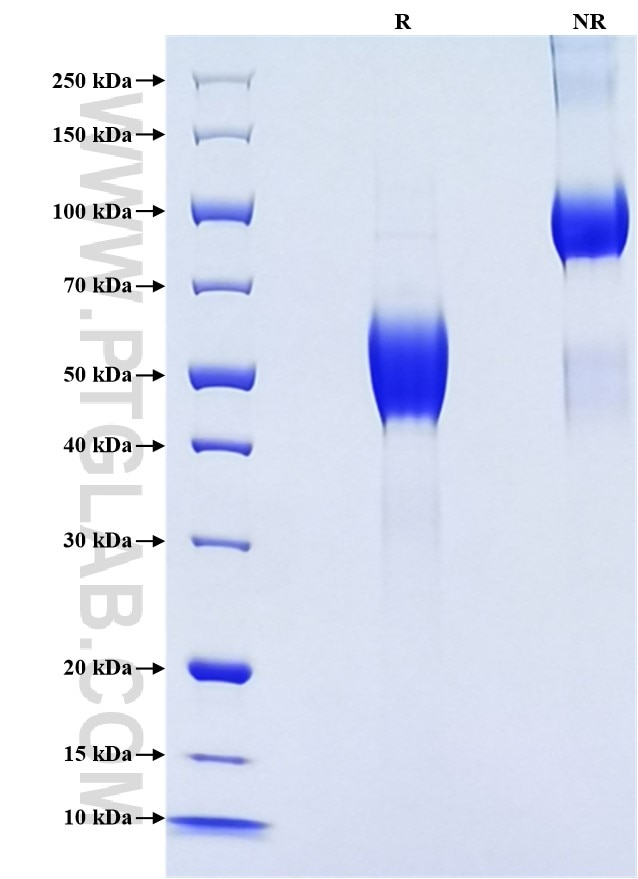
>90 %, SDS-PAGE
Tag
rFc Tag
Activity
not tested
Cat no : Eg3295
Validation Data Gallery
Product Information
| Purity | >90 %, SDS-PAGE |
| Endotoxin | <0.1 EU/μg protein, LAL method |
| Activity |
Not tested |
| Expression | HEK293-derived Human NKG2D protein Phe78-Val216 (Accession# P26718-1) with a rabbit IgG Fc tag at the N-terminus. |
| GeneID | 22914 |
| Accession | P26718-1 |
| PredictedSize | 43.3 kDa |
| SDS-PAGE | 45-65 kDa, reducing (R) conditions |
| Formulation | Lyophilized from 0.22 μm filtered solution in PBS, pH 7.4. Normally 5% trehalose and 5% mannitol are added as protectants before lyophilization. |
| Reconstitution | Briefly centrifuge the tube before opening. Reconstitute at 0.1-0.5 mg/mL in sterile water. |
| Storage Conditions |
It is recommended that the protein be aliquoted for optimal storage. Avoid repeated freeze-thaw cycles.
|
| Shipping | The product is shipped at ambient temperature. Upon receipt, store it immediately at the recommended temperature. |
Background
CD314, also known as NKG2D or Killer cell lectin-like receptor subfamily K member 1 (KLRK1), is a type II lectin-like transmembrane stimulatory receptor. In humans, it is expressed on NK cells, gamma delta T cells, and CD8+ alpha beta T cells. Various families of cell surface ligands have been identified, including the MICA/MICB and ULBP proteins. CD314 is involved in both innate and adaptive immunities, and the NKG2D/NKG2DL pathway involves multiple effector cell types for controlling tumor progression.
References:
1. T Yabe. et al.(1993) Immunogenetics.37(6):455-60.
2. S Bauer. et al.(1999) Science.285(5428):727-9.
3. Amanda M Jamieson. et al.(2002) Immunity.17(1):19-29
4. Huifang Liu. et al.(2019) Am J Cancer Res. 9(10):2064-2078.