
Recombinant Human PIP protein (rFc Tag)
Species
Human
Purity
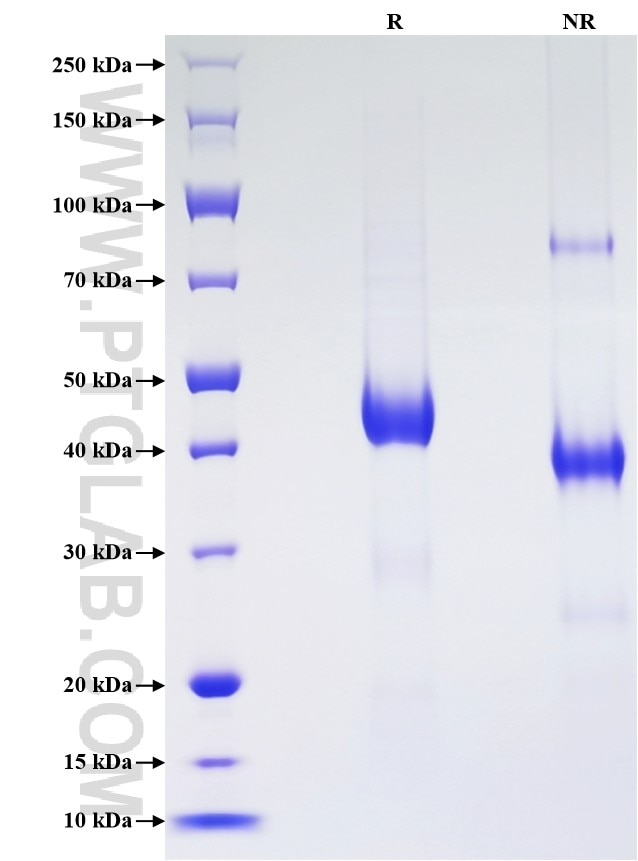
>90 %, SDS-PAGE
Tag
rFc Tag
Activity
not tested
Cat no : Eg3018
Validation Data Gallery
Product Information
| Purity | >90 %, SDS-PAGE |
| Endotoxin | <0.1 EU/μg protein, LAL method |
| Activity |
Not tested |
| Expression | HEK293-derived Human PIP protein Gln29-Glu146 (Accession# P12273) with a rabbit IgG Fc tag at the C-terminus. |
| GeneID | 5304 |
| Accession | P12273 |
| PredictedSize | 39.5 kDa |
| SDS-PAGE | 40-48 kDa, reducing (R) conditions |
| Formulation | Lyophilized from 0.22 μm filtered solution in PBS, pH 7.4. Normally 5% trehalose and 5% mannitol are added as protectants before lyophilization. |
| Reconstitution | Briefly centrifuge the tube before opening. Reconstitute at 0.1-0.5 mg/mL in sterile water. |
| Storage Conditions |
It is recommended that the protein be aliquoted for optimal storage. Avoid repeated freeze-thaw cycles.
|
| Shipping | The product is shipped at ambient temperature. Upon receipt, store it immediately at the recommended temperature. |
Background
GCDFP-15 (gross cystic disease fluid protein 15), also known as PIP (prolactin-induced protein) is a secretory glycoprotein expressed in benign and malignant breast tumor tissues and in some normal exocrine organs such as sweat, salivary, and lacrimal glands. GCDFP-15 expression is increased by prolactin and androgen and inhibited by estrogen. The expression is also regulated by interleukins. GCDFP-15 is a marker of apocrine differentiation and is frequently used for assessment of metastases or regional recurrences of breast origin.
References:
1. Ciullo, Marina et al. Human molecular genetics vol. 11,23 (2002): 2887-94.
2. Hassan, Md I et al. Cellular and molecular life sciences : CMLS vol. 66,3 (2009): 447-59.