
Recombinant Human RNASE1 protein (rFc Tag) (HPLC verified)
Species
Human
Purity
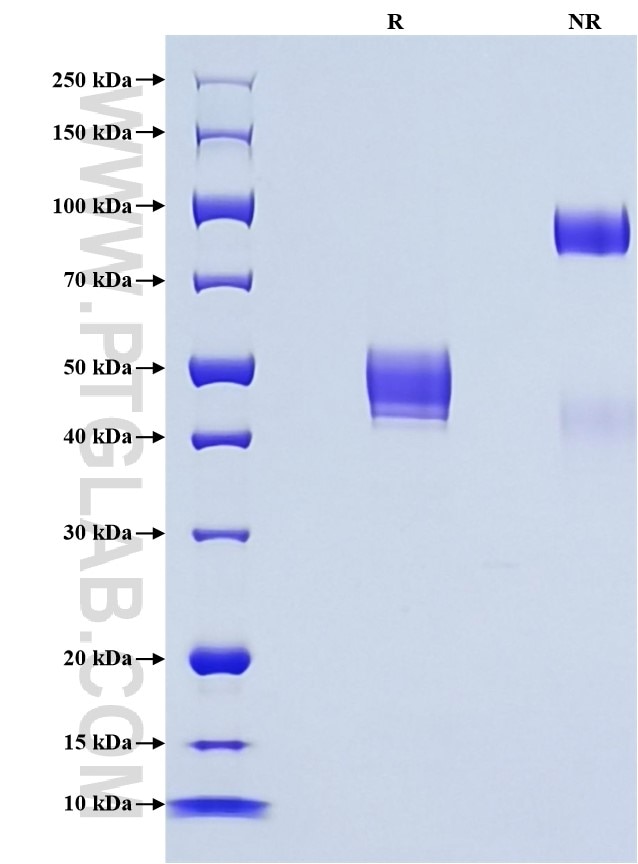
>90 %, SDS-PAGE
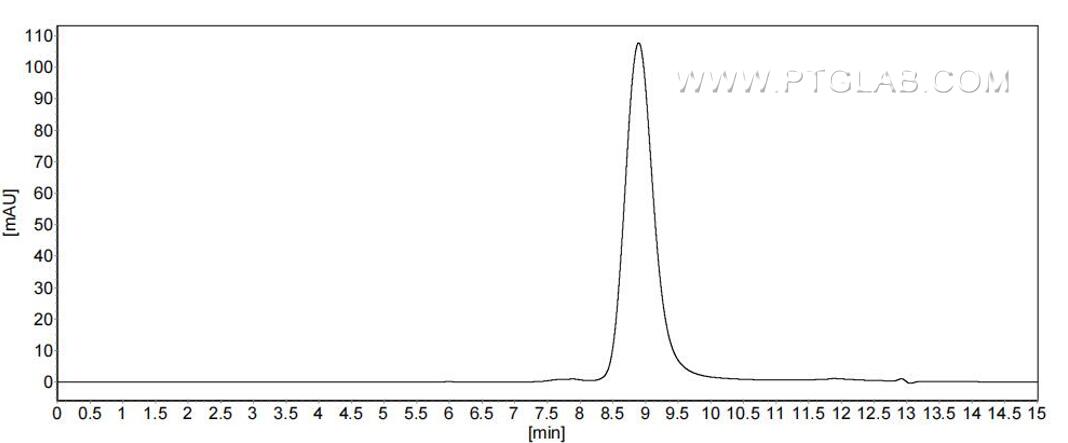
>90 %, SEC-HPLC
Tag
rFc Tag
Activity
not tested
Cat no : Eg3044
Validation Data Gallery
Product Information
| Purity | >90 %, SDS-PAGE >90 %, SEC-HPLC |
| Endotoxin | <0.1 EU/μg protein, LAL method |
| Activity |
Not tested |
| Expression | HEK293-derived Human RNASE1 protein Lys29-Thr156 (Accession# P07998) with a rabbit IgG Fc tag at the C-terminus. |
| GeneID | 6035 |
| Accession | P07998 |
| PredictedSize | 40.6 kDa |
| SDS-PAGE | 42-55 kDa, reducing (R) conditions |
| Formulation | Lyophilized from 0.22 μm filtered solution in PBS, pH 7.4. Normally 5% trehalose and 5% mannitol are added as protectants before lyophilization. |
| Reconstitution | Briefly centrifuge the tube before opening. Reconstitute at 0.1-0.5 mg/mL in sterile water. |
| Storage Conditions |
It is recommended that the protein be aliquoted for optimal storage. Avoid repeated freeze-thaw cycles.
|
| Shipping | The product is shipped at ambient temperature. Upon receipt, store it immediately at the recommended temperature. |
Background
Ribonucleases (RNases) are enzymes that catalyze the degradation of RNA into smaller components. They play crucial roles in various biological processes, including RNA maturation, immune defense, and cellular stress responses. In humans, several types of RNases have been identified and characterized. The ribonuclease A (RNase A) family is one of the best-characterized vertebrate-specific proteins, and in humans, eight catalytically active RNases (numbered 1–8) have been identified and have unique tissue distributions. Apart from the digestion of dietary RNA, these RNases have a broad range of biological actions, including the regulation of intra- or extra-cellular RNA metabolism, antiviral, antibacterial, and antifungal activities, neurotoxicity, promotion of cell proliferation, anti-apoptosis, and immunomodulatory abilities. Based on multiple biological roles, RNases are found to participate in the pathogenic processes of many diseases, such as infection, immune dysfunction, neurodegeneration, cancer, and cardiovascular disorders.
References:
1.	Rosenberg HF. (2008) J Leukoc Biol. 83(5):1079-87.
2.	Michlewski G, (2010)  RNase-assisted RNA chromatography. 16(8):1673-8.
3.	Bao L, Hu J, et al. (2023) Nat Commun. 14(1):2280.
4.	Rudler DL, Siira SJ, et al. (2023) Methods Mol Biol. 2661:317-328.