
Recombinant Mouse CD80 protein (hFc Tag) (HPLC verified)
Species
Mouse
Purity
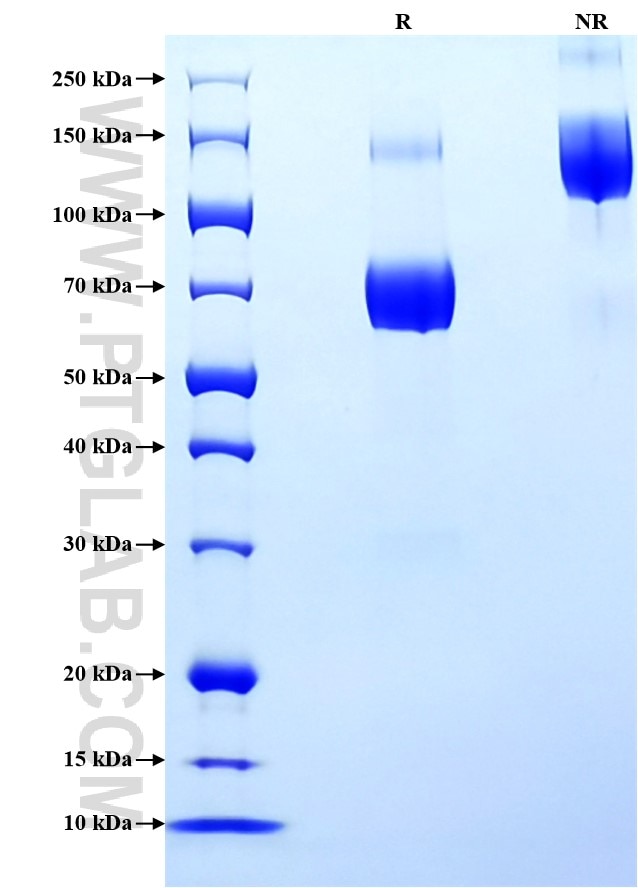
>90 %, SDS-PAGE
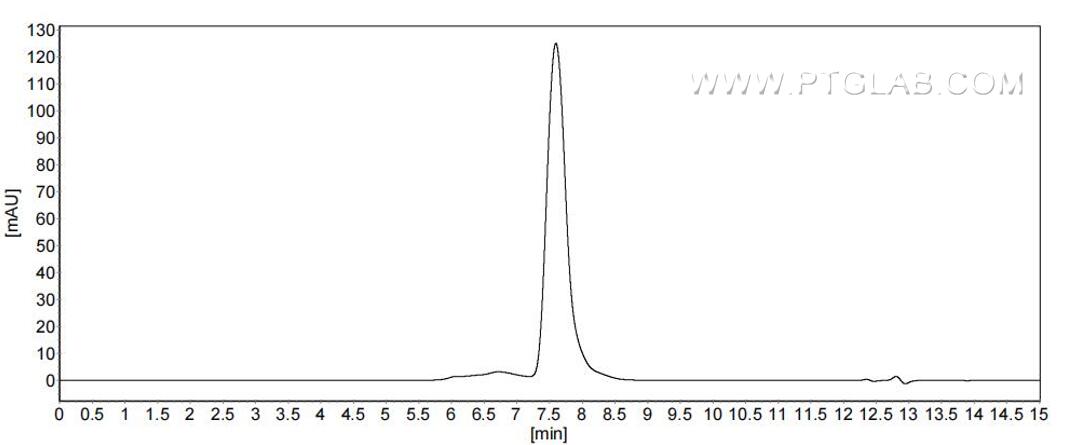
>90 %, SEC-HPLC
Tag
hFc Tag
Activity
not tested
Cat no : Eg0804
Validation Data Gallery
Product Information
| Purity | >90 %, SDS-PAGE >90 %, SEC-HPLC |
| Endotoxin | <0.1 EU/μg protein, LAL method |
| Activity |
Not tested |
| Expression | HEK293-derived Mouse CD80 protein Val38-Asn246 (Accession# Q00609-1) with a human IgG1 Fc tag at the C-terminus. |
| GeneID | 12519 |
| Accession | Q00609-1 |
| PredictedSize | 50.6 kDa |
| SDS-PAGE | 60-80 kDa, reducing (R) conditions |
| Formulation | Lyophilized from 0.22 μm filtered solution in PBS, pH 7.4. Normally 5% trehalose and 5% mannitol are added as protectants before lyophilization. |
| Reconstitution | Briefly centrifuge the tube before opening. Reconstitute at 0.1-0.5 mg/mL in sterile water. |
| Storage Conditions |
It is recommended that the protein be aliquoted for optimal storage. Avoid repeated freeze-thaw cycles.
|
| Shipping | The product is shipped at ambient temperature. Upon receipt, store it immediately at the recommended temperature. |
Background
CD80 (also known as B7-1) is a type I membrane protein that is a member of the immunoglobulin superfamily, with an extracellular immunoglobulin constant-like domain and a variable-like domain required for receptor binding. It is expressed on antigen-presenting cells (APCs), including B cells, dendritic cells, monocytes, and macrophages. CD80 is the receptor for the proteins CD28 and CTLA-4 found on the surface of T-cells. It is involved in the costimulatory signal essential for T-lymphocyte activation. T-cell proliferation and cytokine production is induced by the binding of CD28, binding to CTLA-4 has opposite effects and inhibits T-cell activation. CD80 also acts as a cellular attachment receptor for adenovirus subgroup B.
References:
1. Peach RJ. et al. (1995). J Biol Chem. 36: 21181-21187.
2. Vasilevko V. et al. (2002). DNA Cell Biol. 3: 137-149.
3. Short JJ. et al. (2006). Virus Res. 122:144-153.