
Recombinant Mouse CACHD1 protein (rFc Tag)
Species
Mouse
Purity
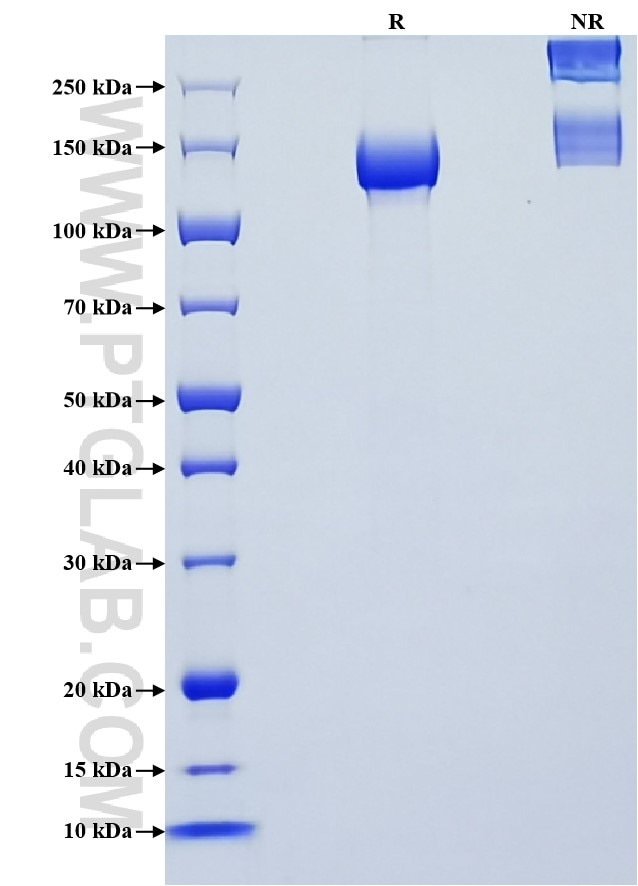
>90 %, SDS-PAGE
Tag
rFc Tag
Activity
not tested
Cat no : Eg2855
Validation Data Gallery
Product Information
| Purity | >90 %, SDS-PAGE |
| Endotoxin | <0.1 EU/μg protein, LAL method |
| Activity |
Not tested |
| Expression | HEK293-derived Mouse CACHD1 protein Asp52-Pro1109 (Accession# Q6PDJ1-1) with a rabbit IgG Fc tag at the C-terminus. |
| GeneID | 320508 |
| Accession | Q6PDJ1-1 |
| PredictedSize | 144.1 kDa |
| SDS-PAGE | 140-150 kDa, reducing (R) conditions |
| Formulation | Lyophilized from 0.22 μm filtered solution in PBS, pH 7.4. Normally 5% trehalose and 5% mannitol are added as protectants before lyophilization. |
| Reconstitution | Briefly centrifuge the tube before opening. Reconstitute at 0.1-0.5 mg/mL in sterile water. |
| Storage Conditions |
It is recommended that the protein be aliquoted for optimal storage. Avoid repeated freeze-thaw cycles.
|
| Shipping | The product is shipped at ambient temperature. Upon receipt, store it immediately at the recommended temperature. |
Background
CACHD1, or cache domain containing 1, is highly expressed in the mammalian central nervous system (CNS), with particular expression in the thalamus, hippocampus, and cerebellum.This protein is thought to be involved in the modulation of voltage-gated calcium channels, particularly the CaV3 (T-type) channels, which are important for regulating neuronal excitability. Cachd1 is also expressed in neuronal progenitors, functions downstream of asymmetric environmental signals, and influences timing of the normally asymmetric patterns of neurogenesis.
References:
1. Cottrell GS. et al. (2018). J Neurosci. 38(43):9186-9201.
2. Powell GT. et al. (2024) . Science. 384(6695):573-579.