
Recombinant Mouse IL-17RB protein (mFc Tag) (HPLC verified)
Species
Mouse
Purity
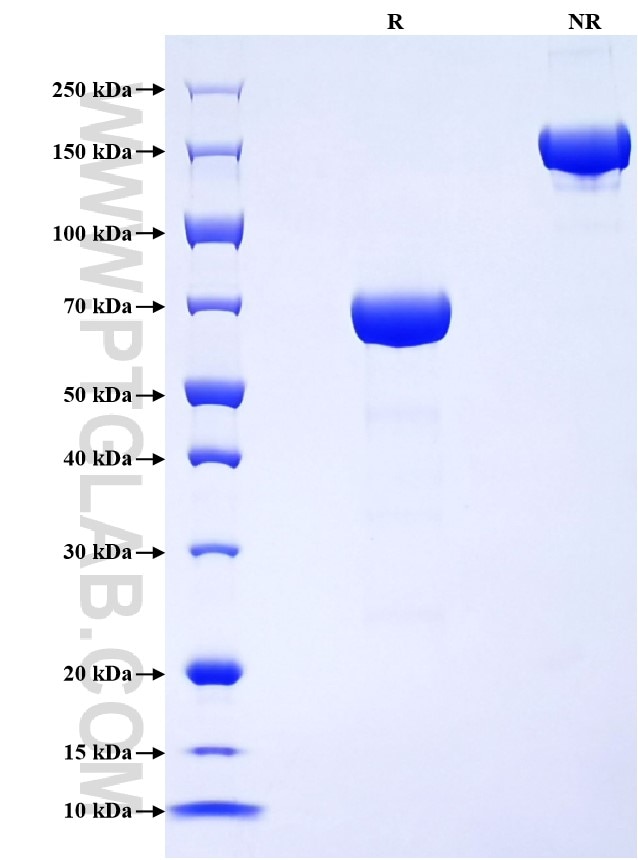
>90 %, SDS-PAGE
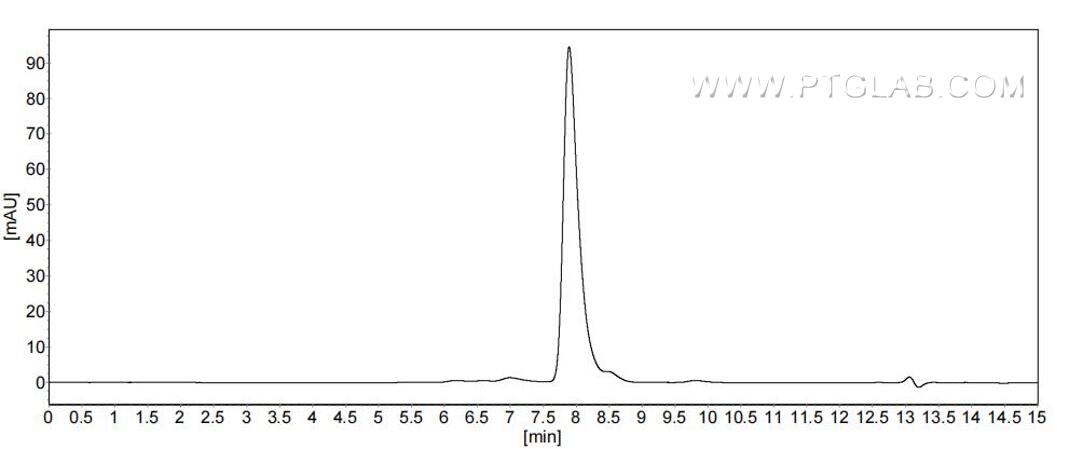
>90 %, SEC-HPLC
Tag
mFc Tag
Activity
not tested
Cat no : Eg4195
Validation Data Gallery
Product Information
| Purity | >90 %, SDS-PAGE >90 %, SEC-HPLC |
| Endotoxin | <0.1 EU/μg protein, LAL method |
| Activity |
Not tested |
| Expression | HEK293-derived Mouse IL-17RB protein Arg18-Gly286 (Accession# Q9JIP3-1) with a mouse IgG Fc tag at the C-terminus. |
| GeneID | 50905 |
| Accession | Q9JIP3-1 |
| PredictedSize | 56.4 kDa |
| SDS-PAGE | 60-72 kDa, reducing (R) conditions |
| Formulation | Lyophilized from 0.22 μm filtered solution in PBS, pH 7.4. Normally 5% trehalose and 5% mannitol are added as protectants before lyophilization. |
| Reconstitution | Briefly centrifuge the tube before opening. Reconstitute at 0.1-0.5 mg/mL in sterile water. |
| Storage Conditions |
It is recommended that the protein be aliquoted for optimal storage. Avoid repeated freeze-thaw cycles.
|
| Shipping | The product is shipped at ambient temperature. Upon receipt, store it immediately at the recommended temperature. |
Background
IL-17RB is a 47.9 kDa transmembrane protein (462 aa) that belongs to the IL-17 receptor family. IL 17RB has a SEFIR cytoplasmic domain implicated in homotypic dimerization and recruitment of signaling proteins (shared with IL-17RA) and a TRAF6-binding domain (not found in IL-17RA). IL-17RB is expressed in various endocrine tissues and epithelial cells in different organs such as kidney, liver, and mucosal tissues. The IL-17B/IL-17RB pathway is considered as a signaling cascade that promotes cancer cell survival, proliferation and migration. The pro-tumor functions associated with the IL 17B/IL-17RB pathway are diverse and complex because they involve mechanisms that act directly on tumor cells, and also indirect mechanisms that lead to tumor microenvironment remodeling.
References:
1.Teng YS. et al. (2019) Cell Death Dis. 10(2):79.
2.Bastid J. et al. (2020) Front Immunol. 11:718.
3.Wilson SC. et al. (2022) Nature. 609(7927):622-629.