
Recombinant Mouse Uromodulin protein (mFc Tag)
Species
Mouse
Purity
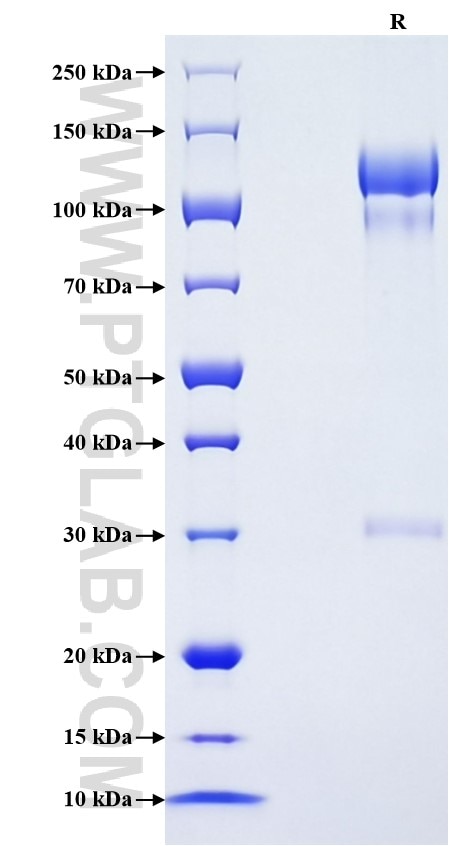
>90 %, SDS-PAGE
Tag
mFc Tag
Activity
not tested
Cat no : Eg3885
Validation Data Gallery
Product Information
| Purity | >90 %, SDS-PAGE |
| Endotoxin | <0.1 EU/μg protein, LAL method |
| Activity |
Not tested |
| Expression | HEK293-derived Mouse Uromodulin protein Asn25-Ala618 (Accession# Q91X17) with a mouse IgG Fc tag at the C-terminus. |
| GeneID | 22242 |
| Accession | Q91X17 |
| PredictedSize | 92.0 kDa |
| SDS-PAGE | 110-130 kDa, reducing (R) conditions |
| Formulation | Lyophilized from 0.22 μm filtered solution in PBS, pH 7.4. Normally 5% trehalose and 5% mannitol are added as protectants before lyophilization. |
| Reconstitution | Briefly centrifuge the tube before opening. Reconstitute at 0.1-0.5 mg/mL in sterile water. |
| Storage Conditions |
It is recommended that the protein be aliquoted for optimal storage. Avoid repeated freeze-thaw cycles.
|
| Shipping | The product is shipped at ambient temperature. Upon receipt, store it immediately at the recommended temperature. |
Background
Uromodulin, also known as THP (Tamm-Horsfall glycoprotein), is the most abundant protein excreted in the urine under physiological conditions. Uromodulin is synthesized by the kidney and localizes in cells lining the ascending limb of Henle and the distal convoluted tubule. Uromodulin has been linked to water/electrolyte balance and to kidney innate immunity. Also, studies in knockout mice demonstrated that it has a protective role against urinary tract infections and renal stone formation. Mutations in the gene encoding uromodulin lead to rare autosomal dominant diseases, collectively referred to as uromodulin-associated kidney diseases.
References:
1. Luca Rampoldi. et al. (2011) Kidney Int. 80(4):338-347.
2. Muchmore AV. et al.(1985) Science. 229: 479–481.
3. Easton RL. et al. (2000) J Biol Chem. 275: 21928–21938.
4. Jennings P. et al. (2007) J Am Soc Nephrol. 18: 264–273.