

Tested Applications
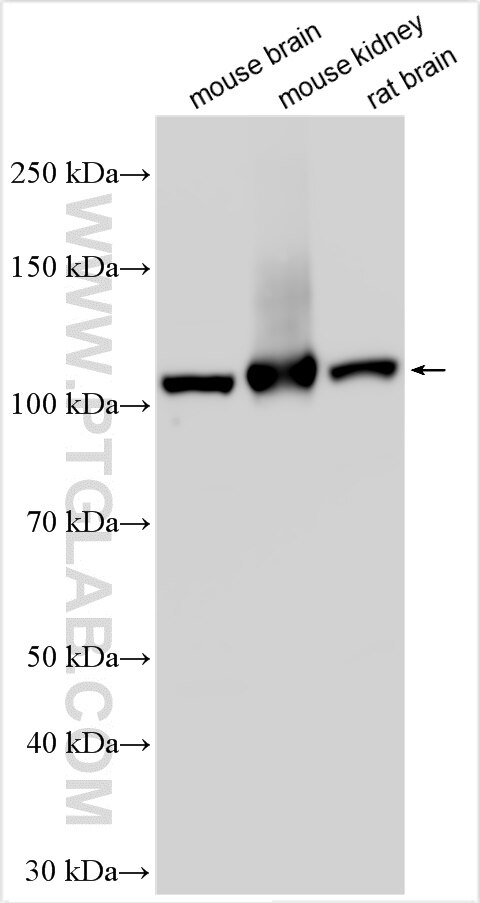
| Positive WB detected in | mouse brain tissue, mouse kidney tissue, rat brain tissue |
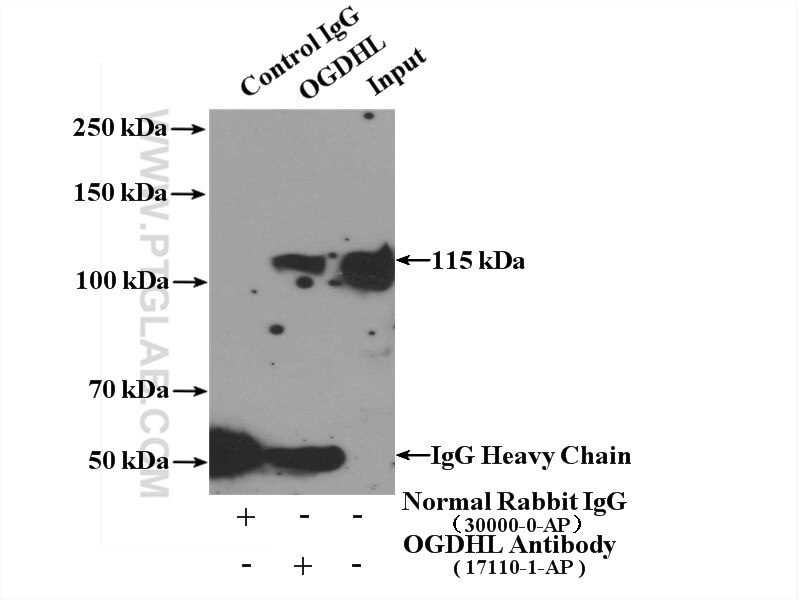
| Positive IP detected in | mouse brain tissue |
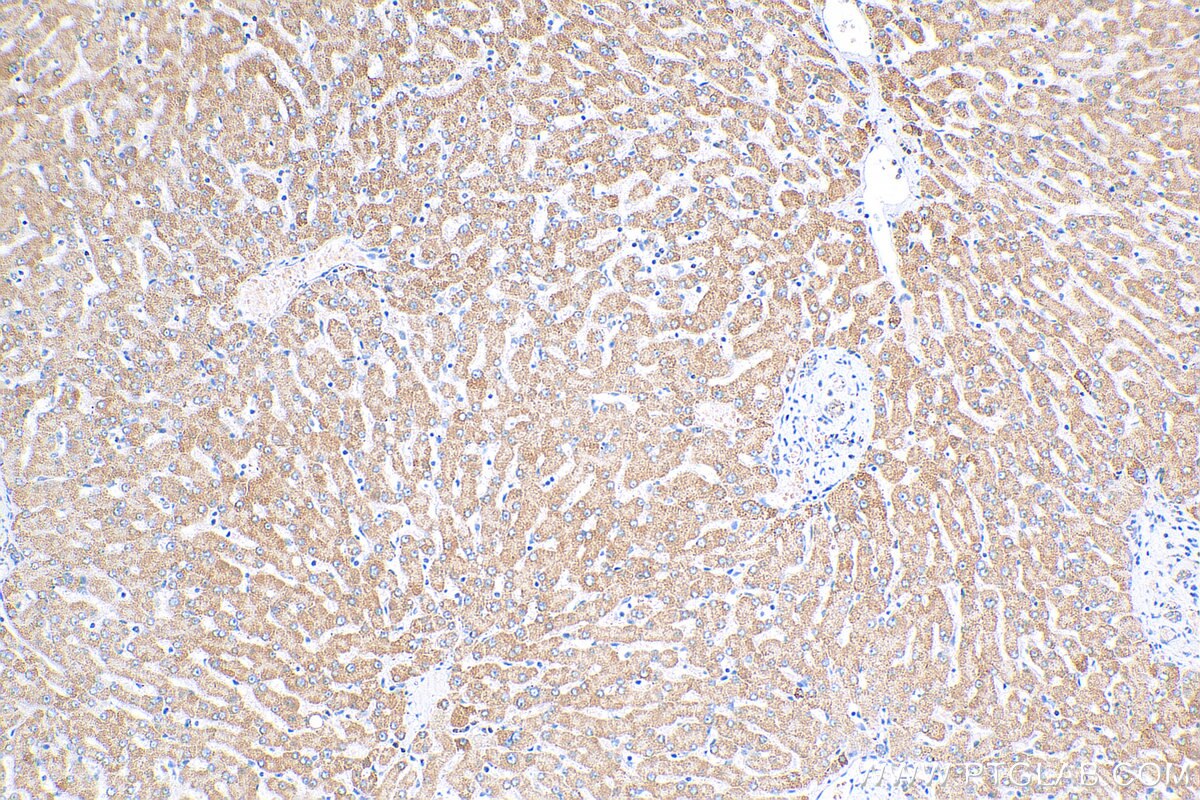
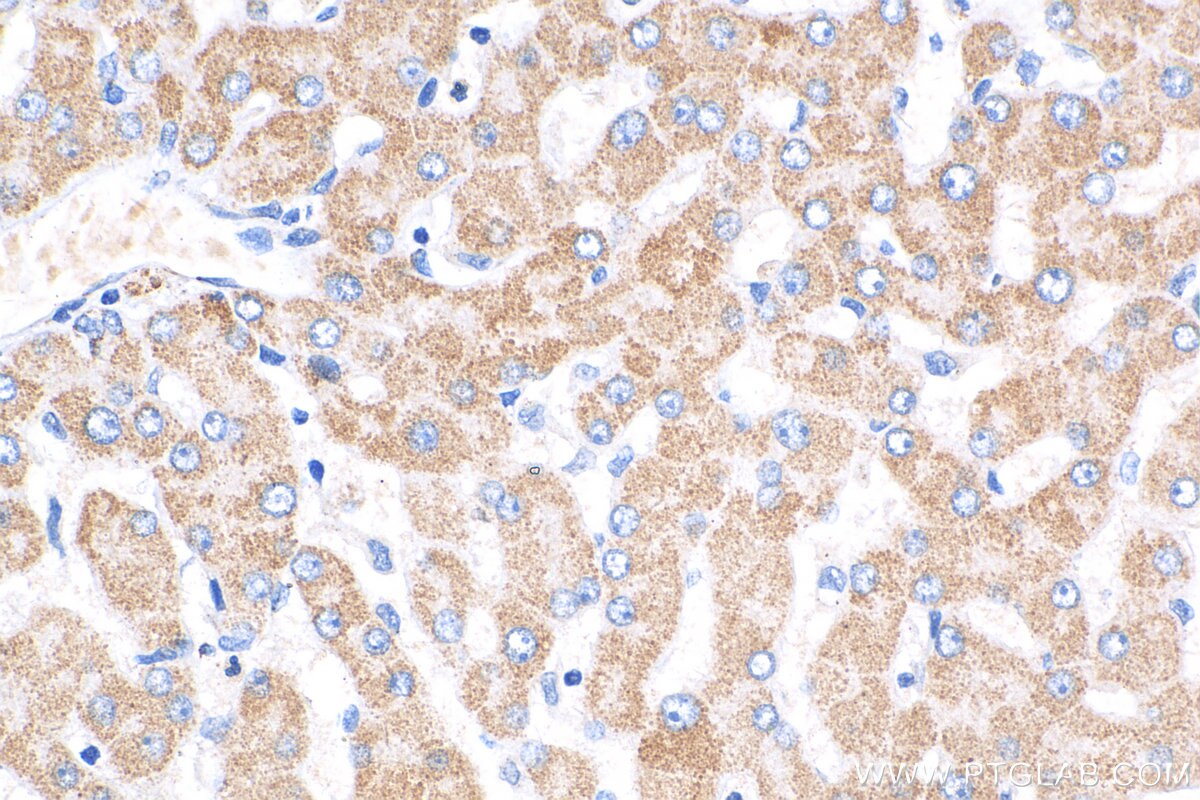
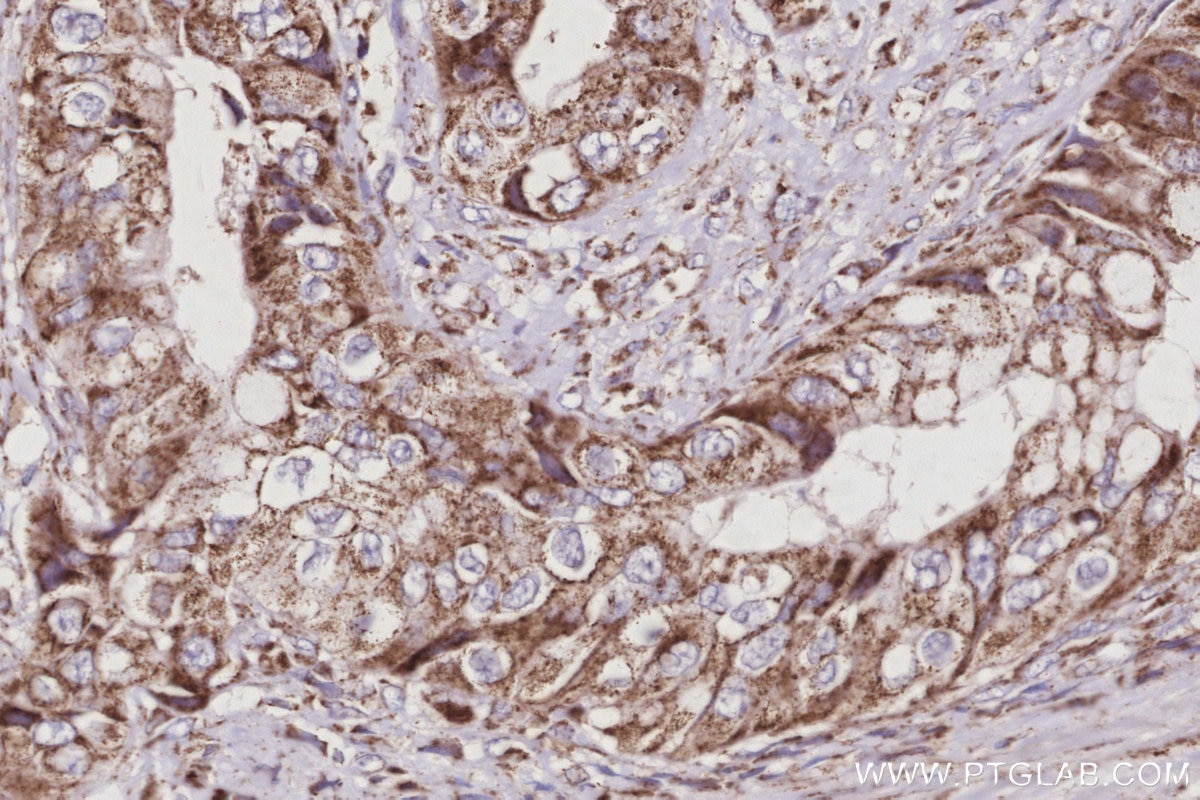
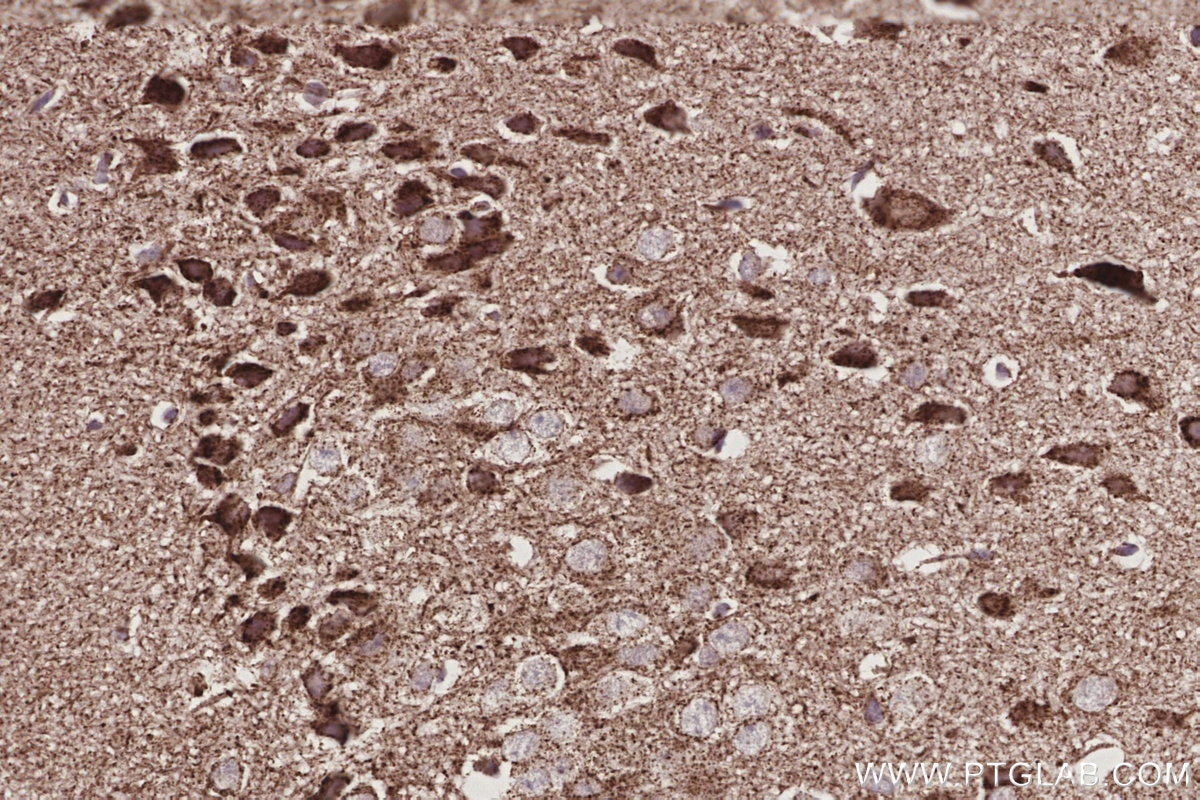
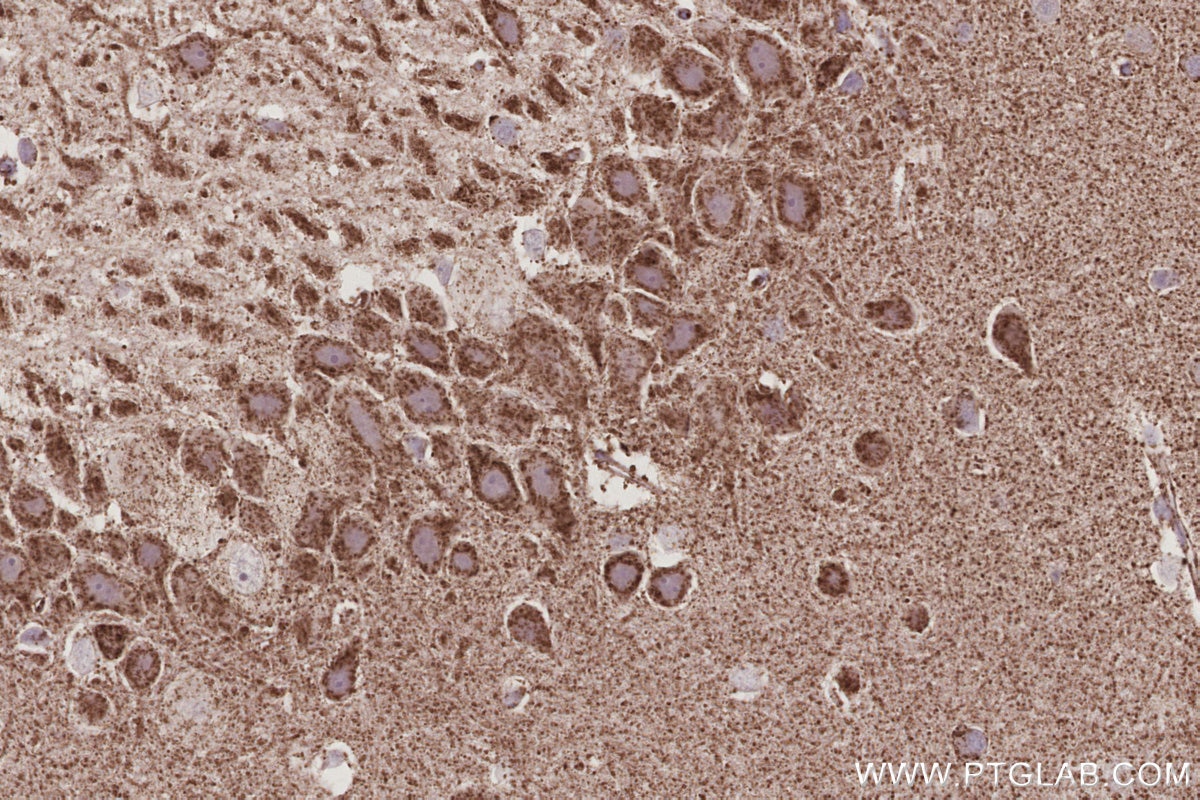
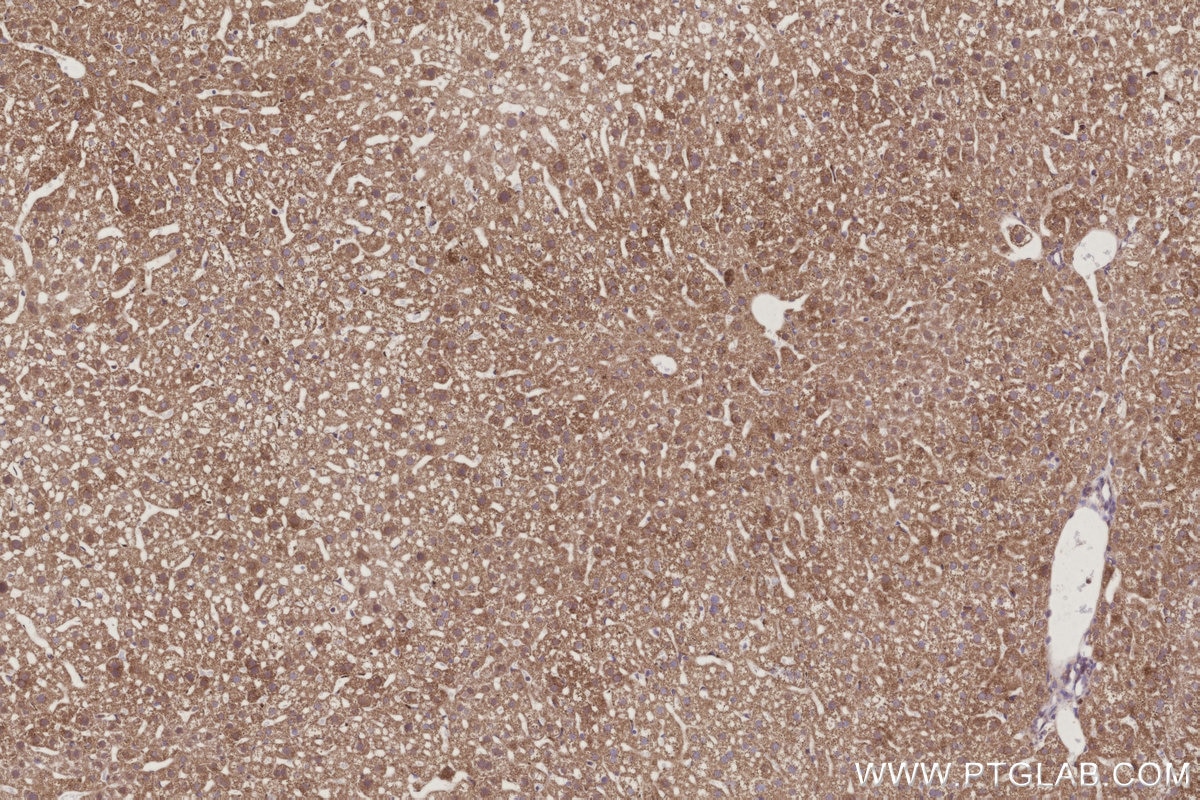
| Positive IHC detected in | human liver tissue, human pancreas cancer tissue, rat brain tissue, mouse liver tissue, mouse brain tissue Note: suggested antigen retrieval with TE buffer pH 9.0; (*) Alternatively, antigen retrieval may be performed with citrate buffer pH 6.0 |
Recommended dilution
| Application | Dilution |
|---|---|
| Western Blot (WB) | WB : 1:2000-1:10000 |
| Immunoprecipitation (IP) | IP : 0.5-4.0 ug for 1.0-3.0 mg of total protein lysate |
| Immunohistochemistry (IHC) | IHC : 1:200-1:800 |
| It is recommended that this reagent should be titrated in each testing system to obtain optimal results. | |
| Sample-dependent, Check data in validation data gallery. | |
Product Information
17110-1-AP targets OGDHL in WB, IHC, IF, IP, ELISA applications and shows reactivity with human, mouse, rat samples.
| Tested Reactivity | human, mouse, rat |
| Cited Reactivity | human, mouse, rat |
| Host / Isotype | Rabbit / IgG |
| Class | Polyclonal |
| Type | Antibody |
| Immunogen |
CatNo: Ag10794 Product name: Recombinant human OGDHL protein Source: e coli.-derived, PGEX-4T Tag: GST Domain: 661-1010 aa of BC026320 Sequence: SGQDVERGTFSHRHHVLHDQEVDRRTCVPMNHLWPDQAPYTVCNSSLSEYGVLGFELGYAMASPNALVLWEAQFGDFHNTAQCIIDQFISTGQAKWVRHNGIVLLLPHGMEGMGPEHSSARPERFLQMSNDDSDAYPAFTKDFEVSQLYDCNWIVVNCSTPANYFHVLRRQILLPFRKPLIIFTPKSLLRHPEAKSSFDQMVSGTSFQRVIPEDGAAARAPEQVQRLIFCTGKVYYDLVKERSSQDLEEKVAITRLEQISPFPFDLIKQEAEKYPGAELAWCQEEHKNMGYYDYISPRFMTILRRARPIWYVGRDPAAAPATGNRNTHLVSLKKFLDTAFNLQAFEGKTF Predict reactive species |
| Full Name | oxoglutarate dehydrogenase-like |
| Calculated Molecular Weight | 1010 aa, 115 kDa |
| Observed Molecular Weight | 115 kDa |
| GenBank Accession Number | BC026320 |
| Gene Symbol | OGDHL |
| Gene ID (NCBI) | 55753 |
| RRID | AB_2156767 |
| Conjugate | Unconjugated |
| Form | Liquid |
| Purification Method | Antigen affinity purification |
| UNIPROT ID | Q9ULD0 |
| Storage Buffer | PBS with 0.02% sodium azide and 50% glycerol, pH 7.3. |
| Storage Conditions | Store at -20°C. Stable for one year after shipment. Aliquoting is unnecessary for -20oC storage. 20ul sizes contain 0.1% BSA. |
Background Information
OGDHL(oxoglutarate dehydrogenase-like) is also named as KGDE1KL, FLJ10851, KIAA1290 and belongs to the alpha-ketoglutarate dehydrogenase family. OGDHL is one of the rate-limiting component of the multienzyme OGDH complex (OGDHC) whose malfunction is associated with neuro-degeneration and it is localized only in the mitochondrial fraction and not in the cytosolic or nuclear fractions(PMID:23152800). OGDHL negatively regulates cell proliferation by inducing apoptosis in cervical cancer cells. It may thus participate in brain-specific control of 2-oxoglutarate distribution between energy production and synthesis of the neurotransmitter glutamate(PMID:18783430). It has 3 isoforms(114 kDa, 108 kDa, 91 kDa) produced by alternative splicing.
Protocols
| Product Specific Protocols | |
|---|---|
| IHC protocol for OGDHL antibody 17110-1-AP | Download protocol |
| IP protocol for OGDHL antibody 17110-1-AP | Download protocol |
| WB protocol for OGDHL antibody 17110-1-AP | Download protocol |
| Standard Protocols | |
|---|---|
| Click here to view our Standard Protocols |
Publications
What published studies show
The anti-OGDHL antibody (Cat# 17110-1-AP) has 19 citations across journals including Nature Communications, Journal of Hepatology, Cell Death & Differentiation, American Journal of Human Genetics, Journal of Experimental Medicine, Metabolism, and Cancer Science. Research fields span hepatocellular carcinoma, Parkinson's disease, neurodevelopmental disorders, Alzheimer's disease, gastric cancer, glioblastoma, cardiac disease, depression/anxiety, mitochondrial metabolism, and stem cell differentiation.
| Species | Application | Title |
|---|---|---|
J Hepatol OGDHL silencing promotes hepatocellular carcinoma by reprogramming glutamine metabolism.
| ||
Nat Commun Dysregulation of mitochondrial α-ketoglutarate dehydrogenase leads to elevated lipid peroxidation in CHCHD2-linked Parkinson's disease models | ||
Nat Commun A reversible state of hypometabolism in a human cellular model of sporadic Parkinson's disease | ||
Metabolism Glutamine synthetase deficiency triggers mitochondrial oxidative stress and a ribotoxic stress response during acute hepatic metabolic crisis. | ||
Cell Death Differ Oxoglutarate dehydrogenase-like inhibits the progression of hepatocellular carcinoma by inducing DNA damage through non-canonical function | ||
J Exp Med CTLA4 depletes T cell endogenous and trogocytosed B7 ligands via cis-endocytosis |









