
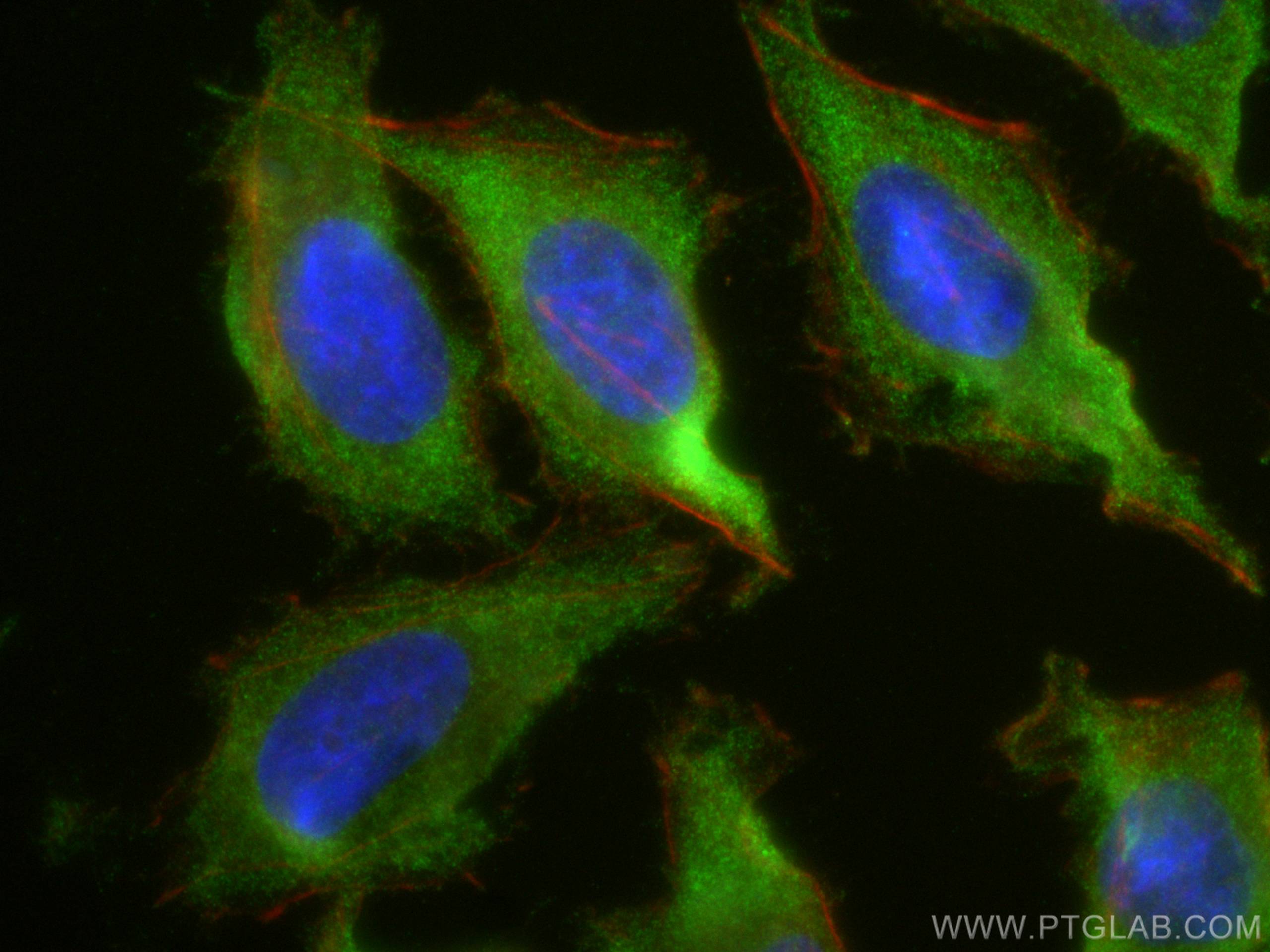

Tested Applications
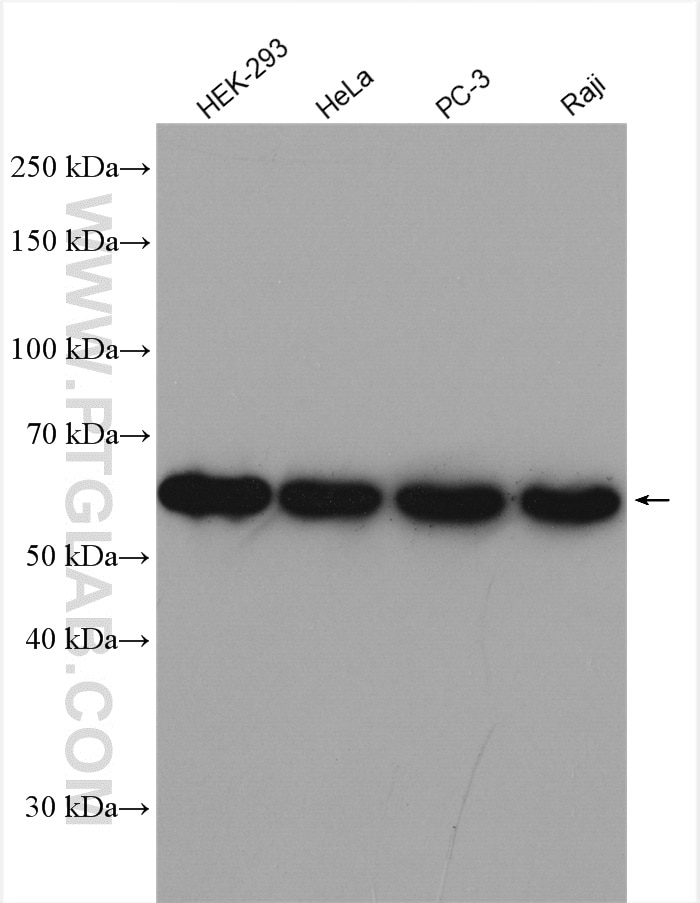
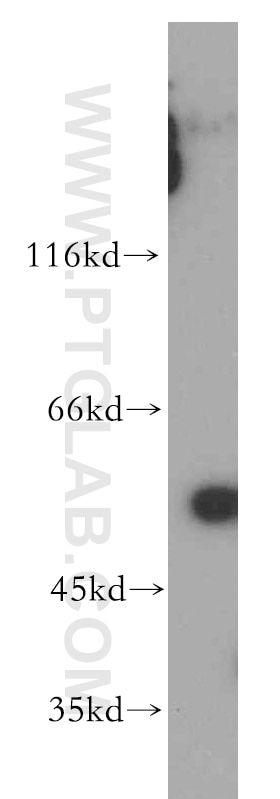
| Positive WB detected in | HEK-293 cells, human skeletal muscle tissue, Jurkat cells, HeLa cells, PC-3 cells, Raji cells |
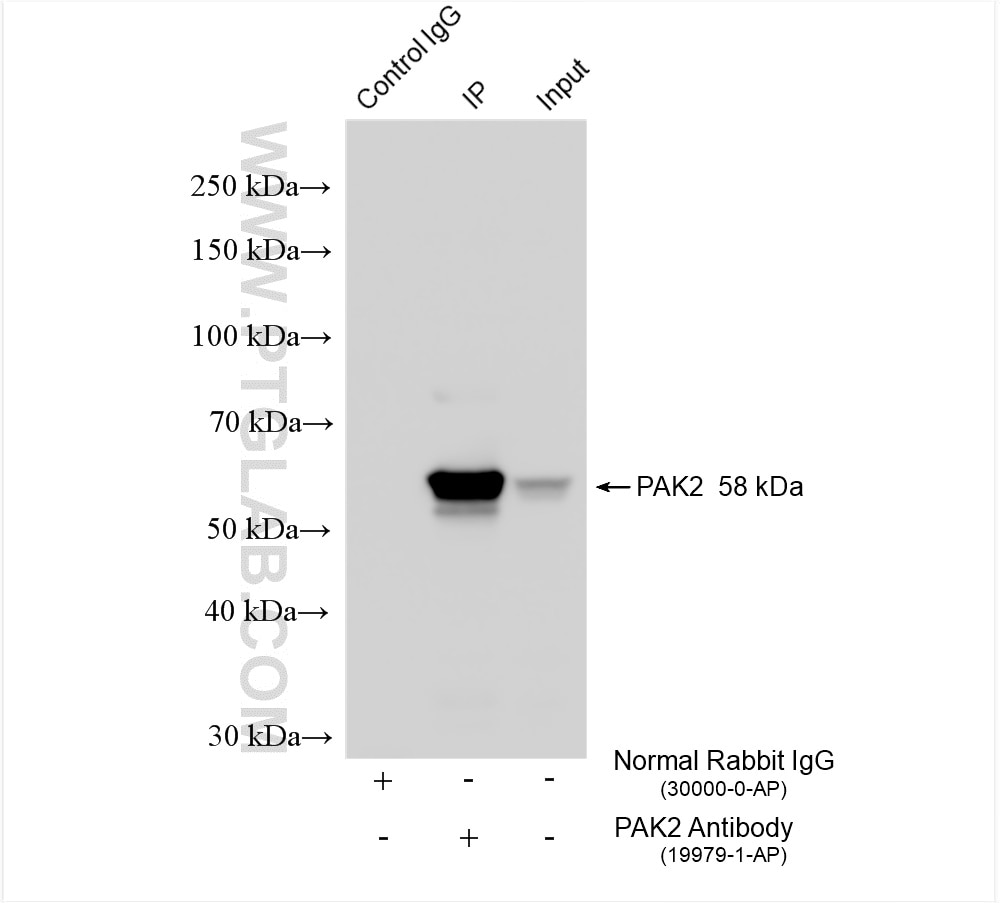
| Positive IP detected in | K-562 cells |
| Positive IF/ICC detected in | HeLa cells |
Recommended dilution
| Application | Dilution |
|---|---|
| Western Blot (WB) | WB : 1:1000-1:5000 |
| Immunoprecipitation (IP) | IP : 0.5-4.0 ug for 1.0-3.0 mg of total protein lysate |
| Immunofluorescence (IF)/ICC | IF/ICC : 1:50-1:500 |
| It is recommended that this reagent should be titrated in each testing system to obtain optimal results. | |
| Sample-dependent, Check data in validation data gallery. | |
Product Information
19979-1-AP targets PAK2 in WB, IF/ICC, IP, ELISA applications and shows reactivity with human samples.
| Tested Reactivity | human |
| Cited Reactivity | human |
| Host / Isotype | Rabbit / IgG |
| Class | Polyclonal |
| Type | Antibody |
| Immunogen |
Peptide Predict reactive species |
| Full Name | p21 protein (Cdc42/Rac)-activated kinase 2 |
| Calculated Molecular Weight | 58 kDa |
| Observed Molecular Weight | 54 kDa |
| GenBank Accession Number | NM_002577 |
| Gene Symbol | PAK2 |
| Gene ID (NCBI) | 5062 |
| RRID | AB_10644144 |
| Conjugate | Unconjugated |
| Form | Liquid |
| Purification Method | Antigen affinity purification |
| UNIPROT ID | Q13177 |
| Storage Buffer | PBS with 0.02% sodium azide and 50% glycerol, pH 7.3. |
| Storage Conditions | Store at -20°C. Stable for one year after shipment. Aliquoting is unnecessary for -20oC storage. 20ul sizes contain 0.1% BSA. |
Background Information
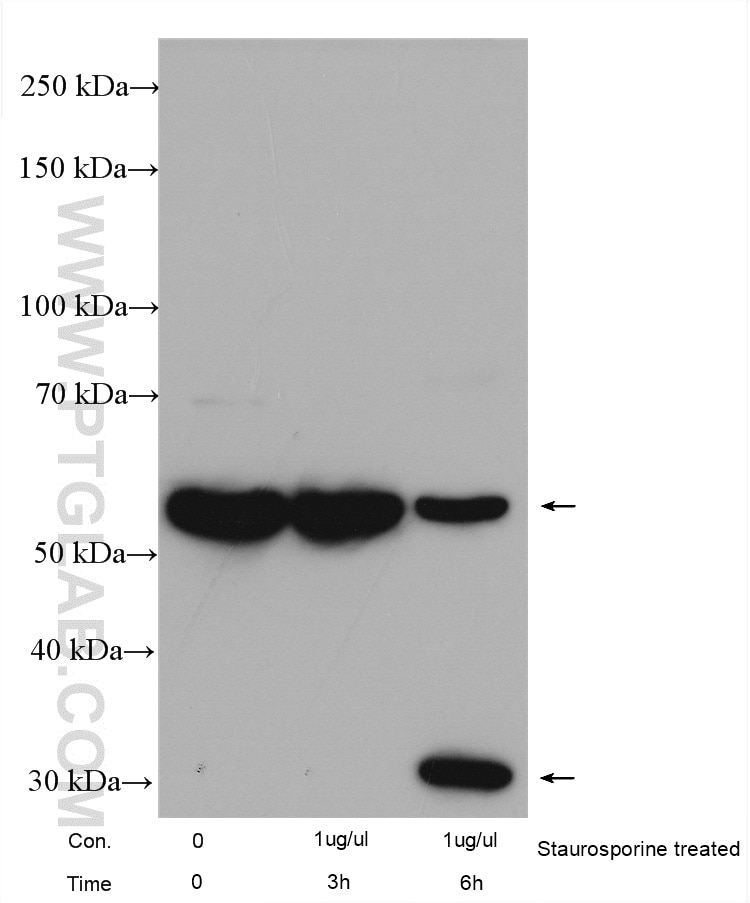
PAK2, also named as PAK65, PAKgamma, p58, PAK-2p27, PAK-2p24 and C-t-PAK2, belongs to the protein kinase superfamily, STE Ser/Thr protein kinase family and STE20 subfamily. Full length PAK 2 stimulates cell survival and cell growth. The process is, at least in part, mediated by phosphorylation and inhibition of pro-apoptotic BAD. PAK2 has several isoforms with the MW of 54-62 kDa and 41 kDa. The 62 kDa PAK2 is cleaved into a 34 kDa C terminal fragment and a 28 kDa N terminal fragment with a time course that parallels apoptotic death in Jurkat cells. (PMID:10200518). Caspase-activated PAK-2p34 is involved in cell death response, probably involving the JNK signaling pathway. Cleaved PAK-2p34 seems to have a higher activity than the CDC42-activated form. The antibody has no cross reaction to PAK1 and PAK3.
Protocols
| Product Specific Protocols | |
|---|---|
| IF protocol for PAK2 antibody 19979-1-AP | Download protocol |
| IP protocol for PAK2 antibody 19979-1-AP | Download protocol |
| WB protocol for PAK2 antibody 19979-1-AP | Download protocol |
| Standard Protocols | |
|---|---|
| Click here to view our Standard Protocols |
Publications
What published studies show
The PAK2 Polyclonal antibody (Cat# 19979-1-AP) has 5 total citations. These appear in Genes Dis, J Pharm Anal, Front Cell Dev Biol, Chem Biol Interact, and Mol Genet Genomic Med. The associated research fields include ovarian cancer (PAK1/PARP inhibitor synergy), hepatocarcinogenesis (Aldolase A/c-Jun axis), hepatocellular carcinoma (PPP1R12B/PAK2/β-catenin), colorectal cancer (PhIP-induced stress responses), and Knobloch syndrome (novel PAK2 variant).
| Species | Application | Title |
|---|---|---|
Genes Dis PAK1 inhibition synergistically enhances the anti-tumor efficacy of PARP inhibitors in ovarian cancers. | ||
J Pharm Anal Aldolase A accelerates hepatocarcinogenesis by refactoring c-Jun transcription | ||
Front Cell Dev Biol PPP1R12B inhibits cell proliferation by inducing G0/G1 phase arrest via PAK2/β-catenin axis in hepatocellular carcinoma.
| ||
Chem Biol Interact PAK2 mediates PhIP-induced proliferative and oxidative stress responses in colorectal cancer cells. | ||
Mol Genet Genomic Med Chinese Family With Knobloch Syndrome Associated With a Novel PAK2 Variant Leading to Reduced Phosphorylation Levels |
Reviews
What customers say
All three reviewers gave 5-star ratings for Western Blot applications. Users report the antibody works well at dilutions ranging from 1:1000 to 1:5000, with one noting it functions effectively at room temperature. Tested cell types include HEK293 cells, Jurkat cells, and human platelet lysate. One reviewer specifically confirmed detection of a single strong band at approximately 69 kDa on human platelet lysate. Overall, users express high satisfaction with the antibody's performance and specificity in WB experiments.
The reviews below have been submitted by verified Proteintech customers who received an incentive for providing their feedback.
Gaurav (Verified Customer) (02-27-2026) | Nice antibody working at room temperature
|
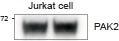
Titouan (Verified Customer) (11-12-2025) | works very well for WB
 |
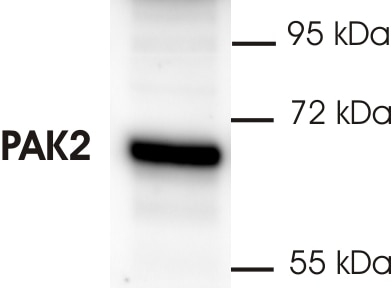
Frédéric (Verified Customer) (02-18-2022) | Je suis satisfait du résultat car j’ai pu détecter par Western-blot une seule bande de forte intensité d’environ 69 kDa sur un lysat de plaquette humaine (voir figure ci-jointe).
 |






