

Tested Applications
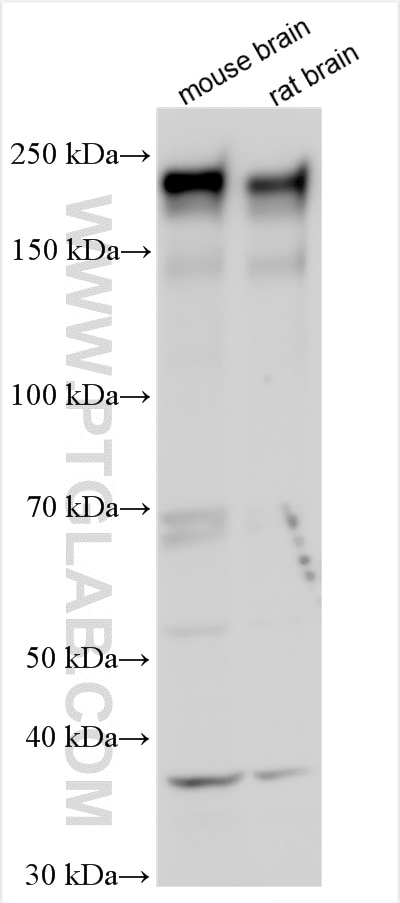
| Positive WB detected in | mouse brain tissue, rat brain tissue |
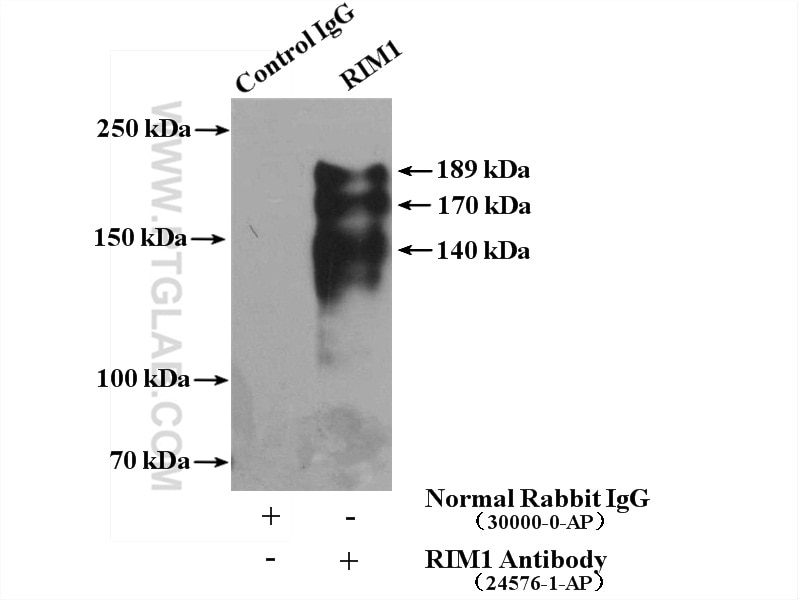
| Positive IP detected in | mouse brain tissue |
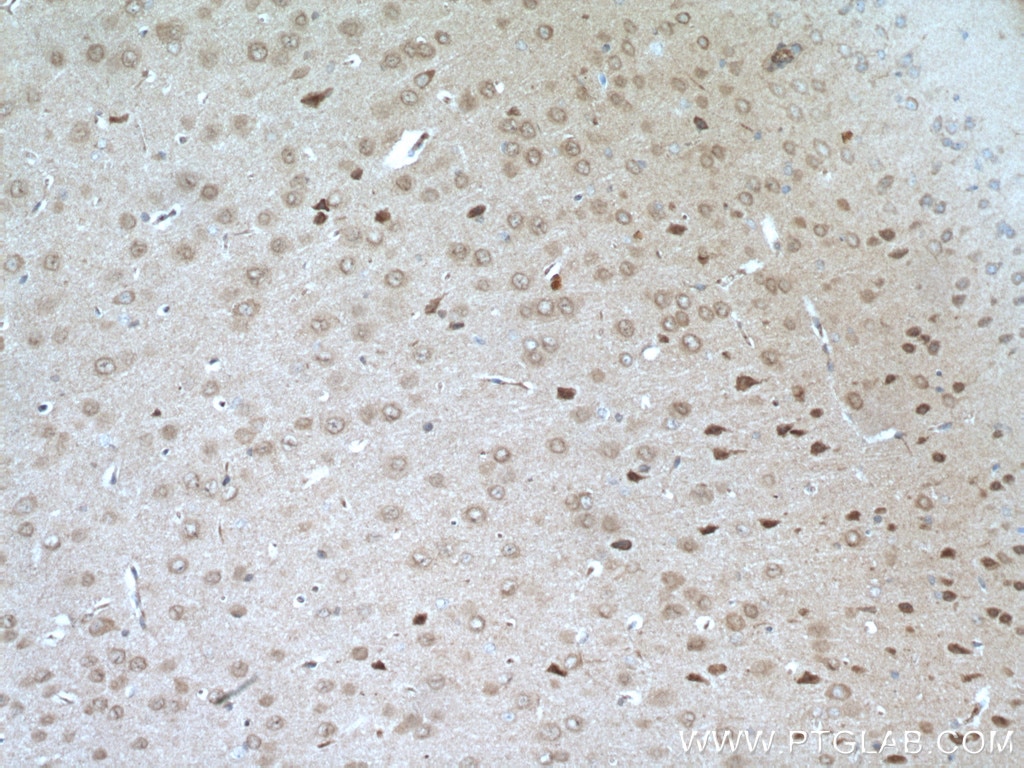
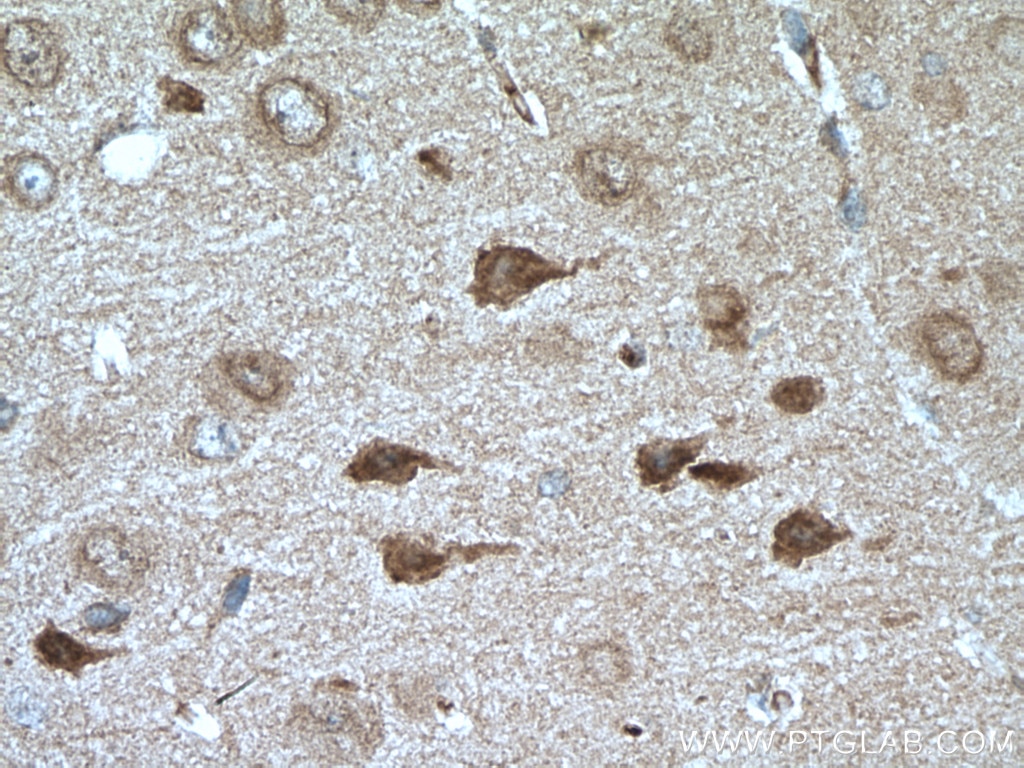
| Positive IHC detected in | mouse brain tissue Note: suggested antigen retrieval with TE buffer pH 9.0; (*) Alternatively, antigen retrieval may be performed with citrate buffer pH 6.0 |
Recommended dilution
| Application | Dilution |
|---|---|
| Western Blot (WB) | WB : 1:2000-1:10000 |
| Immunoprecipitation (IP) | IP : 0.5-4.0 ug for 1.0-3.0 mg of total protein lysate |
| Immunohistochemistry (IHC) | IHC : 1:50-1:500 |
| It is recommended that this reagent should be titrated in each testing system to obtain optimal results. | |
| Sample-dependent, Check data in validation data gallery. | |
Product Information
24576-1-AP targets RIM1 in WB, IHC, IP, ELISA applications and shows reactivity with human, mouse, rat samples.
| Tested Reactivity | human, mouse, rat |
| Cited Reactivity | human, mouse, rat |
| Host / Isotype | Rabbit / IgG |
| Class | Polyclonal |
| Type | Antibody |
| Immunogen |
CatNo: Ag20161 Product name: Recombinant human RIMS1 protein Source: e coli.-derived, PGEX-4T Tag: GST Domain: 923-1039 aa of BC152435 Sequence: KSTTLTVPEQQRTTHHRSRSVSPHRGNDQGKPRSRLPNVPLQRSLDEIHPTRRSRSPTRHHDASRSPVDHRTRDVDSQYLSEQDSELLMLPRAKRGRSAECLHTTR Predict reactive species |
| Full Name | regulating synaptic membrane exocytosis 1 |
| Calculated Molecular Weight | 1692 aa, 189 kDa |
| Observed Molecular Weight | 189 kDa |
| GenBank Accession Number | BC152435 |
| Gene Symbol | RIMS1 |
| Gene ID (NCBI) | 22999 |
| RRID | AB_2879618 |
| Conjugate | Unconjugated |
| Form | Liquid |
| Purification Method | Antigen affinity purification |
| UNIPROT ID | Q86UR5 |
| Storage Buffer | PBS with 0.02% sodium azide and 50% glycerol, pH 7.3. |
| Storage Conditions | Store at -20°C. Stable for one year after shipment. Aliquoting is unnecessary for -20oC storage. 20ul sizes contain 0.1% BSA. |
Background Information
RIMS1 is a RAS gene superfamily member that regulates synaptic vesicle exocytosis. RIMS1 also plays a role in the regulation of voltage-gated calcium channels during neurotransmitter and insulin release. Mutations in RIMS1 have suggested a role cognition and have been identified as the cause of cone-rod dystrophy type 7.
Protocols
| Product Specific Protocols | |
|---|---|
| IHC protocol for RIM1 antibody 24576-1-AP | Download protocol |
| IP protocol for RIM1 antibody 24576-1-AP | Download protocol |
| WB protocol for RIM1 antibody 24576-1-AP | Download protocol |
| Standard Protocols | |
|---|---|
| Click here to view our Standard Protocols |
Publications
What published studies show
The RIM1 Polyclonal antibody (catalog 24576-1-AP) has 8 total citations. Citations appear in journals including Neuron, Science Advances, Neurochemistry International, Experimental Neurology, Neurochemistry Research, iScience, and bioRxiv. The associated research fields focus on neuroscience, particularly synaptic transmission, neurotransmitter release, and presynaptic protein regulation. Studies also explore neurodevelopmental disorders, epilepsy, traumatic brain injury, schizophrenia, and Parkinson's disease, with applications primarily in Western blot across human, mouse, and rat models.
| Species | Application | Title |
|---|---|---|
Neuron Neurexin-1γ drives synaptic transmission through structural integration of neurotransmitter release machinery and postsynaptic receptor nanodomains. | ||
Neuron Differential Regulation of Evoked and Spontaneous Release by Presynaptic NMDA Receptors
| ||
Sci Adv Phosphorylation of Doc2 by EphB2 modulates Munc13-mediated SNARE complex assembly and neurotransmitter release | ||
Neurochem Int Effects of exercise-induced fatigue on the morphology of asymmetric synapse and synaptic protein levels in rat striatum. | ||
Exp Neurol Gene knockout of RNA binding motif 5 in the brain alters RIMS2 protein homeostasis in the cerebellum and Hippocampus and exacerbates behavioral deficits after a TBI in mice | ||
iScience Using brain cell-type-specific protein interactomes to interpret neurodevelopmental genetic signals in schizophrenia |





