
Product Information
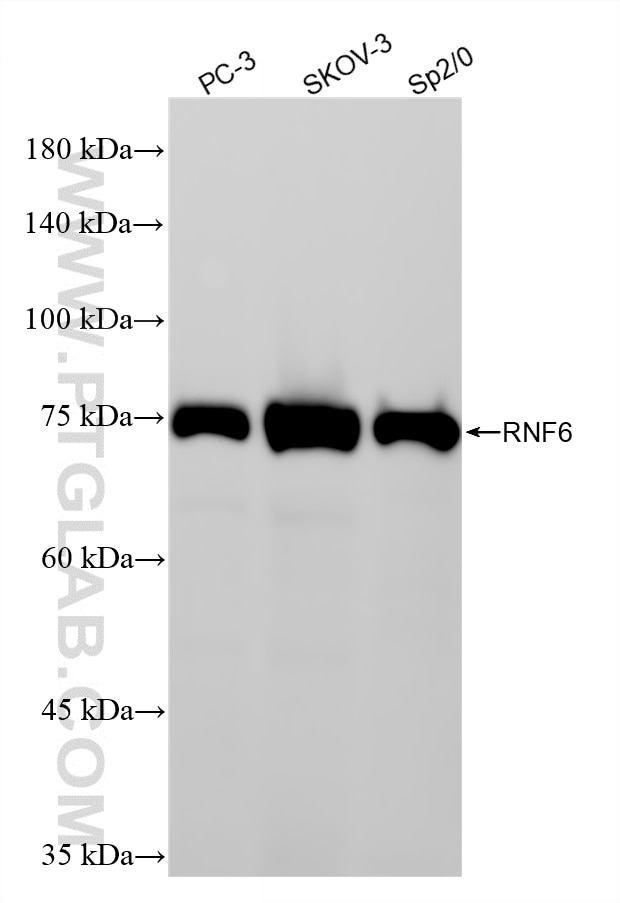
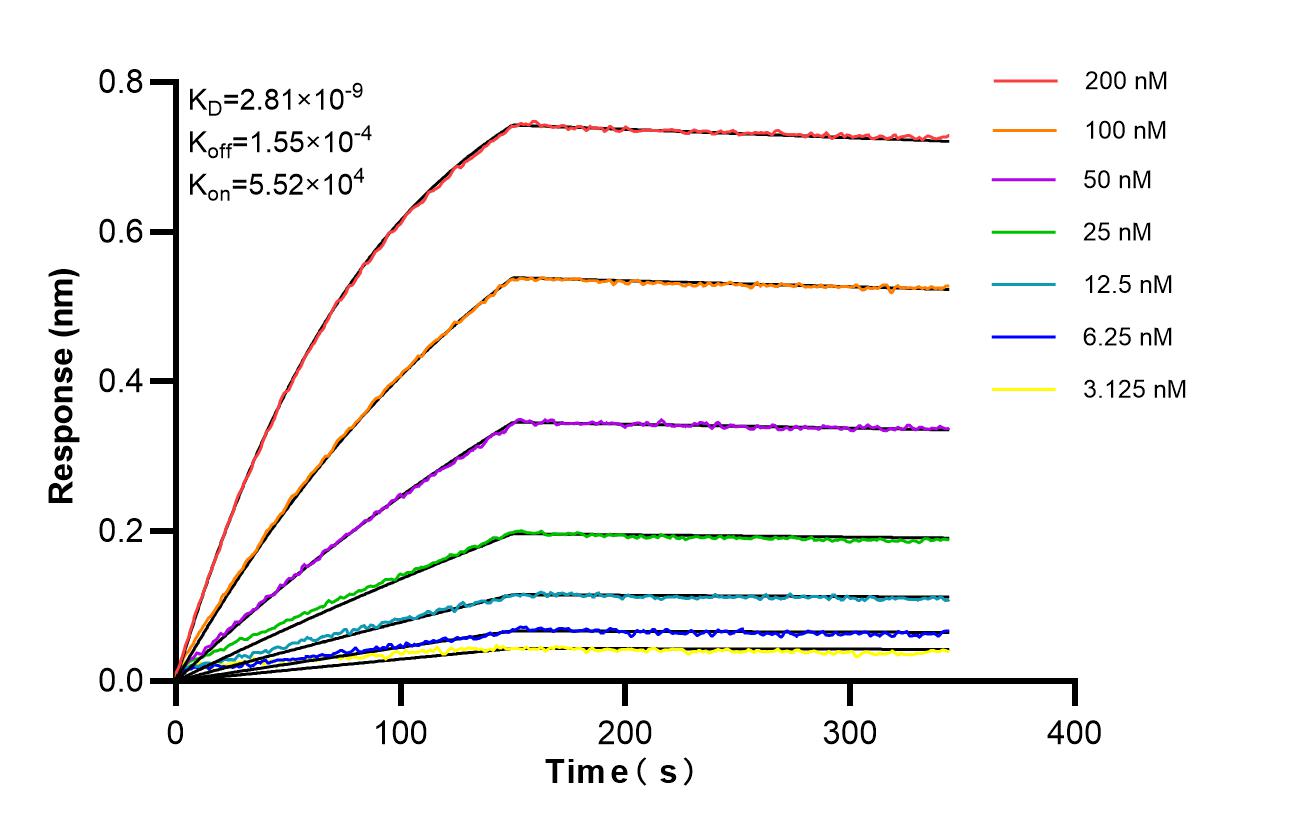
87086-1-PBS targets RNF6 in WB, Indirect ELISA applications and shows reactivity with human, rat samples.
| Tested Reactivity | human, rat |
| Host / Isotype | Rabbit / IgG |
| Class | Recombinant |
| Type | Antibody |
| Immunogen |
CatNo: Ag14209 Product name: Recombinant human RNF6 protein Source: e coli.-derived, PGEX-4T Tag: GST Domain: 1-300 aa of BC034688 Sequence: MNQSRSRSDGGSEETLPQDHNHHENERRWQQERLHREEAYYQFINELNDEDYRLMRDHNLLGTPGEITSEELQQRLDGVKEQLASQPDLRDGTNYRDSEVPRESSHEDSLLEWLNTFRRTGNATRSGQNGNQTWRAVSRTNPNNGEFRFSLEIHVNHENRGFEIHGEDYTDIPLSDSNRDHTANRQQRSTSPVARRTRSQTSVNFNGSSSNIPRTRLASRGQNPAEGSFSTLGRLRNGIGGAAGIPRANASRTNFSSHTNQSGGSELRQREGQRFGAAHVWENGARSNVTVRNTNQRLEP Predict reactive species |
| Full Name | ring finger protein (C3H2C3 type) 6 |
| Calculated Molecular Weight | 685 aa, 78 kDa |
| Observed Molecular Weight | 75-78 kDa |
| GenBank Accession Number | BC034688 |
| Gene Symbol | RNF6 |
| Gene ID (NCBI) | 6049 |
| Conjugate | Unconjugated |
| Form | Liquid |
| Purification Method | Protein A purification |
| UNIPROT ID | Q9Y252 |
| Storage Buffer | PBS only, pH 7.3. |
| Storage Conditions | Store at -80°C. |
Background Information
RNF6 was firstly cloned in a genetic study of chromosomal rearrangements in myeloproliferative disorders, mapping to chromosome 13q12.12 [PMID:10331950]. It containing a coiled-coil domain at the N-terminus, and a RING-H2 finger at the C-terminus which is responsible for its ubiquitin ligase activity. It also activate Inha gene expression by participating in a protein complex binding to the promoter region [PMID:11971979]. In addition, LIMK1 is a substrate of RNF6 and the RNF6-induced LIMK1 polyubiquitination is mediated via K48 of ubiquitin and leads to proteasomal degradation of the kinase [PMID:16204183].



