
Recombinant Rat Serpin E1/PAI-1 protein (rFc Tag)
Cat no : Eg3256
Validation Data Gallery
Product Information
| Purity | >90 %, SDS-PAGE |
| Endotoxin | <0.1 EU/μg protein, LAL method |
| Activity |
Not tested |
| Expression | HEK293-derived Rat PAI-1 protein Ser24-Pro402 (Accession# P20961) with a rabbit IgG Fc tag at the C-terminus. |
| GeneID | 24617 |
| Accession | P20961 |
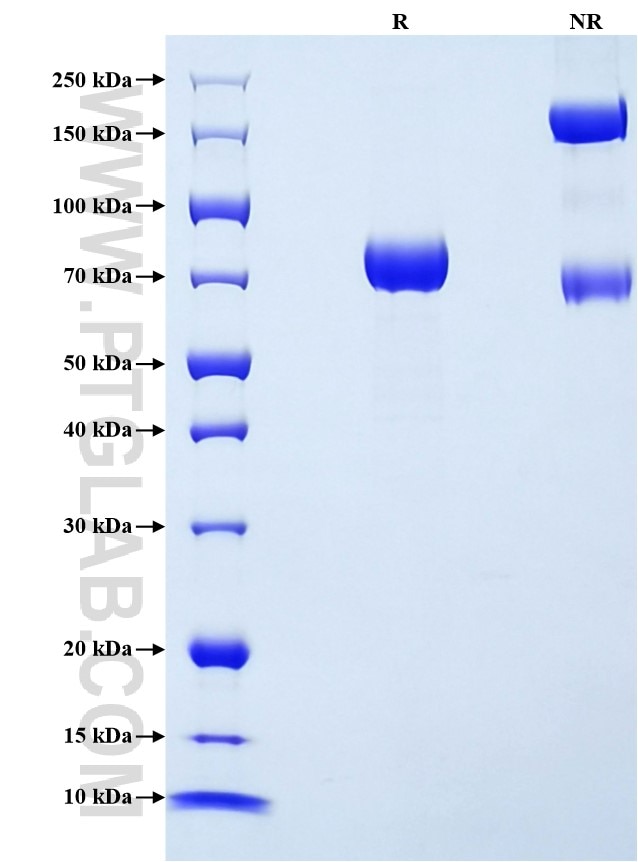
| PredictedSize | 68.9 kDa |
| SDS-PAGE | 70-80 kDa, reducing (R) conditions |
| Formulation | Lyophilized from 0.22 μm filtered solution in PBS, pH 7.4. Normally 5% trehalose and 5% mannitol are added as protectants before lyophilization. |
| Reconstitution | Briefly centrifuge the tube before opening. Reconstitute at 0.1-0.5 mg/mL in sterile water. |
| Storage Conditions |
It is recommended that the protein be aliquoted for optimal storage. Avoid repeated freeze-thaw cycles.
|
| Shipping | The product is shipped at ambient temperature. Upon receipt, store it immediately at the recommended temperature. |
Background
PAI-1 (Plasminogen Activator Inhibitor-1), also known as Serpin E1, is a member of the serine protease inhibitor (SERPIN) family. PAI-1, a single-chain glycoprotein of approximately 52 kDa, acts as an inhibitor of tissue plasminogen activator and urokinase-type plasminogen activator and affects fibrinolysis and plays an important role in lung diseases. Because PAI-1 may display cell type-specific glycosylation and activity, the glycosylation pattern of PAI-1 may serve as a potential biomarker for predicting cellular dysfunction and risk of thrombosis. Recent studies have revealed that PAI-1 has a pro-tumorigenic role in human cancers by regulating angiogenesis and tumor cell survival. It is suggested that increased vascular PAI-1 can directly accelerate the process of atherosclerotic thrombosis by promoting the formation of neointimal plaques.
References:
1. Altalhi R, et al. (2021) Int J Mol Sci. 22(6):3170.
2. Ali G, et al. (2023) Stem Cell Res Ther. 14(1):185.
3. Furuya H, et al. (2022) Sci Rep. 12(1):12186.
Publications
| Species | Title |
|---|---|
Carbohydr Polym Bioinspired bioactive bilayer membrane: A biodegradable adhesive membrane integrating hemostasis, antibacterial, and anti-adhesion functions for visceral repair. |