
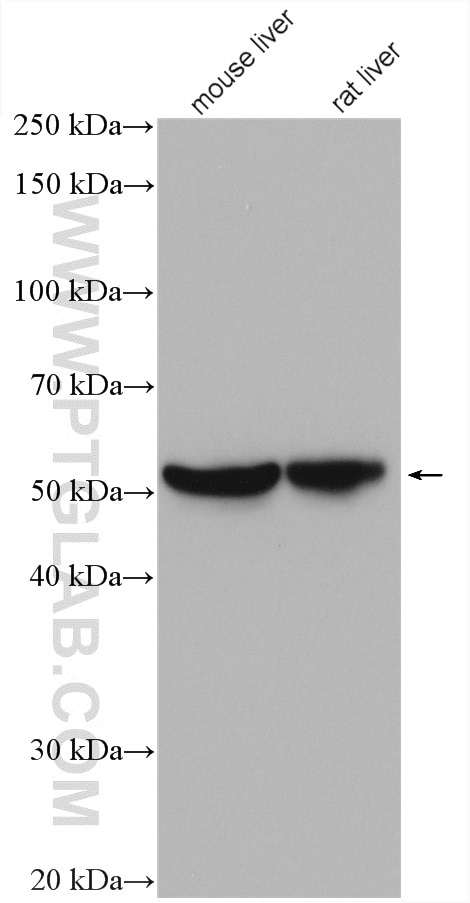
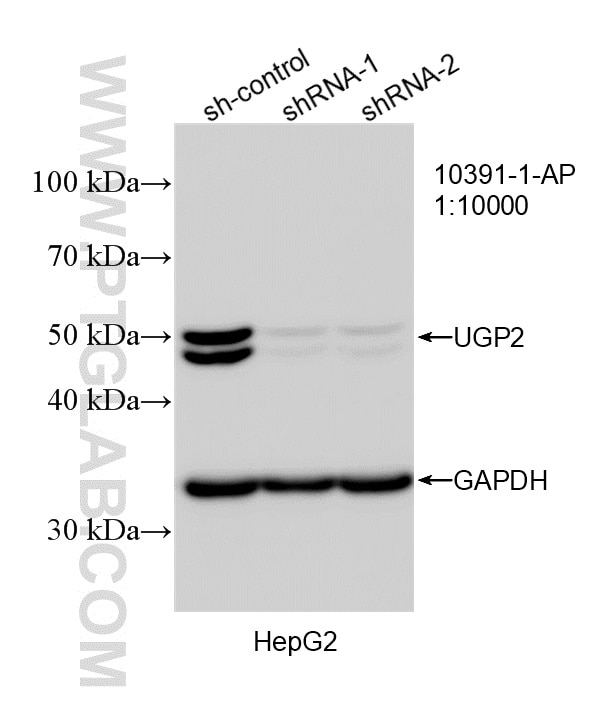
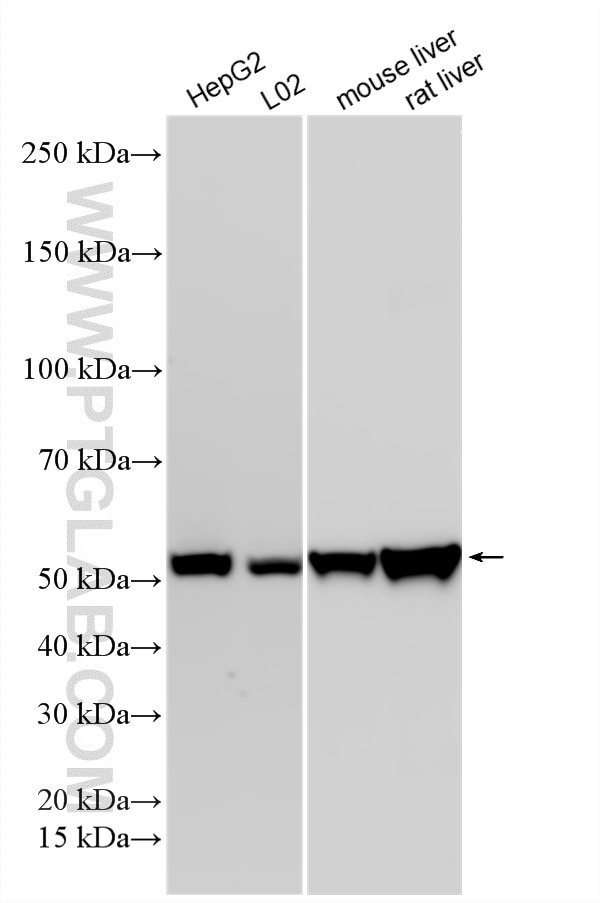
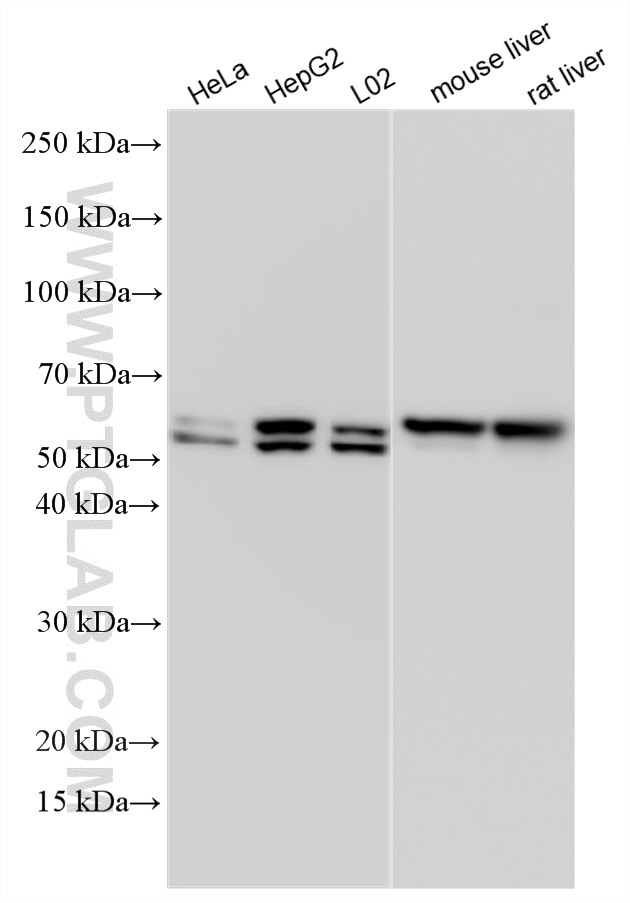


Tested Applications
| Positive WB detected in | HepG2 cells, HeLa cells, mouse liver tissue, L02 cells, rat liver tissue |
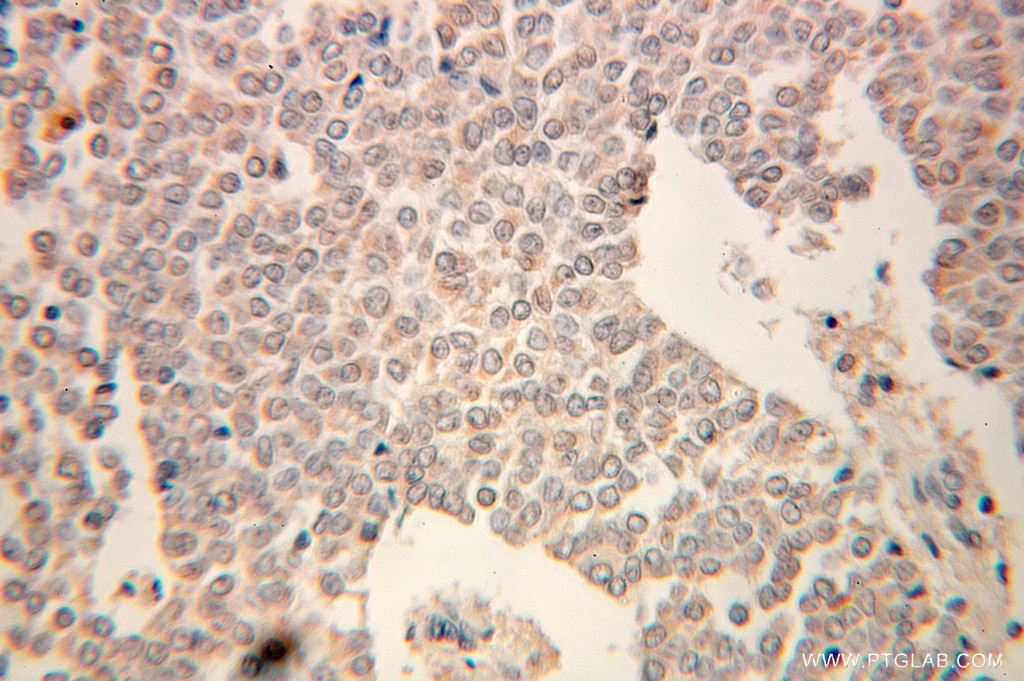
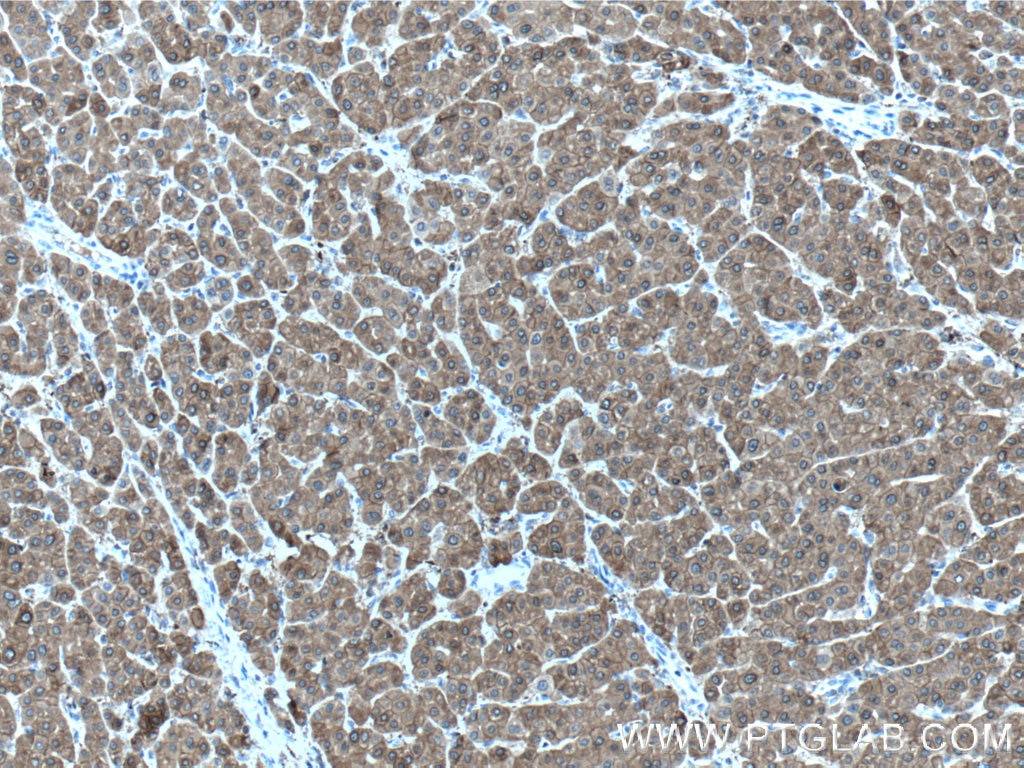
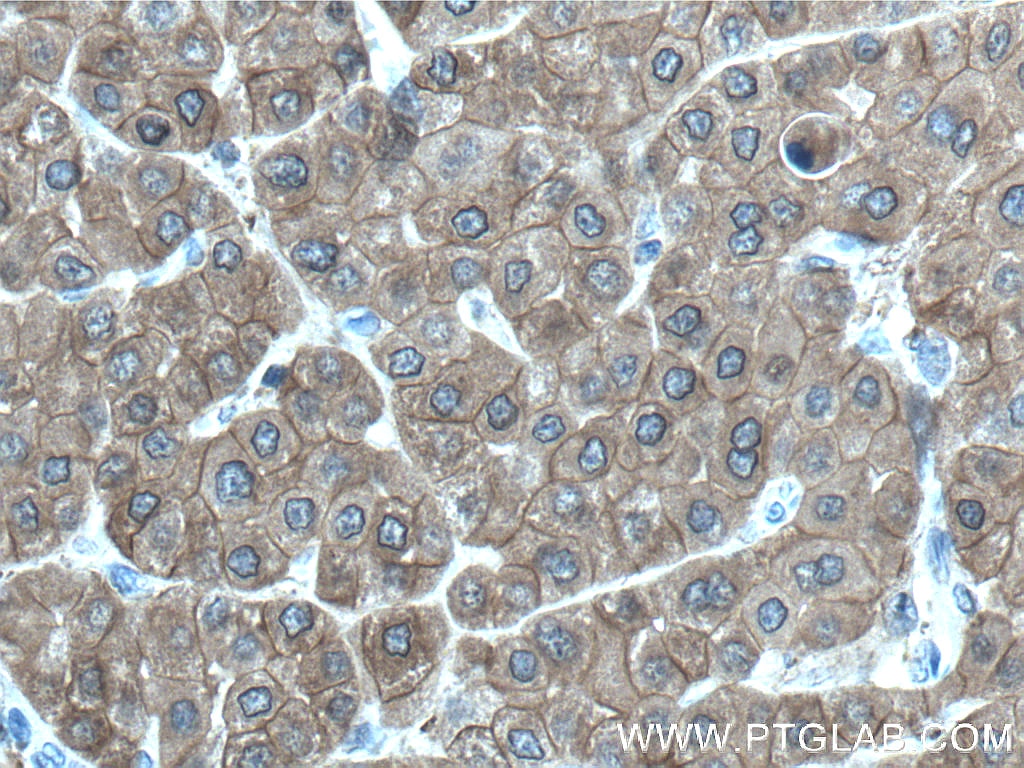
| Positive IHC detected in | human ovary tumor tissue, human kidney tissue, human liver cancer tissue Note: suggested antigen retrieval with TE buffer pH 9.0; (*) Alternatively, antigen retrieval may be performed with citrate buffer pH 6.0 |
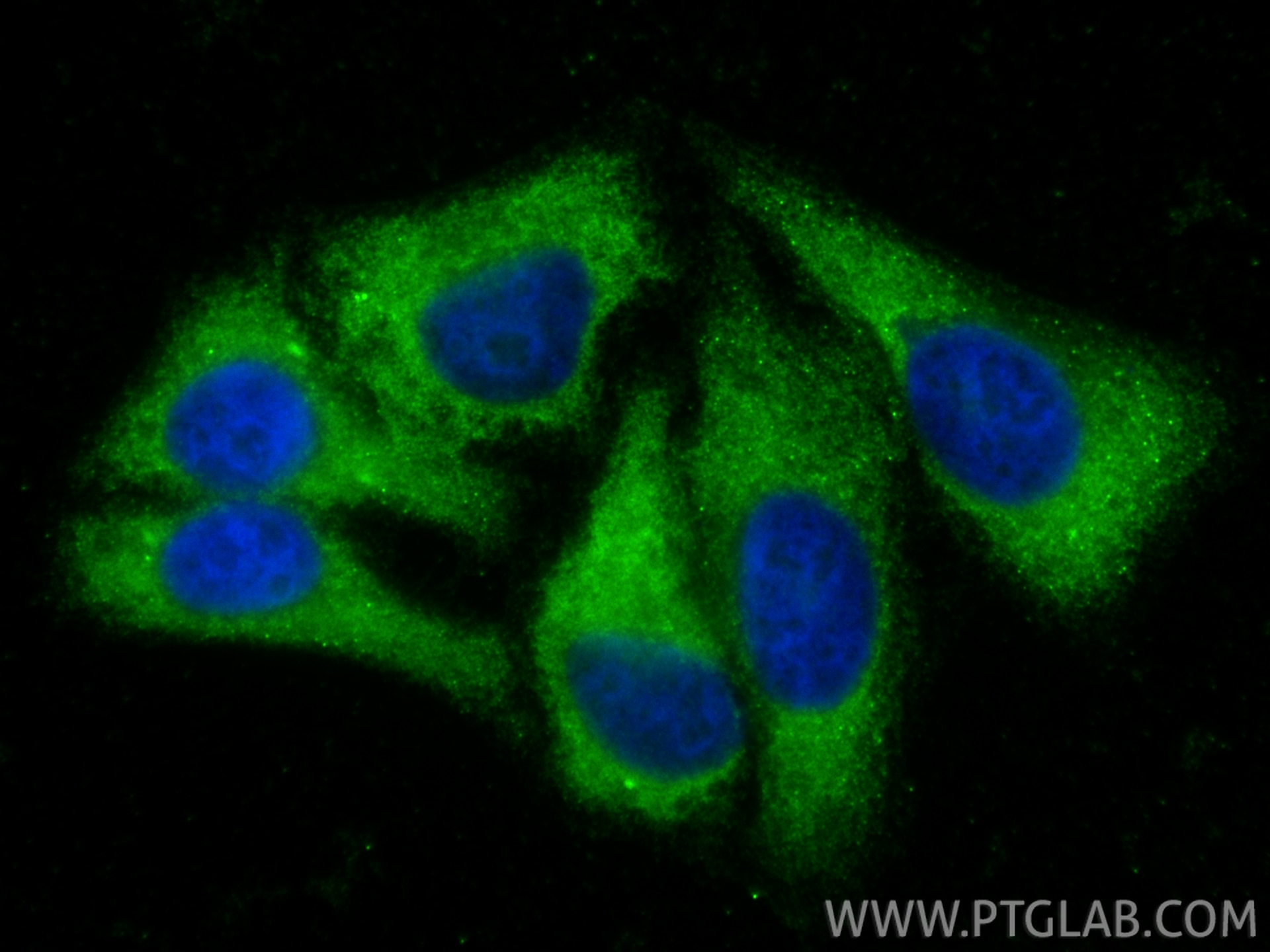
| Positive IF/ICC detected in | HepG2 cells |
Recommended dilution
| Application | Dilution |
|---|---|
| Western Blot (WB) | WB : 1:5000-1:50000 |
| Immunohistochemistry (IHC) | IHC : 1:100-1:1000 |
| Immunofluorescence (IF)/ICC | IF/ICC : 1:50-1:500 |
| It is recommended that this reagent should be titrated in each testing system to obtain optimal results. | |
| Sample-dependent, Check data in validation data gallery. | |
Product Information
10391-1-AP targets UGP2 in WB, IHC, IF/ICC, ELISA applications and shows reactivity with human, mouse, rat samples.
| Tested Reactivity | human, mouse, rat |
| Cited Reactivity | human, mouse, rat |
| Host / Isotype | Rabbit / IgG |
| Class | Polyclonal |
| Type | Antibody |
| Immunogen |
CatNo: Ag0590 Product name: Recombinant human UGP2 protein Source: e coli.-derived, PGEX-4T Tag: GST Domain: 2-288 aa of BC002954 Sequence: SQDGASQFQEVIRQELELSVKKELEKILTTASSHEFEHTKKDLDGFRKLFHRFLQEKGPSVDWGKIQRPPEDSIQPYEKIKARGLPDNISSVLNKLVVVKLNGGLGTSMGCKGPKSLIGVRNENTFLDLTVQQIEHLNKTYNTDVPLVLMNSFNTDEDTKKILQKYNHCRVKIYTFNQSRYPRINKESLLPVAKDVSYSGENTEAWYPPGHGDIYASFYNSGLLDTFIGEGKEYIFVSNIDNLGATVDLYILNHLMNPPNGKRCEFVMEVTNKTRADVKGGTLTQYE Predict reactive species |
| Full Name | UDP-glucose pyrophosphorylase 2 |
| Calculated Molecular Weight | 56 kDa |
| Observed Molecular Weight | 50-56 kDa |
| GenBank Accession Number | BC002954 |
| Gene Symbol | UGP2 |
| Gene ID (NCBI) | 7360 |
| RRID | AB_2272775 |
| Conjugate | Unconjugated |
| Form | Liquid |
| Purification Method | Antigen affinity purification |
| UNIPROT ID | Q16851 |
| Storage Buffer | PBS with 0.02% sodium azide and 50% glycerol, pH 7.3. |
| Storage Conditions | Store at -20°C. Stable for one year after shipment. Aliquoting is unnecessary for -20oC storage. 20ul sizes contain 0.1% BSA. |
Background Information
UDP-glucose pyrophosphorylase 2 (UGP2, synonyms: UDPG, UGPP2, UDPGP2, Phc379)is an important intermediary in mammalian carbohydrate interconversions. It transfers a glucose moiety from glucose-1-phosphate to MgUTP and forms UDP-glucose and MgPPi. In liver and muscle tissue, UDP-glucose is a direct precursor of glycogen; in lactating mammary gland it is converted to UDP-galactose which is then converted to lactose. So far two isoforms are encoded by two transcript variants have been found.
Protocols
| Product Specific Protocols | |
|---|---|
| IF protocol for UGP2 antibody 10391-1-AP | Download protocol |
| IHC protocol for UGP2 antibody 10391-1-AP | Download protocol |
| WB protocol for UGP2 antibody 10391-1-AP | Download protocol |
| Standard Protocols | |
|---|---|
| Click here to view our Standard Protocols |
Publications
What published studies show
The antibody (UGP2, Cat# 10391-1-AP) has 11 total citations spanning journals including Cell Metabolism, Journal of Agricultural and Food Chemistry, Life Sciences, Toxicological Sciences, Scientific Reports, iScience, Journal of Cellular Biochemistry, Disease Markers, bioRxiv, and PLoS Pathogens. Research fields cover glucose metabolism, hepatocellular carcinoma, breast cancer, glioma progression, glycogen shunt regulation, and macrophage innate immune responses to Mycobacterium tuberculosis infection.
| Species | Application | Title |
|---|---|---|
Cell Metab Glucose-dependent glycosphingolipid biosynthesis fuels CD8(+) T cell function and tumor control. | ||
J Agric Food Chem Discovery of a Novel Target Inhibitor Theaflavin against UDP-Glucose Pyrophosphorylase 2 and Its Role in Attenuating the Malignant Phenotype of Liver Cancer Cells via Perturbation of Glucose Metabolism. | ||
Life Sci Ubiquitination of glucose and lipid metabolic proteins is altered in diabetic rat livers. | ||
Toxicol Sci Mitochondrial prohibitins and septin 9 are implicated in the onset of rat hepatocarcinogenesis. | ||
Sci Rep UGP2 is a potential target for breast cancer, based on bioinformatics analysis and in vitro experiments.
| ||
iScience MYCT1 alters the glycogen shunt by regulating selective translation of RACK1-mediated enzymes. |










