
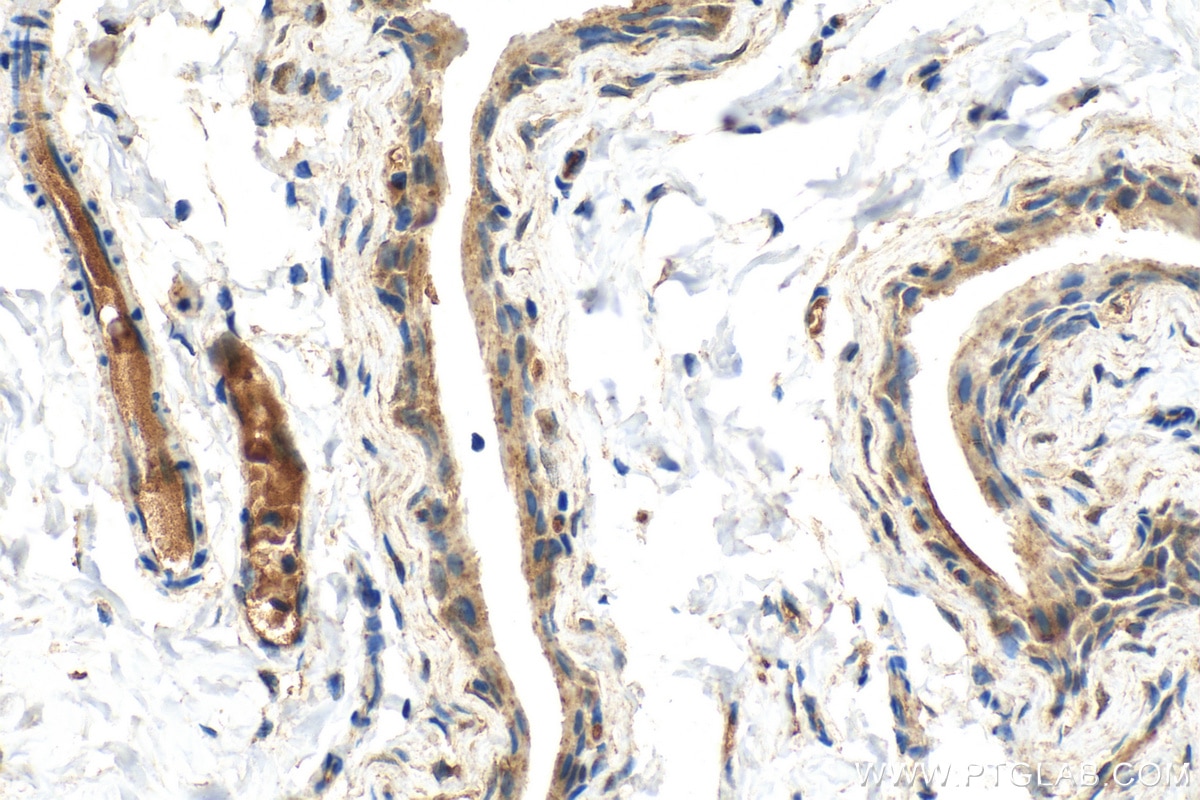

Tested Applications
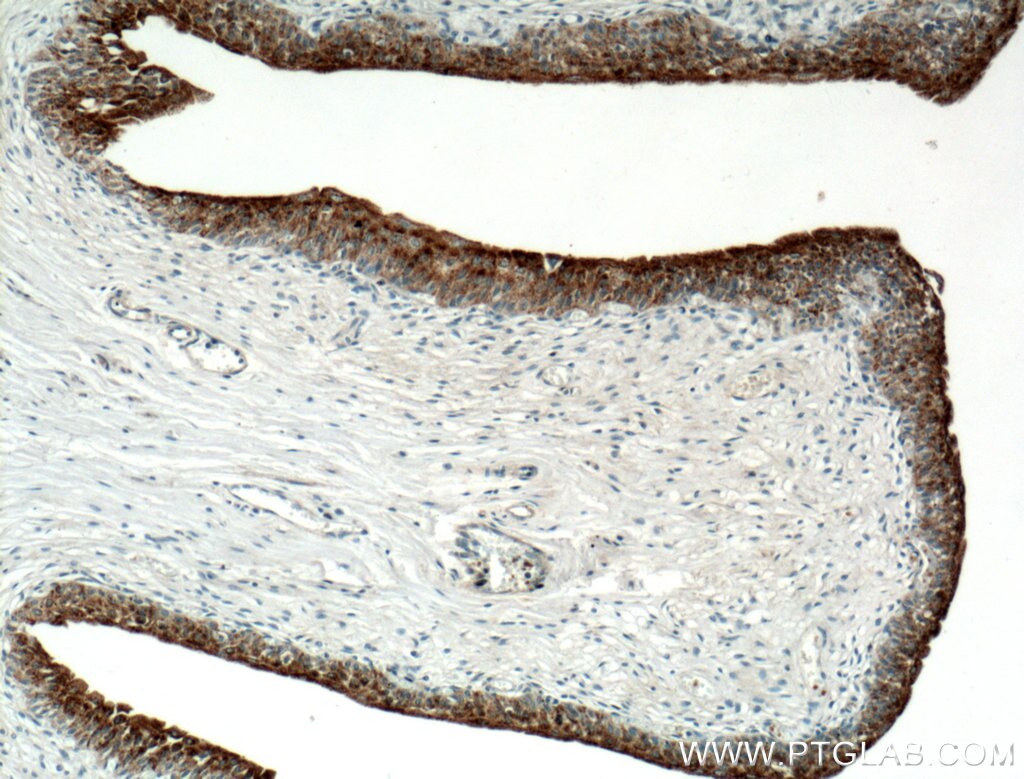
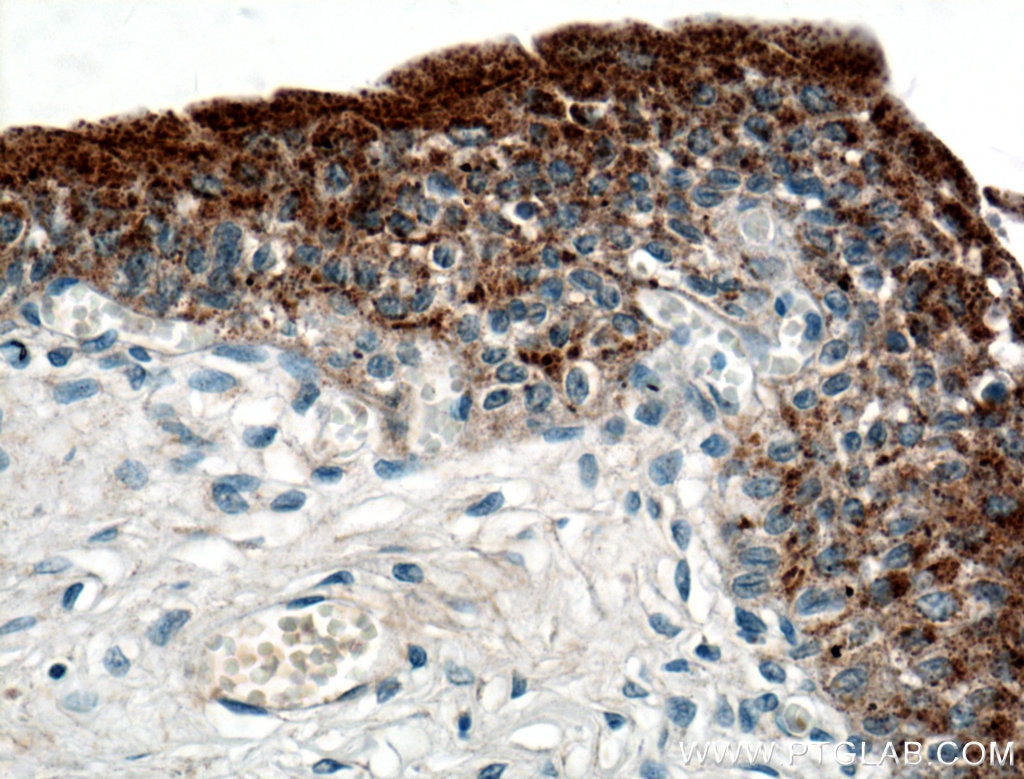
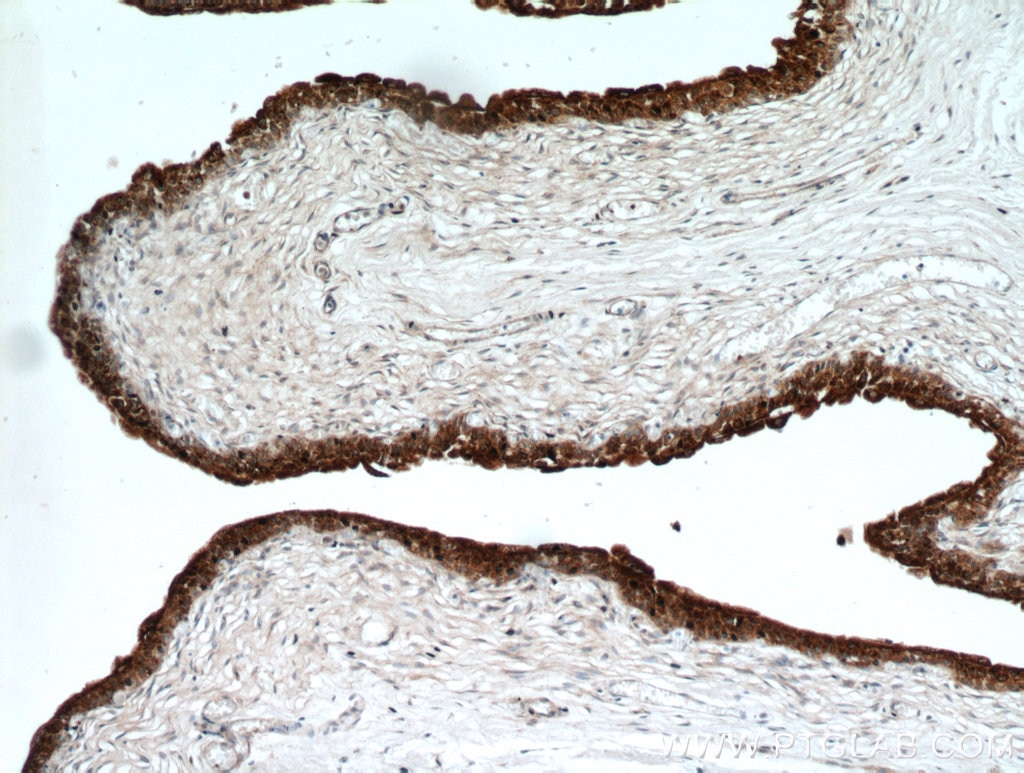
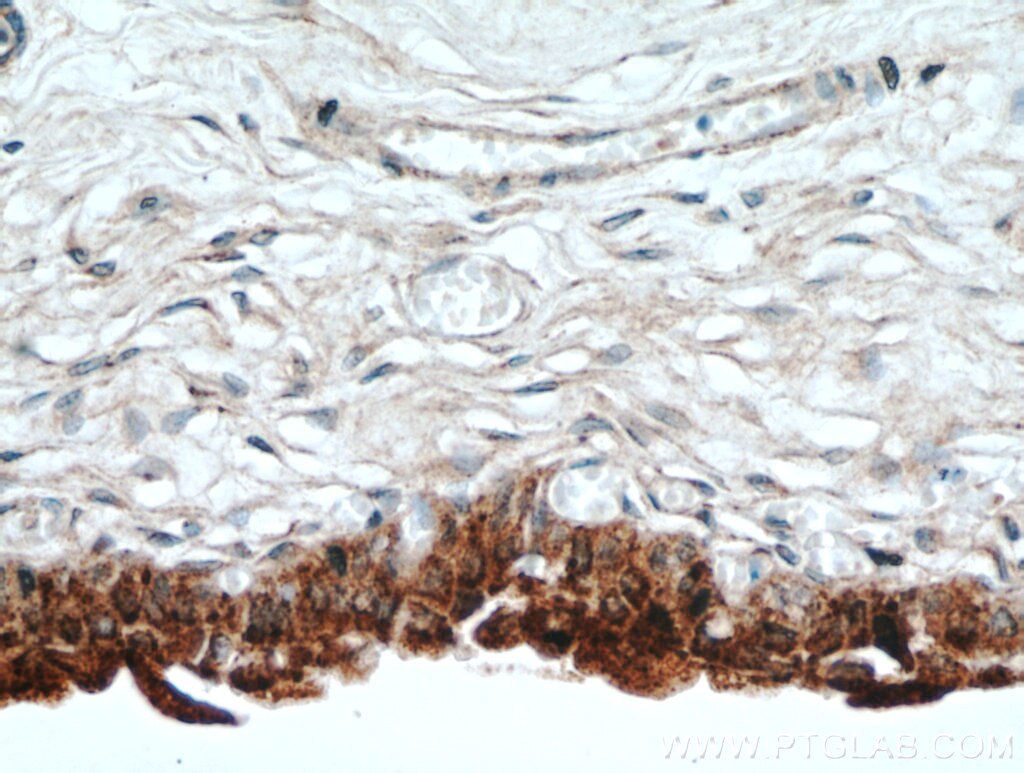
| Positive IHC detected in | human bladder tissue, mouse bladder tissue Note: suggested antigen retrieval with TE buffer pH 9.0; (*) Alternatively, antigen retrieval may be performed with citrate buffer pH 6.0 |
Recommended dilution
| Application | Dilution |
|---|---|
| Immunohistochemistry (IHC) | IHC : 1:50-1:500 |
| It is recommended that this reagent should be titrated in each testing system to obtain optimal results. | |
| Sample-dependent, Check data in validation data gallery. | |
Product Information
21149-1-AP targets UPK2 in WB, IHC, IF, ELISA applications and shows reactivity with human, mouse samples.
| Tested Reactivity | human, mouse |
| Cited Reactivity | human, mouse, rat |
| Host / Isotype | Rabbit / IgG |
| Class | Polyclonal |
| Type | Antibody |
| Immunogen |
CatNo: Ag15694 Product name: Recombinant human UPK2 protein Source: e coli.-derived, PGEX-4T Tag: GST Domain: 41-168 aa of BC113900 Sequence: TESLLVALPPCHLTGGNATLMVRRANDSKVVTSSFVVPPCRGRRELVSVVDSGAGFTVTRLSAYQVTNLVPGTKFYISYLVKKGTATESSREIPMSTLPRRNMESIGLGMARTGGMVVITVLLSVAMF Predict reactive species |
| Full Name | uroplakin 2 |
| Calculated Molecular Weight | 184 aa, 19 kDa |
| Observed Molecular Weight | 28 kDa |
| GenBank Accession Number | BC113900 |
| Gene Symbol | UPK2 |
| Gene ID (NCBI) | 7379 |
| RRID | AB_10755290 |
| Conjugate | Unconjugated |
| Form | Liquid |
| Purification Method | Antigen affinity purification |
| UNIPROT ID | O00526 |
| Storage Buffer | PBS with 0.02% sodium azide and 50% glycerol, pH 7.3. |
| Storage Conditions | Store at -20°C. Stable for one year after shipment. Aliquoting is unnecessary for -20oC storage. 20ul sizes contain 0.1% BSA. |
Background Information
Uroplakins are a group of urothelial differentiation-related membrane proteins. They are components of the asymmetric unit membrane (AUM), which forms the apical plaques of mammalian urothelium and is believed to play a role in strengthening the urothelial apical surface thus preventing the cells from rupturing during bladder distention (PMID: 8175808). Uroplakin-2 (UPK2) is a single-pass type I membrane protein. UPK2 may play an important role in regulating the assembly of the AUM.
Protocols
| Product Specific Protocols | |
|---|---|
| IHC protocol for UPK2 antibody 21149-1-AP | Download protocol |
| Standard Protocols | |
|---|---|
| Click here to view our Standard Protocols |
Publications
What published studies show
The UPK2 Polyclonal antibody (Cat# 21149-1-AP) has 9 total citations published in journals including Cell, Biomark Res, Adv Sci, Phytomedicine, Biofabrication, Int J Mol Sci, Sci Rep, Exp Cell Res, and Pediatr Nephrol. The associated research fields encompass urothelial biology, bladder cancer, chronic bladder pain, benign prostatic hyperplasia, urothelial barrier dysfunction, and urothelial cell differentiation and regeneration.
| Species | Application | Title |
|---|---|---|
Cell Excessive epithelial mechanosensation drives nociceptive innervation and chronic bladder pain via the PIEZO1-SLC7A11-glutamate axis | ||
Biomark Res S100A9 as a potential novel target for experimental autoimmune cystitis and interstitial cystitis/bladder pain syndrome | ||
Adv Sci (Weinh) In Situ Transformable Nanoparticle Effectively Suppresses Bladder Cancer by Damaging Mitochondria and Blocking Mitochondrial Autophagy Flux | ||
Phytomedicine Kangquan formula ameliorates the benign prostatic hyperplasia induced by testosterone propionate in rats by regulating urine microecology and metabolic profile | ||
Biofabrication Construction of a three-dimensional urothelium on-chip with barrier function based on urinary flow microenvironment | ||
Int J Mol Sci Involvement of Mast-Cell-Tryptase- and Protease-Activated Receptor 2-Mediated Signaling and Urothelial Barrier Dysfunction with Reduced Uroplakin II Expression in Bladder Hyperactivity Induced by Chronic Bladder Ischemia in the Rat |






