

Tested Applications
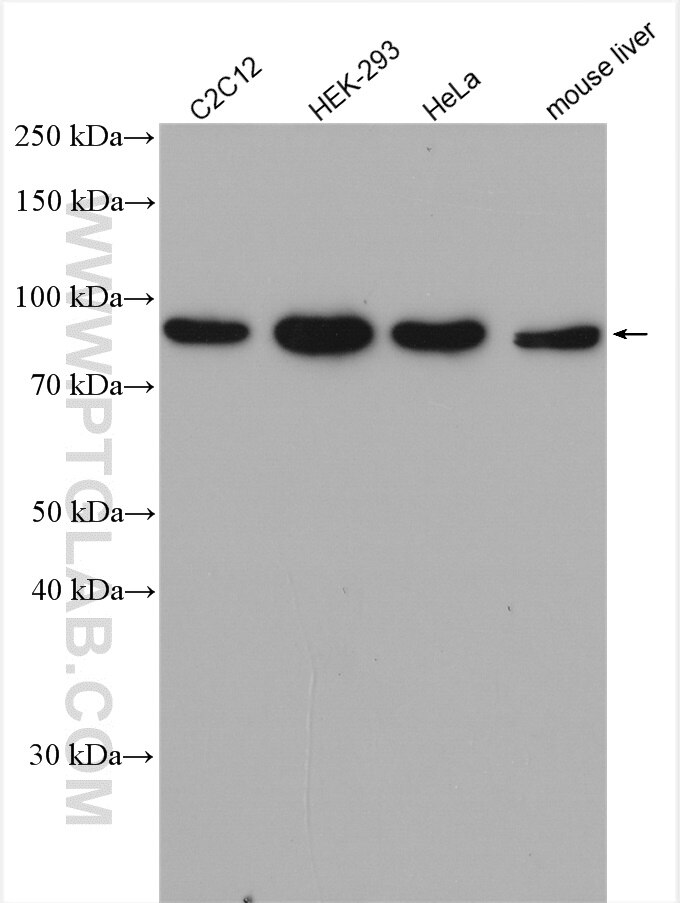
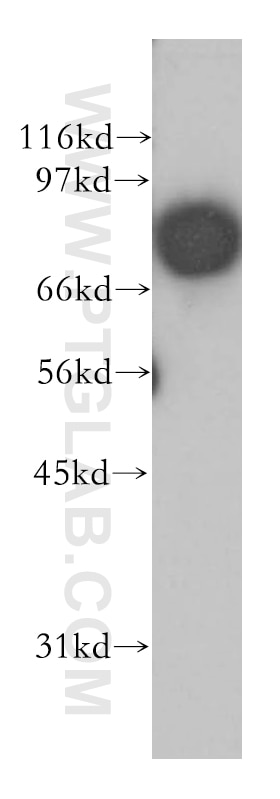
| Positive WB detected in | C2C12 cells, HEK-293 cells, mouse ovary tissue, HeLa cells, mouse liver tissue |
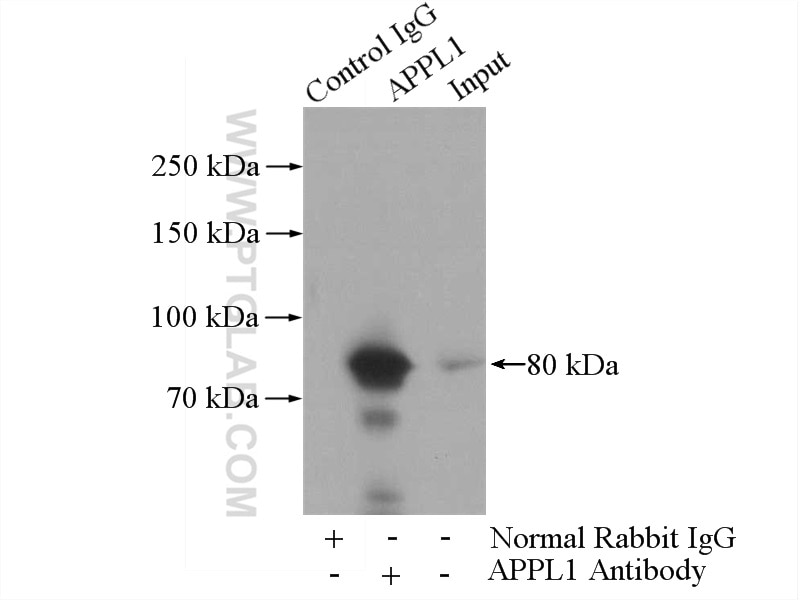
| Positive IP detected in | mouse brain tissue |
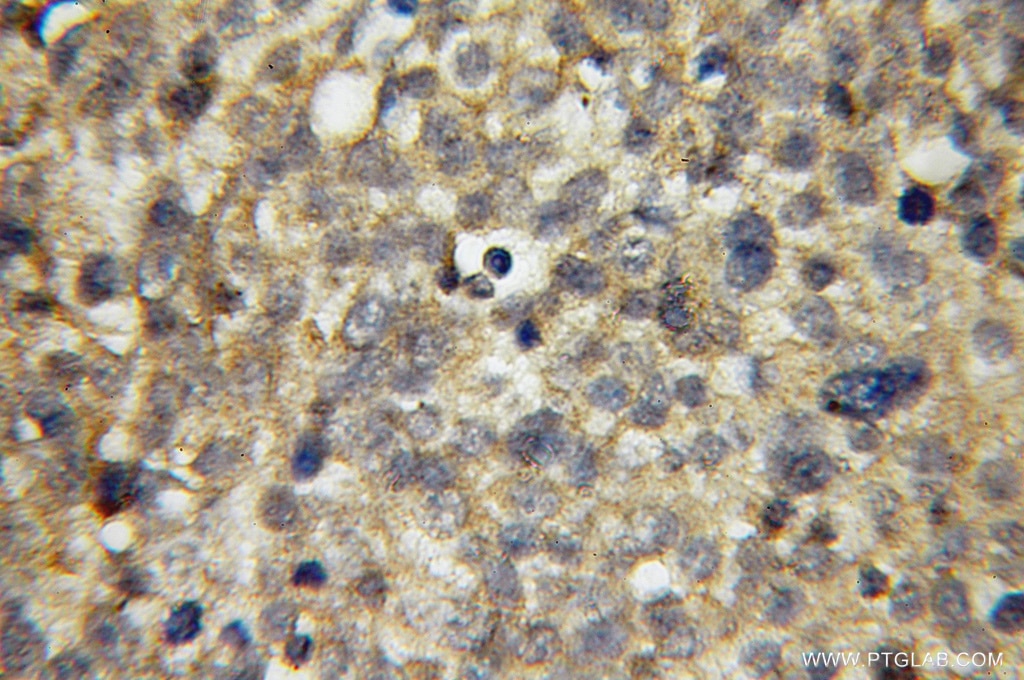
| Positive IHC detected in | human ovary tumor tissue Note: suggested antigen retrieval with TE buffer pH 9.0; (*) Alternatively, antigen retrieval may be performed with citrate buffer pH 6.0 |
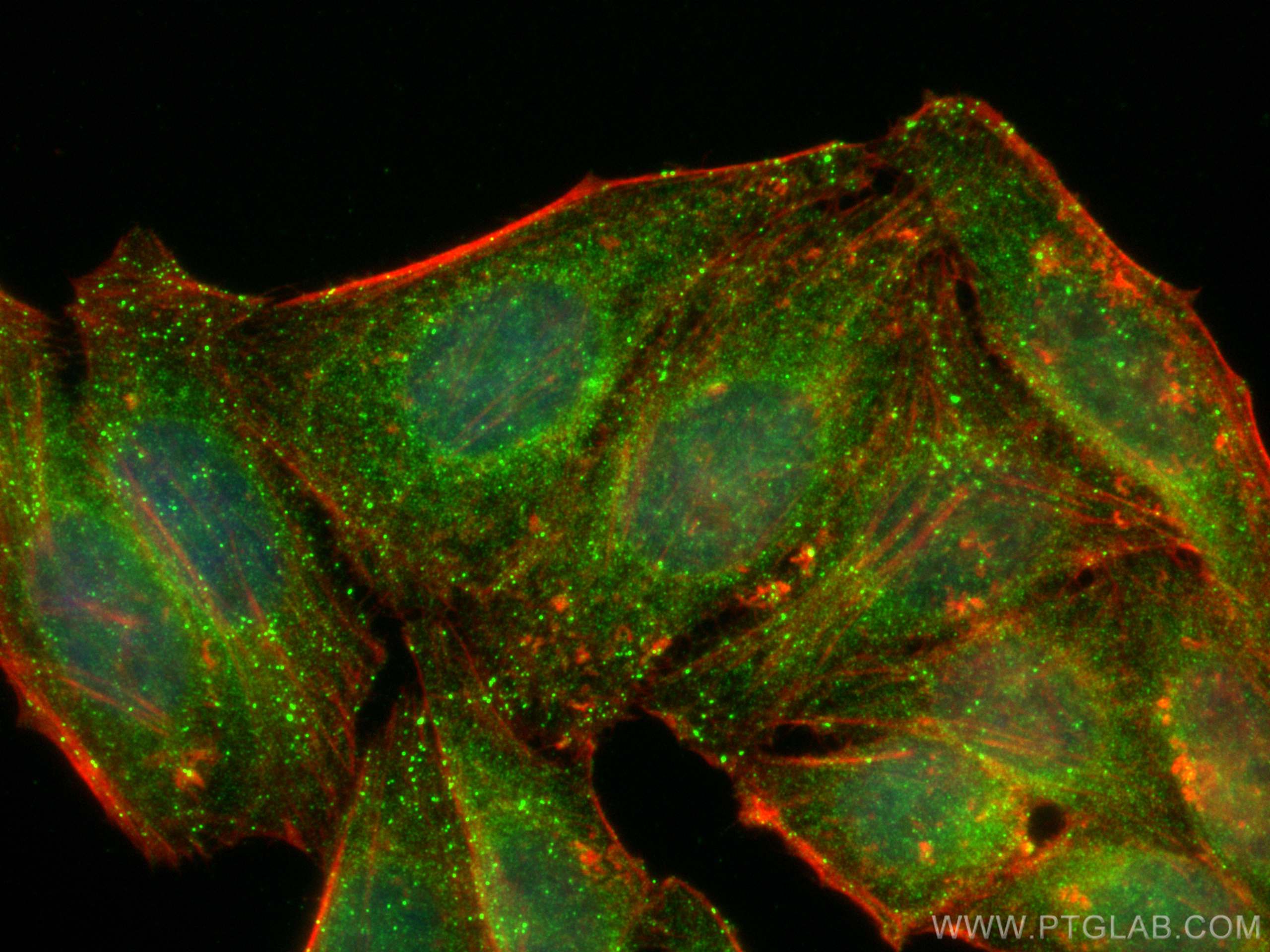
| Positive IF/ICC detected in | HepG2 cells |
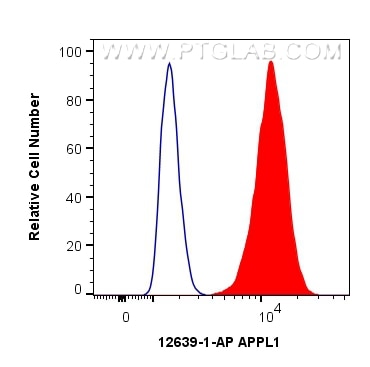
| Positive FC (Intra) detected in | HepG2 cells |
Recommended dilution
| Application | Dilution |
|---|---|
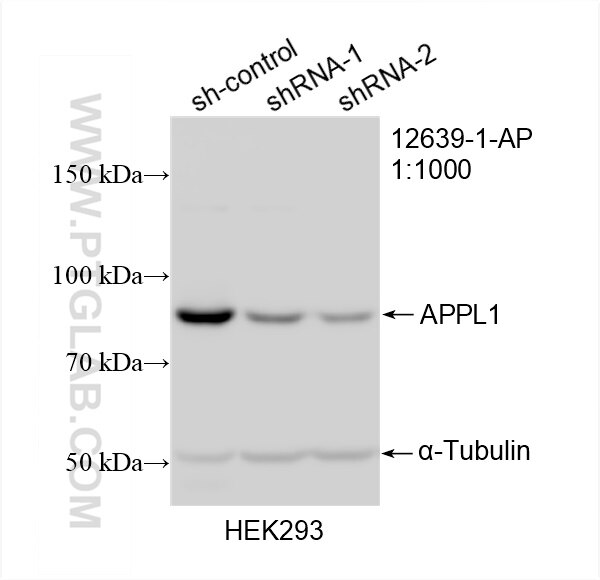
| Western Blot (WB) | WB : 1:2000-1:10000 |
| Immunoprecipitation (IP) | IP : 0.5-4.0 ug for 1.0-3.0 mg of total protein lysate |
| Immunohistochemistry (IHC) | IHC : 1:20-1:200 |
| Immunofluorescence (IF)/ICC | IF/ICC : 1:50-1:500 |
| Flow Cytometry (FC) (INTRA) | FC (INTRA) : 0.40 ug per 10^6 cells in a 100 µl suspension |
| It is recommended that this reagent should be titrated in each testing system to obtain optimal results. | |
| Sample-dependent, Check data in validation data gallery. | |
Product Information
12639-1-AP targets APPL1 in WB, IHC, IF/ICC, FC (Intra), IP, ELISA applications and shows reactivity with human, mouse, rat samples.
| Tested Reactivity | human, mouse, rat |
| Cited Reactivity | human, mouse, rat |
| Host / Isotype | Rabbit / IgG |
| Class | Polyclonal |
| Type | Antibody |
| Immunogen |
CatNo: Ag3334 Product name: Recombinant human APPL1 protein Source: e coli.-derived, PGEX-4T Tag: GST Domain: 405-709 aa of BC028599 Sequence: QQRHESLRPAAGQSRPPTARTSSSGSLGSESTNLAALSLDSLVAPDTPIQFDIISPVCEDQPGQAKAFGQGGRRTNPFGESGGSTKSETEDSILHQLFIVRFLGSMEVKSDDHPDVVYETMRQILAARAIHNIFRMTESHLLVTCDCLKLIDPQTQVTRLTFPLPCVVLYATHQENKRLFGFVLRTSSGRSESNLSSVCYIFESNNEGEKICDSVGLAKQIALHAELDRRASEKQKEIERVKEKQQKELNKQKQIEKDLEEQSRLIAASSRPNQASSEGQFVVLSSSQSEESDLGEGGKKRESEA Predict reactive species |
| Full Name | adaptor protein, phosphotyrosine interaction, PH domain and leucine zipper containing 1 |
| Calculated Molecular Weight | 709 aa, 80 kDa |
| Observed Molecular Weight | 80 kDa |
| GenBank Accession Number | BC028599 |
| Gene Symbol | APPL1 |
| Gene ID (NCBI) | 26060 |
| RRID | AB_2289669 |
| Conjugate | Unconjugated |
| Form | Liquid |
| Purification Method | Antigen affinity purification |
| UNIPROT ID | Q9UKG1 |
| Storage Buffer | PBS with 0.02% sodium azide and 50% glycerol, pH 7.3. |
| Storage Conditions | Store at -20°C. Stable for one year after shipment. Aliquoting is unnecessary for -20oC storage. 20ul sizes contain 0.1% BSA. |
Background Information
Adaptor protein, phosphotyrosine interaction, PH domain and leucine zipper containing 1 (APPL1), a binding partner of Akt2 and an important regulator of INS signaling, plays a key role in the regulation of INS secretion [PMID:22615370]. APPL1 interacts with adiponectin receptors and mediates the INS-sensitizing effects of adiponectin in muscle and endothelial cells. It also participates in nuclear signaling and transcriptional regulation, mostly by modulating the activity of various nuclear factors [PMID:22685329]. Apart from its role in endocytosis and endosomal transport, APPL1 was reported to undergo nucleocytoplasmic shuttling and participate in transcriptional regulation, e.g. by interactions with histone deacetylases (HDACs) [PMID:19686092].
Protocols
| Product Specific Protocols | |
|---|---|
| FC protocol for APPL1 antibody 12639-1-AP | Download protocol |
| IF protocol for APPL1 antibody 12639-1-AP | Download protocol |
| IHC protocol for APPL1 antibody 12639-1-AP | Download protocol |
| IP protocol for APPL1 antibody 12639-1-AP | Download protocol |
| WB protocol for APPL1 antibody 12639-1-AP | Download protocol |
| Standard Protocols | |
|---|---|
| Click here to view our Standard Protocols |
Publications
What published studies show
The APPL1 antibody (Cat# 12639-1-AP) has 13 total citations published in journals including NPJ Aging, Cell Reports, Arthritis & Rheumatology, Journal of Neuroscience, Journal of Biological Chemistry, Journal of Cell Science, Biochemical Pharmacology, Oxidative Medicine and Cellular Longevity, Environmental Science & Technology, Journal of Agricultural and Food Chemistry, Brain Research, Biology of Reproduction, and bioRxiv. Research fields span neurodegeneration/Alzheimer's disease, lipid metabolism, inflammatory arthritis, aging, cerebral ischemia, skeletal muscle remodeling, asthma, endosomal trafficking, and spermiogenesis.
| Species | Application | Title |
|---|---|---|
NPJ Aging Rejuvenation of leukocyte trafficking in aged mice through PEPITEM intervention | ||
Environ Sci Technol The Role of Human Adiponectin Receptor 1 in 2-Ethylhexyl Diphenyl Phosphate Induced Lipid Metabolic Disruption | ||
Arthritis Rheumatol PEPITEM Regulates the Synovial Microenvironment During Immune-Mediated Inflammatory Arthritis to Limit Disease. | ||
Cell Rep Endosomal Dysfunction Induced by Directly Overactivating Rab5 Recapitulates Prodromal and Neurodegenerative Features of Alzheimer's Disease. | ||
Oxid Med Cell Longev DDAH1/ADMA Regulates Adiponectin Resistance in Cerebral Ischemia via the ROS/FOXO1/APR1 Pathway. | ||
J Agric Food Chem Naringin Promotes Skeletal Muscle Fiber Remodeling by the AdipoR1-APPL1-AMPK Signaling Pathway. |
Reviews
What customers say
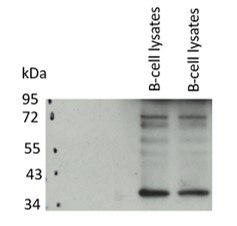
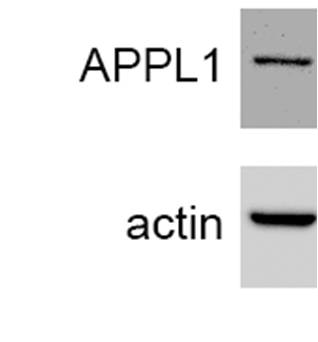
All three reviewers used this antibody for Western blotting, with one also testing it in immunofluorescence. Users report strong, specific detection of APPL1 (~80 kDa) in mouse brain lysates and human primary B-cell lysates, with working dilutions ranging from 1:1,000 to 1:5,000. One reviewer noted an additional lower band around 37 kDa in B-cell samples, possibly a cleavage product. Overall ratings are positive (4–5 stars), with particular praise for signal strength and specificity in brain tissue applications.
The reviews below have been submitted by verified Proteintech customers who received an incentive for providing their feedback.
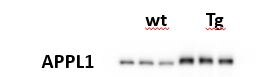
Ying (Verified Customer) (09-11-2023) | used for WB and IFC of brain section of wild type and APPL1 transgenic mice
 |
Sophie (Verified Customer) (11-11-2022) | I used the antibody in a western blot, my samples were primary B-cell lysates (10ug/lane). The antibody did label APPL1 around the 80kDa mark, but I did see another band lower down, around 37kDa - maybe this is a cleavage product?
 |
X (Verified Customer) (01-18-2021) | Very strong and specific signal in WB with mouse brain lysate
 |








