

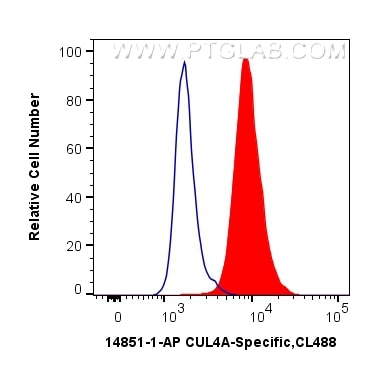

Tested Applications
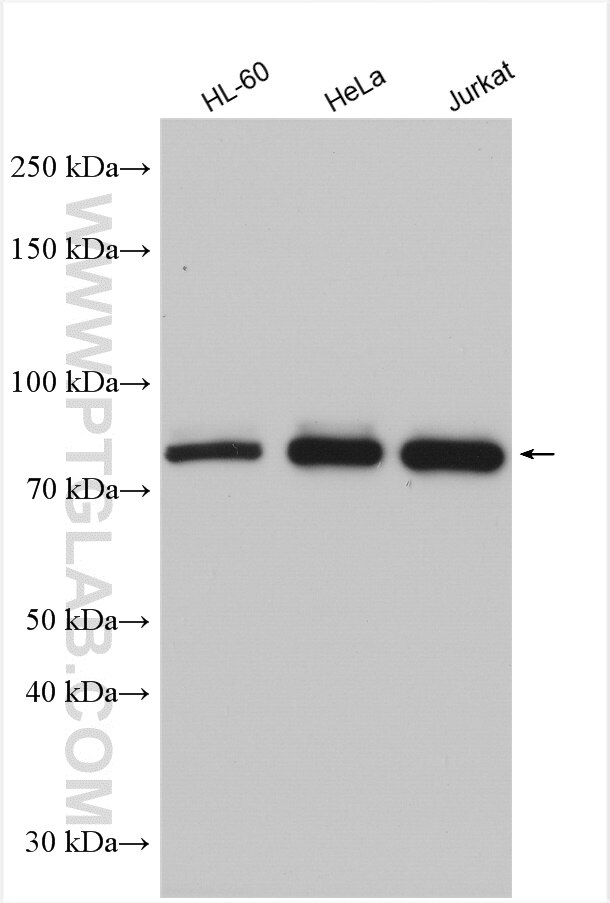
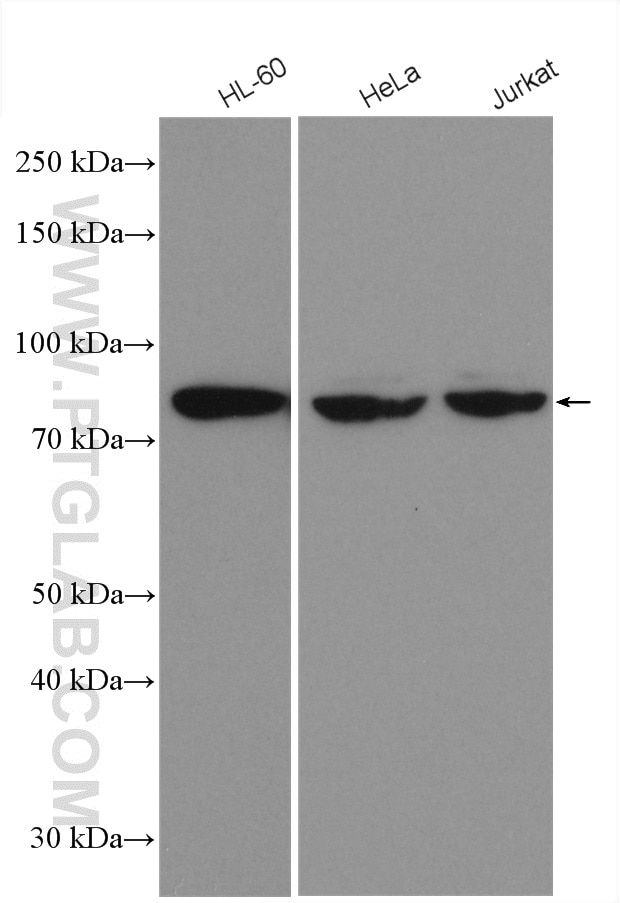
| Positive WB detected in | HL-60 cells, HeLa cells, Jurkat cells |
| Positive IP detected in | HL-60 cells |
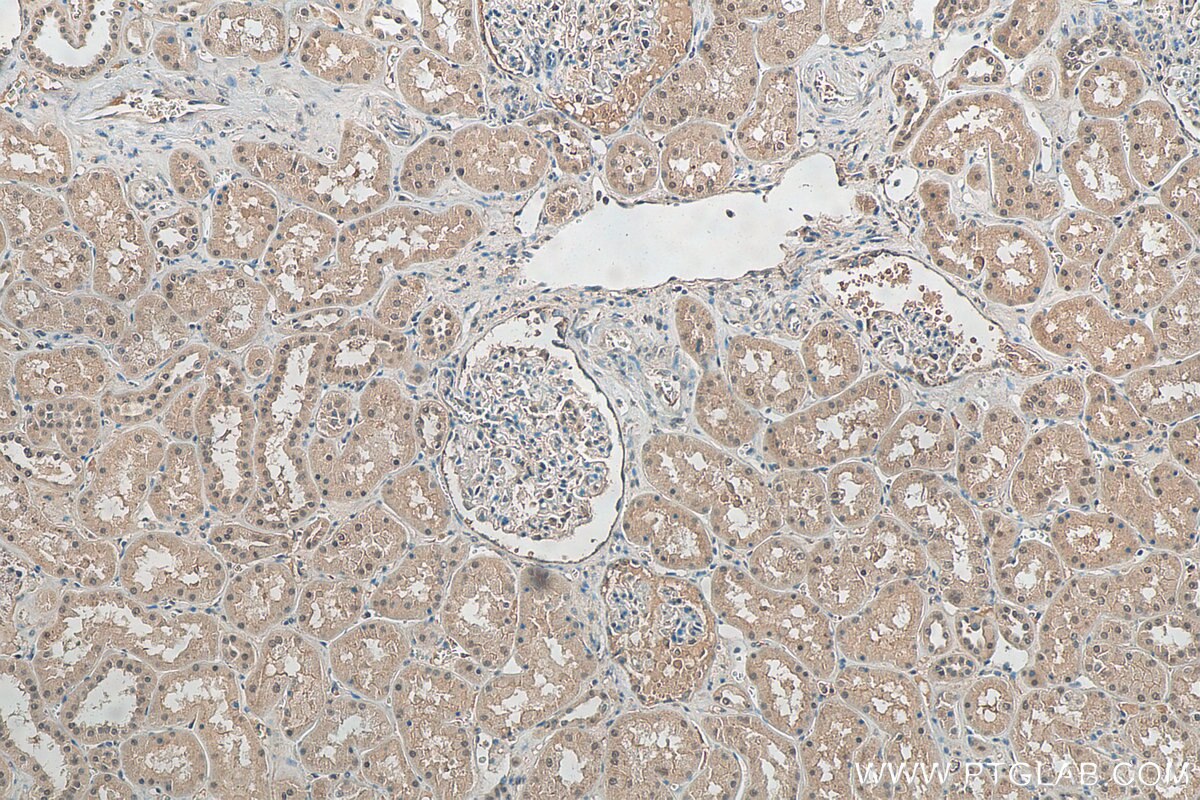
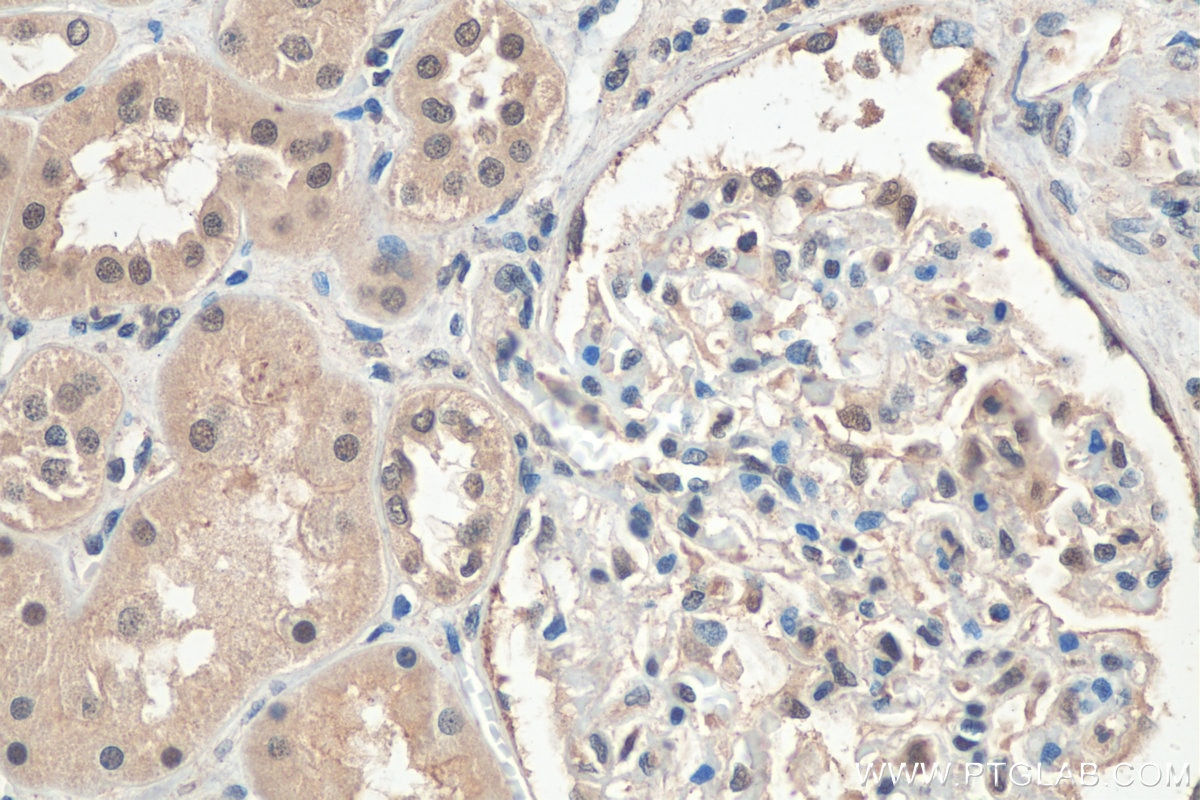
| Positive IHC detected in | human kidney tissue Note: suggested antigen retrieval with TE buffer pH 9.0; (*) Alternatively, antigen retrieval may be performed with citrate buffer pH 6.0 |
| Positive FC (Intra) detected in | HepG2 cells |
Recommended dilution
| Application | Dilution |
|---|---|
| Western Blot (WB) | WB : 1:2000-1:10000 |
| Immunoprecipitation (IP) | IP : 0.5-4.0 ug for 1.0-3.0 mg of total protein lysate |
| Immunohistochemistry (IHC) | IHC : 1:50-1:500 |
| Flow Cytometry (FC) (INTRA) | FC (INTRA) : 0.40 ug per 10^6 cells in a 100 ul suspension |
| It is recommended that this reagent should be titrated in each testing system to obtain optimal results. | |
| Sample-dependent, Check data in validation data gallery. | |
Product Information
14851-1-AP targets CUL4A-Specific in WB, IHC, FC (Intra), IP, ELISA applications and shows reactivity with human, mouse, rat samples.
| Tested Reactivity | human, mouse, rat |
| Cited Reactivity | human, mouse, rat |
| Host / Isotype | Rabbit / IgG |
| Class | Polyclonal |
| Type | Antibody |
| Immunogen |
Peptide Predict reactive species |
| Full Name | cullin 4A |
| Calculated Molecular Weight | 88 kDa |
| Observed Molecular Weight | 77-88 kDa |
| GenBank Accession Number | NM_003589 |
| Gene Symbol | CUL4A |
| Gene ID (NCBI) | 8451 |
| RRID | AB_2261175 |
| Conjugate | Unconjugated |
| Form | Liquid |
| Purification Method | Antigen affinity purification |
| UNIPROT ID | Q13619 |
| Storage Buffer | PBS with 0.02% sodium azide and 50% glycerol, pH 7.3. |
| Storage Conditions | Store at -20°C. Stable for one year after shipment. Aliquoting is unnecessary for -20oC storage. 20ul sizes contain 0.1% BSA. |
Background Information
Cullin proteins assemble a large number of RING E3 ubiquitin ligases, participating in the proteolysis through the ubiquitin-proteasome pathway. Two cullin 4 (CUL4) proteins, CUL4A (87 kDa) and CUL4B(104 kDa), have been identified. The two CUL4 sequences are 83% identical. They target certain proteins for degradation by binding protein DDB1 to form a CUL4-DDB1 ubiquitin ligase complex with DDB. They form two individual E3 ligases, DDB1-CUL4ADDB2 and DDB1-CUL4BDDB2 in this process. CUL4A appeared in both the nucleus and the cytosol, suggesting a more complex mechanism for entering the nucleus. CUL4B is localized in the nucleus and facilitates the transfer of DDB1 into the nucleus independently of DDB2. This antibody is specially against CUL4A,but not CUL4B.
Protocols
| Product Specific Protocols | |
|---|---|
| FC protocol for CUL4A-Specific antibody 14851-1-AP | Download protocol |
| IHC protocol for CUL4A-Specific antibody 14851-1-AP | Download protocol |
| IP protocol for CUL4A-Specific antibody 14851-1-AP | Download protocol |
| WB protocol for CUL4A-Specific antibody 14851-1-AP | Download protocol |
| Standard Protocols | |
|---|---|
| Click here to view our Standard Protocols |
Publications
What published studies show
The CUL4A-Specific Polyclonal antibody (Cat. No. 14851-1-AP) is cited in 30 publications. These appear in high-impact journals including Signal Transduction and Targeted Therapy, Nature Immunology, Cancer Research, Nature Communications, Molecular Cell, Developmental Cell, Cell Reports, Journal of Medicinal Chemistry, and Redox Biology. The research areas span oncology (ovarian cancer chemoresistance, colorectal cancer, gastric/lung/breast cancer), ubiquitin-proteasome/neddylation biology, DNA damage repair, autophagy, adipogenesis and obesity, cardiac fibrosis, and neurodegeneration. Applications primarily include Western blot, with some IHC and immunoprecipitation across human and mouse samples.
| Species | Application | Title |
|---|---|---|
Signal Transduct Target Ther Targeting CRL4 suppresses chemoresistant ovarian cancer growth by inducing mitophagy
| ||
Nat Immunol COP9 signalosome subunit 8 is essential for peripheral T cell homeostasis and antigen receptor-induced entry into the cell cycle from quiescence. | ||
Cancer Res A germline variant in the BET1L 3'-UTR confers colorectal cancer susceptibility by reducing miRNA binding and m6A modification | ||
Nat Commun AMPK induces degradation of the transcriptional repressor PROX1 impairing branched amino acid metabolism and tumourigenesis | ||
Redox Biol Cardioprotective effect of MLN4924 on ameliorating autophagic flux impairment in myocardial ischemia-reperfusion injury by Sirt1. |







