

Tested Applications
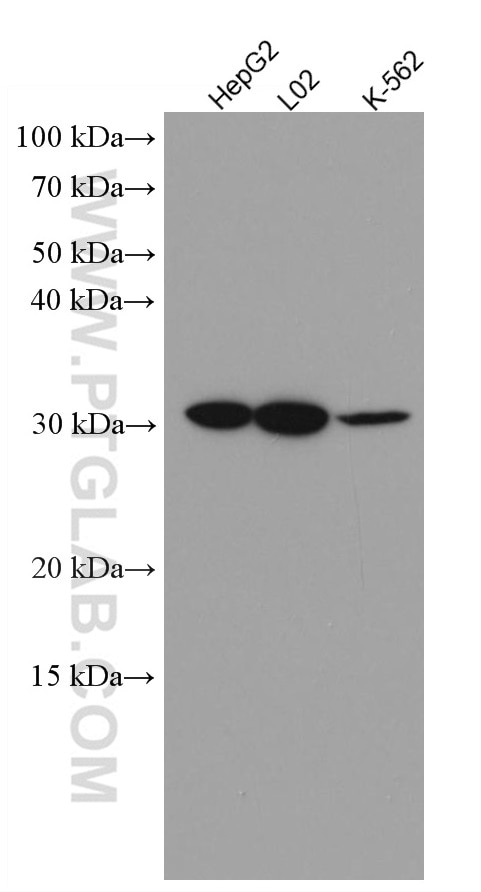
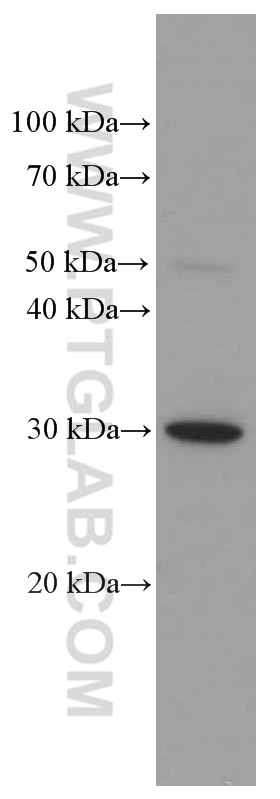
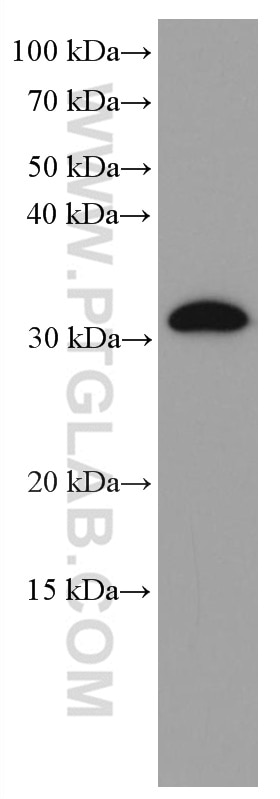
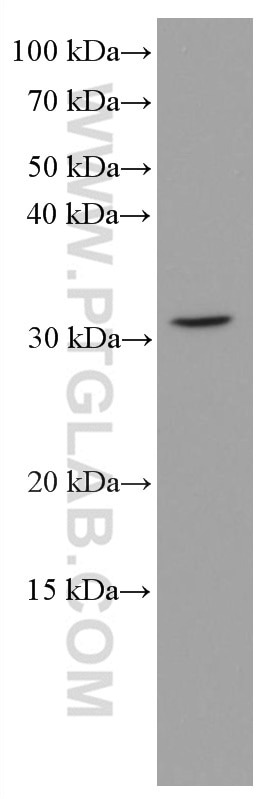
| Positive WB detected in | HepG2 cells, HeLa cells, Jurkat cells, NIH/3T3 cells, L02 cells, K-562 cells |
Recommended dilution
| Application | Dilution |
|---|---|
| Western Blot (WB) | WB : 1:1000-1:6000 |
| It is recommended that this reagent should be titrated in each testing system to obtain optimal results. | |
| Sample-dependent, Check data in validation data gallery. | |
Product Information
66525-1-Ig targets HMGB1 in WB, IHC, IP, CoIP, ELISA applications and shows reactivity with human, mouse samples.
| Tested Reactivity | human, mouse |
| Cited Reactivity | human, mouse, rat, bovine |
| Host / Isotype | Mouse / IgG1 |
| Class | Monoclonal |
| Type | Antibody |
| Immunogen |
CatNo: Ag1264 Product name: Recombinant human HMGB1 protein Source: e coli.-derived, PGEX-4T Tag: GST Domain: 1-215 aa of BC003378 Sequence: MGKGDPKKPRGKMSSYAFFVQTCREEHKKKHPDASVNFSEFSKKCSERWKTMSAKEKGKFEDMAKADKARYEREMKTYIPPKGETKKKFKDPNAPKRPPSAFFLFCSEYRPKIKGEHPGLSIGDVAKKLGEMWNNTAADDKQPYEKKAAKLKEKYEKDIAAYRAKGKPDAAKKGVVKAEKSKKKKEEEEDEEDEEDEEEEEDEEDEDEEEDDDDE Predict reactive species |
| Full Name | high-mobility group box 1 |
| Calculated Molecular Weight | 25 kDa |
| Observed Molecular Weight | 30 kDa |
| GenBank Accession Number | BC003378 |
| Gene Symbol | HMGB1 |
| Gene ID (NCBI) | 3146 |
| RRID | AB_2881888 |
| Conjugate | Unconjugated |
| Form | Liquid |
| Purification Method | Protein G purification |
| UNIPROT ID | P09429 |
| Storage Buffer | PBS with 0.02% sodium azide and 50% glycerol, pH 7.3. |
| Storage Conditions | Store at -20°C. Stable for one year after shipment. Aliquoting is unnecessary for -20oC storage. 20ul sizes contain 0.1% BSA. |
Background Information
The HMG (high mobility group) proteins are nonhistone chromosomal proteins that is present in almost all eukaryotic cells, and it functions to stabilize NUCLEOSOME formation and acts as a transcription-factor-like protein that regulates the expression of several genes[PMID: 18160415]. Once injury, infection or other inflammatory stimuli, activated macrophages, mature dendritic cells and natural killer cells can secret HMGB1, which act as a crucial cytokine[PMID: 20163887]. HMGB1 also involved in V(D)J recombination by acting as a cofactor of the RAG complex, stimulating cleavage and RAG protein binding at the 23 bp spacer of conserved recombination signal sequences (RSS)[PMID: 19360789 ]. Act as a Heparin-binding protein that has a role in the extension of neurite-type cytoplasmic processes in developing cells. HMGB1 (high mobility group box 1) modulates gene expression in the nucleus, but certain immune cells secrete HMGB1 as an extracellular Alarmin to signal tissue damage.The nuclear HMGB1 relocalizes to the extracellular milieu in senescent human and mouse cells in culture and in vivo, which stimulated cytokine secretion through TLR-4 signaling (23649808).This antibody is raised against full length HMGB1 of human origin. The monomeric HMGB1 is 29 kDa and dimer is 58 kDa.
Protocols
| Product Specific Protocols | |
|---|---|
| WB protocol for HMGB1 antibody 66525-1-Ig | Download protocol |
| Standard Protocols | |
|---|---|
| Click here to view our Standard Protocols |
Publications
What published studies show
The Anti-HMGB1 Mouse Monoclonal Antibody (cat. no. 66525-1-Ig) has 65 citations published across 57 journals, including Nature Communications, Nature Microbiology, Journal of Hepatology, Advanced Science, ACS Nano, Small, Cell Death & Disease, Biomaterials Research, and Journal of Controlled Release. Associated research fields encompass cancer immunotherapy, ferroptosis, pyroptosis, neuroinflammation, liver injury, radiation-induced tissue damage, wound healing, cardiovascular disease, and autophagy regulation.
| Species | Application | Title |
|---|---|---|
J Hepatol Nucleolin lactylation contributes to intrahepatic cholangiocarcinoma pathogenesis via RNA splicing regulation of MADD | ||
Exploration (Beijing) NIR II-Guided Photoactivatable Silencing Polyplex Boosts Cancer Immunotherapy. | ||
Bioact Mater NIR-II photo-accelerated polymer nanoparticles boost tumor immunotherapy via PD-L1 silencing and immunogenic cell death | ||
Nat Commun A protein-based cGAS-STING nanoagonist enhances T cell-mediated anti-tumor immune responses | ||
ACS Nano A First-Aid Nanomedicine Endowed with Microenvironment Self-Adaptive Regulation Ability to Facilitate Acute Liver Failure Prophylaxis and Therapy. | ||
Redox Biol Mecheliolide elicits ROS-mediated ERS driven immunogenic cell death in hepatocellular carcinoma. |





