
Product Information
87439-1-PBS targets CCL4/MIP-1 beta as part of a matched antibody pair:
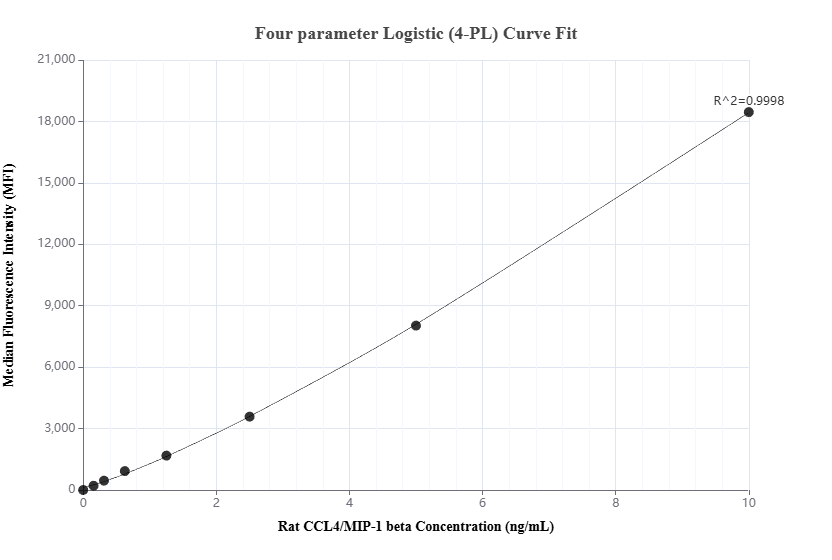
MP03044-1: 87439-1-PBS capture and 87439-2-PBS detection (validated in Cytometric bead array)
Unconjugated rabbit recombinant monoclonal antibody in PBS only (BSA and azide free) storage buffer at a concentration of 1 mg/mL, ready for conjugation. Created using Proteintech’s proprietary in-house recombinant technology. Recombinant production enables unrivalled batch-to-batch consistency, easy scale-up, and future security of supply.
This conjugation ready format makes antibodies ideal for use in many applications including: ELISAs, multiplex assays requiring matched pairs, mass cytometry, and multiplex imaging applications.Antibody use should be optimized by the end user for each application and assay.
| Tested Reactivity | mouse, rat |
| Host / Isotype | Rabbit / IgG |
| Class | Recombinant |
| Type | Antibody |
| Immunogen |
CatNo: Eg3200 Product name: recombinant rat CCL4/MIP-1 beta protein Source: mammalian cells-derived, pHZ-KIsec-C-rFc Tag: C-rFc Domain: 24-92 aa of NM_053858.1 Sequence: APIGSDPPTSCCFSYTSRKIHRNFVMDYYETSSLCSQPAVVFLTKKGRQICADPSEPWVNEYVNDLELN Predict reactive species |
| Full Name | chemokine (C-C motif) ligand 4 |
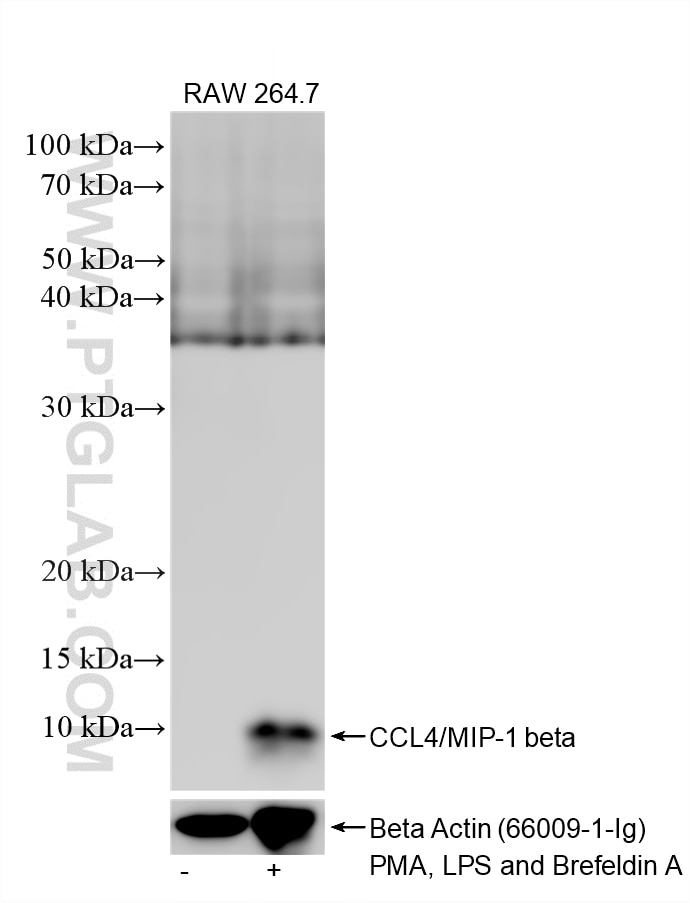
| Calculated Molecular Weight | 10 kDa |
| Observed Molecular Weight | 10 kDa |
| GenBank Accession Number | NM_053858.1 |
| Gene Symbol | Ccl4 |
| Gene ID (NCBI) | 116637 |
| RRID | AB_3745547 |
| Conjugate | Unconjugated |
| Form | Liquid |
| Purification Method | Protein A purification |
| UNIPROT ID | P50230 |
| Storage Buffer | PBS only, pH 7.3. |
| Storage Conditions | Store at -80°C. |
Background Information
CCL4 (C-C motif chemokine ligand 4), also known as macrophage inflammatory protein-1β (MIP-1β), is a pivotal chemokine that governs immune cell migration and activation. By binding primarily to its receptor CCR5, it directs the recruitment of monocytes, dendritic cells, natural killer (NK) cells, and T lymphocytes to sites of inflammation and infection. CCL4 plays a crucial role in antiviral defense, antitumor immunity, and inflammatory responses. However, dysregulated CCL4 signaling is implicated in the pathogenesis of chronic inflammatory diseases, autoimmune disorders, and cancer progression. Notably, due to its shared use of the CCR5 receptor with HIV-1, CCL4 also participates in HIV pathogenesis. This dual role as a mediator of both protective immunity and pathology positions CCL4 as a significant biomarker and a promising therapeutic target in immunology and medicine.







