

Tested Applications
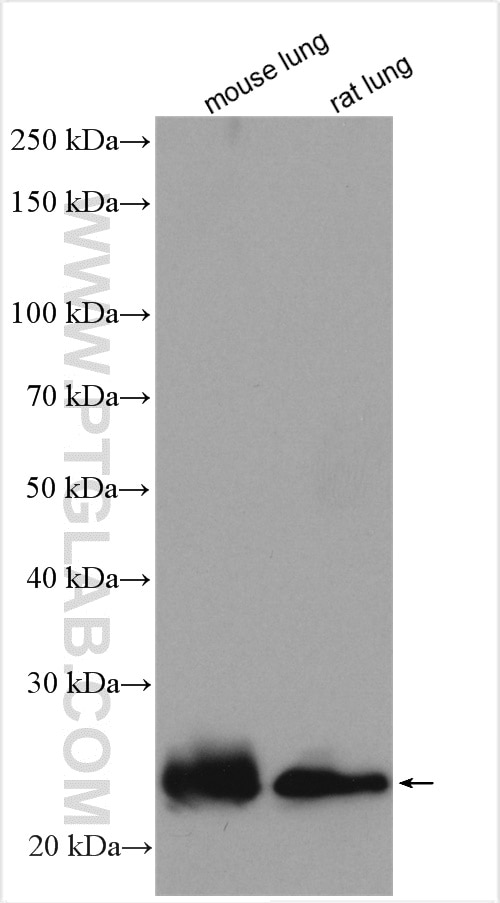
| Positive WB detected in | mouse lung tissue, rat lung tissue |
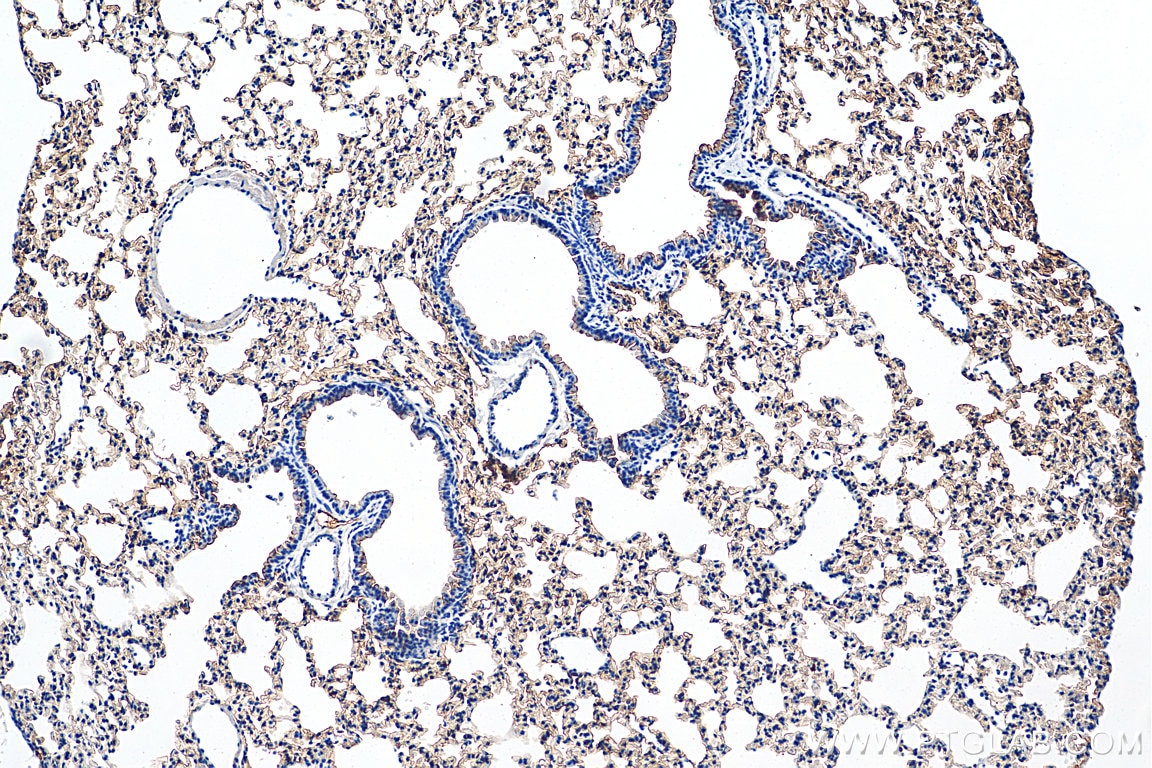
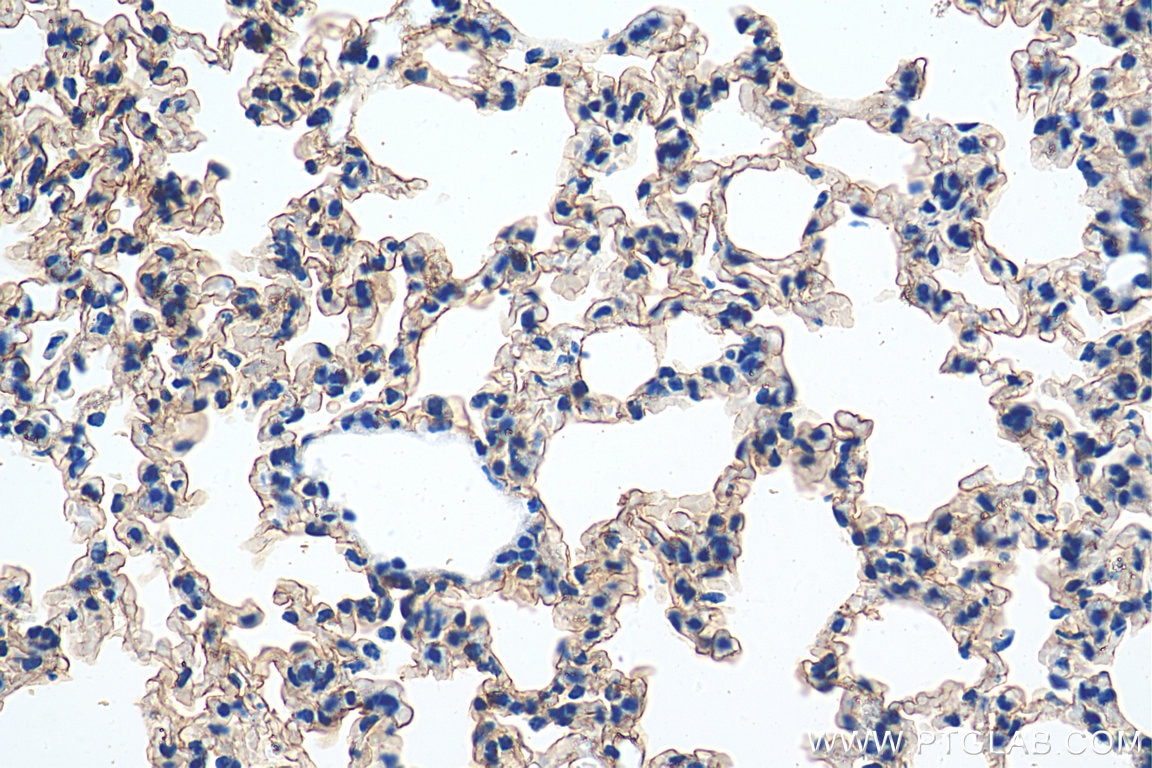
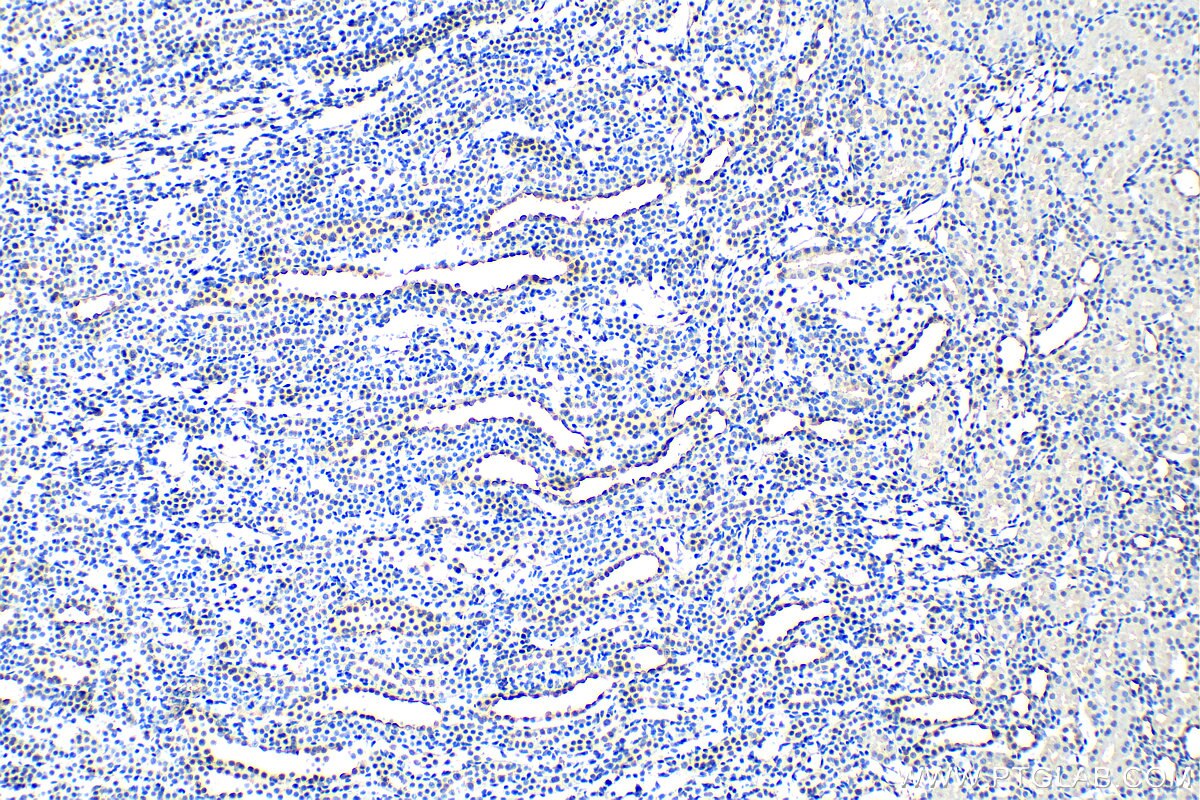
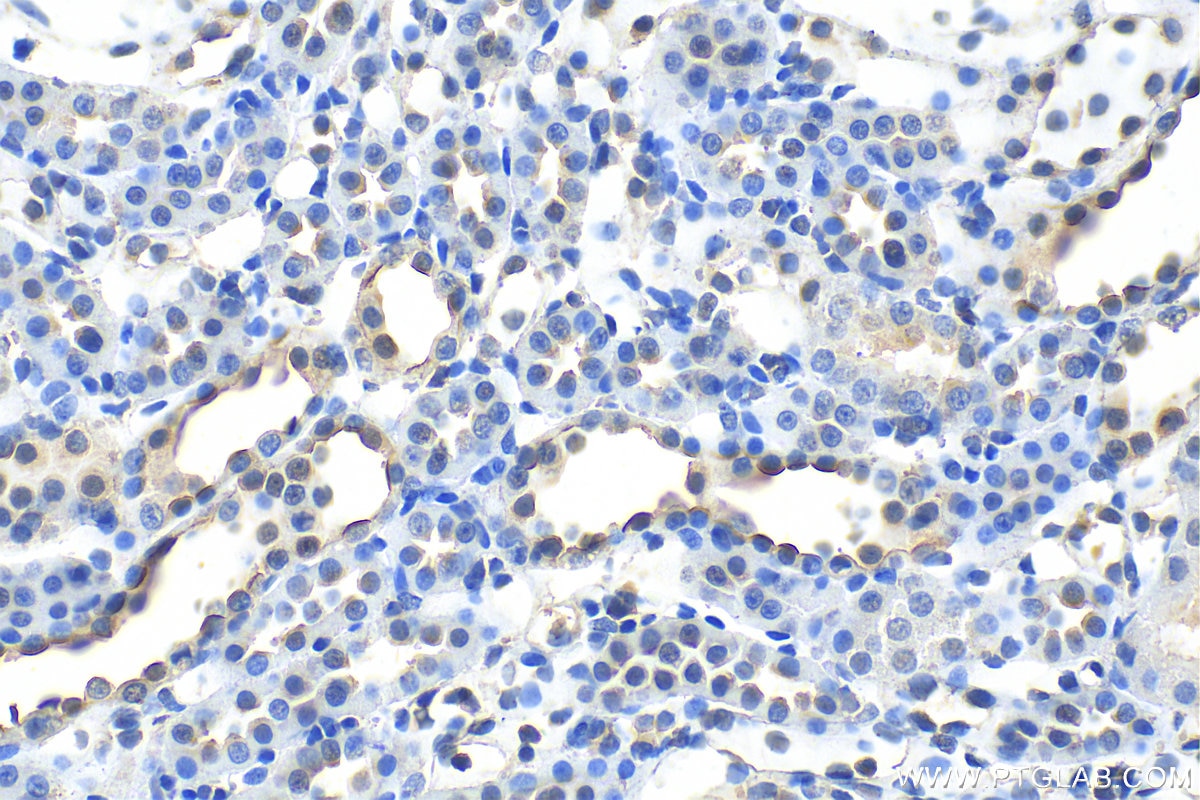
| Positive IHC detected in | mouse lung tissue, rat kidney tissue Note: suggested antigen retrieval with TE buffer pH 9.0; (*) Alternatively, antigen retrieval may be performed with citrate buffer pH 6.0 |
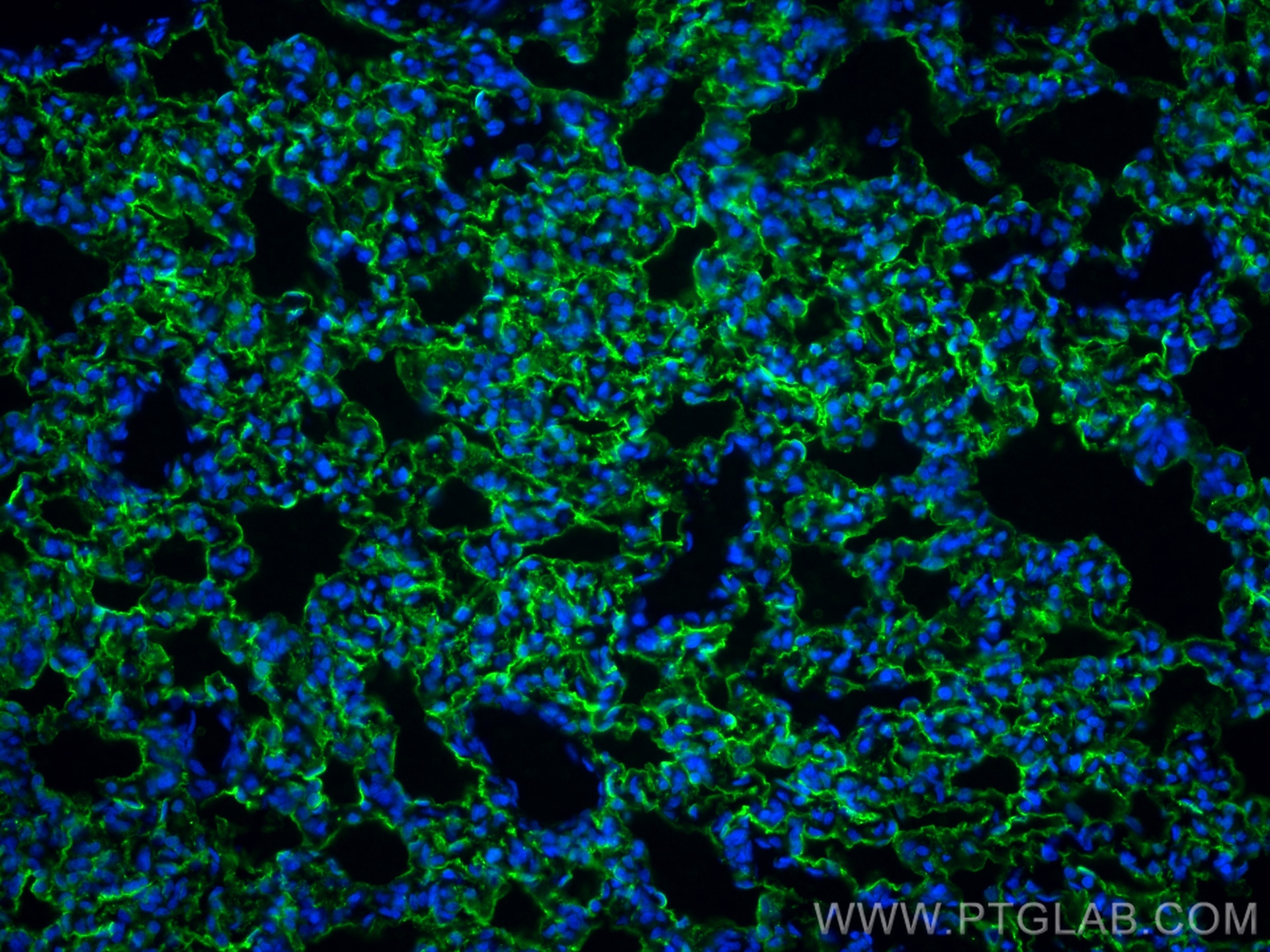
| Positive IF-P detected in | rat lung tissue |
Recommended dilution
| Application | Dilution |
|---|---|
| Western Blot (WB) | WB : 1:500-1:2000 |
| Immunohistochemistry (IHC) | IHC : 1:2500-1:10000 |
| Immunofluorescence (IF)-P | IF-P : 1:50-1:500 |
| It is recommended that this reagent should be titrated in each testing system to obtain optimal results. | |
| Sample-dependent, Check data in validation data gallery. | |
Product Information
20334-1-AP targets AQP5 in WB, IHC, IF-P, ELISA applications and shows reactivity with human, mouse, rat samples.
| Tested Reactivity | human, mouse, rat |
| Cited Reactivity | human, mouse, rat, chicken |
| Host / Isotype | Rabbit / IgG |
| Class | Polyclonal |
| Type | Antibody |
| Immunogen |
CatNo: Ag14103 Product name: Recombinant human AQP5 protein Source: e coli.-derived, PGEX-4T Tag: GST Domain: 190-265 aa of BC032946 Sequence: FGPAVVMNRFSPAHWVFWVGPIVGAVLAAILYFYLLFPNSLSLSERVAIIKGTYEPDEDWEEQREERKKTMELTTR Predict reactive species |
| Full Name | aquaporin 5 |
| Calculated Molecular Weight | 265 aa, 28 kDa |
| Observed Molecular Weight | 27 kDa |
| GenBank Accession Number | BC032946 |
| Gene Symbol | AQP5 |
| Gene ID (NCBI) | 362 |
| RRID | AB_2918066 |
| Conjugate | Unconjugated |
| Form | Liquid |
| Purification Method | Antigen affinity purification |
| UNIPROT ID | P55064 |
| Storage Buffer | PBS with 0.02% sodium azide and 50% glycerol, pH 7.3. |
| Storage Conditions | Store at -20°C. Stable for one year after shipment. Aliquoting is unnecessary for -20oC storage. 20ul sizes contain 0.1% BSA. |
Background Information
AQP5 is a member of aquaporins (AQPs) which are membrane proteins functioning as water channels and involved in the bidirectional transfer of water and small solutes across cell membranes. AQP5 is widely expressed including digestive, renal, respiratory, and reproductive systems. AQP5 overexpression in cancer cells and tumor tissues has been extensively reported. Recently AQP5 has been identified as a marker for adult pyloric stem cells.
Protocols
| Product Specific Protocols | |
|---|---|
| IF protocol for AQP5 antibody 20334-1-AP | Download protocol |
| IHC protocol for AQP5 antibody 20334-1-AP | Download protocol |
| WB protocol for AQP5 antibody 20334-1-AP | Download protocol |
| Standard Protocols | |
|---|---|
| Click here to view our Standard Protocols |
Publications
What published studies show
The AQP5 Polyclonal antibody (Cat# 20334-1-AP) has 46 citations. Publications appear in journals including Nature Communications, Redox Biology, Theranostics, Biomaterials, Free Radical Biology and Medicine, Frontiers in Immunology, Journal of Ethnopharmacology, and PLoS ONE. Research fields span pulmonary medicine (lung injury, fibrosis, bronchopulmonary dysplasia, ARDS), salivary/lacrimal gland disorders (Sjögren's syndrome, xerostomia), inflammation, ferroptosis, aging, and cancer, using applications such as WB, IF, and IHC across mouse, rat, human, and chicken models.
| Species | Application | Title |
|---|---|---|
Nat Commun FGF 13 functions as a regulator of the ERK/aerobic glycolysis axis in the inflammatory state during septic lung injury. | ||
Redox Biol Redox signaling-mediated S-glutathionylation of protein disulfide isomerase A1 initiates intrinsic apoptosis and contributes to accelerated aging | ||
Redox Biol Norepinephrine attenuates acute lung injury by protecting mitochondria via the β(2)-AR-AKAP1 axis and inhibiting alveolar epithelial pyroptosis. | ||
Theranostics Exosomes of human adipose stem cells mitigate irradiation injury to salivary glands by inhibiting epithelial-mesenchymal transition through miR-199a-3p targeting Twist1 and regulating TGFβ1/Smad3 pathway | ||
Biomaterials Inhaled pulmonary surfactant biomimetic liposomes for reversing idiopathic pulmonary fibrosis through synergistic therapeutic strategy | ||
Phytomedicine β-Eudesmol in Rhizoma Atractylodis targets AVPR2 to inhibit the cAMP-AQP2 pathway and promote fluid metabolism |







