
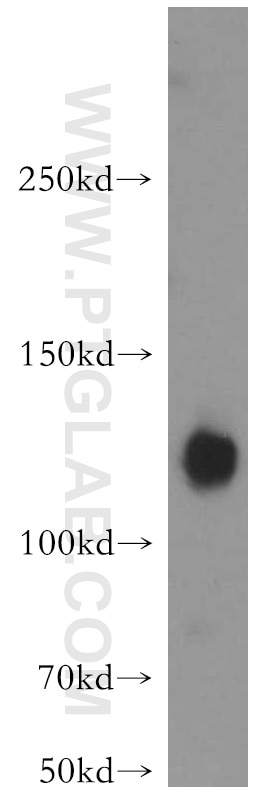
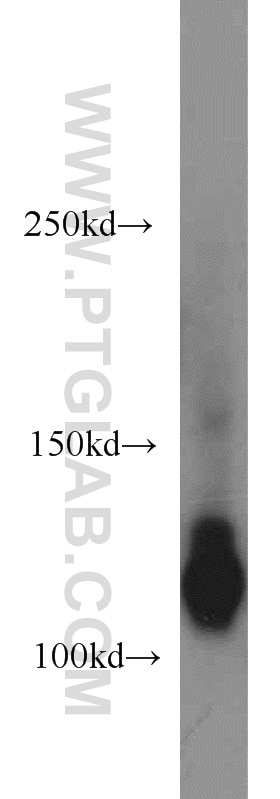
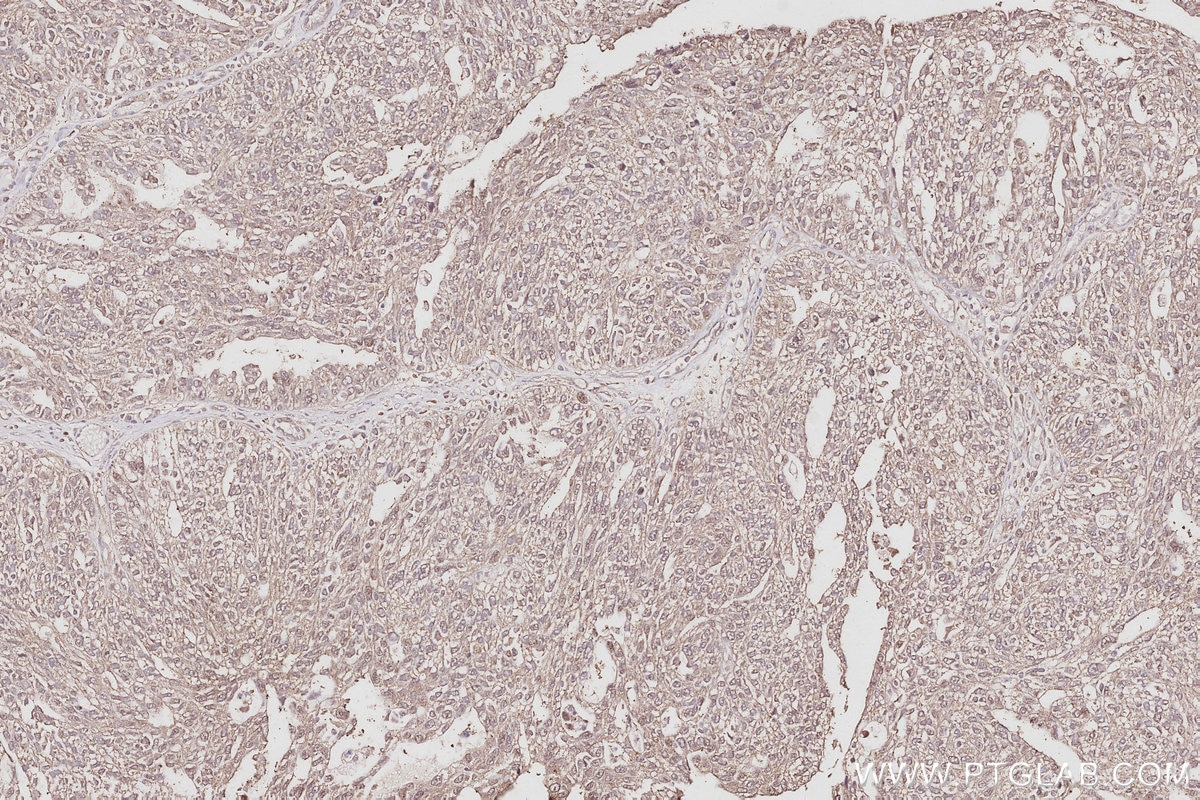
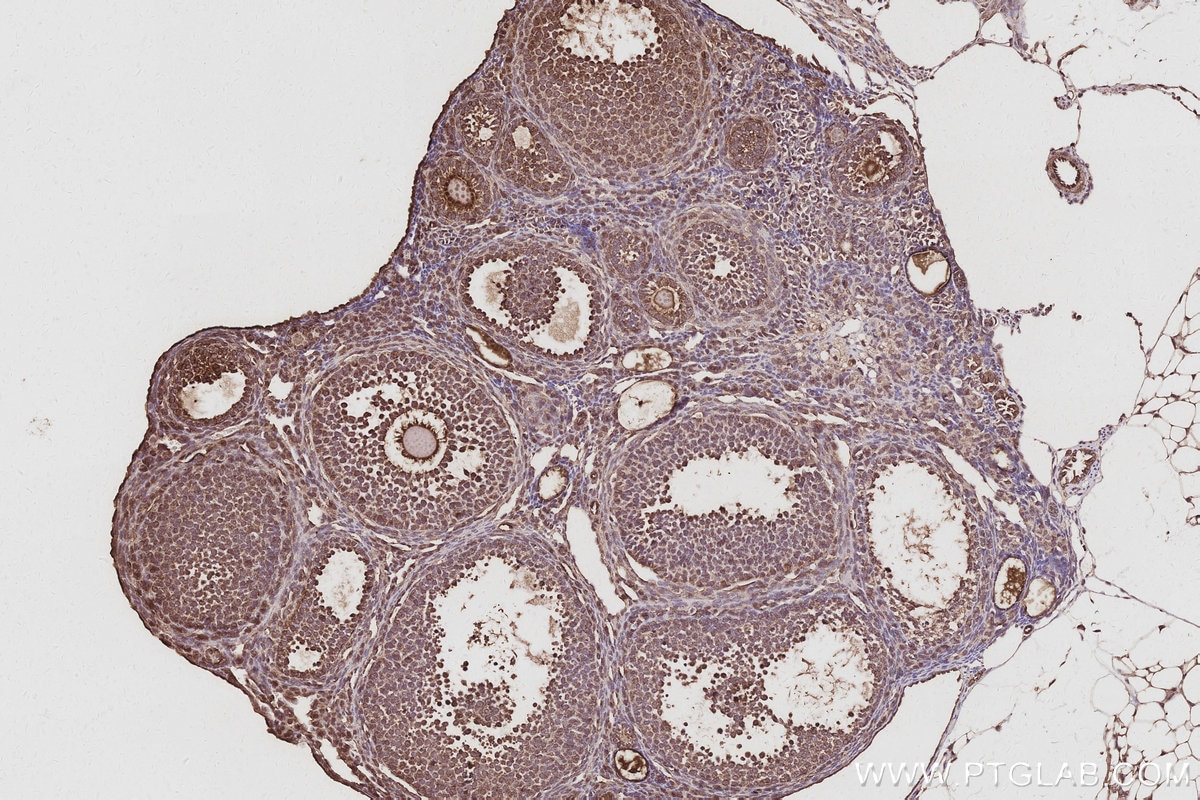

Tested Applications
| Positive WB detected in | mouse brain tissue |
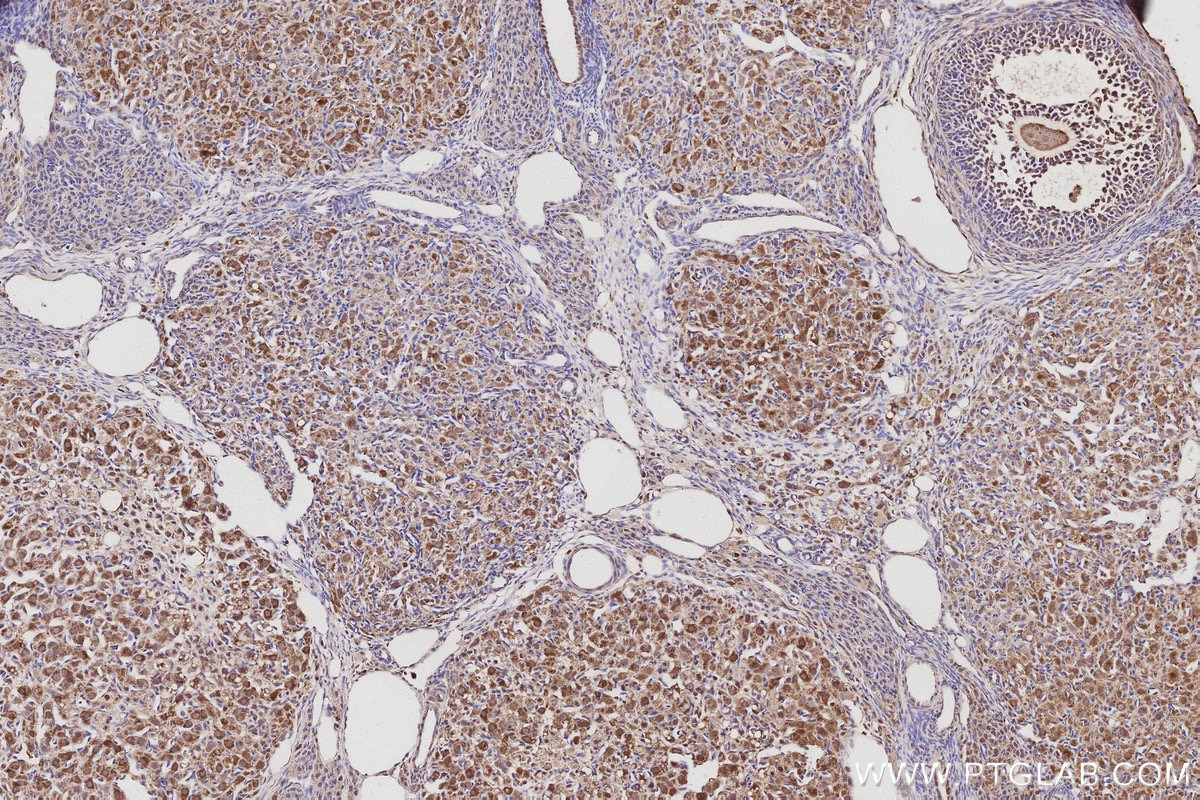
| Positive IHC detected in | human ovary cancer tissue, rat ovary tissue, mouse ovary tissue Note: suggested antigen retrieval with TE buffer pH 9.0; (*) Alternatively, antigen retrieval may be performed with citrate buffer pH 6.0 |
Recommended dilution
| Application | Dilution |
|---|---|
| Western Blot (WB) | WB : 1:500-1:2000 |
| Immunohistochemistry (IHC) | IHC : 1:1000-1:4000 |
| It is recommended that this reagent should be titrated in each testing system to obtain optimal results. | |
| Sample-dependent, Check data in validation data gallery. | |
Product Information
21565-1-AP targets ATP8A1 in WB, IHC, IF, ELISA applications and shows reactivity with human, mouse, rat samples.
| Tested Reactivity | human, mouse, rat |
| Cited Reactivity | human, mouse, rat |
| Host / Isotype | Rabbit / IgG |
| Class | Polyclonal |
| Type | Antibody |
| Immunogen |
CatNo: Ag16071 Product name: Recombinant human ATP8A1 protein Source: e coli.-derived, PGEX-4T Tag: GST Domain: 430-527 aa of BC109317 Sequence: QNSQFGDEKTFSDSSLLENLQNNHPTAPIICEFLTMMAVCHTAVPEREGDKIIYQAASPDEGALVRAAKQLNFVFTGRTPDSVIIDSLGQEERYELLN Predict reactive species |
| Full Name | ATPase, aminophospholipid transporter (APLT), class I, type 8A, member 1 |
| Calculated Molecular Weight | 1164 aa, 131 kDa |
| Observed Molecular Weight | 120 kDa |
| GenBank Accession Number | BC109317 |
| Gene Symbol | ATP8A1 |
| Gene ID (NCBI) | 10396 |
| RRID | AB_10734587 |
| Conjugate | Unconjugated |
| Form | Liquid |
| Purification Method | Antigen affinity purification |
| UNIPROT ID | Q9Y2Q0 |
| Storage Buffer | PBS with 0.02% sodium azide and 50% glycerol, pH 7.3. |
| Storage Conditions | Store at -20°C. Stable for one year after shipment. Aliquoting is unnecessary for -20oC storage. 20ul sizes contain 0.1% BSA. |
Protocols
| Product Specific Protocols | |
|---|---|
| IHC protocol for ATP8A1 antibody 21565-1-AP | Download protocol |
| WB protocol for ATP8A1 antibody 21565-1-AP | Download protocol |
| Standard Protocols | |
|---|---|
| Click here to view our Standard Protocols |
Publications
What published studies show
Able is busy answering your previous question. Please try again later.
| Species | Application | Title |
|---|---|---|
Nat Neurosci Adaptor protein AP-3 produces synaptic vesicles that release at high frequency by recruiting phospholipid flippase ATP8A1
| ||
Nat Commun Synaptic vesicle-omics in mice captures signatures of aging and synucleinopathy | ||
Cell Death Dis Loss of Atp8a2 drives neurodegeneration through the dysregulation of spatiotemporal phosphatidylserine externalization in mature neurons. | ||
Cell Death Discov 2-Aminoethoxydiphenylborate (2-APB) inhibits release of phosphatidylserine-exposing extracellular vesicles from platelets. | ||
Proc Natl Acad Sci U S A AP-3-dependent targeting of flippase ATP8A1 to lamellar bodies suppresses activation of YAP in alveolar epithelial type 2 cells. | ||
EMBO J Transport through recycling endosomes requires EHD1 recruitment by a phosphatidylserine translocase. |
Reviews
What customers say
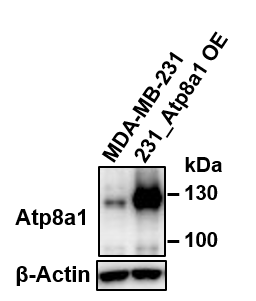
The single review for this product is a 5-star rating from a Western Blot application. The user tested it on human breast cancer cell line MDA-MB-231 (wild type and Atp8a1 overexpression) at a 1:1000 dilution. The reviewer's key note was that the sample must not be boiled before application, suggesting heat denaturation may compromise the target's detectability. Overall, the feedback is positive, with the main takeaway being a practical protocol tip regarding sample preparation.
The reviews below have been submitted by verified Proteintech customers who received an incentive for providing their feedback.
Mareike (Verified Customer) (01-17-2025) | The sample must not be boiled before application!
 |






